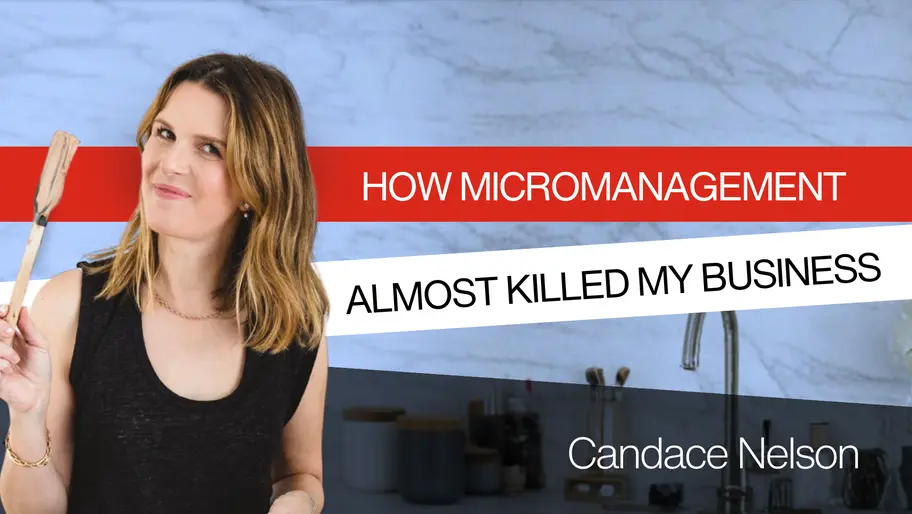
How micromanagement almost killed my business
Any opinions, views, findings, conclusions, or recommendations expressed in this publication are those of the author(s) and do not necessarily reflect the views and policies of Hiscox.
For the first year of Sprinkles, I refused to let anyone else near the kitchen. I showed up before dawn, measured every ingredient, and mixed every batch from scratch — convinced that the moment I handed any of that off, something essential about what we’d built would be lost. My recipes were my competitive advantage, the result of years of obsessive experimentation, and the idea of trusting someone else with them felt scary.
So I kept doing everything myself. And for a while, I convinced myself it was working. What I wasn’t willing to admit was that I was becoming the bottleneck. The business could only grow as fast as one very tired person could bake.
Here’s what finally letting go taught me
1. Micromanagement is a growth ceiling
Eventually I hit a wall — not a metaphorical one. I was physically breaking down. I couldn’t scale the business, I couldn’t take a single day off, and I was so exhausted I was starting to make mistakes. The very quality I was so desperate to protect was beginning to suffer because I was spread too thin. You can’t scale something you’re holding onto with both hands. Every hour you spend doing something someone else could do is an hour you’re not spending on the things only you can do. Delegation isn’t giving something up — it’s making room for everything else.
2. Hire people you can trust, then actually trust them
So I hired a head baker. His name was Jason. I took my time finding him and checked his references thoroughly — more than once. When the day finally came to hand over my recipes, I stood there holding those pages thinking: what if he leaves? What if someone pays him to leak them? What if nothing tastes the same without my hands on it? I handed them over anyway. Jason turned out to be exactly the kind of person you hope to find — deeply skilled, meticulous, and fiercely loyal. He stayed for years, committed enough to turn away people who approached him outside of work trying to buy our recipes off him. (Yes, that actually happened — someone waited for him in the parking lot after his shift. He said no.) Do the work upfront: check references, set clear expectations. But once you’ve hired well, get out of the way and let your team do their job.
3. Your fear is about control, not quality
Letting go didn’t just save my sanity — it saved the business. I finally had the headspace to think like a founder instead of a line cook. I could plan, sell, and grow. Sprinkles went from one location in Beverly Hills to Newport Beach, then Dallas, and beyond. And the cupcakes didn’t suffer — if anything, they got better, because Jason cared about them as much as I did. I told myself I was protecting the product, but really I was protecting myself from the discomfort of not being in control. Those are different things, and it’s worth being honest with yourself about which one is actually driving the behavior. One is about the business — the other is about you.
If you’re at the stage where you’re doing everything yourself, I understand the impulse completely. But ask yourself honestly: are you protecting the business, or are you just afraid to let go? The business I wanted to build couldn’t exist until I got out of my own way.
Related Articles

Do you need a business license?
Starting a business is a busy and exciting time. But you may be wondering if you need a business license, and if so, what kind of business license. Here are some of the licenses a new business might need.
Read More
6 steps to becoming a successful CrossFit gym owner
If you have a love of fitness or are interested in CrossFit, discover what's needed and required to open your own CrossFit gym - including affiliation requirements and fees.
Read More
The Starting a Business in California Checklist
Starting a business in California can be exciting. To hit the ground running, it is important for you to complete certain steps so that your business is set up legally and protected from the day you open your doors. If you are planning to move to the Golden State to open your small business, here is a checklist to help you make sure that you have taken care of everything.
Read MoreWe provide tailored insurance for the specific risks you face, so you can take the right risks to grow your business.
Subscribe to the Hiscox Entrepreneurial Digest on LinkedIn


Get valuable business resources, timely tips and inspiring success stories in your LinkedIn feed every month.