Interior Design: Stephanie Jackson's Founder Journey



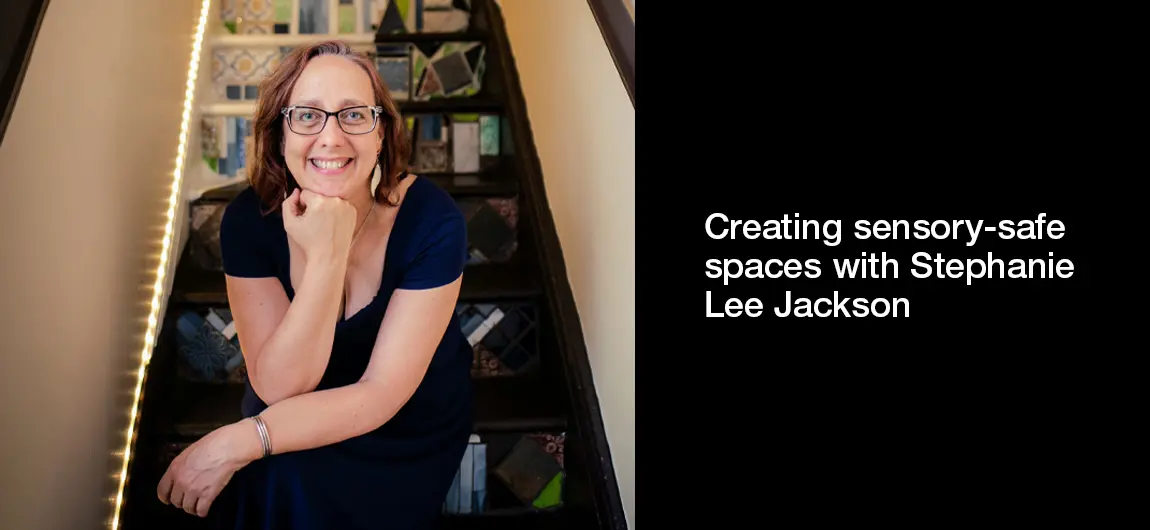
In this episode of Side Hustle to Small Business, Sanjay speaks with Stephanie Lee Jackson, founder of Practical Sanctuary, about how sensory-aware interior design can transform daily life, especially for neurodivergent individuals. Stephanie shares her journey through multiple career shifts and why creating calm, supportive spaces is essential for mental health, productivity, and well-being.
View transcript
Interior Design - Stephanie Lee Jackson, Practical Sanctuary
[00:00:00] Sanjay Parekh: Welcome to The Side Hustle to Small Business Podcast, powered by Hiscox. I'm your host, Sanjay Parekh. Throughout my career, I've had side hustles, some of which have turned into real businesses, but first and foremost, I'm a serial technology entrepreneur. In the creator space, we hear plenty of advice on how to hustle harder and why you can sleep when you're dead.
[00:00:22] On this show, we ask new questions in hopes of getting new answers. Questions like, how can small businesses work smarter? How do you achieve balance between work and family? How can we redefine success in our businesses so that we don't burn out after year three? Every week I sit down with business founders at various stages of their side hustle to small business journey. These entrepreneurs are pushing the envelope while keeping their values, keep listening for conversation context and camaraderie.
[00:00:56] Today's guest is Stephanie Lee Jackson, the founder of Practical Sanctuary, an interior design company that addresses your family's sensory needs, health needs, functional needs, and relationship boundaries. Stephanie, welcome to the show.
[00:01:11] Stephanie Lee Jackson: Thank you so much, Sanjay.
[00:01:13] Sanjay Parekh: I'm excited to have you on because man, what you're doing is kind of the same as a lot of people, but there's a little bit of a twist on it, so that's gonna be interesting to talk about. But before we start diving into that, give us a little bit about your background and what got you to where you are today.
[00:01:29] Stephanie Lee Jackson: I was a fine artist. I have two art degrees. I have lived in poverty. I've gotten my furniture outta dumpsters. I've started a couple of galleries and. I am also a massage therapist, and that is how I made my money for 20, 25 years.
[00:01:48] And my business started when my art career and my massage therapy practice collided. My massage clients trusted me and they loved how I had my space set up. And one of my clients said, Stephanie, I just love that painting and I love your studio. Would you do installation on my stairs? And I said. No, I've quit art. I'm not doing that anymore. And she said, I'll pay you. And I said, yes. That is what I do.
[00:02:18] Sanjay Parekh: The, the magic words there. So installation on the stairs, is it, what was it? The stair tread stairs?
[00:02:24] Stephanie Lee Jackson: Yeah, the risers.
[00:02:26] Sanjay Parekh: Okay.
[00:02:26] Stephanie Lee Jackson: Yes. She had a vision. She wanted her to feel like her staircase risers were underwater, and she had the colors picked out.
[00:02:36] And she told me her vision and I said, I can make that happen. And it was so much fun. It was a collaborative experience with the two of us. We drank wine, we played music, we talked, she watched the evolution of her staircase risers, and I realized this is what I was born to do. It's not just about the visuals, it's about the person and the space and the vision and putting that all together.
[00:03:06] Sanjay Parekh: Yeah. Okay. So let, let's step back a little bit. What was your first entrepreneurial adventure? It sounded like maybe it was the art gallery, but was there something before that when you were a kid or anything else like that?
[00:03:16] Stephanie Lee Jackson: I never considered myself an entrepreneur. I considered myself an artist, and I had to learn the hard way that in order to succeed as an artist, you are an entrepreneur and most artists do not want to accept that, which is why we're all starving.
[00:03:34] Sanjay Parekh: Yeah. You, you got to hustle on the business side of it as well. Right.
[00:03:37] Stephanie Lee Jackson: So you do. And we don't want to, we really don't. We, we, we picked this because we just want to do what we want to do.
[00:03:47] Sanjay Parekh: Yeah.
[00:03:47] Stephanie Lee Jackson: And art school should have a mandatory business component as far as I'm concerned, which mine could not. Yeah.
[00:03:55] Sanjay Parekh: Yeah.
[00:03:55] When did that click for you that you were an entrepreneur?
[00:04:00] Stephanie Lee Jackson: Way too late. Way too late after I had abandoned the art world.
[00:04:06] Sanjay Parekh: Okay.
[00:04:06] Stephanie Lee Jackson: I was backed into a corner. It was the 2008 recession. I had had my daughter, I was living in New York. The last thing I did before having my daughter was write a check on my credit card to pay my rent.
[00:04:20] Sanjay Parekh: Wow.
[00:04:21] Stephanie Lee Jackson: And it never got better. And when my daughter was nine months old, I ended up moving in with my mother-in-law in South Philadelphia because there was no other financial option that was rock bottom.
[00:04:34] Sanjay Parekh: Yeah.
[00:04:34] Stephanie Lee Jackson: And at that point I had to accept that the art world was not going to take care of me. And I'm like, okay, I'm walking away. And massage was how I was making my living. I had just been, you know, just winging it. I decided I needed to learn some business skills. And I did it on my own with coaches, social media email chains, friends as accountability partners. And when that client asked me to do her staircase risers, it clicked, oh, I love to do this, and now I have some marketing skills so I could market this.
[00:05:17] Sanjay Parekh: Right, right. So, okay. So the massage business, when did that come along? How did you get that started?
[00:05:28] Stephanie Lee Jackson: Well, I went to massage school because I was just drawn to it. You know, I was working in a library, I was a librarian and it was paying the bills. It was a good job that was allowing me to support myself and paint, and I. Became interested in holistic healing. I was just drawn to it. And that's a really portable career. You have a massage table, you can go anywhere. People always want a massage.
[00:05:55] Sanjay Parekh: Yeah.
[00:05:56] Stephanie Lee Jackson: And it, you know, if you, if you employ yourself, you can charge a good enough hourly rate that you can work 15, 20 hours a week and your bills are covered.
[00:06:08] Sanjay Parekh: Yeah.
[00:06:09] Stephanie Lee Jackson: So that was just super useful. When I moved to New York, it, it was in the recession, the crisis recession. After nine 11, there were no jobs anywhere. I, I picked the worst time to move to New York and I ended up starting a massage practice and a gallery in an abandoned storefront in Williamsburg that happened to be owned by someone I was dating at the time. That was my first official entrepreneurial endeavor.
[00:06:42] Sanjay Parekh: Yeah,
[00:06:43] Stephanie Lee Jackson: I learned a lot. One of the things I learned never rent from your boyfriend, so that did not last. But I, I had built a clientele and I ended up working outta my apartment as half of the entrepreneurs in New York do. So I built those entrepreneurial skills slowly over time.
[00:07:09] Sanjay Parekh: Yeah. So, okay. Well let's kind of zoom in a little bit. So you've got the massage therapy practice that you've been doing for a while now. This serendipity thing happened around you know, painting these sterilizers. Mm-hmm. So how have you moved that into this new business practical sanctuary
[00:07:30] Stephanie Lee Jackson: As I was, you know, developing the business and the business idea. I came to understand that I have another superpower. I love quirky people. I have been befriending the weird person in the corner since preschool, and over time as I learned more, I'm also a neuroscience nerd.
[00:07:56] I'm constantly reading about psychology and about the brain listening to podcasts. I came to understand that I understand neurodivergent people. That is people on the autism spectrum, spectrum, people with a DHD, people with OCD. I mean half the artists I know have some combination of those characteristics and that I know what to do to make the environment comfortable for those people.
[00:08:30] I am not neurodivergent, but I am highly sensitive, which means that I'm really empathic and I'm really attuned to details. So things that seemed really obvious to me just weren't registering, and it would be, it was so frustrating. I'm like, look, I walk in, I'm like, turn these lights out. What's that humming sound? Why is it so reverberation in here? We can't be comfortable. We can't communicate. I realized that that's a thing that I can make that a thing and there's a real need.
[00:09:07] Sanjay Parekh: Yeah, I, I got to tell you you, you mentioned that like, humming in the, but that irritates me to no end. Oh. Like e even my computer that I've got here, like I've done things to make sure that it's as quiet as possible. Yes. Because that extra noise is just. Irritating. It sucks your energy. I I, yeah. You want to just focus on what you want to focus on and not like all of this extra noise and everything, so.
[00:09:31] Stephanie Lee Jackson: Exactly.
[00:09:32] Sanjay Parekh: Okay, so, so this is interesting. So is this, like what you've discovered, is this thing that you are passionate about and, and potentially really good at, is this a thing that other people are doing? Or is this a, a new thing that you've discovered?
[00:09:48] Stephanie Lee Jackson: This is a new thing that I am hard, I think of a. Of a social awareness wave. I don't know if I was the first person to name it, but when I started doing this, people just started sending me more and more things, books about neurodivergence movements. It is starting to be a movement.
[00:10:14] I think it's incredibly important on a healthcare level, on an education level. I think we're reaching a threshold where we cannot afford to ignore this, and I'm doing my best to position my business as the go-to for this.
[00:10:37] Sanjay Parekh: Yeah.
[00:10:38] Stephanie Lee Jackson: I am undercapitalized as in self capitalized, so it's a challenge.
[00:10:44] Sanjay Parekh: Yeah. Yeah. So, okay. So you've, you've started this business, you had the kind of aha moment with the one with the risers. Mm-hmm. How have you found other clients and how have you communicated this? Because I don't know if people are necessarily looking for this because they don't know it exists. Right? They don't know it.
[00:11:02] They probably need it, but they don't know to look for it because they don't know it exists.
[00:11:06] Stephanie Lee Jackson: You are definitely a business person. You understand my problem. Naming it in a way that the client who needs me understands that they need me is a real challenge.
[00:11:20] Sanjay Parekh: Yeah.
[00:11:21] Stephanie Lee Jackson: I published a book last fall. It's called The Eccentric Genius Habitat Intervention. It is a manifesto about the need for this, and it is a guide for starting to understand your own nervous system and starting to adapt your environment. That's one way I communicate. My clients come to me through referrals and through experience with me. Since I'm an introvert, that is a slow way of getting clients, so I am working on talking to people like you.
[00:12:01] Sanjay Parekh: Yeah.
[00:12:01] Stephanie Lee Jackson: Doing speaking engagements. I spoke at Autodesk last fall, which helped me start to connect with larger industries, which I think is crucial for this. So I am still in the, like, basically startup phase in terms of getting the message out there.
[00:12:21] Sanjay Parekh: Yeah. So you actually mentioned something that I find very interesting because I think it's a... it, it's kind of the antithesis of what an entrepreneur needs because of what they have to do is, you mentioned you're an introvert, right? And, and of course there's a lot of entrepreneurs that are introverts. Mm-hmm. There's many that are extroverts. Mm-hmm. There's many that are kind of in, in the between.
[00:12:41] But as entrepreneurs, as founders of companies, we've got to be. At least fake, ex extroverted. Mm-hmm. Because you've got to engage with people Yes. And get them excited about what you're doing. So how do you manage that for yourself? By, by knowing that you're an introvert but having to, from a business perspective, be an extrovert.
[00:13:01] Stephanie Lee Jackson: Naming, it was the first step. And as an in highly sensitive introvert, I have a deep understanding of what my strengths are. I have to market in different ways, but I couldn't have done this if I had been any other way. And I know that there are people out there like me that will resonate with that. So it's a challenge to figure out and also to partner with people partnering with extroverts.
[00:13:37] So important. I have hired outreach, you know, someone to just go and like do the research, make the first contact. I am great if I have a warm introduction. I can like hop on a podcast with you. I love that. I love one-on-one. I love deeper conversations. It's the megaphone like person, after person, after person that I can't do. So if I understand myself well enough, I can pick people to work with that will compliment that.
[00:14:12] Sanjay Parekh: Yeah. Yeah, that makes sense. Okay, so how long is it that you've been doing kind of this, this new thing and you're still running the massage business as well?
[00:14:19] Stephanie Lee Jackson: I'm, yes. Yeah.
[00:14:21] Sanjay Parekh: So how long has the new thing been up and running?
[00:14:23] Stephanie Lee Jackson: I incorporated in January of 2020.
[00:14:27] Sanjay Parekh: Okay.
[00:14:27] Stephanie Lee Jackson: This was an interesting time to do that because of course we were shut down and as it happened. An acquaintance reached out on social media and said, I want to work with you. And I said, well, but I'm in Philadelphia. You're in Dallas. And she's like, oh, we'll make it work. And we did. And I was able to develop a way to work virtually with people.
[00:14:50] Sanjay Parekh: Okay.
[00:14:50] Stephanie Lee Jackson: So I can work with people anywhere in the world. And I have, I have worked with people in Australia, in the uk and I even had a young girl call me from Pakistan. I gave her a sensory design consultation on her one room in her father's house in Pakistan.
[00:15:14] Adam Walker: Support for this podcast comes from Hiscox committed to helping small businesses protect their dreams since 1901. Quotes and information on customized insurance for specific risks are available at Hiscox.com. Hiscox, business insurance experts.
[00:15:35] Sanjay Parekh: Okay, so let, let's talk about running kind of these multiple businesses. So you've got. The massage, you've got the interior design, like how are you managing your time between these two things? And then also you've got, you know, family life and personal life. Yes. And like all of those other things that make us human right. Like all those requirements and all those those you know, things that we have to do. How do you balance your time across all of these things?
[00:16:05] Stephanie Lee Jackson: Structure, systems, and self-care. The job is actually helpful in that it forces me to organize my time, which is better for me than just like having to get up every morning and just figure out what I've got to do today.
[00:16:28] You know when I know, okay, the newsletter goes out on Tuesday and I'm teaching all day Monday. I need to spend Friday getting that newsletter. Done. It's just a jigsaw puzzle and fortunately, I'm the expert in how to prioritize your time and your space. That's literally what I'm selling people. So I'm using my own life as material for communicating and marketing and helping people understand like that this works.
[00:17:03] Sanjay Parekh: Yeah. Yeah. Do does like, do you do anything specifically, you mentioned systems, but do you do anything in terms of like boundaries? Like do you make sure like, Hey, at this time everything is done and weekends are sacred, like is there anything else like that that you
[00:17:19] Stephanie Lee Jackson: do? Boundaries are essential, and that's one of the things I work with in my business specifically, is creating those physical boundaries that mirror the psychological boundaries that we need.
[00:17:31] Things like, although I. Have a massage therapy practice. I do not answer my phone. If a client is a client that I want, they will leave a message that saves an awful lot of misery because if I have to screen a massage therapy client who called me and said, how much you charge, like, that's gonna raise my stress level, and I don't want that client because that client wants something that I do not provide. If you get my drift.
[00:17:59] Sanjay Parekh: Right. Yeah.
[00:18:00] Stephanie Lee Jackson: So that trained me in boundaries. And when I am doing a thing, I am doing that thing. If a client texts me, I can like handle that. But extraneous things need to have their place and there's always a basket for that. You know, the phone goes on, do not disturb at nine 30, it wakes up at 6:45. I don't take calls at that point. Yeah, really just boundaries are everything.
[00:18:30] Sanjay Parekh: Yeah. Let's drill into one thing you said. You, you mentioned you wrote a book last year. What was the motivation for writing the book and what has been the result? Because I think a lot of entrepreneurs think about this to write a book to support their business or, or kind of fit in with their business. How have you found that experience? Has it been helpful? Has it not been helpful? Was there anything surprising that you discovered along the way?
[00:18:54] Stephanie Lee Jackson: I wrote the book to play to my strengths. As an artist and a creative person. I have had multiple blogs that got traction when things weren't getting traction any other way.
[00:19:07] People told me for years, you're such a good writer. And I'm like, yes. And that does not earn money does it now. So I was doing it anyway. And because I'm integrating very different fields, I'm integrating art neuroscience. Healing entrepreneurship, architecture. I needed a vessel to convey that, to communicate that, something that was useful, something that is engaging.
[00:19:41] It's funny, it's interesting, something that's clear and something that's affordable. You know, an intake consultation with me cost around two grand. That's a lot for a tire kicker. If someone can pick up my book for $15, that's gonna help get them over the hump. It's gonna, it's basically a lead magnet.
[00:20:03] Sanjay Parekh: Yeah. Yeah. Interesting. I, I'm thinking about kind of this, this journey that you've had now. Artists, gallery owner massage therapist now, interior designer. Is there like a common thread for you amongst all of these things or. Is there a lesson in each one that has built upon the next, that you really feel like that's why you're at this place now?
[00:20:32] Stephanie Lee Jackson: Every step in this journey has been determined by a really strong inner drive and resonance with something that I found outside of me. I'm incredibly purpose driven. I'm allergic to being a cog and a corporate machine. Always have been. I feel like a lot of entrepreneurs have that.
[00:21:00] Sanjay Parekh: Yeah.
[00:21:00] Stephanie Lee Jackson: I think so. In them and planning how things were gonna go, never worked. It's like I'm on Plan Q at this point in my life, being open to what's around me and what. Is needed from what my strengths are and what is needed from me has informed every step of this path. And it's been like a spiral.
[00:21:26] Sanjay Parekh: Yeah.
[00:21:27] Stephanie Lee Jackson: You know, I started with the art. I was drawn to the healing. I was drawn to travel.
[00:21:31] I responded to crises, you know, recessions nine 11, you know, childbirth, economic collapse required a certain skillset that I had been developing by. Going toward what I was drawn to, not what society and family and culture told me I should be doing.
[00:21:53] Sanjay Parekh: Yeah.
[00:21:53] Stephanie Lee Jackson: I trust that. And when my clients get results, it's because I communicate that trust, that they can trust themselves. I, I trust their agency and I help them uncover their agency, and that's what they're really buying from me.
[00:22:10] Sanjay Parekh: Yeah. Yeah. Okay. I, I've got a, you, we just talked about a book being a lead magnet. Let's see if we can give a, a little free advice to some of the listeners out there. Is there something that, that stands out to you that people could think about doing something that's quick, fast, inexpensive, possibly in their work area that would change the way that they feel about working there or, you know, make them more productive or, or, you know, something like that.
[00:22:42] Stephanie Lee Jackson: There are some exercises in my book. One of them is walk outside, take three deep breaths, walk back in, take another breath. What do you notice? You're gonna notice how things smell. You're gonna notice where the clutter is. If you can just take five or 10 minutes to stop sense. In your body, what's happening in your space, and then deal with something trivial but annoying. Untangle your cords. Stack your mail in a nice pile. Take out the trash. That is literally going to free up bandwidth in your brain that's gonna enable you to focus and tap into more of your creativity.
[00:23:37] Sanjay Parekh: Yeah. Yeah.
[00:23:38] Stephanie Lee Jackson: All of those small things are draining bandwidth in a way that you don't realize until you start to clear it away and then suddenly you have more energy. Literally.
[00:23:50] Sanjay Parekh: Yeah. Have you seen that That's been the biggest, like when you go into a client and you're helping them, is that like. The first thing that you do, is that the biggest impact that it makes or is it something else? Like, is there something that stands out like, like, oh, I was with this one client and we did this and it was just huge and everything else was kind of minor, but this was so quick, but it was amazing.
[00:24:16] Stephanie Lee Jackson: Every client has a thing and it's a thing. Again, that's generally obvious to me that the client has just, their brain has edited it out. Right. They notice when I change it and they're like, oh my God, I can't believe, you know, I walked into a client, that high powered executive, I didn't think I had anything to teach this person. Her Zoom background was just like, oh my God, what great taste, you know, looks perfect. I walk into her place and her, her office is her Zoom background and it's like. Like on top of her, and there's all of this wasted space. I'm just like OMG, you know? We have to move the layout right now. I was there for two hours and she called me sobbing five hours later. She's like, I can't even express what you've done for me.
[00:25:14] Sanjay Parekh: Yeah.
[00:25:14] Stephanie Lee Jackson: There was a reason she had set up her space like that, and the reason had a lot to do with trauma. She was just operating from her stress. Creating a place that just felt like, okay, we, we will get this done. But as an external person, I'm like, this environment is destroying you.
[00:25:35] Yeah. It's gonna be really easy to make some changes that de deescalate that stress response.
[00:25:42] Sanjay Parekh: Yeah. Has there been anything that has surprised you in doing this business? I mean that's, that's probably a surprising thing to have that happen because you obviously saw it even though the, the client did it. But has there been anything else that has surprised you in being the founder of a business like this? A mission-driven business.
[00:26:02] Stephanie Lee Jackson: Surprise is an interesting word. I'm surprised by the number of things that seem obvious to me that people aren't addressing. It's, it's an endless source of. Of shock, just how many people are continuing to function, who, I don't know how they're functioning with the number of obstacles in their, their psyche, their habitat, their culture. Too many people are pushing through brick walls when a little bit of tweaking would make it so much easier.
[00:26:47] Sanjay Parekh: Yeah. Yeah. Do you think that's just like the natural human, like it is just momentum? Like you, you just,
[00:26:57] Stephanie Lee Jackson: I think we're conditioned. I think we're conditioned to, particularly in Western society, we're conditioned to tune out the signals from our own bodies and be individualistic and be productive.
[00:27:12] That's, that's capitalism, that's corporate culture. Just tamp it down and push through. And what I see is that we will be wildly more productive if we can tune in rather than suppressing.
[00:27:30] Sanjay Parekh: Yeah. Yeah. Interesting. Okay Stephanie, I've got a couple last questions for you. Thinking back now over your, your kind of entire career and history, is there something that jumps out at you now that you know what, you know, that you would go back in time and do differently? Obviously, knowing that the outcomes would be different if you did that, but Right. But, but now learning and knowing what you know, like you're much smarter now than you were, you know, 10 years ago, 20 years ago, whatever, however many years ago. Is there something that jumps at you like, oh yeah, now you already mentioned one. Do, don't rent your, your venue. From your boyfriend.
[00:28:09] Stephanie Lee Jackson: From your boyfriend.
[00:28:10] Sanjay Parekh: That's, yeah. Don't do, that's..
[00:28:11] Stephanie Lee Jackson: You have to learn the hard way. Yeah.
[00:28:14] Sanjay Parekh: Is there anything else that jumps out at you?
[00:28:16] Stephanie Lee Jackson: I would've quit sooner. I would've quit a lot of things sooner.
[00:28:20] I would have quit the art world sooner. I would've moved from New York to Philadelphia sooner. Hmm. I would have let go of ego-driven projects and. Tuned more into connection.
[00:28:39] Sanjay Parekh: Yeah. What, what do you think quitting things earlier would've done for you?
[00:28:47] Stephanie Lee Jackson: See, the tricky thing is, is that you never don't learn a lesson until you learn it.
[00:28:52] Sanjay Parekh: Right? Of course.
[00:28:54] Stephanie Lee Jackson: You know, so I would, there's, there's advice I would go back and give my former self, but that's. You're not gonna learn a lesson until you're ready to hear it. Like..
[00:29:07] Sanjay Parekh: Yeah.
[00:29:08] Stephanie Lee Jackson: People would've told me the thing I needed to do at the point, and I would've had a good reason not to do that. So I really just don't judge yourself really, like looking back and saying, I should have done that. It's like, well, you know, shoulda, woulda, coulda.
[00:29:27] Sanjay Parekh: Stephanie, this has been fantastic. Where can our listeners find and connect with you online?
[00:29:33] Stephanie Lee Jackson: You can find me at practicalsanctuary.com that has a link to buy my book. It has a link for a consultation. You can find me on social media, LinkedIn, Instagram, Facebook. All of it's on that website, practicalsanctuary.com.
[00:29:50] Sanjay Parekh: I love it. Thanks so much for being on today.
[00:29:52] Stephanie Lee Jackson: Thank you so much. It's been really fun.
[00:29:58] Sanjay Parekh: Thanks for listening to this week's episode of the Side Hustle to Small Business podcast, powered by Hiscox. To learn more about how Hiscox can help protect your small business through intelligent insurance solutions, visit Hiscox.com. And to hear more Side Hustle to Small Business stories, or share your own story, please visit Hiscox.com/side-hustle-to-small-business. I'm your host, Sanjay Parekh. You can find out more about me at my website, SanjayParekh.com.
Subscribe to our podcast



Did you start your business while working full-time at another job?
Tell us about it! We may feature your story in a future podcast.