Yoga Business: Rachel Lundberg's Journey to Thrive



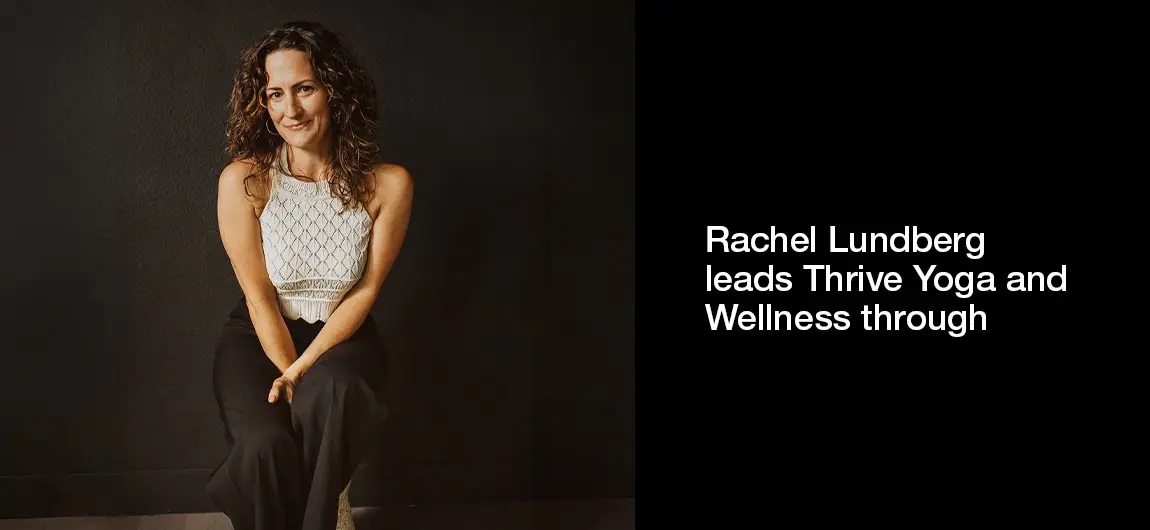
Rachel Lundberg is the founder of Thrive Yoga and Wellness in Oregon City, Oregon, a wellness center that aims to reconnect and nourish your body and mind. Rachel and Sanjay discuss her early journey into yoga, her approach to building a supportive and inclusive studio environment, and why community connection is essential for long-term success in the wellness industry.
View transcript
Yoga Business – Rachel Lundberg, Thrive Yoga and Wellness
[00:00:00] Sanjay Parekh: Welcome to The Side Hustle, the Small Business Podcast, powered by Hiscox. I'm your host, Sanjay Parekh. Throughout my career, I've had side hustles, some of which have turned into real businesses, but first and foremost, I'm a serial technology entrepreneur. In the creator space, we hear plenty of advice on how to hustle harder and why you can sleep when you're dead.
[00:00:21] On this show, we ask new questions in hopes of getting new answers. Questions like, how can small businesses work smarter? How do you achieve balance between work and family? How can we redefine success in our businesses so that we don't burn out after year three? Every week I sit down with business founders at various stages of their side hustle to small business journey.
[00:00:43] These entrepreneurs are pushing the envelope while keeping their values. Keep listening for conversation, context, and camaraderie.
[00:00:56] Today's guest is Rachel Lundberg, the founder of Thrive Yoga and Wellness Center, based in Portland, Oregon. Rachel, welcome to the show.
[00:01:04] Rachel Lundberg: Thank you. Happy to be here.
[00:01:07] Sanjay Parekh: Yeah, thanks. I'm excited to have you on because man, health and wellness, super important all the time when you're a business owner.
[00:01:15] Or honestly, if you're anybody and so it's an important topic. We'll touch on that I think in a little bit. But first, before we get there, give us a little bit about your background and what got you to where you are today.
[00:01:27] Rachel Lundberg: Well being in the wellness world started for me about 20 years ago, a little more than 20 years ago when I decided to become a yoga teacher.
[00:01:36] So I went through a yoga teacher training. I had three little kids, ages four down to five months. And went through, got my certificate, and then started teaching. Locally and just built that business up over the years of raising my children. And in 2015 I started a yoga teacher training program, which I ran out of different studios for several years.
[00:02:03] And in 2022 I actually purchased Thrive Yoga and Wellness and merged all of my businesses into one roof. And that's what I've been doing ever since then.
[00:02:15] Sanjay Parekh: Okay, so I have lots of questions, but let's start with this. So is this the first time you've done anything entrepreneurial or was there entrepreneurial stuff when you were a kid or entrepreneurs in the family? Anything else like that?
[00:02:27] Rachel Lundberg: So I think I'm a natural entrepreneur. I definitely have a knack for business. Love it. I love solving problems. I love I love the day-to-day business stuff. So I actually, as a young mom needing to create income for the family, I created several different side hustles, if you will, and signed up.
[00:02:48] For different kinds of side hustles, but the one that maintained consistency throughout all that time was teaching yoga. Which is interesting. But I wouldn't have expected that would be the one that I would continue. I mean, that would become my career as it has. But yeah, I, and I was married for over 20 years to a serial entrepreneur, so definitely lots of learning was had in that experience as well.
[00:03:14] So I've been able to be. On both sides of the fence, both as the one that's supporting the entrepreneur and being an entrepreneur myself.
[00:03:23] Sanjay Parekh: Yeah. So it's interesting. So you bought a business and then you were able to like essentially coalesce all the other stuff into one place. So why was that important for you to have your own space to be able to run all of these things, you know, kind of simultaneously?
[00:03:40] Rachel Lundberg: I actually didn't realize how important it was to me when I made the decision. Interesting. It's become evidence over time how important it has. Been to have a brick and mortar. So I wasn't interested in a brick and mortar business. To be honest I like my freedom. I want to travel, I want to be able to run my business from anywhere.
[00:03:59] So I was really in from probably about 20 17, 20 18, building an online presence for my. Teacher trainings and my my yoga offerings and had created an online university and thought that, or an online yoga studio, which is now a university. But, and I thought that I would can just continue that. But a good friend of mine owned this space and had built a really beautiful community and really wonderful environment that I could feel when I walked into this space.
[00:04:32] And she decided to retire. And this was just shortly when the pandemic was ending shortly after that time. And I, it was just an internal yes for me that this was the next best step and I wasn't quite sure why. So it was definitely an intuitive, and also with business numbers and things like that, all of that had to make sense for me as well. But it was a, it was an internal yes.
[00:04:54] Sanjay Parekh: Yeah, so that's interesting. You were so against it and it's just the opportunity. Opportunity just fell into your lap. How did you think about that in terms of like, okay, you know, this makes sense business wise because of these reasons. Was there anything like that or was it just like, I'm going to figure it out?
[00:05:12] Rachel Lundberg: Yes. Well, both of those things, the intuitive part of me that was like, this is a yes, knew that I would figure it out, and the business part of me looked at all of the numbers and said, this is. Honestly, the, it was problematic. Like there were lots of problems happening that wise people advised me to not get involved in the sense of the liabilities and the different things.
[00:05:38] You know, the financial liabilities, the risks that were there, that were inherent in doing this. But I knew that I could figure it out and I came up with some pretty crafty plans and ways to to make it successful. And then I have.
[00:05:53] Sanjay Parekh: Was there anything that made you nervous about doing that? I mean, you had a bunch of smart people telling you not to, and you're like, ah, I'm going to do it anyways.
[00:06:00] Rachel Lundberg: Everything about it made me nervous for sure.
[00:06:03] Sanjay Parekh: Yeah.
[00:06:03] Rachel Lundberg: But I, but it was an inner knowing.
[00:06:06] Sanjay Parekh: Yeah. How did you get over that then, for yourself? You know, other than the inner knowing?
[00:06:11] Rachel Lundberg: I presented them with my plan, and they were like, well, you're right. I mean, that's actually solid.
[00:06:16] Sanjay Parekh: Yeah. Was there like any kinda linchpin on that plan? Like, what was it that. You realized that maybe some of these other folks didn't?
[00:06:26] Rachel Lundberg: Well, so the way that it was set up with the previous owner is that she had the lease on the building wrapped underneath the actual wellness center business.
[00:06:37] Sanjay Parekh: Okay.
[00:06:38] Rachel Lundberg: So they weren't running independent of each other. So if something happened with the building and the lease, then it would directly affect. The it would take down the entire business, basically, ah, the way that the LLCs were set up and everything like that, the way and the paper, the way the papers were signed, so they weren't independent of each other.
[00:06:58] And I really wanted to protect the fact that I was merging my online business with this brick and mortar business, with the understanding that the building itself. The lease and the arrangements there and the pe people that were renting in that space were going to fall underneath my stewardship, but I didn't have to tie them into my yoga business.
[00:07:21] Sanjay Parekh: Got it. Okay. So, so kind of protecting from a legal liability standpoint, one from all the rest.
[00:07:28] Rachel Lundberg: Yeah. So that if something were to happen for any reason to the building, that the other business could still maintain its independence.
[00:07:34] Sanjay Parekh: Yeah, so that's a smart move. Was there, like, did you have a lawyer? Did you have somebody else like that? Or was this just something you've learned over time? How did you figure out this?
[00:07:42] Rachel Lundberg: That just came out of my, that solution just is something that I just. I just came up with and then had it confirmed. It seems like when I look at it, it seems like a fairly logicals solution.
[00:07:55] Sanjay Parekh: Right?
[00:07:56] Rachel Lundberg: But it wasn't one that I was advised, like I didn't receive the advice to do it that way.
[00:08:01] That's something that I came up with. And then said, well, why wouldn't I just do it like this?
[00:08:05] Sanjay Parekh: Yeah. Sometimes, you know, it's better to be lucky than to be good. Right. So yeah, it is what it is. Sometimes those answers just come to you, so that's fantastic. Let's talk about like your journey into yoga.
[00:08:18] Like, what was it, so you started this for your yourself I imagine you know, getting into yoga. At what point did you kind of transition and realize like, Hey, I want to do this as a business. What, was there something that tipped you over.
[00:08:32] Rachel Lundberg: Well, teaching yoga is I will call that a hobby job. So somebody who decides to become a yoga teacher. I like to let them know, you know, just understand that in order to make this a career it's really. There's not a lot of people that can make a career out of it. So it is like a hobby job. And that worked for me as a young mom and you know, being like a secondary provider in our family and not the primary provider.
[00:08:58] But when started to shift is when I decided to do a teacher training program. Those are high dollar programs. Those are high dollar investments for people. And so that's when I formed my LLC was in 2015. I decided that I would run a training program and then my revenues. Expanded a lot. You know, so that's really when I put my business in place and decided to to start there. And everything that's built has been built upon that.
[00:09:28] Sanjay Parekh: Yeah. So looking back at that was there something that, you know, like now looking back, do you regret not doing that earlier or was that the right time? You know, like, think about that timeline.
[00:09:42] Rachel Lundberg: It was definitely the right time. I had, at that point, I had about 10 years of experience under my belt as a teacher.
[00:09:48] So I felt like I was in a space of moving to more, toward an expert in my field. And I noticed the need. So the need for training specifically in the style that I was trained in and that I was teaching in there wasn't anything else out there that was available like it. So I, since I couldn't find anything like it, I created it and and have, and so yeah. So that's really, if that answers your question.
[00:10:22] Adam Walker: Support for this podcast comes from Hiscox committed to helping small businesses protect their dreams since 1901. Quotes and information on customized insurance for specific risks are [email protected]. Hiscox, business insurance experts.
[00:10:43] Sanjay Parekh: Okay, so let's talk about your, kind of, your role then. So, you know, it's shifted over time because you were an instructor. You, well, you're doing it for yourself, then you're an instructor, then you're teaching other instructors, and now you're running a business and you've got other people underneath you.
[00:10:56] Like, how has your role kind of changed and are there things that you like. Wish you still had to under, you know, like that time to do yourself or are there things that you're glad you don't have to do anymore? Talk a little bit about like that experience, that kind of continuum that you've gone through.
[00:11:16] Rachel Lundberg: Well, when I was doing the trainings and just when I was just teaching and doing the trainings, everything was under me. It was my own. I didn't have to oversee a lot of people. I didn't have the financial responsibilities of space. I didn't have the community responsibilities of being a steward of a community at the size that I am now.
[00:11:38] So that is all very new for me too. It was a huge jump from just running my own little. Basically my little side hustle business to this very large operation where you know, I'm overseeing between 10 to 12 tenants at any time, as well as a large community of yoga students in the studio and a large group of teachers, and then a large group of trainees and, you know, all of the things that have to happen in a business and creating policies, procedures all the things that I just never would've thought would need to be a part of my of my life.
[00:12:23] Sanjay Parekh: Yeah. Talk a little bit about, like, so when it was just you, like how many students were you talking about, like when it was just you and then like how has it scaled to what it is now? Like, how many people are we talking about in terms of community?
[00:12:36] Rachel Lundberg: So when it was just me, I would just pop into places and teach. So maybe there would be 20 people in there, but I, they weren't my immediate responsibility. Right. I was, you know, a contracted person that would come in and teach and and when I was training teachers, you know, I would have maybe 12 people in a program at one time for a period of time.
[00:12:54] Sanjay Parekh: Okay.
[00:12:54] Rachel Lundberg: So really, I would say directly under my jurisdiction or under my stewardship would maybe 12 people at a time.
[00:13:01] Sanjay Parekh: Got it.
[00:13:02] Rachel Lundberg: Okay. So that has changed. Like tenfold. So more than that.
[00:13:09] Sanjay Parekh: Yeah, for sure.
[00:13:10] Rachel Lundberg: So yeah.
[00:13:10] Sanjay Parekh: So when you took over the business, when you acquired it, how many people was it at that point and what is it now?
[00:13:16] Rachel Lundberg: Wow, that's a great question. So the business when I took it over was just about ready to sink into the planet. So it was on the brink of death. And the, I would say the group. I mean, there were probably two or three tenants, solid tenants in the building at the time. And maybe 50 students that were coming in and out through the doors. So, okay.
[00:13:42] And we've grown now to we're back up to, I think it's, I can't remember close to, I have to even look to see how many classes a week we're offering now, but to a lot more classes. A lot more student memberships. A lot more tenants in the building. And it keeps growing. Yeah. We where our plan is to double that in 2026.
[00:14:05] Sanjay Parekh: So, yeah. So I'm going to clarify. So tenants, you mean like instructors, people that are actually. Doing the work? Is that who that you mean by tenants?
[00:14:13] Rachel Lundberg: No, so the, that's a great question. So when we're talking about myself and my career in yoga, but the Wellness Center is a hub of wellness practitioners. So the yoga studio is one of the wellness providers inside the building. I'm the landlord, put the landlord hat on. And then they we have acupuncture, massage therapy I'm trying to think of all the different things. Yeah. I can't even think of all of 'em off the top of my head right now.
[00:14:41] Yeah. Because I'm being put on the spot, but like, we have a bunch of different wellness practitioners in our space Yeah. That are all running their own individual businesses.
[00:14:48] Sanjay Parekh: Got it. So overall how many people, like as a community then, are you thinking that size-wise, ballpark? You know I know it's impossible to know because you're not running all those other businesses.
[00:14:59] Rachel Lundberg: Probably a co, probably a couple hundred.
[00:15:01] Sanjay Parekh: Yeah. Yeah. So significantly larger from when you took it over, and now you're trying to double that again in the next year.
[00:15:10] Rachel Lundberg: Right. So, and I would say that's the kind of, the amount of people that are coming in and out through the building, right.
[00:15:15] And that includes my community of the yoga studio as well as the practitioners that are in the building, their clients. So all of these people are coming through and having an experience in this space that I'm curating, that we're all curating together. And and so. Yeah. And then as far as directly under me, people that are working as a part of the yoga studio, there's, you know, between 12 and 15 people.
[00:15:40] Sanjay Parekh: Yeah. Do you feel like I, I imagine this is true, that because you have all of these folks that are focused on different aspects of wellness for a person, that there's a natural synergy that happens and like referrals between different people in the same kind of space.
[00:15:58] Rachel Lundberg: Yes. And that's one of the beauties of what has happened here. And also not just happened, but intentionally. We encourage our practitioners to get in front of our yoga students because we have, you know, between 40 to a hundred people coming through the door. Within the day, the week, whatever it might be, and seeing all the different practitioners in the building.
[00:16:19] So I do find that the practitioners that are willing to get themselves in front of the yoga students are seeing a lot of them coming in for services. So the ecosystem of it, that's the intention.
[00:16:31] Sanjay Parekh: Yeah. So yeah the, you mentioned some of it was intentional. Are there like intentional things that you've done to kind of reinforce that? Other than, you know, obviously getting them in front of students like that are there other things that are just kind of under the radar that things that you're doing to kind reinforce that and creating success for some of these other folks that are in the building?
[00:16:52] Rachel Lundberg: Absolutely. So we have, when they, when anybody signs up to be a part of this center, they agree and understand that they'll be part of three main outfacing events each year.
[00:17:03] So we come together in the spring, we do a spring open house where we invite in the community to meet the teachers and the yoga teachers and, or excuse me, the practitioners in the yoga teachers. And so we're getting the yoga students to meet the practitioners and vice versa. So that's one of the top the tactics that we use. The other is that we go to a community event out here in, and we're in Oregon City, which is just outside of Portland, and we attend their big street fair. And we get a lot of cross business there just by getting all of our practitioners to participate. And then we do a fundraiser on behalf of. A women's, she like a women's services here locally. That's what we've been doing for the last few years, and that's another opportunity. So we try to bring events in that bring the practitioners and the students and the practitioners clients that can come all together because we actually have a vision that this becomes a third. A third place in addition to where we hold and run our businesses, that it's a place where people feel like they can come and be nurtured and feel safe.
[00:18:09] Sanjay Parekh: Yeah. So thinking about it so very interesting kind of outreach and kind of reinforcement mechanisms that you've got there. So you've been running this business now for a good number of years. Have there been things that you've tried in the past that didn't quite succeed the way you thought they were going to going to for the business?
[00:18:29] Rachel Lundberg: So many things.
[00:18:30] Sanjay Parekh: Yeah. What's top of mind? Because I think you learn a lot more from the failures than you do the successes.
[00:18:36] Rachel Lundberg: I think for me personally you know, not, I think one, what's been one of the hardest lessons to learn is navigating that space of being a compassionate leader and needing to have policies, procedures, and standards in place. Yeah. So one of the big challenges that I came up against was in the beginning was that when I stepped into this role, the people that were renting space here, none of them had agreements. None of them had signed agreements with the previous owner. And so just and then, you know, learning that.
[00:19:10] It's wonderful to take someone by their, at their word, you know, that they, with their intentions. But what's even more important, especially in a business setting, is that you have something in writing. So I think that's been the, one of the biggest growth edges for me, has been to make sure that those standards and procedures are in place ahead of time so that there's less of having to try to like convince someone to. Sign a document, you know? Right. Or sign an agreement of some sort. Whereas before when it was just me running my own thing, that was just never something that had to come up for me, obviously.
[00:19:43] Sanjay Parekh: Yeah. Yeah. Well, what about failures though? Things that you've tried in the past that, that haven't succeeded that you've learned from, and then incorporated those lessons going forward?
[00:19:54] Rachel Lundberg: I would say the biggest ones are programs that we've launched. Yeah. Within the yoga studio itself. Maybe a specific class or a promotion that has fallen flat, you know, or spending a bunch of money on a mailer, which is something that we did. You know, I think it went out to like 2000 different addresses and we got like one hit from it, which just.
[00:20:21] Boggles my mind. Right. So learning things like that was, to me seems like a failure in the sense that it didn't bring us any business, but it was a really big learning lesson. Yeah. About how important, especially something like this is really word of mouth is the most successful thing that we can do.
[00:20:39] Sanjay Parekh: Yeah, I, yeah it definitely depends on the business, right? There's some business that thrive by direct mail, and then there's others that it's, it is just not going to make a dent. Is there, like, in thinking about marketing then, so you've got these events, obviously direct mail doesn't work. Are there other things that you've tried and have been surprisingly successful?
[00:21:01] Rachel Lundberg: Surprisingly successful would be anything that has a draw toward community. So anything that requires or invites people to show up either for themselves or for someone else. Is what gives us the most success. And I think it's, you know, because of the nature of the business that I'm in traditional marketing tactics don't always work. It's more about getting to the heart of why people come here and having them speak to that. So we gather a lot of really powerful testimonials. Our Google page has great testimonials on it. And people are finding out about us in very grassroots ways rather than in, in our, even our social media isn't super robust in any way.
[00:21:48] We are consistent about it, but it's not really what brings people in our doors.
[00:21:52] Sanjay Parekh: Yeah. Is there anything that you do to encourage that word of mouth? Like a lot of businesses they'll do, you know, like, oh, you get a discount or this, that, or the other. Anything that you're doing there? Is it just organic?
[00:22:03] Rachel Lundberg: You know, we haven't consistently, it's been organic, but that is something that's in my 2026 plan is just engaging more with the community and inviting more people into the space. We are a big building that people drive by all the time and still are surprised that we exist. So just getting more exposure. Yeah. So that people know that we're here.
[00:22:27] Sanjay Parekh: Yeah, come on. People just look to the left. The building's there.
[00:22:29] Rachel Lundberg: I know. It's, I mean, it's, you're driving right by. It's there. We have a big, we have a big sign out front. And then, but people are like, you've, wait, I lived down the street. I've been here for five years. I didn't realize you guys were right there. So but yeah, so just getting our ourselves out there more so that people know that we're here.
[00:22:47] Sanjay Parekh: Yeah.
[00:22:47] Is there anything like, do you pay attention to anything to think about marketing? I think marketing is one of those things that's a challenge for all business owners, small businesses, side hustlers. So how are you getting these ideas in terms of marketing the business? Are you like going to met, you know, like chambers of commerce, do you know marketing? Like how are you going about that?
[00:23:07] Rachel Lundberg: Most recently. Ai, to be honest.
[00:23:12] Sanjay Parekh: Yeah.
[00:23:12] Rachel Lundberg: I mean, you know, AI is has been a fantastic tool as a small business owner just to I don't know if you if it's like this for other entrepreneurs. I think it is. From who I know, but we're kind of a little bit a DD. You know, I think a lot of us are we got a lot of ideas.
[00:23:30] We've got a lot of energy and it's hard to funnel that sometimes. And so I have found that being surrounded by really good people that can download from my brain and make a project happen, but also just ai what are some of the proven to the best that, you know, I can get marketing strategies for my industry.
[00:23:49] And so that has been super helpful. So we'll be using that a lot in 2026, to be honest.
[00:23:55] Sanjay Parekh: Yeah. Yeah. Interesting. Okay. I want to ask you a question about your own kind of exercise and wellness routine. You're in a business that's all that and so how do you take care of yourself because it's hard when you've run a business and you know, needing to take care of yourself. So what do you do?
[00:24:12] Rachel Lundberg: That's a great question. That's a great question. I think people may be surprised that I'm not practicing yoga all the time, so I teach a lot of yoga. I've practiced a lot throughout my life. I love it. I think it's more of a life practice, an inner practice. Ultimately I've really loved dancing.
[00:24:31] Those, that's what I love to do. Lifting weights is also something that I'm really passionate about and I've really enjoying the last few years and just being outside and walking.
[00:24:40] Sanjay Parekh: Yeah.
[00:24:40] Rachel Lundberg: So those three things really bring me a lot of joy. And then as I'm getting a little older, just enjoying my sleeping time more.
[00:24:51] Sanjay Parekh: Oh yes, definitely. The sleep. How do you work that into like all of those things? How do you work those into your days? Do you have like definite set times? Like, look, every morning I'm going to go for a walk, or whatever it is. Or is it just as it comes depending on the day?
[00:25:09] Rachel Lundberg: I actually do have it scheduled into my, to my work week. So there's a ladies' gym, literally a block away from here. So I end my day at four 30 on Tuesdays and Thursdays, and I hop over there and I work out. If I need to come back and do more work in the office, I will. I actually try to work a shortened work week. I really go hard on Tuesday, Wednesday, Thursday and then my Fridays stay fairly open.
[00:25:34] I've been blocking out creativity time and then I work on Saturdays and I take Sundays and Mondays off, and I pretty much really guard those days. So yes, I do schedule my workouts in there. Some are very specific and some do come more organically as the moment allows.
[00:25:51] Sanjay Parekh: Yeah. Okay. I gotta ask you this question then. That's so interesting. Why Sunday and Mondays off versus Saturdays and Sundays off?
[00:25:59] Rachel Lundberg: Well, I teach on Saturday morning. Okay, so I'm already here. So it just makes sense for me to work a little bit while I'm here. Also, my partner, he he works in the service industry and so his days off are Sunday, Monday, so I have built my schedule so that he and I can spend time together.
[00:26:16] Sanjay Parekh: I love that. I love that. Okay. Last question for you, Rachel. Now you've been doing this for a while, had your own place for a while, thinking about all the things you've experienced, the things that have gone right and they gone wrong. If you could go back in time and do something differently now, knowing what you know that you didn't know before what jumps out at you that you do differently and why?
[00:26:41] Rachel Lundberg: I would have gone bigger sooner. Yeah. Yeah. I would've provided I would've created opportunities to be earning more income for myself earlier in my life because as a woman and then, you know, eventually getting divorced and moving on with life, like I, I know I'm very capable of it, and it would've been really helpful for me to have started this journey probably 10 years sooner than I did.
[00:27:08] Sanjay Parekh: Yeah. Do you think, was there something that held you back from going bigger sooner?
[00:27:14] Rachel Lundberg: Oh, do you really want to go there? Life kids expectations, social responsibilities. Health issues that I was dealing with. There's lots of things that made it so that I, that really wasn't the reality for me.
[00:27:31] Sanjay Parekh: Yeah.
[00:27:32] Rachel Lundberg: And honestly, the timing is perfect now because I don't have those responsibilities. My kids are all grown. Right. I have so much time freedom. I don't know that I could have done it to the level that I'm doing it now, however, I guess to know that, to know then that I would be able to, that I could, I, I guess in, in retrospect. Knowing that I'm built for it. Yeah. And so I could have done it sooner.
[00:27:56] Sanjay Parekh: Yeah. Okay. I love that. Rachel has been fantastic. Where can our listeners find and connect with you online?
[00:28:03] Rachel Lundberg: So you can go to thriveyogaoc.com. That's my brick and mortar. You can connect with me there. You can also go to Yoga Oak University. That's where all of my trainings are housed and other programs that I offer and people can reach out to me through either of those. And just, I like to mention that it doesn't matter where you are in the world, you can take a class from us for free. We do all of our classes live stream, so if you wanted to take a class with me, you just go to the website. You'll get offered a free class for the first time, and you can tune in from whate, from wherever.
[00:28:35] Sanjay Parekh: Awesome. Thanks so much for being on today, Rachel.
[00:28:38] Rachel Lundberg: It's so nice to meet you. Thank you.
[00:28:46] Sanjay Parekh: Thanks for listening to this week's episode of the Side Hustle to Small Business podcast, powered by Hiscox. To learn more about how Hiscox can help protect your small business through intelligent insurance solutions, visit Hiscox.com. And to hear more Side Hustle to Small Business stories, or share your own story, please visit Hiscox.com/side-hustle-to-small-business. I'm your host, Sanjay Parekh. You can find out more about me at my website, SanjayParekh.com.
Subscribe to our podcast



Did you start your business while working full-time at another job?
Tell us about it! We may feature your story in a future podcast.