Arcade Business: Paul Baillie's SMB Ownership Story



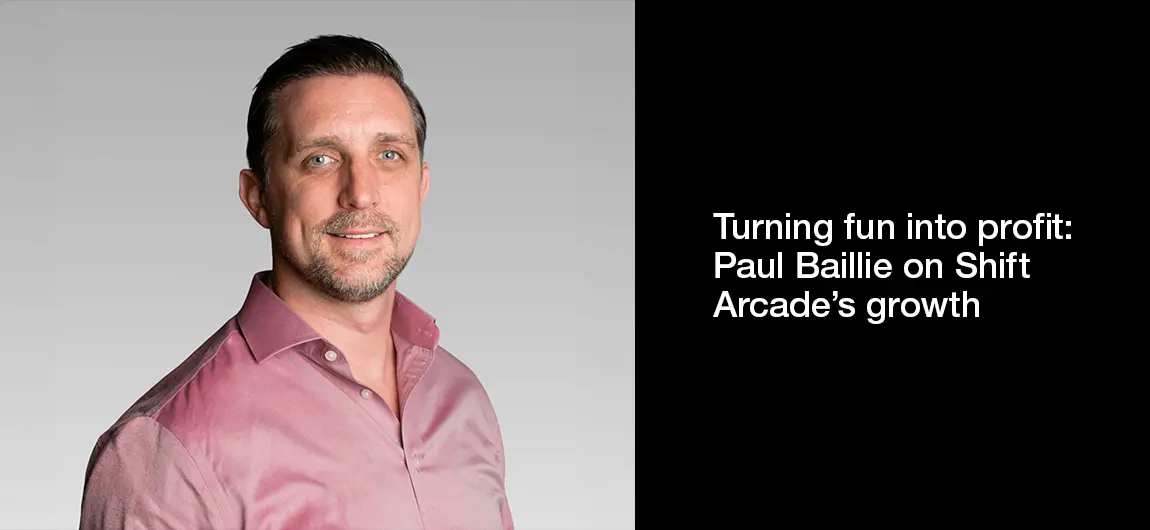
What does it really take to build a profitable arcade business from scratch and scale it into a franchise? In this episode of Side Hustle to Small Business, Sanjay sits down with Paul Baillie, Co-Founder of Shift Arcade, to unpack the journey of building a modern arcade brand through bootstrapping, smart growth, and strategic franchising. Paul shares how Shift Arcade went from a simple idea into a thriving entertainment business, the realities of funding a startup without outside investors, and the lessons learned while preparing to franchise.
View transcript
Arcade Business - Paul Baillie, Shift Arcade
[00:00:00] Sanjay Parekh: Welcome to The Side Hustle, the Small Business Podcast, powered by Hiscox. I'm your host, Sanjay Parekh. Throughout my career, I've had side hustles, some of which have turned into real businesses, but first and foremost, I'm a serial technology entrepreneur. In the creator space, we hear plenty of advice on how to hustle harder and why you can sleep when you're dead.
[00:00:22] On this show, we ask new questions in hopes of getting new answers. Questions like, how can small businesses work smarter? How do you achieve balance between work and family? How can we redefine success in our businesses so that we don't burn out after year three? Every week I sit down with business founders at various stages of their side hustle to small business journey.
[00:00:43] These entrepreneurs are pushing the envelope while keeping their values. Keep listening for conversation, context, and camaraderie.
[00:00:56] Today's guest is Paul Bailey, the founder of Shift Arcade Racing Simulator arcades with locations in San Ramon, California and Miami. Paul, welcome to the show.
[00:01:08] Paul Baillie: Uh, Sanjay, nice to meet you.
[00:01:10] Sanjay Parekh: Uh, it's, uh, nice meeting you too. Uh, so I gotta admit, uh, uh, a little bit of a fanboy for arcades in general, because I remember, uh, spending a lot of time in them as a kid. So I think we're gonna get into some fun stuff. But before we get to that, give us a little bit about your background and what got you to where you're.
[00:01:27] Paul Baillie: Fantastic. Thanks again for, uh, for having me on today. Um, so yeah, my name's Paul Bailey, uh, one of the, the two co-founders of Shift Arcade. Um, bit of background, so grew up in the, in the UK. Uh, left there as I was about 30, was working corporate job. Had been doing, you know, tech, sales, project management, sort of operational background for, for a very long time. Um, had the, the opportunity to bounce around a bit. Lived in Australia, um, Singapore for a little while before moving over to to, to New York and ultimately California.
[00:01:59] Um, now lived, you know, settled down in, in California. I'm in the East Bay, just outside of, uh, San Francisco and had worked corporate tech sales jobs, um, for probably about 20 years over overall. Um, and then. But always with a, a desire to, uh, to be my own boss, to start my own company. I was always very interested in that. Um, my business partner Greg, kind of came with the idea of, of shift arcade, uh, about three years ago. Um, and we've been, we we're working on that as a, as a side hustle together, kind of launching that for, for a couple of years. And it's been within the last, uh, sort of eight, nine months now, um, that I've been full time and, and, yeah. This is my, my main gig now.
[00:02:45] Sanjay Parekh: Uh, awesome. So, okay. Uh, so that's an interesting shift, uh, long corporate history. Um, so where did the idea originally come from and when did you decide like, oh, this is something I want to go all in on.
[00:03:01] Paul Baillie: Yeah, so certainly, uh, you know, credit Greg with the, with coming up with the idea, um, he's been a sim racer at, at home as a, as a hobby for, for quite a while and has been keeping sort of tabs with it as a, um, as a growing activity in sport and potential for, for a commercial application as well.
[00:03:21] So, um, actually going back through kind of COVID, there was a big increase in, um, sim racing. Right. Not only were actual Formula One and nascar, real World Championships and series, uh, moved to virtual online events. Um, but there's also been a, just a general, um, increase in the popularity of, of racing. There's now three Formula One races here in the US on an annual basis, um, but also the. Just the capability and the hardware and the software and you know, just the ability to be able to offer this as a service to consumers has just increased recently. So, yeah, it was 2023, early 23, um, that Greg kind of approached me. He was like, Hey. I think this could be a really good idea. What do you think? He, you know, uh, drafted up a business plan. Uh, he and I got talking about it. I helped him out with some, some market testing. You know, we updated the business plan and ultimately through that process, kind of convinced myself to, to join him in it. And we've been, we've been partners ever since.
[00:04:24] Sanjay Parekh: Yeah. Yeah. So, okay. Let's talk about, uh, like the idea originally, um, was this. Off the shelf hardware? Like did you buy the simulators from somebody? Did you build your own? Like how did you go about it?
[00:04:37] Paul Baillie: Yeah, so I mean obviously the step one was the, was was the idea then some market testing.
[00:04:42] So we just very simply, uh, we did a, a Facebook ad links to a Google form, which basically just had a few questions in there, roughly, Hey, if we build this, will you come type of questions, right? Um. We ran that for about a month. We spent, I think it was about 1500 bucks or so on ads just to get it out there. Um, and got enough confidence through the responses that, hey, as long as about 25% of the respondents here are, are accurate and come as often as they say they would, then, you know, we'll break even. And we're, we're okay. We kind of got enough confidence to start through that. Um, uh, to your question then, okay, so the technology is then very important, right?
[00:05:20] So yeah, the underlying the hardware. It's commercially available. We used a partner, you know, we, we purchased those through a company called Podium One initially, and it's the same as you could get at home now.
[00:05:30] Sanjay Parekh: Right?
[00:05:30] Paul Baillie: About $25,000 for a simulator. And it takes up pretty much a bedroom. So there's many reasons why many people don't do this at home.
[00:05:37] Um, but yeah, it's commercially, you know, commercially available or available to consumers. Um, we then added our own software stack. Very grateful that, you know, Greg is a software developer. Um, so we've added software on top that, you know, allows us to remote control and access all of the simulators at once. So that gives us the ability to operate them as a group within the store. So very effective and, you know, good commercial features. And then there's a, a web layer that just obviously allows us to present the reservations, take payments, do leaks and leaderboards and, and things like that.
[00:06:14] Sanjay Parekh: Okay, so let's talk about getting started then 25 grand for a, a single simulator is a good bit of money, uh, and obviously why it's outside of the reach of a lot of people, uh, and they don't wanna set aside a whole bedroom for this. Um, so how many did you get to kind of launch and how did you fund this thing?
[00:06:34] Paul Baillie: Yeah, so, uh, we, we bootstrapped ourselves, right? So we, we self-funded. Um, and have done, uh, all, all the way through. Um, we, we obviously had to do a few things to, uh, to keep the budget tight to start with. So first off, we started with four, just four simulators. Um, and what we wanted to do, there's a, there's a wide range of hardware and peripherals and the type of experience that you can offer.
[00:07:00] Um, we knew that we wanted to be able to provide a high-end and immersive experience, um, but it's possible to spend, you know, anywhere from. A few hundred dollars to, for a steering wheel that might clamp down to your desk. You know, when you run on your PlayStation all the way up to a hundred thousand dollars for, you know, all the whizzbang widgets and, you know, and, and features. You can spend more on a simulator than you might on a real race car. Um, so we knew we had to be high, but not crazy. I think there is a diminishing return in terms of, you know, what you get for, for spending on hardware. Um, so we, we settled upon two simulators that have full motion. So the actual, the simulator moves you can feel under steer, over steer the rumble of the engine coming through the, through your seat. So that provides a great, uh, immersive experience, plus also information for the driver to know how they're doing. Right. Are they gonna lose grip around this corner?
[00:07:51] Sanjay Parekh: Right.
[00:07:52] Paul Baillie: Um, so two motion simulators, we call them haptic, and then two non motion. And the idea was. Hey, is it worth spending more money on these haptic simulators because we are gonna draw more customers in, right?
[00:08:04] Sanjay Parekh: Right.
[00:08:04] Paul Baillie: So we did two motion, 25,000 each, two non motion, or about, you know, about 15,000 each. Uh, and we found out very quickly that yeah, customers are booking the motion simulators about four times, four to one over the static ones. Um, and more than that, they were waiting for the motion simulators to be free. So they may sit in a shop. Two static simulators available, waiting for the haptics to come in so that it obviously informed us, yes, it's worth spending more money for a better experience. 'cause that's what the customers want.
[00:08:35] Sanjay Parekh: Right. That's, uh, so the interesting, you did like basically an ab test on your own, in, in like real life.
[00:08:42] Yeah. Um, with this hardware. What, why do you think that, uh, I, I have some suspicions, but I wanna hear from you. Why do you think they were willing to wait for that experience versus just the one that's already there? That's almost as good.
[00:08:58] Paul Baillie: I would say, I would say because it's not almost as good. There is a, there is a step change, right?
[00:09:03] So yeah. Yes. The, the foundation of the, of the rest of the equipment within the simulators, the, the pc, the game, the content, you know, you've got your triple screens and everything else is the same, but the motion just elevates it significantly. Yeah. Um, so I think it's a step change. Um, then obviously there's a function of pricing, right? So for us, we do $20 for the static and 25. For the haptic, and that's a 30 minute slot. Um, so I think the, the experience you get is significantly more than the price differential that you pay. So the
[00:09:37] Sanjay Parekh: right,
[00:09:38] Paul Baillie: the value of that experience is therefore much higher.
[00:09:41] Sanjay Parekh: Yeah. Yeah. Um, okay. Let, let's talk about, uh, like starting this business.
[00:09:45] So you said you bootstrapped it, you bootstrapped it all the way through. It sounds like about a hundred thousand dollars worth of equipment and then you had overhead of a space and like all the other things. I'm guessing probably what, 150, $200,000 to get going? Something like that. Um, did anything make you nervous along this path? That's a lot of money.
[00:10:08] Paul Baillie: Everything's made me nervous along the path. Um, so again, it was, it was, it was 180. I don't mind sharing. Uh, I've actually got a Medium article and, and some posts out there that describe, you know, the, the startup in, in more detail. So yeah, perhaps I'm sure can find that if they're interested in, in more.
[00:10:25] Um, yes, lots of things made me, you know, made me nervous. Um, you know, big questions and, and now that we are further down the path, um. And we're, we're going through franchising, so I'm going through the same questions multiple times with new locations. Um, obviously learning and evolving my viewpoints, right?
[00:10:48] Sanjay Parekh: Right.
[00:10:48] Paul Baillie: The location, very important. When we started, we were in a small regional more, um. Very much the type of location where, you know, the surrounding houses, the local, you know, suburbs, they go there for their weekly grocery shop and hairdos and all that kind of stuff. Uh, but they walk past us and know we, we were in a small location kind of tucked away. Now the rent was cheap, which was great, but we were then spending $3,000 a month in, um, online ads to drive our reservations there. We've since moved into a more premium mall where there's a cinema, there's an escape room, a a, a VR experience, bars and restaurants. Um, and while the rent is, is over double the foot traffic is significantly higher.
[00:11:31] So we've doubled our overall reservations. We were doing about a thousand reservations a month. Original location and now 2000, um, which makes a massive impact. You know, that, that a big impact on, on revenue. So that was a big, big learning. It's just the, you know, the, the trade off between location and marketing and, you know, all of these, uh, the different budgets which can achieve the same result.
[00:11:57] Adam Walker: Support for this podcast comes from Hiscox committed to helping small businesses protect their dreams since 1901. Quotes and information on customized insurance for specific risks are available at Hiscox.com. Hiscox, business insurance experts.
[00:12:18] Sanjay Parekh: You started out with this one location, moved locations, figured out a bunch of stuff. Now you've got, uh, and we mentioned in the intro of Miami and, and you're looking at franchising. So is that a franchise or is it a, a corporately owned one and like how are you thinking about growth for the business?
[00:12:34] Paul Baillie: Yes. Um, so we, we started always with the idea that if this works once, let's do it a hundred times, right? So I kind of break up our, our progress into yearly chunks. The first year was that proof of concept, Hey, does this work? Do we have something repeatable and profitable? Um, we actually, um, we broke even on our operating costs in our second month, and we've made money ev every month ever since going from a hundred.
[00:12:59] Sanjay Parekh: And that was even at the original location in the second month. You were good?
[00:13:02] Paul Baillie: Yeah. Month two. Yeah. Yeah.
[00:13:03] Sanjay Parekh: Wow.
[00:13:04] Paul Baillie: Um. So we went from about 150 reservations in that first month, uh, actually to this December of, uh, 25, we had our record month. We did 2,500 reservations.
[00:13:16] Sanjay Parekh: Wow.
[00:13:16] Paul Baillie: So, and, you know, a nice, a nice growth over that time. Uh, so year one was basically gaining the confidence. Yes, this works. We went from four simulators up to, it was either six or eight at the end of that, that period. Kind of classified. Yep. Proof of concepts done. We think this works. Then how do we expand? Um, really two options, more corporate owned stores or franchising.
[00:13:39] Were the, were the two that we looked at. We settled upon franchising, um, for the ability to, uh, you know, use other people's money, right outside capital. Um, plus also having, um, additional owners, you know, somebody who comes at something with an ownership mindset, right? Rather than hiring. You know, rather than employee mind mindset, there's a, there's a bit of a difference there.
[00:14:00] Um, and obviously with the intent of looking to expand geographically, working with somebody who knows the local area, right? Mm-hmm. Our franchisees are like, I need to be in this spot, right? It's gonna, you know, it's these three blocks, that's where this needs to be. So coming with that location and that local knowledge is very important. Um, so mid 24 to mid 25, um. Was the franchising process. We worked with a company called Franchise Growth Partners to help us through, through that. Um, there's some, uh, some legal work involved franchise registration, and we had to do extra hoops to jump through in California to do that here. Um, and that was all finished in the middle of last year.
[00:14:38] So yeah. Now, uh, one corporate owned store, one franchise location, live in Miami. Um, three more coming. Two of those are gonna be in Sacramento, California, one in Portsmouth, New Hampshire. And then we've got about four others who are real close to, to signing up. Um, so my goal is to be able to grow the, you know, the locations six to 12 new locations per year. So, you know, one to. You know, one every other, every month or every other month, roughly. Yeah. Um, and part of the reason of that is, uh, I think the, the Apex Club that I described earlier, providing events to our, our customers becomes better with scale. So more locations. Equals more simulators, uh, within the, within the network, which means we can put more cars on the track. So the competition and the race that you get is more fun. The competition can be closer. Um, so you get this nice flywheel effect where more members, uh, equals a, a a better membership experience.
[00:15:38] Sanjay Parekh: Yeah, so, uh, I, I think I got this from what you just said, is the thought that with more locations, there's the opportunity for people to. Play against one another across locations.
[00:15:49] Paul Baillie: Yes. Yes, exactly. Wow. Yeah. So we can, we can compete against Miami, we can compete against, you know, anybody else within the, within the network. Yes.
[00:15:57] Sanjay Parekh: Oh, that's super interesting. Yeah, yeah,
[00:15:59] Paul Baillie: Yeah.
[00:16:00] Sanjay Parekh: Um, and something you can't do in real life, right? Like you have to all travel to the same location to do this in real cars, in real life. So that, that's an interesting twist.
[00:16:10] Paul Baillie: And you asked earlier, so part of the, the motivation actually, if you, if you look now, um, motorsports, and that's obviously a broad, uh, broad category is actually one of the top 10 most popular sports here within the us. Um, but if you then look at how accessible it is and how affordable it is, it's actually. The least accessible and the most expensive to actually participate in.
[00:16:34] Sanjay Parekh: Mm-hmm.
[00:16:34] Paul Baillie: Right. You know, how, how do you, how do you go and emulate, you know, your, your favorite F1 driver? How do you go and do that? Right. If you're a, if you're a football fan, you can throw a ball at any park in, in your backyard. Like you can do it kind of anywhere for free.
[00:16:48] Nearly motorsports not the same. Right. Right. If you, even if you are willing to take your car to a, to a track date. It's a thousand dollars. It's a weekend commitment. Um, it's a lot. So making Motorsports accessible is, um, is achievable through sim racing.
[00:17:04] Sanjay Parekh: Yeah. Um, let, let's dig in, uh, on the franchising just a little bit. Uh, is there anything you're worried about in terms of franchising? The one thing that I think always crops up for small business owners that are thinking about this is. How do you manage, uh, and make sure that culture and, um, the experience for the customers is equivalent or better, uh, as the corporate stores?
[00:17:27] Because I mean, honestly, you're, you're in California, your first location's in Miami, that that's a hall. Um, you're, you're not there day to day. You can't see what's happening there. So how do you think about that and how do you make sure that that stays to the standard that you're expecting?
[00:17:42] Paul Baillie: Yeah, there's, there's definitely challenges there. Um, ultimately I think it all boils down to, you know, to processes and, and definitions. Um, we're very lucky in the fact that really what we do is all defined by the software that we created, right? So the booking experience, you know, the, on the online customer process, bringing them into the stores is consistent because that's all defined with software.
[00:18:06] Um, and then the. On sim experience, again, is driven by our, our software. Um, you know, the UI that they see is, is in, is built in-house, so it's the same in every location, and then the underlying physical hardware, right? That gives them the, you know, the physical sensations as well as the same. So we have a lot of control over the, the hardware and software stack that drives the customer experience. But then if we look at actually running a business, there's a lot more than, than just that. Right. You know? So then it's, it's marketing, it's operational standards within the store. It's cleanliness, it's look and feel and branding and, and a whole bunch of stuff. So, um, yeah, there's a lot of learning for us to do in these areas.
[00:18:48] Um, certainly working through that franchising process and the operational rigor that comes with, with that gave us a good start on that. Um. Mm-hmm. There's a big difference between sitting down and defining a document and then actually implementing the day-to-day and week to week processes of, you know, maintaining that and imp right. And, uh, what's the word I'm looking for? Basically just making it, um, making it lived. That's the Yeah, that's understandable.
[00:19:18] Sanjay Parekh: Makes sense.
[00:19:18] Paul Baillie: Yeah.
[00:19:19] Sanjay Parekh: Yeah, yeah. I like it. I like it. Okay. Uh, Paul, last question for you. If you were talking to somebody who's thinking about doing. Something as similar as you did, uh, going from a corporate career and launching a side hustle or launching a full-time business, what advice would you give to them?
[00:19:36] Paul Baillie: Yeah, um, I mean, definitely. So step one, do it right. Start somewhere. Start somehow. Um, I thought about this for a decade or more, um, before I actually really did anything. There was a couple of ideas that came in and I discarded and you know, I think there was. So starting is very important, right? Unless you start, then you've got nothing to, you know, to, to work on and, and develop. Um, and something that is 10% today can be 20% in a, in a, in a week, and 50% in a couple of months. But if you are always at zero, right? You know, just iterate and make things better. So start number one. Think hard and realistically about just finances, right? Giving up a job and also then, you know, needing to pay for healthcare and all the other things.
[00:20:26] There's, there's just some financial logistics and reality that needs to come into this. So, you know, to what degree can your side hustle? Uh, become an income and to, to how much income. I'm not earning anything like I did in a corporate job right now. Um, but I think I have more, there's more future potential, there's more happiness, um, but potential happiness doesn't pay the mortgage. Right? So just have some realistic and open conversations, especially, you know, with, with, you know, wife, husband, whoever, partner right? That's, that's involved in that. Um, and just be, be real. Uh, yeah. Aware of, of that reality.
[00:21:02] Sanjay Parekh: Yeah. I like it. Uh, great advice, Paul. Uh, this has been fantastic. Where can our listeners find and connect with you online?
[00:21:10] Paul Baillie: Yeah. Uh, probably simplest is through LinkedIn. Um, so I'm Paul Bailey, B-A-I-L-L-A-E. Um, I can also be reached at [email protected]. Shiftarcade.com.
[00:21:21] Sanjay Parekh: Awesome. Uh, thanks so much for being on today.
[00:21:24] Paul Baillie: Thank you, Sanjay. Very nice to meet you.
[00:21:28] Sanjay Parekh: Thanks for listening to this week's episode of the Side Hustle to Small Business podcast, powered by Hiscox. To learn more about how Hiscox can help protect your small business through intelligent insurance solutions, visit Hiscox.com. And to hear more Side Hustle to Small Business stories, or share your own story, please visit Hiscox.com/side-hustle-to-small-business. I'm your host, Sanjay Parekh. You can find out more about me at my website, SanjayParekh.com.
Subscribe to our podcast



Did you start your business while working full-time at another job?
Tell us about it! We may feature your story in a future podcast.