Fitness Gym Business: Patty Durrell's Journey



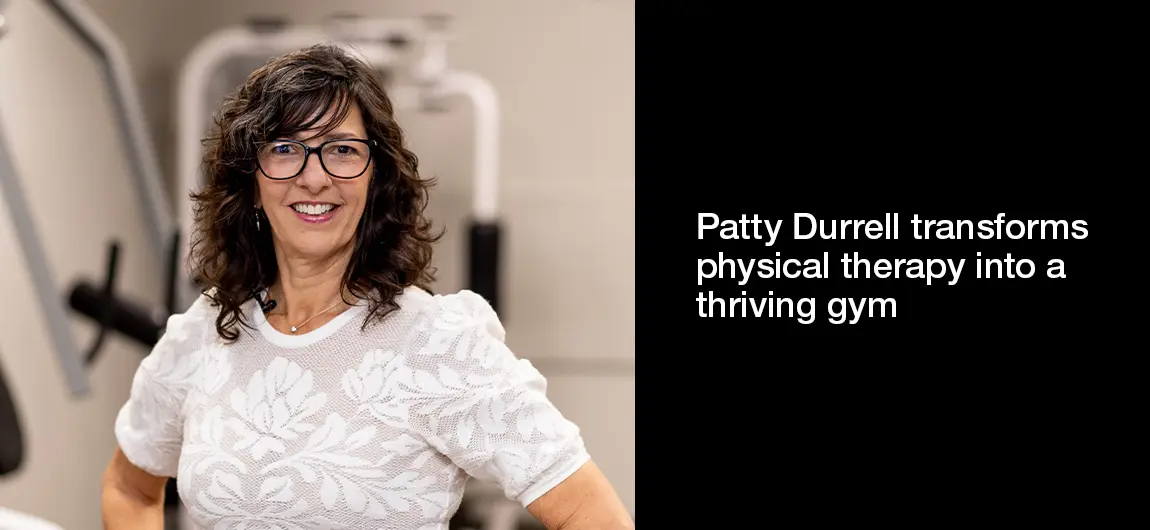
Patty Durrell is a Physical Therapist and the Founder of Rock Solid Fitness, based in Dunedin, Florida. Having seen gyms close around her while working with clients in other facilities, she decided to open Rock Solid Fitness to create a sustainable, client-focused environment. Her innovative approach combines expert physical therapy with fitness training, supporting clients’ long-term health and performance.
View transcript
Fitness Gym Business – Patty Durrell, Rock Solid Fitness
[00:00:00] Sanjay Parekh: Welcome to The Side Hustle to Small Business Podcast, powered by Hiscox. I'm your host, Sanjay Parekh. Throughout my career, I've had side hustles, some of which have turned into real businesses, but first and foremost, I'm a serial technology entrepreneur. In the creator space, we hear plenty of advice on how to hustle harder and why you can sleep when you're dead.
[00:00:22] On this show, we ask new questions in hopes of getting new answers. Questions like, how can small businesses work smarter? How do you achieve balance between work and family? How can we redefine success in our businesses so that we don't burn out after year three? Every week I sit down with business founders at various stages of their side hustle to small business journey.
[00:00:43] These entrepreneurs are pushing the envelope while keeping their values, keep listening for conversation context and comradery. Today's guest is Patty Durrell, the founder of Rock Solid Fitness, based in Dunedin, Florida. Patty, welcome to the show.
[00:01:04] Patty Durrell: Thank you, Sanjay. I am really excited to be here with you today.
[00:01:08] Sanjay Parekh: I, I gotta admit, I struggled a little bit with the name of the the city there because Dunedin is is not one that just kind of rolls off the tongue, I think. But we won't keep talking about geography and, and names of cities for this podcast. That's a totally different podcast. So first, let's talk about you. Give us a little bit about your background. What got you to where you're today?
[00:01:30] Patty Durrell: I was in a physical therapy program in college. I was a non-traditional student, which just meant I was the old kid in the class.
[00:01:38] And I was very busy working at UPS loading trucks. I was taking and teaching karate and I was attending bar and I couldn't get rid of the last few pounds that I wanted to lose, and somebody took me to the gym. And turns me onto the style of training that we do at Rock Solid Fitness today and changed my life forever. I'm 59 years old. I'm in great shape. There's nothing that I think my body can't do. It's always ready for me. And so that's what got me into what I, what I'm doing, because when you get something that changes your life profoundly, you wanna share it with everyone, right?
[00:02:13] Sanjay Parekh: Yeah. Okay. I gotta ask you, in an intro, you talked about karate. What kind of karate was it that you were doing?
[00:02:18] Patty Durrell: Tang Soo Do Moo Duk Kwan is what I did. Okay. Yeah, the Korean style of karate.
[00:02:22] Sanjay Parekh: And, and how far did you get? What belt did you achieve?
[00:02:24] Patty Durrell: It's, you know, it pains me to share this with you, Sanjay, but right before my black belt I made, I made it all the way through right before my black belt test. And, and the reason why I didn't test was because. I was graduating to be a physical therapist assistant, and I saw many people break their hands and break their feet on the cinder blocks.
[00:02:43] Sanjay Parekh: Oh, wow.
[00:02:43] Patty Durrell: And so I knew that if something happened, I would not be able to forge ahead into my career. And so I, I, I quit. But I, you know, I, I, I know my, my ex-husband came up when we first moved to Florida and snuck up behind me in the closet. And I didn't know it was him and I didn't think there was anyone in the house, and I flipped him into the shoe rack. So I know I still have some skills.
[00:03:05] Sanjay Parekh: It's, it's good to keep those skills sharp. Maybe not necessarily on, on family members, but but it is what it is. That's what they get for, for sneaking up on you, I suppose. That's exactly right. And things kick in.
[00:03:16] Patty Durrell: Right.
[00:03:17] Sanjay Parekh: Yeah. Yeah, exactly. And, and I think you made the right call of, I mean, look, it'd be cool to say you had the black belt, but you know, keeping everything in in one piece is probably important too, I'd say.
[00:03:28] Patty Durrell: Yeah. It was great though. It taught me, it taught me a lot of great things and I swer, if I ever had children, I would put them into a karate. Yeah. Program with a really good KoSA. Yeah.
[00:03:38] Sanjay Parekh: Yeah, yeah. So let's talk about the business then. And maybe we'll circle back to karate in a minute and, and what it taught you about business. But is this the first time that you've ever done something entrepreneurial or did you do anything entrepreneurial maybe as a kid, or were there entrepreneurs in the family or anything else like that?
[00:03:54] Patty Durrell: No first, first thing I've ever done. Entrepreneurial. I mean, if you know the book the E-Myth by Michael Gerber.
[00:04:02] Michael Gerber, okay. I had the entrepreneurial seizure and thought I could operate a company when I had absolutely no idea how or what to do. So, yes. I've never done anything like this before. Never thought I wanted to have a business. I worked as a solopreneur. While I was working full-time in physical therapy, I had a little side job teaching my patients how to strength train so they could stay outta the physical therapy loop. And it took off and I decided to go full-time in it. But I was still working outta people's other people's gyms. And, you know, when the sixth gym was going out of business I realized I had to take control of my asset. And so I opened a business with a business partner and that went south really fast.
[00:04:49] Sanjay Parekh: Yeah. Well, yeah. So tell us about that. What, what went wrong?
[00:04:54] Patty Durrell: I didn't realize she had been in business for a long time and I didn't realize that she, she just, you know, wasn't thriving. And so there was some financial problems that I wasn't pre prepared for. And so we, we separated and we had 3000 square feet collectively.
[00:05:10] And the landlord gave me 1000 square feet and her 2000 square feet. So if you know anything about a personal training studio, 1000 square feet is really small. And if somebody was at the desk trying to make an appointment and somebody else was waiting for their appointment, someone's butt was in someone's face. It was just kind of crazy that we were able to grow up and hit a ceiling in that little small space.
[00:05:31] Sanjay Parekh: Yeah. Was there anything that made you particularly nervous about doing this on your own?
[00:05:38] Patty Durrell: Oh, everything made me nervous about it. I, I've always been really passionate about empowering and challenging people to live their best life through, you know, strength training and, and health and wellness.
[00:05:49] But I didn't know what I was doing. And frankly, when things started to not just grow and, and do well. I really started to take my focus off of people and helping people solve their problems, and I started to put my focus on numbers and percentages and really got emotionally, mentally and physically very sick and ruined. You know, some important relationships. Along the way.
[00:06:17] Sanjay Parekh: Yeah. So do you think you got focused on, on like the numbers and all that because of the experience from before and what happened with that previous business or like what was the cause of that?
[00:06:28] Patty Durrell: I think it was I knew that things had to improve. You know, things had to go up. I had great success the first four years in business. We grew like 40% year over the year, the first two years. And 20% year over year, the next two years. But then, you know, I hired too many people, maybe was paying salaries. I didn't understand how to run a business. And so I, when things weren't going up and they started to flat line and go down, I started to panic.
[00:06:56] Like I didn't know what to do. I literally just didn't know how to handle that situation. And you know, I learned that, I think the biggest lesson that I, I learned outta that was when you're passionate. About helping people, and that's your focus, your team, your clients, everything goes right. But when you take your focus off of the people, then I think everything goes wrong.
[00:07:21] Sanjay Parekh: Huh, interesting. Interesting. So how, how did, what was it that got you to that point and make you realize that you needed to refocus on helping people and all the other things will just fix themselves? Was it somebody saying something to you or. Just like, you know, what caused that epiphany?
[00:07:39] Patty Durrell: I think it was you know, being at odds with my husband, like we were best friends and madly in love with each other, and he and I both started to resent the business. Hmm. It was not liking myself. You know, when you're working until midnight, getting up at four 30 in the morning, day in, day out, and you don't have any free time for yourself to fill your own bucket. I didn't like who I was. I didn't like me. I got physically sick, like really sick, where I was scared about my health. Yeah. I just I lost sight of what was most important in life and I could, you know, my passion was gone. The passion.
[00:08:20] Sanjay Parekh: Yeah.
[00:08:20] Patty Durrell: For what I love to do was no longer a part of me or my business.
[00:08:25] Sanjay Parekh: Yeah. So let, let's step back to the beginning there and, you know, starting this out. How did you find your first clients and, and get them to sign up? I mean, you know, your a brand new place, there's probably a sea of places that you, they could go to. How did you make them, you know, how did you, you find them or they find you, and how did you convert them into long-term customers?
[00:08:49] Patty Durrell: Yeah, so, you know, I worked out of other people's gyms, so there was always people on the floor that if I went over and gave some free advice to or just kind of helped in their own program, they might be interested in working with me.
[00:09:01] But the main way I did it was I worked I worked in outpatient orthopedics for a while and I worked on a traumatic brain injury team. And my, my ex-husband al also worked in outpatient orthopedics, so. Patients really that were stuck in the physical therapy loop, right? They would not do their home exercise program and they would come back in with the same problem. If I could teach them how to strength train on their own, they, they wouldn't need physical therapy any longer. So it, that was really, I had, I had that kind of. Already set up when I was working out of other people's gyms. So when I opened my own place, they, they were used to following me around this place, went out of business and we went to a second place that went out of business.
[00:09:47] We went to a third place. It went out business. We went to a fourth place. It went out. So I was at the sixth place and I was like, I know this place is going out of business. I recognize these signs. And so, you know, I always lost some clients in the process, but
[00:10:02] Sanjay Parekh: Right.
[00:10:02] Patty Durrell: For the most part. And, and, and referrals and then market marketing, having a passion. I think when you're passionate about what you do and you wanna help people and change their life and you talk about it, they get excited about it too.
[00:10:14] Sanjay Parekh: Yeah. Yeah. So let, let's talk about that. How did you differentiate Rock Solid Fitness? Really in that sea of all these fitness places and things that they could do. And nowadays you know, people just think that, oh, I just go on YouTube and watch some things and do it at home, whatever, whatever. Right? Like, how do you differentiate yourself in that?
[00:10:34] Patty Durrell: I love that question. We bridge the gap between physical therapy and personal training. We do high intensity safe strength training, and we trademark that because I think there's a lot of intense exercise programs out there, but they're not safe.
[00:10:49] And I think there's a lot of exercise programs that don't push you hard. So we really push you really hard, but we keep you safe first. So yeah, I think we also differentiate ourselves in education. We're constantly educating our members. Every single coach that I hire has to go through an apprenticeship first, so they understand the human body and how it moves and what, you know, the risk reward to exercise an injury, how to overcome injury.
[00:11:18] So we really. There's, I, I stand on the rock that says there's nobody like us out there. There's people that are similar, but there's nobody like us. And we're excited about that.
[00:11:30] Adam Walker: Support for this podcast comes from Hiscox committed to helping small businesses protect their dreams since 1901. Quotes and information on customized insurance for specific risks are available at Hiscox.com. Hiscox, business insurance experts.
[00:11:51] Sanjay Parekh: Okay. Let, let's talk about the, you, you talked a little bit about the kind of training staff and, you know, making sure that they are in that right place to be able to deal with clients. But let's talk about the first part of it. How do you find the right people? Mm-hmm. For something like this, like it, it, maybe it's not finding people that have worked at other.
[00:12:10] Places before, because they might have those bad habits that are hard to unlearn. And we've seen that in, in so many industries, right? Where employees, they, they just, they're not as good as somebody that knows nothing because you've gotta unlearn that stuff. So how do you think about that in terms of the people that you hire and then how is it that you get them to that place where they know enough that then they can become useful in the, in the business?
[00:12:33] Patty Durrell: That's a great question. And it's changed over the years. So I've been in business 14 years, Sanjay, and in the beginning it was just. They needed to have a degree in exercise science or, or a related field. And I liked them to come outta college so that I can kind of form them into, you know, our, our style of training.
[00:12:51] We used to, you know, just pour our hearts into training them and that was part of their onboarding process. And also, you know, to make them a believer in what we do because these. Younger folks that come out of college, if they're in exercise science programs, sometimes they've been a part of research or they're in an exercise program that is nothing like ours.
[00:13:11] Ours is 25 minutes. Full body twice a week. That's all you do. So these younger folks are in the gym five, six days a week. So having them buy into it by experiencing it is, is really the best way for them to get trained and to really kind of love what they do also. But now I don't know, the education system lets us down a lot. I can sit with someone who has a master's degree in exercise science and ask them what muscles bend the knee? And they can't tell me. So, you know, it's very disappointing. So I've had to lower my standards, not in in knowledge, but in expectations of like a college degree. Or something like that. So now I look for people who are super passionate about exercise.
[00:13:57] They're super passionate about helping people. And then I can train them the, you know, the system. They have to know anatomy. They have to know anatomy. I'm not gonna teach someone anatomy, but they don't have to have a college degree. because frankly, a lot of people have a, a college degree, don't know their anatomy.
[00:14:15] Sanjay Parekh: Yeah. That's so interesting. What is it that you, why is it that you think that's happened where you've got. People that you know previously would know these things and now they don't like, what, what's the disconnect there?
[00:14:28] Patty Durrell: I think one, they get it in year one or two, and it's not reinforced. I don't know why it wouldn't be reinforced, you know, why would an exercise science graduate not know about exercise or some of the founders of exercise or even how to use different types of machines? I think COVID had a lot to do with that. Everything, you know, we're learning on a screen now. We're not in in classroom doing practicals and practicums and taking field trips, so everybody wants to have convenience. And I also, I also think that there's a lot of things that are required in our programs that aren't related to what we're going to be doing.
[00:15:07] Why did I have to learn Shakespeare to graduate in a physical therapy degree? Right? Why was that important?
[00:15:14] Sanjay Parekh: Right. Yeah. Interesting. Okay, you, you touched upon COVID, so let's talk about that for a minute. Mm-hmm. A business like yours, I imagine was tough during the pandemic. So how do you think about things like that? How do you prepare for Black swan events where it's like this huge amount of uncertainty? And how did you fare through the, especially the early days of the pandemic?
[00:15:40] Patty Durrell: Sanjay, it was, you know, that was such an interesting time. I don't think you can prepare for something like that, but you can prepare for your reaction to it, right?
[00:15:49] So to to form a, a community of people that are going through the same kinds of things as you are in the same kind of industry, I think is important to try and get through stuff like that. So if something like that ever happens again. We did, I reached out to my colleagues and we, you know, we shared ideas and things. Many of us took our stuff. Online, right? So you're now, you're doing online training, which we don't even believe is a good way to train. But we were doing what we kind of didn't believe in, just to give our members a way to stay engaged with their health and their fitness. I learned that, you know, I'm grateful that I was able to keep everyone staffed, you know, let's face it, thankfully, to government assistance.
[00:16:32] You know, the PPP program, the Payroll protection Program, helped a lot of small businesses out. And the whole time I was going through that process with COVID, I said to myself and I said to my colleagues, we really need to figure this out on our own. All of this money is really helpful for us, but it wasn't helpful in the end because.
[00:16:56] You know, I had a big staff that I, I really, they didn't have anything to do. I had to somehow keep them engaged because I was still paying them. And then once you take that money, you're required to continue to pay them even though there's no work for them to do. And so what I learned through that was I really was overstaffed.
[00:17:16] I didn't need as many things as, as I thought I needed. I could hire people in fractional services and that would be you know, enough. And so there were so many, I mean, I could talk to you for days about the lessons I learned through COVID and because I filed my taxes as a health services. Organization because of my license, my, I'm, you know, I'm licensed in the state of Florida, we were able to stay open as long as we followed all of the rules and the guidelines, right?
[00:17:47] Sanjay Parekh: Ah.
[00:17:47] Patty Durrell: And so we, you know, one person in the studio at a time, like we wore masks and shields and sprayed like, I mean, I, I'm surprised the upholstery wasn't worn off of our machines because we were wiping 'em down so much. And if somebody coughed, everybody freaked out. It was just a crazy time. I had to close my business down.
[00:18:07] Some, you know, an intern brought COVID into the organization and my, oh geez, my staff got sick, so we had to close the place down for, you know, two weeks so that we didn't get anyone else sick. You know, it was a difficult, difficult time, but I, I learned, you know, I don't know how we made it through, but I think I always say that the difference between a small business that closes and one that stays open is when the.
[00:18:33] Owner, founder, CEO, whatever, decides to stop. Stop. Yeah, stop. The challenges because there's always a challenge. I mean, you know, we have hurricanes around here. You know, a hurricane comes, you have no power. Your members homes are destroyed. There's five feet of water in there. You lose a ton of your membership because of that, and all you wanna do is help them. There's always something that's gonna happen.
[00:18:59] Sanjay Parekh: Yeah, I, I imagine did, did like this, even though it was trying times, the fact that you were able to stay open. Did that help? Like after the pandemic because people were just itching for a place to get outta the house and go do something. And you were one of those places that was open. Did, was it like a, a, a weird, silver, silver lining for the business.
[00:19:22] Patty Durrell: No, it wasn't because I would literally get phone calls from members, friends, family telling me that I was killing people. I had healthcare professionals in the area accusing me of doing the wrong thing by staying open Uhhuh because I was spreading the disease.
[00:19:43] You know, I think that what I do strength training is a absolute foundation of our health and fitness. It totally helps our immune system. So the fact that we were looked at as non-essential was really disappointing. We are essential, like personal training studios, gyms are essential to our health and we should always be looked at that way.
[00:20:05] So I remember one person who was so. You know, stressed out because he couldn't get to the gym that he came and worked out with us when all the other gyms were closed. But I'm also in a state where things reopened pretty quickly. Yeah. You know, it provided that you were following the guidelines of, you know, so many, so many feet apart and mask on, you know, pretty much we, we were not like the rest of the, of the country here in Florida.
[00:20:33] Sanjay Parekh: Yeah. Yeah. Interesting, interesting. Okay, let's talk about boundaries and, and how do you set these boundaries for yourself and keep work separate from personal life? Like, how do you think about that for yourself? I, I can imagine like, you know, in the business that you're in, like you think about these things like almost all the time, like the way you're lifting even for yourself personally. And so business somehow seeps back into it. But how do you think about that for yourself?
[00:21:03] Patty Durrell: It's been such a great evolution, Sanjay. I'm so glad you're asking me that question because you know, after getting really sick and ruining the relationship with myself, and, you know, let's face it, I'm divorced now. You know, my ex-husband and I are great friends and we still love each other and support each other, but I think. The business and my drive to the business, you know, was a part of our issue. Not all of it, but a part of it. So now, I mean, I got, I safeguard my time. I'm out in nature every day. I make sure that I eat healthy meals.
[00:21:34] I'm drinking water. I'm, I take care of me first. Really. And so that's the first boundary. If I don't fill my cup up, I have nothing to give to anyone else. And it took me getting really sick, losing sight of me. I, I was walking around like a walking contradiction for years in my business, you know, I was drinking too much.
[00:21:54] I was stressed out. I was blaming people. I had all these people problems because I was blaming people. I hardly slept. You know, I, that's not. What we promote at Rock Solid Fitness, right? We, we promote the opposite. And so I will, I felt like a walking contradiction, so boundaries for me. Boundaries is a great book by, I think it's Henry Cloud awesome book if you haven't read it. And boundaries are really important. I have community with my friends. I have a great group of friends. Yeah. And I just make sure I get this morning, I set my alarm for five 15 so I could get up and walk before I went to work. And when that alarm went off, I was like, I need another hour of sleep.
[00:22:34] You'll walk later. And I reset the alarm for another hour. It just, you know, and I would've never done that in the past. I would've felt awful guilty doing that. You know, like I, everything had to be a certain way and it had to be perfect and it had to get done. And now I give myself and everyone else a lot of grace and generosity. Yeah, that's a great boundary.
[00:22:54] Sanjay Parekh: It, it, it's, so you've touched on this a couple of times, I think. Let's talk about starting a business with a family member like this. Like what thoughts do you have, like lessons learned? How do you do it well? How do you not do it well? Like what, what is your feedback on that?
[00:23:13] Patty Durrell: The first thing I'm gonna say, Sanjay, is like, you know, when two people get married and one didn't wanna have children and the other one did. And then maybe get married and then it flip flops. The one who wanted children no long, longer wants children, and then the other one does that. That's kind of what happened with my ex-husband and I like he, he kind of put the idea in my head of having a facility.
[00:23:36] And then when it came time where I wanted one, he, he wanted no part of having a facility. So but was always super supportive, always supportive of me, but it was really my baby. So it was, it wasn't ever something that he wanted to build or wanted to. I mean, I, you know, of course he wanted it to grow for, for me, for us. And of course he was super supportive in, in the things that I did for that. But it. You know, anytime that I would yeah, it just, I don't recommend it. You know, when I had my partner. A guru of mine who's been in this business forever and is one of the top you know, gym owners in the world put his arm around me and said, yeah, you shouldn't have a partner.
[00:24:24] And I was in the honeymoon stage with my partner at that time and I was like, ah, he thinks everyone else has a problem. I'm, you know, I'm gonna be fine. We're gonna be a great partnership. And then we, we did, we weren't a great partnership. And he told me that one person usually winds up doing more work than the other and there's resentment that sets in and, and so I think a lot of times I look to my husband to kind of save me, you know, he was really smart.
[00:24:48] He's the one that turns me on to the strength training style that we do. And nobody's gonna save you. Nobody's gonna show up for you. Gotta find that within yourself. And I think partnerships you need to have. Every idea of what could happen between you with an exit plan for that idea if you're gonna form a partnership, like what happens if this, what happens if that, what happens if this, what you know?
[00:25:12] And have a plan for that before you enter into the partnership. So, no, I don't recommend partners. I don't.
[00:25:19] Sanjay Parekh: Yeah. Yeah. Interesting.
[00:25:21] Patty Durrell: I don't recommend a partnership. Yeah.
[00:25:23] Sanjay Parekh: Interesting. Okay. Okay, let's, let's peek behind the curtain. You know, a lot of times, you know, I talk to folks that are in a business and they're helping other people with that thing, but then it's much more interesting to see what they do themselves, right?
[00:25:37] So what is your exercise routine and how do you make time for it in the day when it's you? Like you're there every day helping other people exercise. So how do you do that for yourself?
[00:25:49] Patty Durrell: I love that question too, Sanjay, because. We take the excuse that I don't have enough time out of the equation With our workout program, our program is 25 minutes twice a week, so it is literally written in my schedule every Tuesday and every Friday.
[00:26:06] Okay. I, and, and we train, you know, none of us at Rock Solid Fitness train by ourselves, we all train with a coach. So it's on the right, you know, the Rock Solid Fitness calendar too, that I have an appointment. So I make an appointment with myself and I show up and I do it. And you know, like I said, I didn't walk this morning.
[00:26:27] I'll walk this afternoon, you know, every day I need to get out. I need to walk, I need to bike, I need to get up on my standup paddle board. And I also have a stationary. Airdyne in my, in my office. So if I can't do it, I'll get on that bike for 20 minutes and knock it out. But I also give myself grace.
[00:26:45] We talk about the 80 20 rule with our members. Like we don't want them to strive to be perfect and drive themselves crazy. You know, I could, I try to cook healthy meals. If I go out, I try and choose a healthy choice, but that's not all the time. Sometimes I have pizza. And people love to catch me eating pizza, you know, or, or, you know, whatever. I, I have chocolate often, you know, but it's one piece. So I think the 80 20 rule, we try and be really good 80% of our life because 20% of our life we're not in control. So I think I do exactly what I recommend everyone else does, and I'm not perfect.
[00:27:23] Sanjay Parekh: Yeah. You hit upon my, the two favorite foods there.
[00:27:27] And, and totally weaknesses is man pizza and chocolate. That's just hard to beat. Hard to beat. Okay. Last couple of questions here for you. Now thinking about this, you, you've been doing this for quite some time pre pandemic, post pandemic. Is there something that now, like knowing what you know now that.
[00:27:48] Thinking like, you'd be like, okay, if I could go back in time, I would do this differently. Knowing of course that your outcome would change by doing this, but just by the fact that, you know, now you're so much smarter and you've learned these lessons, is, is there something that stands out to you like that?
[00:28:04] Patty Durrell: Yes, I would've gotten a small business loan immediately, and I would've used that money to pay myself. And invest in the organization right away rather than feeling like I needed to fund everything myself. I would've definitely done that with, although I say that you know, it's also very difficult when you're a female. I'm just gonna say it. I never thought I would say that Sanjay, ever. I thought females were crazy that would complain about this. When you go to a bank first of all, the gym business is notorious for not doing well. So bankers don't like to loan money. But when you're a woman, like I literally had a banker look at me and say, oh, is this, is this a hobby that your husband's letting you do?
[00:28:50] So wow. Yeah, and, and then, you know, so I think that I would've borrowed, figured out a way to get my hands on some money. To just not feel so scared, right? Yeah. Because the fear is the thing that makes us mess up. Fear is the thing that holds us back. And fear is what said into me when I, you know, started to really not focus on helping people but focus more on numbers and percentages and things like that.
[00:29:19] It was fear, fear of failure, fear of, you know, so I think when you have a little cushion of money you know, and you have issues with money, like I grew up with issues with money. Then you're not so afraid of Yeah. Of doing things that, so that would be the one thing.
[00:29:34] Sanjay Parekh: I, I hope you left that bank immediately after that comment. Because that's just, that's not okay. Yeah.
[00:29:41] Patty Durrell: There, yeah, you're right. I, I did not, and I, and I often think I wanna go in there and say. Look at me now, you know? Yeah. Like show them my bank estate and statement and say, I bet you're really sorry that I'm not your customer. You know?
[00:29:54] Sanjay Parekh: Yeah. I'm sure whoever says that probably realizes it now and has probably seen your name elsewhere and than like, oh, that was a massive mistake.
[00:30:02] So better to not even go back in and and rub it in their faces. Right. Just let them rub it in their own. That's right. Okay. Last question for you, Patty. If you were talking to somebody that's thinking about taking that leap like you did and launching either a side hustle or a full-time business, what advice would you give them?
[00:30:22] Patty Durrell: The same. I would tell them to make sure that they pay themselves first. And to focus on their passion. And don't let fear hold them back, you know? Constantly learn. Find people that are successful in your industry. Make friends with them, talk with them, learn from them. That's what I would tell them.
[00:30:44] But make sure that you're doing what you're passionate about, whether it's, you know, owning a business, you're just passionate about owning a business and making it something. Or if it's a service business and you're gonna be operating in it, then make sure that you love what you do.
[00:31:00] Sanjay Parekh: I love it. I love it. Patty, thanks for being on. Where can our listeners find and connect with you online?
[00:31:06] Patty Durrell: Thank you, Sanjay. It's been fun. So yeah, they can find my website at Rock Solid Fitness Ffl. That's Rock Solid Fitness Ffl for Florida. And our same handle for Facebook, Instagram, Twitter. No, we're not on Twitter and LinkedIn. And they can also find us on Pinterest. We just started to post on Pinterest.
[00:31:30] Sanjay Parekh: It's hard to keep up with all the platforms sometimes, so, oh. Yeah.
[00:31:33] Patty Durrell: We're not on Twitter. Right.
[00:31:35] Sanjay Parekh: There you go. Thanks again for being on today.
[00:31:38] Patty Durrell: Thank you, Sanjay.
[00:31:44] Sanjay Parekh: Thanks for listening to this week's episode of the Side Hustle to Small Business podcast, powered by Hiscox. To learn more about how Hiscox can help protect your small business through intelligent insurance solutions, visit Hiscox.com. And to hear more Side Hustle to Small Business stories, or share your own story, please visit Hiscox.com/side-hustle-to-small-business. I'm your host, Sanjay Parekh. You can find out more about me at my website, SanjayParekh.com.
Subscribe to our podcast



Did you start your business while working full-time at another job?
Tell us about it! We may feature your story in a future podcast.