Plant Business: Nick Cutsumpas's Journey to Farmer Nick



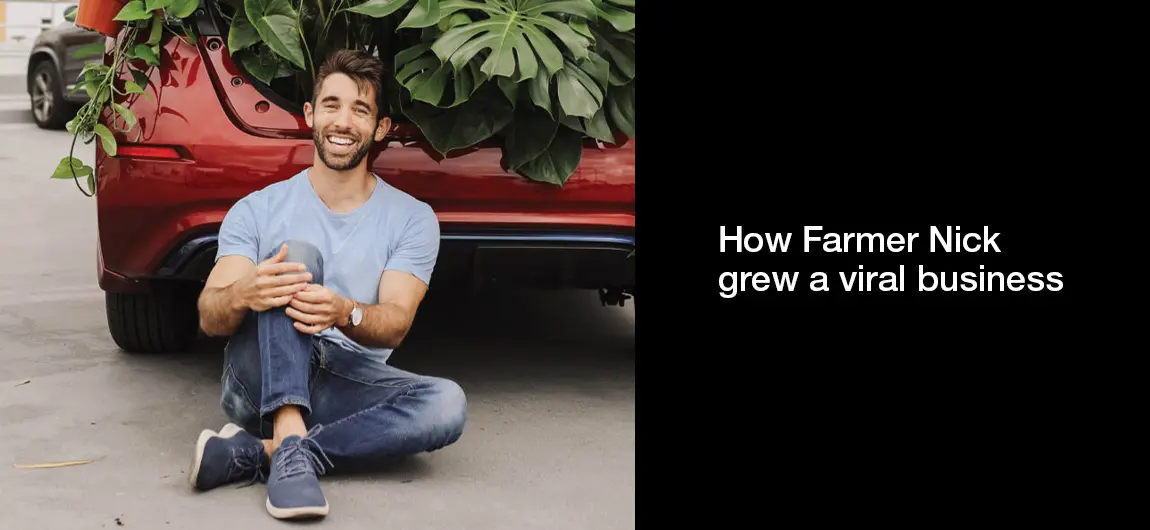
Garden guru Nick Cutsumpas, better known as Farmer Nick, is a Michigan-based plantcoach, urban gardener, and landscape designer. He talks about how his mom encouraged him to start a garden, sparking a deep love for greenery that quickly blossomed into a full-time career and an impressive social media following. He hosts several Netflix shows and has been featured on the Food Network.
View transcript
Plant Business – Nick Cutsumpas, Farmer Nick
[00:00:00] Sanjay Parekh: Welcome to The Side Hustle to Small Business Podcast, powered by Hiscox. I'm your host, Sanjay Parekh. Throughout my career, I've had side hustles, some of which have turned into real businesses, but first and foremost, I'm a serial technology entrepreneur. In the creator space, we hear plenty of advice on how to hustle harder and why you can sleep when you're dead.
[00:00:21] On this show, we ask new questions in hopes of getting new answers. Questions like, how can small businesses work smarter? How do you achieve balance between work and family? How can we redefine success in our businesses so that we don't burn out after year three? Every week I sit down with business founders at various stages of their side hustle to small business journey.
[00:00:43] These entrepreneurs are pushing the envelope while keeping their values, keep listening for conversation context and comradery. Today's guest is Nick Cutsumpas, more commonly known as Farmer Nick. Nick is a plantrepreneur who is passionate about all things green. Nick, welcome to the show.
[00:01:06] Nick Cutsumpas: Sanjay, thanks for having me on. I'm super excited to get into it today.
[00:01:11] Sanjay Parekh: So I'm excited to have you on because I don't think we've ever had a plantrepreneur on the podcast. You might be one of one. In terms of that I'm sure there's more than you, but before we start talking about all that stuff, give us a little bit about your background and what got you to where you are today.
[00:01:28] Nick Cutsumpas: Absolutely. So I was not destined for plantrepreneurship by any means. I grew up just north of New York City in White Plains, New York.
[00:01:38] Went to college outside of Boston at Tufts University where I played baseball. And then when I graduated I was going to be living and working in New York City, but I was going to live at home actually, so I could save up money. And my mom said, okay, if you're going to be here living rent free, you got to do something around the house.
[00:01:55] Good mom advice, right? So she said, why don't you start a garden because you love being outside. You love cooking. I wanna cook with the stuff you grow. And we'll see what happens. And from the moment I taste the literal fruits of my labor, I was just obsessed and started growing more and more. It was just something that I had never really thought of would be a passion, and it became so much more than that. And fast forward to now, I have a full on landscaping business in New York, LA a little bit here in Michigan. And if it's green, I'm all in.
[00:02:32] Sanjay Parekh: That's awesome. That's, it's neat how those accidental things that end up happening just unlock those interests and things that really end up driving life. So, okay, so you had that interest there, but you still went down the regular path, right? And got jobs and things like that. So when did the switch happen that you were like, okay, I got to go and do something else?
[00:02:59] Nick Cutsumpas: So I moved to New York City about three years later after my little garden experience in White Plains in the suburbs.
[00:03:07] And you go from this suburban green area to this 600 square foot concrete box. And I was like, oh, shoot. What am I going to do? And so I did the only thing that a rational human would do in that situation, which was buy 120 house plants and was, seems normal. Seems normal, right? And it was at that point where I'd been working for a bunch of startups and tech sales and partnerships and you know, an ex-girlfriend at the time had said, Hey, why don't you share this on Instagram? Like, why not just talk about what you're growing? I was like, oh, guys, don't do Instagram. That's not important to me, whatever. But I did it begrudgingly and it just started taking off and it was, you know, early stages for this plant craze that really took over New York City and many other urban centers like that.
[00:03:55] And it got to the point where I was like, oh, shoot, like maybe I could do this full time and take on clients and do social media and had an opportunity to shoot a Netflix show in London or in the uk rather and it would've require me to leave my job. So I said, all right, I quit. I'm going to take this show on the road and see what happens. And pandemic happened right after, which was not great timing, but it all worked out for the best.
[00:04:24] Sanjay Parekh: Yeah, so it's so interesting and I see that often and give this recommendation to people often is that, you know, you were the same person before and after. It's just nobody knew about you until you started doing the Instagram stuff. So I'm assuming that Netflix folks found you because of Instagram?
[00:04:40] Nick Cutsumpas: Absolutely. Casting agents are all over Instagram. They see everything. And that's why I think that, you know, no matter what you're doing, you should have some kind of social presence to, to teach, to have fun with it, to just work on your own public speaking and your sales skills in a way, right?
[00:05:00] Like you're selling yourself every day. The best part about it is I'm selling myself. I'm not selling somebody else's thing. And that feeling was so liberating. Took some getting used to right. Learning to advocate for Farmer Nick in a different way than Nick Cutsumpas, but a big part of that journey for me was having that corporate background to understand the nuances and figure out how to build this into a sustainable business.
[00:05:27] Sanjay Parekh: Yeah. Was there anything that made you nervous about making that leap, about quitting the job and kind of going all in? Or was it because like Netflix was there, you're like, ah, it'll work out.
[00:05:38] Nick Cutsumpas: You know, I didn't intend really to quit the job. I was hoping to take like an unpaid leave of absence kind of thing, a sabbatical.
[00:05:47] But I was put in a position where unfortunately I would have to leave, and I decided to take that jump and I get back from the experience and it was around Thanksgiving time, and my family in New York is all like, okay, you had this great job, you had this great salary, the benefits, everything, and you're doing what? You're going to go play in the dirt. And I was like, yeah I think I can do it. And I joke around and say that no one believes in you until they always believed in you. Right? Like, like, oh, I knew you would make it. I knew you. I like, no, you you didn't believe me that I was going to do this, and you know it's right place, right time. Combination of luck and skill, hard work. But it certainly is a decision I did not regret.
[00:06:38] Sanjay Parekh: Yeah, I think that's a common refrain from a lot of entrepreneurs that do this, where they take a leap from a job a you know, considered safe job and then go and do something crazy like this. And it's hard convincing people that y yeah, you're totally not nuts.
[00:06:55] You actually do have a plan. Was there anything that you know, like with parents or anything else like that, that you used to convince them that you weren't nuts? Or did you just be like, just let me accomplish it and then you'll see?
[00:07:05] Nick Cutsumpas: I mean, I think my parents and grandparents still think I'm nuts, right? Like I don't think we've gotten over that phase. I think the big moment for them realizing that this was okay was when I bought the house last year because they're like, oh, like he must be doing okay like if he was able to buy this house you know, I, that was a big moment. because they're worried about finances, they're worried about insurance.
[00:07:29] Right. Reasonable things for a parent to be worried about. But, you know, as a millennial now, 33 years old, you know you grow up in a system and school system and parents where they say, oh my gosh, you're so special. You can be anything you want. And then you say, I'm going to be anything I want, and they're like, whoa. We didn't really, we didn't really mean that, like, go take the safe job that we think is better for you. So there's some, you know, complicated sociocultural issues with that. Right. But it's they're coming around.
[00:08:05] Sanjay Parekh: Yeah we meant anything you want inside of this little box. Yes.
[00:08:09] Nick Cutsumpas: Exactly.
[00:08:10] Sanjay Parekh: Make sure you just draw inside of the lines. That's all. That's all we want you doing. So, you know, an interesting thing that you've done here is created this moniker for yourself, Farmer Nick where did that come from, kind of in this journey? Was that right from the beginning or did you figure it out one way?
[00:08:26] Nick Cutsumpas: Oh, that was from the start. That was mom really. Mom was, you know, watching me spend hours out there and I'd wear a little hat and she goes, oh look, it's Farmer Nick in the backyard. You know, what do we have for dinner today? So that was all mom and..
[00:08:41] Sanjay Parekh: Oh, so this predated the business and everything else like that?
[00:08:43] Nick Cutsumpas: Oh this was the first year gardening. Okay. The first time I went out there and was growing tomatoes, cucumbers and squash. She was like, oh, look, Farmer Nick, at it again. So that was her Nickname for me. She deserves all the credit for that one.
[00:08:58] Sanjay Parekh: Yeah, I love that. I love that. Okay, so, so Farmer Nick starts you, you've got this passion and then along the way, then you decide to launch this and make it into a consulting and coaching business. How did you make that move for yourself and how did you make sure, you know, one, one of the challenges I think for a lot of people is trying to take a hobby like this and turning it into a business is that then you lose the passion for the hobby and yes, because it's become a business. So how did you make that move for yourself to make sure that you don't lose the love?
[00:09:33] Nick Cutsumpas: So my first client was this woman in New York. I met her at an event. I was just taking photos for a friend at an event, and she goes, oh, do you do photography full time? I was like, no, actually, I mostly just take pictures of my plants and she looks at my Instagram and then she, you know, looks up from the phone and says, how many clients do you have?
[00:09:53] And I paused. I was like, well, you know, I'm really booked out. Like, I'm like, I'm two months out. And she's like, oh man. Like how does it work? I was like, well I'll take you plant shopping. We'll be able to assess the space and come back and plant this and that inside, outside of the terrace, what have you. So I, I really learned how to prototype. The business without the pressure of quitting my job and saying I'm going to figure it out. I'm a big fan of prototyping. I think every business is a fan of prototyping and if I could prove to myself and refine my craft and my story and my strategy and my process while I had a full-time job and income, yeah, it's going to be harder because I'm working in the morning before work. I'm working after I'm working on weekends. But it gives you the opportunity to make mistakes. It's like, listen, I'm going to. charge my friends nothing. Just pay for the plants and I'll mess up. I'll do this, I'll do that, but I'll learn.
[00:10:50] Sanjay Parekh: Yeah.
[00:10:51] Nick Cutsumpas: And that was big.
[00:10:52] That was really big. So once I was able to refine that process, you know, it, it grew a lot more than I thought it would. And that's when the passion started to like dip a little bit. It's like, Ooh, now I'm like really getting busy and I'm doing this and it's burning me out. How do I get the love back? And that was where social media helped. I could be silly on social media and I could share what I wanted, plant what I wanted. And social media, yes, has turned more into the full-time job now than anything else, but in those early stages, especially, really pushed forward this kind of joy and fun and creative side.
[00:11:31] Sanjay Parekh: Yeah. Hey, help me with the timeline a little bit. So did the coaching and consulting come first, and then where did the landscaping company come into play in all of this?
[00:11:41] Nick Cutsumpas: It all just started growing, dare I say, organically from that first garden, right? So I did the gardening for food, then I started getting to the house plants. Then people started saying, oh, can you come do my apartment? We do the apartment house plants. Then someone tells someone that, oh, you know Nick, great plant guy. Oh, I've got a terrace. Can you do a terrace? Oh, sure, I'll do the terrace. Oh, by the way, I have a second home in upstate New York. Can you do the landscaping there? And it just kept growing and growing.
[00:12:10] Then even though the pandemic was brutal on a lot of businesses, my business was outside, so right. I was then able to say, okay, I need to take a little three month break while everyone figures out what the heck is going on. But now I can start to do some more larger scale projects. So I spent most of the pandemic doing bigger clients' houses, more suburban residential, some even, you know, acres of property here and there. And that's really where the landscaping started at a much bigger scale than just the New York City scene.
[00:12:45] Sanjay Parekh: So, okay, so all through this, you've been basically kind of self-taught with this stuff. Did you at any point, like think like, okay, I need to go get some training or education like for sure. When did that come in?
[00:12:57] Nick Cutsumpas: I'd never consider myself or call myself a landscape architect that's full on schooling that you need for that. I went to my favorite place, the New York Botanical Garden, and I took their adult education classes in their certification program. So I did plant science, soil science we do spring, perennials fall, like all these different classes.
[00:13:21] We did drafting all these different things that were very technical skills for the work that I was doing without needing to go back for a, you know, two or four year degree in something specific. But I just knew that if I was going to expand this way, I needed to have a deeper background and understanding.
[00:13:38] And when I was out in la continued some of that work, got my master gardener certification out there, which was a lot of fun. Very focused on growing food as well out there. And now the next thing for me is figuring out, you know, okay out in the Midwest, there's lots of farming out here. Do I want to go back to school in a more official capacity and get something in sustainable agriculture or native landscaping? Something along those lines. So we'll see where the next level of education goes, but those early stages were really important to add validity to the business.
[00:14:12] Adam Walker: Support for this podcast comes from Hiscox committed to helping small businesses protect their dreams since 1901. Quotes and information on customized insurance for specific risks are available at Hiscox.com. Hiscox business insurance experts.
[00:14:33] Sanjay Parekh: So one thing kind of jumps out at me too, because you've mentioned this a couple times. You've got landscaping in New York, you've got landscaping in LA, and now you're in Michigan. How are you managing the business when you've got such disparate, and this is like a hands-on business, right? Like it's out in the field. Like, it's not like you're doing video calls with people that are sitting in an office. So how are you managing all this?
[00:14:57] Nick Cutsumpas: Not well all the time, you know, like it's easier when you're on the ground. When I was in la much easier to handle the LA clients when I was in New York, much easier to handle the New York clients.
[00:15:10] Something's got to give. And now most of my clients are on the coast and I'm not near either. Fortunately I have a really great team who supports that work and leads that work on the ground in New York. My first employee ever woman named Emily Woods, who still works for me in a part-time capacity, she's amazing and she understands everything about the Farmer Nick ethos from a sustainability standpoint, from a design standpoint, she gets it and is very much a mouthpiece for me. That said, you know, there are some people who come to the table who want the Farmer Nick experience, right? And like sometimes they'll skip the first level of communication and go right to me about certain things that they want to do, or problems that they have, right?
[00:15:57] I will say, you know it's much harder and quality sometimes will suffer when you're not there all the time. But the biggest thing in scaling is recognizing that you can't be there all the time, even if you're in New York, you can't be there all the time. And you have to place trust in your employees. And I love my team. We've got a great little team. And yeah, you know, things happen. You know, things aren't exactly what the client wants, this or that, but. That's my role to come in and say, Hey, how can we make this right? What can we do to make this even better? How can we grow from here? Most complaints turn into opportunities that are even bigger down the line, so it's always a good learning experience and a good opportunity to grow that client.
[00:16:37] Sanjay Parekh: Yeah. You touched on something I think that's super interesting is that, you know, when you have built a brand based on your personality and you're like the face of the business, and then people don't see you because you're not the one executing. Like, how do you think about that in terms of growing long term?
[00:16:58] Like, is there a plan to think about? The brand differently or kind of the impact of, you know, how you discuss the businesses publicly?
[00:17:08] Nick Cutsumpas: It's a great question, Sanjay. I think for me it's about actually scaling down the landscape side to only pick the clients that we really love the project or really love the client because the clients that.
[00:17:24] We work with are great, but when you take on so many, you can't be there physically or on every call with them. If we scale down, let's say we have, I think we've got like probably 30 to 40 clients at any given moment. If we took that number down to 10 to 20. I can be much more available to, right, to be there to get on the ground and make content there to, to interact with the client in person on their property, on their land, on, in their office buildings. Right. Because that does make a difference. So if I scaled down to the 10 to 20 clients, I don't think it had that big an impact on revenue either, because, you know, 20% of the clients are bringing 80% of that revenue anyway.
[00:18:07] Sanjay Parekh: Right.
[00:18:08] Nick Cutsumpas: It's the, there's one client, a small client that it drives me crazy.
[00:18:12] Right? Like, I get texts all the time and it's just not worth the money. Right. You know? So, so being able to, you know, in the plant world, you're pruning right? You're pruning to, to grow because pruning will not just, you know, make it healthy for the plant, but long term it's going to be a more bountiful harvest later. So that's the goal right now.
[00:18:36] Sanjay Parekh: Yeah. It's interesting you've gotten to that point because a lot of entrepreneurs, when they're starting out. You don't have that luxury of being able to prune? No. No. You've got to take on the customers.
[00:18:44] Nick Cutsumpas: No. You have to take on everything.
[00:18:45] Sanjay Parekh: Yeah.
[00:18:46] Nick Cutsumpas: That, that first, you know, one to three years is just say yes to everything and figure it out later. Right. The maturing stage is recognizing when I say no or when to fire a client.
[00:18:57] Sanjay Parekh: Yeah.
[00:18:57] Nick Cutsumpas: Which can be very important for your mental health more than anything else. It's like, you know, I'm, there's nothing I can do to make this client happy. Right. There's nothing I can do. So instead of trying to fight it over and over again, I'm just going to say, Hey, listen, this wasn't a fit.
[00:19:13] Let's just go our separate ways. Yeah. Had a client last year that is literally sending me pictures of a little hardscape we installed and they're like, it's off by one quarter of an inch. And I was like, okay. And they're like, we really so dissatisfied with the work. I was like, all right. We're never working together again. I'll pull it all out and you'll never see us again. So it's just, you know, you can't deal with that.
[00:19:45] Sanjay Parekh: Yeah. Yeah. That not to keep your sanity, you can't deal with that. So let's talk about the business in terms of cause. Kind of marketing that you've done and kind of focused on some of the causes. Obviously sustainability, given your business is a big focus as well, but you've gotten more involved beyond that. So how do you think about that in terms of how does it help marketing? How does it help the brand or does it not matter? And this is just something that's important to you to do.
[00:20:16] Nick Cutsumpas: Sustainability certainly helps the brand more than it hurts the brand. But there are certain people who don't take you seriously or don't want to work with you because they view it as political. And this is where I struggle because the environment, nature should be the most bipartisan thing that we do.
[00:20:40] We all want clean air, we all want beautiful parks of nature. We all want drinkable water. That should be the given. Unfortunately, you know, you start talking about native plants and how it's better for the environment, for this, and that. And then people tune out, oh it's getting political. He mentioned climate, right? So it hurts probably more than it helps on the landscape side because certain clients want what they want and they don't care the impact or this or that. On the brand side it far far outweighs the negatives there because you want to bring those people in, those are your core audience.
[00:21:20] And by showing them that you have the same values and you're preaching those values, even when it's not always popular or even when it's controversial, you really build a lot of brand loyalty and some true followers. Were like you're there with me and I appreciate it.
[00:21:37] Sanjay Parekh: Yeah. Yeah. Interesting. Okay, let's change gears a little bit and talk about balance and how do you balance kind of the stress of building a business and for you, like a business that's spending so many different time zones and having to manage all that. Like how do you think about that and the demands on your time in relation to family time and personal time and wanting to do things. Obviously you get time for being silly on, on Instagram, but you know, beyond that, like how do you think about that for yourself?
[00:22:10] Nick Cutsumpas: I don't really think about it too often, to be honest, because my work is still fun. I don't feel like I have a real job.
[00:22:16] Like, I go outside, yes, you know, I got to hit certain deadlines and yada. But I go out there, I do my thing. And I'm like, oh shoot it's now the weekend. Like, what am I going to do? Oh, probably going to do the same thing because I'm just enjoying this, you know? Right. And that's, I think what has helped me create longevity in being this content creator and also practitioner, is the fact that I never intended to be a content creator.
[00:22:45] I just liked plants and I wanted to help other people have success with it. Whereas there are many content creators who fall in this bucket of I'm going to be a content creator at all costs. because this is what I wanna do. And if it's plants, great. If it's something else, great. Like, they don't care what the avenue is.
[00:23:06] They just want to be that. That's fine. Right. But I was just wanting to be a gardener. That's all I wanted to do and doing, having that approach and doing what I do allows me to have flexibility where, hey, we can take a vacation almost at any time we want. But when we're on vacation, I'm going to go to the botanical garden because I wanna go to the botanical garden.
[00:23:30] Right. Like that's the goal. And everything becomes a content opportunity. Which is good. And I think I try to set boundaries there where I don't have to be filming everything and posting it the same day. Right. I'll hold onto it for a year and then post it later. because I still wanna be present and be there for my family and friends. Swim with.
[00:23:52] Sanjay Parekh: I you say that it's fine that there's people that don't care what kind of content they create, but to me that comes across as there's a lack of authenticity, right? Like, I think that's maybe why you've hit, struck a nerve because you are authentic. You do care about this, like, and we're not going to see you like posting about, I don't know, widgets or what, whatever it is. I mean, do you think about that in terms of like the content that you create, because I mean, there's an opportunity there to do personal content too, right? Like you might wanna for sure highlight other things in your, you know, your personal stuff. Do you think about, how does that impact the view of people of you as somebody that's Farmer Nick?
[00:24:34] Nick Cutsumpas: That's a good question. I think that the more you can show other sides of yourself outside of your core, the better it is for your audience to feel connected to you.
[00:24:49] Sanjay Parekh: Yeah.
[00:24:50] Nick Cutsumpas: You don't wanna make it your whole personality and completely 180 and switch things up. But, you know, I talk about growing things all the time.
[00:24:58] I'm trying to grow my family. It's not easy. My, my wife and I are going through IVF, right? And the number of people who have messaged me, thanking me for talking about this. And saying how they never see men talk about IVF. It's always the wife or whoever is talking about it, except the dad.
[00:25:23] That is something that I did not expect. Right. But you share a vulnerable side of yourself. And it just builds even more trust and authenticity with your audience. Now, I'm not going to be one of these creators that's like, Hey, everyone, here's, you know, here's what it looked like when I went to the bathroom today. Like, probably doing really healthy. Like, I'm not that vlogger kind of person, right? But you pick and choose these moments to, to share aspects that you think are relatable, aspects that are genuine to you aspects that are important to our society, right? Like I'm very open about, you know who I support politically and able to share kind of my values when it comes to just what's happening in our world.
[00:26:08] And that's fine. Like I'll lose followers. I know I'll lose followers. I lose thousands of followers when I post stuff like that. But, you know, especially being in, in the world of landscaping, like that's something where the workforce is very much affected by what is happening right now in our world. So how could I not mention those things when I've worked alongside those people? Right. You know? So it's a blessing and a curse to be open and vulnerable with your audience and share what you really do care about. But I think it has certainly been a positive thing for me.
[00:26:41] Sanjay Parekh: Yeah. Yeah. That's great. Okay, last couple of questions for you, Nick. Thinking back on this kind of journey that you've been on, if you could go back in time and do something differently, what is that thing and why?
[00:26:59] Nick Cutsumpas: On the landscaping side, I would have scaled up a little quicker. I would've taken on a few more of the big clients. I would've tried to take more risks I would've hired earlier just because there was some real momentum right before I left New York around getting some footholds in areas like the Hamptons and other spots that I'm currently not really in as much, so just, you know.
[00:27:28] There's a risk in scaling up too quickly. Of course. Right. You know, you never know it, can you sustain it? I would've been a little, would've liked to have been a little more aggressive in some of the hiring to be able to take on more. When we had a small team on the content side, I should have gotten in the long form YouTube much earlier. Just now doing YouTube with my kids show Farmer Nick Jr. Which is super fun. But I still need to do more. More YouTube for just the home renovation, all these different things that are happening and I'm getting there. We're working on it. We've got the team set up and we're going to be sharing some videos this fall here. But long form, just to diversify the type of content would've been a nice thing to start earlier and get that habit.
[00:28:14] Sanjay Parekh: Yeah. What is it that you think kept you from expanding more quickly in the landscape side earlier?
[00:28:23] Nick Cutsumpas: I think that it was fear of just not being able to support my employees, right? I pay my employees much better than they'd be paid hourly anywhere else.
[00:28:34] So when you try to do the right thing by them and you're so worried about not being able to keep them on for a season, or if next year it's not the same, like, you know, employee starts to say, oh I'm going to quit my job and come on full time. I'm like whoa. Like, like it, it freaks me out because I don't wanna be the one responsible, right. If you lose your livelihood. Yeah. Right. Especially if it's only 20% of my personal income. Right. You know? So being very selective was a good thing, and Emily was my only full-time employee that I had there. But man, it was stressful when you're having to worry about so many other folks and making sure that they're taken care of the right way.
[00:29:16] Sanjay Parekh: Yeah. Yeah, absolutely. Okay, Nick, last question for you. If you were talking to somebody who's thinking about taking that leap like you did and starting a side hustle or launching a full-time business, what advice would you give to them?
[00:29:30] Nick Cutsumpas: Don't quit your job yet. Start with friends and family. Test things out. Do work for free. Prototype as many of those experiences as possible. So when it comes for that big client, there are no questions. You know, all the mistakes you've made already. Hopefully there's always going to be more. But that'll just give you the confidence to go into those larger situations that you can do it and you can get the job done.
[00:29:55] Sanjay Parekh: Awesome. Nick, this has been fantastic. Where can our listeners find and connect with you online?
[00:30:01] Nick Cutsumpas: Farmer Nick on Instagram and TikTok, and then if you've got a little one who loves plants and wants to laugh at me, dressed up as a sunflower on the internet Farmer Nick Jr. On YouTube.
[00:30:13] Sanjay Parekh: Awesome. Thanks so much for being on today.
[00:30:16] Nick Cutsumpas: Thanks, Sanjay. Appreciate it.
[00:30:21] Sanjay Parekh: Thanks for listening to this week's episode of the Side Hustle to Small Business podcast, powered by Hiscox. To learn more about how Hiscox can help protect your small business through intelligent insurance solutions, visit Hiscox.com. And to hear more Side Hustle to Small Business stories, or share your own story, please visit Hiscox.com/side-hustle-to-small-business. I'm your host, Sanjay Parekh. You can find out more about me at my website, SanjayParekh.com.
Subscribe to our podcast



Did you start your business while working full-time at another job?
Tell us about it! We may feature your story in a future podcast.