Productivity for Small Business: Monisha Longacre's Story



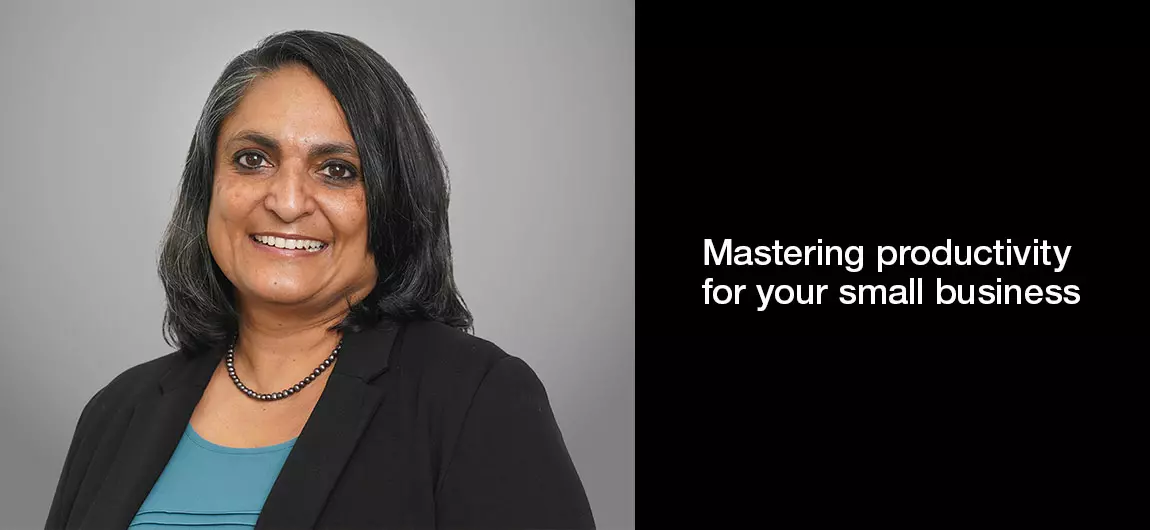
Monisha Longacre has many titles. She is an author, a fractional COO at two different companies, and the founder of priorigami, a productivity app aimed at helping entrepreneurs be the most productive they can be. As an expert in productivity, Monisha shares her insights on timeblocking, managing multiple roles, and being transparent with your employees.
View transcript
Productivity for Small Business – Monisha Longacre, priorigami
[00:00:00] Sanjay Parekh: Welcome to The Side Hustle, the Small Business Podcast, powered by Hiscox. I'm your host, Sanjay Parekh. Throughout my career, I've had side hustles, some of which have turned into real businesses, but first and foremost, I'm a serial technology entrepreneur. In the creator space, we hear plenty of advice on how to hustle harder and why you can sleep when you're dead.
[00:00:21] On this show, we ask new questions in hopes of getting new answers. Questions like, how can small businesses work smarter? How do you achieve balance between work and family? How can we redefine success in our businesses so that we don't burn out after year three? Every week I sit down with business founders at various stages of their side hustle to small business journey.
[00:00:42] These entrepreneurs are pushing the envelope while keeping their values, keep listening for conversation context and camaraderie. Welcome to The Side Hustle to Small Business Podcast. Today my guest is Monisha Longacre. Monisha, I'm excited to have you here. Thanks for being on the show today.
[00:01:04] Monisha Longacre: Thank you. So good to be here.
[00:01:06] Sanjay Parekh: So give us a little bit about your background and what got you to where you are today.
[00:01:10] Monisha Longacre: So my background is mostly in digital media. Spent 13 years at the Weather Channel. I was, went to school for communications, thought I was gonna be a journalist, and ran smack dab into the internet, which changed everything. At the time I thought it was gonna change communications. Little did I realize it was gonna change how we did everything right.
[00:01:28] So I was really on the forefront of that, and very fortunate to be in that space. After the Weather Channel, I worked at several different tech startups in ed tech and HR tech. And really got a bug for how do you make people's lives better with technology. And throughout that I was really busy juggling work, family, kids, and realized that I had spent a lot of time perfecting different techniques to help me manage it all. Hmm. So that got me into this whole side hustle of Productivity 1 0 1, which is my business. And I first launched an app called priorgami and it's basically a Fitbit type app for task management.
[00:02:13] And so you enter your tasks and you keep track of you know, your progress made, setting goals and then congratulate you along the way. And then I took that and I have written a book called Practical Productivity. A Guide to Surviving Life's Juggling Act. Yeah. And it's chockfull of tips and tricks and hacks and all of the things that you've heard that I've actually tried.
[00:02:39] And give you ways to try it out yourselves to find out what would work best for you.
[00:02:43] Sanjay Parekh: Yeah. So I imagine a lot of this stems from that career at Weather Channel. Weather.com and maybe in the beginning not so productive and maybe by the end you'd figured it out. Like what, what kind of transition did you make there by looking back at it all?
[00:02:59] Monisha Longacre: Yeah. It was basically I have that mindset of everything I see in front of me I find wanna find a better way to do it.
[00:03:04] Sanjay Parekh: Yeah.
[00:03:05] Monisha Longacre: So it's like every little challenge. I was like, okay, there's gotta be a better way to manage my time. There's gotta be a better way to manage energy. There's gotta be a better way to keep track of my tasks.
[00:03:14] And so I would just try different things. Some worked, some didn't. Right. And it's all different for each person, right? But it was a game to me. And so that's really kind of the take on this book is, you know, how do you make all the puzzle pieces fit? How do you keep all the balls in the air? Which ones are the ones to let go?
[00:03:31] Right? Sometimes, you know? And then making it in a way that's not. Added stress because we have enough stress in our lives, we don't wanna add one more thing to it. But helping you kind of reduce the stress by making sure that you feel like you've got control over it.
[00:03:46] Sanjay Parekh: Yeah. So very entrepreneurial kind of thing that you're trying to do here. Ever did anything entrepreneurial as a kid or were there entrepreneurs in the family that you saw as you were growing up?
[00:03:57] Monisha Longacre: Not really. We were all very hard workers. Study hard, work hard, everything's gonna come your way. Definitely more of the approach of more and more, more, right. And had to kind of unteach myself some of those things. Well, more is not necessarily always better. Making sure you're focused on the right things is better. So there were a lot of things that I had to kind of give myself grace on. And say, wait a minute, maybe this isn't the right approach.
[00:04:26] Sanjay Parekh: Yeah. So at what point then did you decide that, hey, I wanna. Try launching kind of a side hustle thing.
[00:04:33] Monisha Longacre: So I had in my mind lots of little ideas for businesses, lots of little things along the way. I had a folder where I would kind of parry away all these little concepts. But when it came to time to do it, what really made the difference was focusing on something that would solve problems that other people had.
[00:04:52] Sanjay Parekh: Right? Right.
[00:04:53] Monisha Longacre: That was to me, the real, oh, is there a way I can really help?
[00:04:56] Sanjay Parekh: Yeah.
[00:04:57] Monisha Longacre: And that's what the impetus was. To actually take the dive and do it.
[00:05:03] Sanjay Parekh: Right. So for this, this productivity kind of side hustle, what was it that Tipped you over the edge to make you realize like, yeah, this is definitely worth doing.
[00:05:11] Monisha Longacre: So I think it was, I guess I had kind of built a brand for myself for getting things done. Like I was the person that oh, if something needed to get done, oh, get, give it to Monisha, she'll figure it out. And so I kind of saw it as a superpower.
[00:05:26] Sanjay Parekh: Yeah.
[00:05:26] Monisha Longacre: And a differentiator. And I was like, wow, gosh, if you could package this and kind of teach others to do the same. I believe there was some value in that.
[00:05:36] Sanjay Parekh: Yeah. That it also feels like when you're talking a little bit of a negative, because all the things that everybody else didn't want to do, they just kept giving to you.
[00:05:44] Monisha Longacre: Well, it is, and I talk about that in my book. Like why is it that the busy people get all the work?
[00:05:51] Right. If you're the busiest person, guess who you go to first. And there's a reason why. It's because they have a system. It's Because they don't procrastinate. It's because they know they have a limited amount of time. So they learn how to use it wisely.
[00:06:05] Sanjay Parekh: Yeah.
[00:06:05] Monisha Longacre: But it is, it's a wheel.
[00:06:07] Sanjay Parekh: Yeah, exactly. Right. Like you're all, I'm already busy. Don't give me more. So I think that kind of dives right into like entrepreneurs and entrepreneurship. Like we're all busy. Any like things that you've seen or any piece of advice about how do we deal with that? Like one of the things that we've heard many times on this show with folks is that they try to get a virtual assistant, but then the amount of time that it takes to train that person to do the job, it'd just be quicker to do it yourself, right?
[00:06:37] And that's like this catch 22 kind of fallacy that exists around that because. There is another side to that if you can get them trained, that it does make you better. So how do you think about that and, and kind of how do you counsel people around that?
[00:06:51] Monisha Longacre: And there are lots of little trips, ticks, trips, tips and tricks on that in the book. And there are lots of different ways to kind of go about doing it. It's gonna be different for each person. But first of all, especially as an entrepreneur, as you have to understand that you can't do it all. It just isn't possible, right? Especially, we have so many great ideas, right?
[00:07:09] Their ideas are flowing and right. We wanna do it, and it's like, okay, well the first realization is if you can accept that you can't do it all. The second then is prioritizing, right? Like, what are the things that you can really let go? And let's focus on the things that really matter and are really gonna move your business forward. Which is really difficult, but we talk about the Eisenhower Matrix and how to look at things from urgency and importance and really focus on the things that are both important, but an urgent, but not necessarily, but don't lose sight of the things that are really important, but not urgent. That's the biggest quadrant to make sure you don't lose sight of.
[00:07:44] Sanjay Parekh: Right.
[00:07:45] Monisha Longacre: And then it's prioritize. Once you know what to prioritize, I believe in the daily top three is pick three things a day.
[00:07:53] Sanjay Parekh: Yeah.
[00:07:54] Monisha Longacre: So you're not trying to eat the elephant. Right. You can't do it all. And so if you start chipping away at it, then you see progress.
[00:08:01] Yeah. And so it takes a lot of discipline. Yeah. And it takes practice, but once you get in the habit of doing it, it comes naturally.
[00:08:08] Sanjay Parekh: Yeah. I like that. Okay, so, you kind of decided to step away, do this side hustle thing, but you're, you've still got a full-time job. Two, two full-time jobs. Yeah.
[00:08:19] Monisha Longacre: So two part-time jobs.
[00:08:20] Yes. Two part-time jobs. Okay. And I'm serving as a fractional COO for two different companies. Right. One is an online video mentoring platform. Okay. For early to mid-career. Professionals.
[00:08:31] Sanjay Parekh: Okay.
[00:08:31] Monisha Longacre: The idea is to get them coaching earlier in their careers. So that they can pick up some of these other skills.
[00:08:37] Sanjay Parekh: Yeah.
[00:08:38] Monisha Longacre: Sooner rather than later. And then I'm also working in a, as an operations head at a commercial real estate company.
[00:08:45] Sanjay Parekh: Okay.
[00:08:45] Monisha Longacre: And relaunching my app and writing the book.
[00:08:48] Sanjay Parekh: Okay. So you're juggling a lot of things, kind of the thing that you're working on, which is productivity kind of helps with all this. Do you feel like these things. Do you learn things from these things that then inform the work and, and vice versa? Or, or, yes. How does that work for you?
[00:09:05] Monisha Longacre: Absolutely. Constantly learning. And I think that's really the, the key of this whole thing and what's hard about finishing the book is that it's really not finished.
[00:09:14] Right. It's still work in progress, right. It's, there's still constantly things that I was like, oh wait, here's a new. Little challenge. How's a better way to do this? So.
[00:09:23] Sanjay Parekh: Yeah.
[00:09:24] Monisha Longacre: Maybe there'll be a second version. I don't know, but it never ends. And even some things in the books where like learning how to say no is really difficult for me.
[00:09:34] Yeah. Still is. Even though I know that's the right thing to say.
[00:09:38] Sanjay Parekh: Right.
[00:09:39] Monisha Longacre: Asking for help is difficult for me.
[00:09:41] Sanjay Parekh: Yeah.
[00:09:41] Monisha Longacre: You know because that's like a weakness on my part if I have have to ask help, but it's not. It can be a strength, especially for entrepreneurs. So those are still work in progress, not done.
[00:09:53] Sanjay Parekh: Yeah. And I think that's, that's it's funny you touch on those. I think that's a challenge for a lot of entrepreneurs. Especially the saying no. And saying no to. Let's say clients that maybe aren't the right fit necessarily long term. But the money is really good. So how do you think about that, even for yourself and, and how do you kind of navigate that? Because that is so hard.
[00:10:16] Monisha Longacre: It is really difficult because you wanna, especially when you're starting to make it, you wanna say yes to everything, right? Right. But it can quickly take you in directions that aren't necessarily right for the business. And we grapple with this every day, all day, you know? And there's sometimes where you do have to kind of go veer off a little bit. And there are other times, and I guess that's the secret sauce to figuring out which is which.
[00:10:41] Sanjay Parekh: Yeah. Do, do you have like a framework or something in terms of thinking about how, when to say no or just is it like a gut thing and be like, I know this is a no, but..
[00:10:50] Monisha Longacre: I wish I knew. Yeah, I'm have to, I'm gonna have to work on that, like figuring out a formula to, you know, which one, which, when do you pi, you know, kind of go off course.
[00:10:59] Sanjay Parekh: Maybe it's just always say no to everything. And then if they keep asking, then you say yes.
[00:11:02] Monisha Longacre: I don't, I dunno, because some entrepreneurs have found their, like their key by pivoting, right? That's what they started, that's with and what they thought they were building ended up being different because of the market, right? So you can't always ignore it either. Yeah. But that's a really interesting problem and a great example of how this work is never done.
[00:11:19] Sanjay Parekh: Right. Right. Exactly. Okay, so working on kind of working for two different businesses how do you think about like, you know, the, I struggle with that because it's like the juggling the different tasks. And, and the things that you're doing are so different, right. Real estate company. Online video mentoring and then the productivity. So how do you think about that and, and kind of that task switching? Like do you split up your day? Is it different days for different things? Like how do you think about that?
[00:11:50] Monisha Longacre: Both and all. So it's definitely switching up my time. So I've divided up my week between the two jobs and then I have time in between. That allows me to focus on what's most important. Right?. So there are, and it goes to, this is a really good analogy of the work-life balance dilemma. Mm-hmm. That everybody struggles with. And they, I will admit, at one point I tried to do a pie chart, make sure it was all even, well that didn't work. You know, I was like, that is not how work-life balance is kind of a misnomer, if you will. And so I have a chapter in my book about how we really have one life to live. Right.
[00:12:26] Right. And you can't really cut it up and segment it and make sure it's all balanced. Right. But each day figuring out what is the most important things and getting those done.
[00:12:36] Sanjay Parekh: Yeah.
[00:12:36] Monisha Longacre: And then do the same the next day. Right?
[00:12:39] Sanjay Parekh: Right.
[00:12:39] Monisha Longacre: Because I can't be all three things all the time, every single day.
[00:12:43] Sanjay Parekh: Yeah.
[00:12:43] Monisha Longacre: But if for today, what are the three things I need to get done?
[00:12:48] Sanjay Parekh: Yeah. Yeah. Interesting. I mean, I think that's a lot of parallels for entrepreneurs because. I think for all of us, it's hair on fire almost all the time. You know, everything's go... going back to your, your kind of Eisenhower thing, everything's important and urgent. Urgent, constantly.
[00:13:06] Monisha Longacre: And I think that's one of the biggest struggles is how to make sure that we're not just doing the urgent all the time. Because the important doesn't get done.
[00:13:15] Sanjay Parekh: Yeah.
[00:13:15] Monisha Longacre: And so what I say is make sure that if something's really important, that you're making time blocking time, focus time. Deep work time. Which is really where all the great ideas come from, right? Because you can do emails and you can do put out fires all day, every day and find that you're not really moving your business forward.
[00:13:33] Sanjay Parekh: Right?
[00:13:34] Monisha Longacre: Right. The moving your business forward is gonna come from that.. The deep work. Yeah, the focused work. That you have to prioritize.
[00:13:43] Sanjay Parekh: So How would you advise to somebody that doesn't have that time? Needs that time. How do you figure out a way to get that time?
[00:13:53] Monisha Longacre: You have to fight for it. And then the other thing that
[00:13:56] Sanjay Parekh: I, I mean, is it, is it blocking it off on the calendar? It's time blocking and then just saying like, it's just not gonna happen. Nothing else is gonna happen again.
[00:14:01] Monisha Longacre: You've gotta find what works best for you. Time blocking is a very efficient way to get deep work done. Right. Especially for people. And I also advise looking at your natural rhythms, like when are your highs and lows during the day?. And mapping that deep work time to the best time for you to be able to focus. Right. Right. Because I think we just kind of do whatever comes at us, but if you can really say, gosh, you know, my really good thinking time is between 10 and 12 every day. Yeah. And then I always make sure you communicate like, right, like, I'm not gonna be available for these two hours.
[00:14:32] Right. Because I really wanna get the X, Y, Z done. And then tend, people tend to appreciate that and respect it if they know.
[00:14:40] Sanjay Parekh: Yeah.
[00:14:41] Monisha Longacre: If they don't know, then it's. You know, free for all. And people are knocking and do you have a minute? And you know, and the whole morning's gone.
[00:14:48] Sanjay Parekh: Right.
[00:14:49] Monisha Longacre: But protecting that time is hard until you get used to doing it.
[00:14:53] Sanjay Parekh: Yeah.
[00:14:53] Monisha Longacre: And people respect it. If you, you've set that boundary too.
[00:14:56] Sanjay Parekh: I think my challenge is, is one of my best thinking times is when I'm in the car listening to music. Because nothing else is going on. And it just, but the problem is I don't drive a lot of places nowadays, so.
[00:15:07] Monisha Longacre: It's changed everything.
[00:15:08] Sanjay Parekh: I can figure out a way to do it, kind of replicate that same experience somewhere else?
[00:15:12] Monisha Longacre: Yes, that's exactly right. Yeah, it's fine that, what is the equivalent of that? You know, there are some people who do fake commutes now. Because of that thinking time. That's interesting. So they don't interesting necessarily have to go anywhere, but they'll get in the car. You know, either get a coffee or do something just to have that as part of their routine.
[00:15:29] Sanjay Parekh: That time. It's funny you mentioned that. I read a story about somebody actually trying to buy a plane that wasn't gonna go anywhere, but you would get on and have no access to the outside world. So that.
[00:15:40] Monisha Longacre: Same idea.
[00:15:40] Sanjay Parekh: You'd, you'd have that time.
[00:15:42] Monisha Longacre: So that's a little more extreme.
[00:15:43] Yeah.
[00:15:44] Sanjay Parekh: May, maybe there's a, maybe there's a business idea somewhere.
[00:15:47] Monisha Longacre: And in fact, I was just on a plane and I'm kind of bummed that planes have wireless now.
[00:15:52] Sanjay Parekh: Have wifi now. Yeah. Yes.
[00:15:53] Monisha Longacre: Because that was one of my really good sacred times to you know, for..
[00:15:57] Sanjay Parekh: Nobody could contact you or anything else like that.
[00:15:59] Monisha Longacre: Or I didn't want to.
[00:16:00] Right. I was like, okay, this is my special time. Yeah. And now it's like, oh, well I'll just text you. I'm like, no, please don't.
[00:16:09] Adam Walker: Support for this podcast comes from Hiscox, committed to helping small businesses protect their dreams since 1901. Quotes and information on customized insurance for specific risks are available at Hiscox.com. Hiscox business insurance experts.
[00:16:30] Sanjay Parekh: So, okay, so you're, you're juggling kind of a, a couple of jobs and then this side hustle thing. What's kind of the long term for you? Is it, you know, getting rid of the side, the, the kind of jobs and then making this side hustle thing be the full-time thing? Like how do you view these things for yourself in the long term?
[00:16:47] Monisha Longacre: Again, I feel like it's such a work in progress, right? Like different things come up and you kind of go with the flow. So I'm not done with going with the flow.
[00:16:57] Sanjay Parekh: Right.
[00:16:57] Monisha Longacre: I am energized by learning different businesses, really trying to help them with their operational expertise, right?. Like businesses who have figured out how to be really good at their business, but then the business of business.
[00:17:08] Is a whole different thing. And so I'm really enjoying that. And I like working for, like, the real estate thing is a whole new to me. I don't know anything about it, but it's been great. Nice. Because it's been such a great learning experience to do what I know how to do. But do it in different sectors, so I'm not done with that yet.
[00:17:26] Sanjay Parekh: You've, you've gone through like kind of the really. Ends of the spectrum in terms of size of organizations. Yes. Right? Yes. Like weather, huge organization. And now you're working on these smaller startups and a lot of times small organizations try to act like the big ones. But I think it's to their detriment because. They have some advantages that don't happen in big organizations are, are there certain things that you see that small organizations try to do that they shouldn't do or things that they don't do that they should do?
[00:17:56] Monisha Longacre: And I think that's what I like about where I am right now is I have seen both, very early startups. You know, I have my own business. That's just me. And then I've worked for EY, which is even larger. So seeing that whole spectrum, I can be really thoughtful about recommending things that are right sized. Right. Because it's hard to not get caught up in, oh, we need this big system and we need this big system, and saying, wait, wait, wait. No, no, no. You're still. 30 to 50 people, you know? Right. But there are some things you do need in place now that you've grown to that size. And you know, it is once, not one size fits all, but where you are in your maturity and trying to make those right decisions. So you're not over, I mean, the, the beauty of that size is you don't wanna be bureaucratic, you don't want the administrative stuff to start eating away at all your work time. Right. So how do you still get those processes in place that make sense, but aren't gonna get the, in the way of doing your job.
[00:18:51] Sanjay Parekh: Is there something that you see often that small businesses should do but aren't doing that they could steal from larger organizations? Like maybe to help them plan for scaling up and getting bigger over time.
[00:19:05] Monisha Longacre: The one thing I see, and this is pretty consistent, and it doesn't matter what size business you are, but I think again when you talk about productivity, is everybody's gotta get better about giving feedback. Learning how to give it. Learning how to take it, building it into your culture.
[00:19:21] Sanjay Parekh: Yeah.
[00:19:21] Monisha Longacre: I just think that's one of the biggest things you can do from an operational success standpoint. Yeah. That is the hardest thing to get people comfortable with doing.
[00:19:31] Sanjay Parekh: Interesting. Okay, let's change gears a little bit and talk about kind of your transition. So weather, EY, a little bit, everything then into this things and doing your own things. Was there anything that made you nervous as you made these transitions and, and how did you deal with that?
[00:19:52] Monisha Longacre: I, I don't think I'd get nervous.
[00:19:55] Sanjay Parekh: No?
[00:19:55] Monisha Longacre: Change has always been exciting to me. And I think part of it is just that learning culture. Like I'm like, I want to learn something new, right? I wanna experience something new. I'm not afraid of a challenge. I was always the change agent, right? Like, oh, we need to move from this to this. Okay. You know? Yeah. Help do that. Because I just think there's always. Something better or something new or something different. So if anything I seek it. Yeah. I don't avoid it.
[00:20:22] Sanjay Parekh: Yeah. And that's, as entrepreneurs, that's really kind of what we are, right? But the friction we have a lot of times is for those other people that are not that same. And and a lot of times entrepreneurs will try to just steamroll because we know like, look, this is the better way to do it. It doesn't always go well. Right. No. Yes. Any like experience doing that? Like any advice on how to manage that for entrepreneurs that might be listening?
[00:20:47] Monisha Longacre: Yeah, and again, the whole key is kind of that shared vision, right? That shared purpose. I think especially for entrepreneurs, we have that in our head. But making sure everybody under else understands it. Yeah. And is bought into it is a whole nother. Effort. Right. Just because you've got it doesn't mean that everybody else is on the exact same page. Right. And we're moving a million miles ahead. Right? Yeah. But you got, in order to bring everybody else with you, you gotta slow down.
[00:21:13] Sanjay Parekh: Yeah.
[00:21:14] Monisha Longacre: Which is hard.
[00:21:15] Sanjay Parekh: Right.
[00:21:16] Monisha Longacre: And make sure they're bought in. Right. But first understand and then bought in.
[00:21:20] Sanjay Parekh: Right? Yeah.
[00:21:21] Monisha Longacre: Which is a whole different aspect.
[00:21:23] Sanjay Parekh: A any like, man, this great advice. I, I like that. Any, any advice on how to make sure that happens and make sure that. They do understand and they do buy in because a lot of times in, in corporate America, like you'll get the Yeah, but it's actually a no. Right? And then like they don't get it or they don't believe it. Not, and again, I've seen this over and over again. And the number one thing I think that makes all the difference and it's hard is full transparency.
[00:21:51] Sanjay Parekh: Yeah.
[00:21:52] Monisha Longacre: Right. Like if something's not working for a leader to say, guess what guys, it's not working.
[00:21:58] Sanjay Parekh: Right.
[00:21:59] Monisha Longacre: Is huge. Yeah. But I think we're always afraid Yeah. To have that conversation or be that transparent. Or be that open. Especially in when you're building something new. Right? Like the last thing you wanna say is, oh, this isn't working. But if you do, you know how much credibility and trust you build.
[00:22:17] Sanjay Parekh: Yeah.
[00:22:18] Monisha Longacre: You can, you know, it's like, oh wow. Like, you know, especially when we we're figuring something out. I don't know all the answers.
[00:22:24] Sanjay Parekh: Yeah.
[00:22:25] Monisha Longacre: We gotta figure this out together and I need your help. And you can see the exact opposite happen when leaders are not transparent.
[00:22:31] Sanjay Parekh: Yeah. So let's, let's talk about kind of, how you manage your day and everything. We touched upon it it a little bit ago and you know, the pie and work life balance. How do you manage it for yourself? Is it all based on the calendar, you just try to time block it? Do you let things be flexible? How do you think about, you know, work life balance and, and family time, all of those kinds of things.
[00:22:54] Monisha Longacre: So I really do use my calendar a lot to make sure that the non-negotiables are there, right? Like this podcast is there, it's blocked, you know, I'm not moving them. Definitely doing it. Definitely doing it. And then I try to take my top three of the day.
[00:23:11] Sanjay Parekh: Right.
[00:23:11] Monisha Longacre: And make time for them.
[00:23:13] Sanjay Parekh: Okay.
[00:23:13] Monisha Longacre: Right. Like.
[00:23:14] Sanjay Parekh: And do you do that the night before? A week before?
[00:23:16] Monisha Longacre: I, I do it in the morning.
[00:23:17] Sanjay Parekh: Okay. The day of.
[00:23:17] Monisha Longacre: And priorigami will actually send you an alert to say, hey, time to set your top three and you can set it right for the night before I do it. Then the first thing in the morning.
[00:23:25] Sanjay Parekh: Okay.
[00:23:26] Monisha Longacre: But then there's things that. I, you know, I know that it doesn't go always to plan. So I have a plan. I always have a plan. I also accept that it doesn't always go to plan, so I always have a plan B.
[00:23:36] Sanjay Parekh: Okay.
[00:23:37] Monisha Longacre: And I also recommend the things that actually have to get done. You double it up? So if I have to do something, let's say I had something to do this afternoon and something gets in the way, I have another time slotted to get it done.
[00:23:50] Sanjay Parekh: For, for as a plan B, as a backup for the.
[00:23:52] Monisha Longacre: So like whole double or nothing, right? Yeah. Like you double book yourself. And what's brilliant about, it's if you get it done in the first time, then it opens up time, right? So it's like finding money.
[00:24:01] Sanjay Parekh: Oh, that's interesting. I like that.
[00:24:02] Monisha Longacre: But if you don't get it done, you've already have a backup plan in place.
[00:24:06] Sanjay Parekh: Okay.
[00:24:07] Monisha Longacre: So you're not scrambling.
[00:24:08] Sanjay Parekh: Yeah. Yeah. Interesting.
[00:24:10] Monisha Longacre: So, and, and I don't do that for everything, but the things that are really important that have to get done right is, is a really worthwhile tool. Yeah, I like it. But I, you constantly are, I call it productivity Tetris, where you're moving things on your calendar, just to kind of make it all fit. And then the other thing is, again, I've learned over time is you don't block every minute of every day. Right. And, but you gotta have. Recovery time, right. You've gotta have you time, you've gotta, and I didn't use to make time for those things Because I was like, oh, just keep going, keep going, keep going.
[00:24:43] But I definitely value, so I put it on my calendar now. Yeah. If I'm going to walk and my team knows that I don't take my phone and it's there and it's, if anything at role models that behavior. Right. So lunch two or three times a week I'll try to walk. And I just block it as walk.
[00:25:00] Sanjay Parekh: Yeah.
[00:25:01] Monisha Longacre: And they know I don't have my phone.
[00:25:03] Sanjay Parekh: Yeah. I will say I like a lot of these scheduling tools that now have the ability that once a meeting is scheduled, it'll block time. Either before, after, or both for you. On your calendar so that you have that either recovery time or time to get ready for those meetings. Yes. And so I've, I've personally found that very useful in terms of kind of dealing with all of this.
[00:25:24] Monisha Longacre: Yeah. And then try again what works for you? If you need that break, then build it in. Right, right. Like, I need that, you know, that buffer time to prepare or get caught up on emails or, you know, whatever that may be.
[00:25:35] Sanjay Parekh: Yeah. Okay. Last couple of questions here for you. Okay. One, if you were talking to somebody else. That was thinking about doing the same thing as you, you know, escaping a corporate job, starting to do startups or starting a side hustle. What advice would you give to them?
[00:25:53] Monisha Longacre: It's much harder than you think. And I do talk to entrepreneurs all the time, or wanna be on entrepreneurs mostly, right? And they've got this great idea and they're so excited and they don't wanna work for anyone anymore, and they want all the flexibility in the world.
[00:26:09] Sanjay Parekh: Right?
[00:26:10] Monisha Longacre: All the things that glorify entrepreneurship. Right. Which are all true.
[00:26:14] Sanjay Parekh: Yeah.
[00:26:15] Monisha Longacre: But I was like, it is the hardest thing you will ever do.
[00:26:17] Sanjay Parekh: Yeah. It's a hard slog in the beginning,
[00:26:19] Monisha Longacre: right? It truly is. Yeah. And, and it never goes away.
[00:26:22] Sanjay Parekh: Right.
[00:26:22] Monisha Longacre: Like it's con, I said, you never turn it off. You never take a vacation. Yeah.
[00:26:26] You never, like, there are these things and are you ready for those things? Yeah. Because that's the stuff that nobody tells you, right? It's very glamorized, right? Like, oh it is. You're your own CEO. You get to call the shots, you get to prioritize. It's like, well, no, no, no. Let me tell you what the reality is.You know there, you don't call on people when you take a day off. Your business stops.
[00:26:47] Sanjay Parekh: Right?
[00:26:48] Monisha Longacre: Right. Yeah. So it's.
[00:26:50] Sanjay Parekh: It's glamorized with the ones that are.
[00:26:53] Monisha Longacre: Thinking about it.
[00:26:54] Sanjay Parekh: Very successful and very successful, right? Yes. The, the ones like us that, you know, you're slogging through stuff. Like nobody writes stories about the slog. No. They only write stories about the, you know. Yeah.
[00:27:05] Monisha Longacre: Except the book. The Hard Thing About Hard things. That was excellent. Very few. Very few. Then I'll say. YBut you're right. And I don't think a lot of people read that, but I do recommend it. Right. So if you, before you jump into this. Make sure you know exactly what you're getting into and I don't wanna discourage you from doing it. But just realize this will be the hardest thing you've ever done.
[00:27:23] Sanjay Parekh: Yeah. But maybe the most rewarding as well. Yes, absolutely. At the same time. Yeah. Okay.
[00:27:28] Monisha Longacre: Kind of like parenting.
[00:27:31] Sanjay Parekh: So last question for you like looking back on all of it you know, since the beginning, since you started working if there is something that you could do over again, based on what you know now, what is that and, and why?
[00:27:45] Monisha Longacre: Oh goodness. That's a great question. If I could do it over again, I think I'd have a lot more confidence.
[00:27:55] Sanjay Parekh: When you started going on, on your own or? Just in general? Just in general. Okay. Like, you know, speaking up more. Yeah. Taking more risks, you know, not waiting as long to do certain things. Yeah.
[00:28:09] How, how long did it take you to, you feel like, before you got like your sea legs there and were confident?
[00:28:13] Monisha Longacre: I think it was long, much longer than it could, should have been.
[00:28:16] Sanjay Parekh: Yeah.
[00:28:17] Monisha Longacre: And that might just be a personal thing, but once the great news is once you start doing it, yeah. You realize nothing terrible is gonna happen. Like the world's not gonna fall apart.
[00:28:28] Sanjay Parekh: Most things we work on are not, not that important in the end of it. Right. They're not fatal.
[00:28:33] Monisha Longacre: Yes. But it took me a long time to not.. To build that confidence to do that. Right. And maybe that's just, you gotta experience stuff and, you know, get some things behind you before you can.
[00:28:44] Sanjay Parekh: Yeah.
[00:28:45] Monisha Longacre: And again, a lot of that is upbringing and background and all sorts of things.
[00:28:49] Sanjay Parekh: Right.
[00:28:49] Monisha Longacre: But Yeah, I wish I had been bolder sooner.
[00:28:53] Sanjay Parekh: Yeah. Yeah, I can appreciate that. Monisha, this has been fantastic. Where can our listeners find and connect with you online?
[00:29:01] Monisha Longacre: So I'm on LinkedIn, Monisha Longacre. You can find out more about my app at priorigami.com and the book is Practical Productivity and it will be on Amazon.
[00:29:12] Sanjay Parekh: Awesome. Thanks so much for being on today.
[00:29:14] Monisha Longacre: Thank you.
[00:29:18] Sanjay Parekh: Thanks for listening to this week's episode of the Side Hustle to Small Business podcast, powered by Hiscox. To learn more about how Hiscox can help protect your small business through intelligent insurance solutions, visit Hiscox.com. And to hear more Side Hustle to Small Business stories, or share your own story, please visit Hiscox.com/side-hustle-to-small-business. I'm your host, Sanjay Parekh. You can find out more about me at my website, SanjayParekh.com.
Subscribe to our podcast



Did you start your business while working full-time at another job?
Tell us about it! We may feature your story in a future podcast.