Selling Art Online: Miriam Schulman's Story



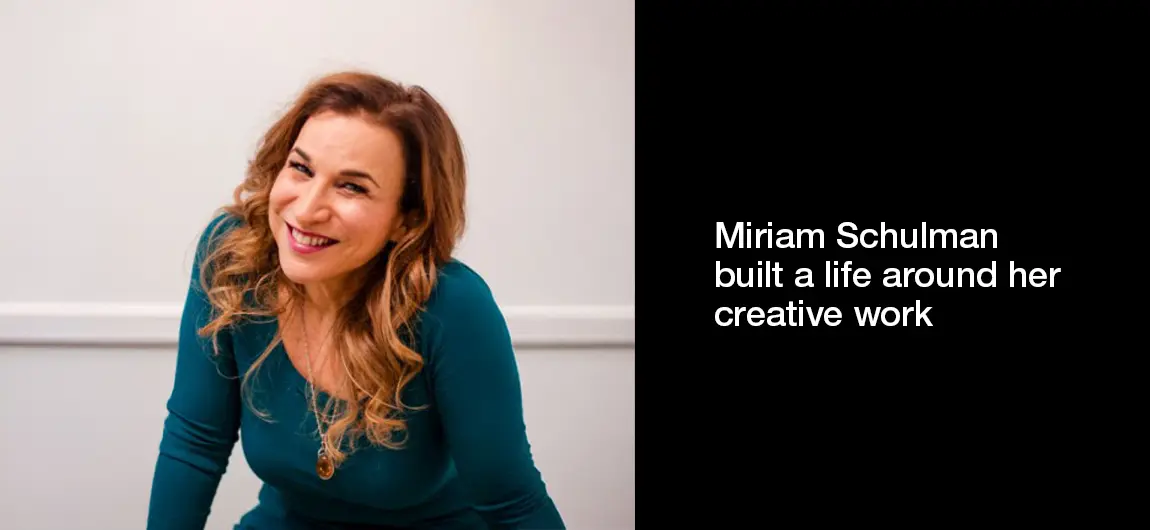
Miriam Schulman is the Founder of Schulman Art, which began as a resource for creative entrepreneurs and has evolved into a comprehensive coaching service helping artists turn their talents into sustainable businesses. Her innovative approach supports artists’ success through mentorship, educational resources, and community-building.
View transcript
Selling Art Online – Miriam Schulman, Schulman Art
[00:00:00] Sanjay Parekh: Welcome to The Side Hustle to Small Business Podcast, powered by Hiscox. I'm your host, Sanjay Parekh. Throughout my career, I've had side hustles, some of which have turned into real businesses, but first and foremost, I'm a serial technology entrepreneur. In the creator space, we hear plenty of advice on how to hustle harder and why you can sleep when you're dead.
[00:00:22] On this show, we ask new questions in hopes of getting new answers. Questions like, how can small businesses work smarter? How do you achieve balance between work and family? How can we redefine success in our businesses so that we don't burn out after year three? Every week I sit down with business founders at various stages of their side hustle to small business journey.
[00:00:43] These entrepreneurs are pushing the envelope while keeping their values. Keep listening for conversation, context, and camaraderie. To today's guest is Miriam Schulman, the artist behind Schulman Art. And who has dedicated herself to coaching other artists on how to sell their art. Miriam, welcome to this show.
[00:01:08] Miriam Schulman: Oh, hey Sanjay. Thank you so much for having me.
[00:01:11] Sanjay Parekh: So I'm excited to have you on here because it's interesting, we've had an artist on the show but we haven't had people talk about artists and how to do the business of art, which I think is a whole nother can of worms. But before we start talking about all of that stuff, give us a little bit about your background and what got you to where you are today.
[00:01:31] Miriam Schulman: Okay, so first of all I had been a self representing artist for over 20 years making a sustainable living as an artist. But I didn't always start off that way, so I took the practical route and went to Wall Street and look, he's laughing at me and after, not, I, why does people laugh?
[00:01:50] Sanjay Parekh: I like how you said The practical route is going to Wall Street. Okay.
[00:01:54] Miriam Schulman: Well. I was told I couldn't make a living as an artist. So I said, well, where did they make money? Over there. I was like, okay, that's where I'm going then. But after 9/11 happened, I knew I couldn't go back to that world. And at first I still didn't believe I could make a living for my art. So I did other things. I painted on the side and I was teaching Pilates and when the gym wanted me to sell personal training packages and they were giving me sales training, that's when I had my aha moment. I saw that what they were teaching me to sell personal training packages I could use to sell anything, including art. And so since that time I built a six figure art business. I added on online classes in 2013. I've made millions of dollars selling online art classes. And roughly 2018, that's when I started my podcast. So end of 2018, early 2019 is when artists started asking me, could you please show me how to do it? So now I'm coaching other artists, and that's mostly where I spend my time.
[00:03:01] Sanjay Parekh: Okay. Is this the first time that you've started something or did you do anything entrepreneurial as a kid, or did you have entrepreneurs in the family, anything like that? Oh, great question.
[00:03:14] Miriam Schulman: No. Parents who are entrepreneurs. Wow. That's the first time someone ever asked me that. No, but I don't like to be told what to do, so it's like, it makes sense now that I work for myself. Yeah. And the truth is that once you get started as your own business person, you become unemployable very fast. Like it's, I can't go back.
[00:03:37] It's like, there's no way. It's like what we were talking about before we hit record, it's like. I'm supposed to do the work myself. I can't talk to people all day and tell them what to do. So I have a team. I delegate. I like being bossy.
[00:03:50] Sanjay Parekh: Yeah. Yeah. Yeah, I very much identify with that. Once I think you, a lot of times when you become an entrepreneur, you become just broken and unemployable by other people. And that has. That has hit me on the head multiple times through life. So that could be a good thing, that could be a bad thing. I guess that is what you make of it. So okay. Let's talk about the business. So, okay. Pilates sales training. That is a funny segue into selling art and art. So like, what is it that you learned in that process that really gave you that aha moment?
[00:04:27] Miriam Schulman: Okay. So, I'm actually thinking right now as we're talking like how similar the gym business model is to a lot of our business models. So the. So I worked for New York Sports Club, a very large chain of gyms in the New York area and beyond, and they understood that their business model, their biggest source of revenue was not the memberships, it was selling personal training packages.
[00:04:57] So they invested a lot in us, their employees, to train us on that. Now, this is very similar. To what I teach today, which is like you don't focus on these small little things. If you focus on the large ticket items, you're going to be more successful. Like you only need, so taking from the gym world, they understood that selling one personal training package for whatever it was, $2,000 is like a year of gym membership revenue from somebody else.
[00:05:27] So it makes sense that they would invest that kind of time into us. But the types of, techniques that they were teaching me all had to do with relationship building and that is what I do now. So I te I did that throughout my business as an both an artist, as an online class producer, as a coach. And that's what I teach the artists now. It's about those relationships that are going to build your business.
[00:05:53] Sanjay Parekh: Yeah, that's interesting. I, and I think in sales of almost anything. It's about relationships, but why do you feel like artists in particular have this? Lack of understanding of relationships or do they and like.
[00:06:11] Miriam Schulman: Yeah, I'm not sure that, what do you feel like there, that artists in particular have it? I do know that art schools do a very poor job of not only not teaching them the skills, but kind of reverse teaching. Like, oh, selling is selling. If you're successful, you're selling out. Only real artists, blah, blah, blah, blah, blah. When the truth is the most successful artists throughout history, and I'm talking about hundreds of years ago, like Reubens was a master marketer. He would make etchings and distribute it to all the crown princes throughout Europe because he knew there was going to be a war, and it was going to be tough to get his paintings out. So what? What is that? They're flyers. What is that? That's the same thing as a Facebook ad.
[00:06:56] I mean, this is basically what they did, michelangelo didn't say to the Pope, you want me to paint that ceiling? That's not what I do. I'm so sorry. No, he's like, well, that's not really what I do, but how much it's true. Yeah. Alright. Where's the scaffolding? I think I could do it. So. It. He didn't say, I'm not a real artist because I'm not doing exactly what my passion is. Sometimes, and this is the, I think this is a this part is a harder lesson for artists than for most entrepreneurs, but I think entrepreneurs are guilty of this too. Making money can be very boring and we always want to chase like the next shiny thing.
[00:07:41] And it, once you start to make money, it's not fun anymore. But making money is very boring, you're saying. So I'm assuming you agree with me.
[00:07:48] Sanjay Parekh: Yeah. No, absolutely. I think we do have this tendency to chase the shiny thing. Yeah. I think we see that time and time again. But there's so many, quote unquote, boring businesses that are very lucrative.
[00:08:01] Miriam Schulman: Or every, let's just say every business is boring. You just have to be willing to do the boring parts, like, it is, it doesn't matter if you're an actress or an artist or a weight loss coach, there's going to be parts of your job you just don't like. Period.
[00:08:20] Sanjay Parekh: That, and that's just kind of what it is and that's what you have to hustle through to get to the other side. Yeah.
[00:08:24] Miriam Schulman: You just have to like, the parts you like enough to put up with the parts you don't like.
[00:08:29] Sanjay Parekh: So Yeah. Yeah. So let's talk about you starting this. Was there anything like. I mean, you've had a interesting trajectory, right? W Wall Street doing Pilates, then now coaching artists. Like was there anything that made you nervous about starting this up? And if so, like how did you get over that for yourself?
[00:08:49] Miriam Schulman: The thing that made me the most nervous when I started being an artist with that I would have to go back to work. A nine to five, like honestly, I just did not want to do that. So I was really motivated. I did have some savings that kind of floated me through those first few years, so I didn't, I could, I did have the luxury of focusing full-time.
[00:09:12] On what I was doing, and it wasn't six figures. The first year it was like, maybe it was 8,000, then 24,000, and then it started doubling. So it took me a few years to get to six figures, and that was over 20 years ago. So when I was making 60,000, that was nice. Like, because it was like 25 years ago I was making that. But not to say that I don't have fears, so I do, we all do anytime that we're going to do something that's brand new. That makes us feel uncomfortable, whether that may be for somebody I coach that's just sending out an email, they're afraid that's going to bother somebody for somebody else that might be putting on a webinar.
[00:09:54] For me right now, it pitching for speaking engagements, I find that intimidating. But anytime we are going to do something that makes us feel uncomfortable, our brain. Senses, discomfort will register it as fear. You may not feel the fear on that conscious level, but on some level you do and your brain will come up with all kinds of reasons why it's a terrible idea, and you should never do that because our brain has evolved for survival, not goal achievement, and it just wants us to stay in the cave and be safe.
[00:10:27] Sanjay Parekh: Yeah. Yeah. Was there ever a time where you. Thought about or, and considered going back to Wall Street doing the finance thing. Like was there a point in time where it just. It just didn't seem like this was going to work out. And there was that risk of you having to go back and get a job.
[00:10:46] Miriam Schulman: Yeah. Yeah.
[00:10:47] There actually, there was, so this was before 9/11 happened. There was like a year after my second child was born and I had quit my, I had quit my job because the hedge fund had. Blown up. And so I was taking like an extended maternity leave and I was so tired of the spit up and the diapers and I went interviewing and 9/11 happened and I took that as a sign from the universe. Oh, you want to go back there? Really? So I had witnessed the 93 bombing of the World Trade Center. Yeah. I was in that, not in the World Trade Center, but I was in seven world trade next door. Yeah. And the power had gone out. So I walked up to the 37th floor naively thinking, oh, I'll just go back to work. I didn't know it was a terrorist attack. And when I got up there, I looked out the windows and I saw what was going on and we learned what was going on, and everybody around me was still working. So that mentality of work, no matter what, I could not go back to that.
[00:11:52] Sanjay Parekh: Yeah. Understandable.
[00:11:54] Miriam Schulman: Unemployable.
[00:11:55] Sanjay Parekh: Yeah, unemployable. Exactly. That's what we are. Okay. Let's talk about the incubator the kind of the coaching program that you've. You kind of found yourself into, because everybody kept asking you for this. So how did you think about doing this and starting this up? Because I don't imagine that there's many others doing this, or are there any others doing this?
[00:12:18] Miriam Schulman: Oh, there's a lot of everybody doing coaching. I think I'm one of the few who was both a an A artist who had made six figures and have gotten six figure results from my clients. So I've gotten many clients over the six figure mark.
[00:12:35] Sanjay Parekh: Yeah. So what was it that. Really made you interested in doing this for other people then?
[00:12:42] Miriam Schulman: Yeah. When I first started I was trying to do everything. I was selling my portrait still. I was teaching online classes and I thought, oh, and I'll also do coaching because I didn't understand that you really have to focus on one thing. But yeah, so that was at first and when the pandemic happened, and there were so many artists who were just devastated by that, I decided to focus just on creating a legacy for them, for these artists. And that's when I wrote my book Artpreneur and dedicated myself to helping other artists have the same success that I had.
[00:13:18] Sanjay Parekh: Yeah. So in doing that, have you jettisoned like creating art yourself or really doing that as a business like that? I can imagine like doing that would be a tough thing for an artist to do.
[00:13:31] Miriam Schulman: I did phase it out, but I'd been selling my portraits for overt. 20 years and yeah, since I started that was 25 years, so I don't have to do everything to prove myself anymore. It's kind of, again, going back to Michelangelo later in his career he was an architect. He did things, but he didn't do all the things all at once.
[00:13:54] Yeah. So I don't feel the need to continue to prove myself in all the areas I've done that.
[00:13:59] Sanjay Parekh: Yeah. So then how do you take commissions now at this point? Is it like only when you want to or only if it's somebody you know well, or Yeah. Based on your time or..
[00:14:09] Miriam Schulman: That's a Great question. Somebody reached out to me because they wanted, I don't even know how they found me.
[00:14:14] They wanted me to paint their puppy and their bunny. I was like, oh my gosh, really? And I said, I don't even want to pick up my paintbrush for less than a thousand dollars. So I quoted them that for a very small painting, and they were like, yeah, okay. Damn. I didn't charge enough. So I didn't even know where my paints were. So like, but I did do the commission, so I'm not advertising. And yeah, this is the thing that a lot of artists and marketers and people in business is you have to market all the time. It doesn't matter how good you are and how you cannot rest on your laurels. If you want to sell whatever it is, you have to market that. So I just don't market it anymore, so they don't find me. I'm hiding.
[00:15:01] Sanjay Parekh: Obviously you're hiding. Obviously. I like it. Not that well apparently, but no. Exactly. You're attempting to hide. Yeah.
[00:15:12] Adam Walker: Support for this podcast comes from Hiscox committed to helping small businesses protect their dreams since 1901. Quotes and information on customized insurance for specific risks are available at Hiscox.com. Hiscox, business insurance experts.
[00:15:33] Sanjay Parekh: So let's talk about kind of the challenges that artists have, right? Like, so we talked about some of them already, but what other things have you seen just time and time again that artists do or rather don't do that hurt them in terms of being financially successful?
[00:15:52] Miriam Schulman: Okay. The biggest one, and I have to be honest, this one bites me as well.
[00:15:56] It's that idea that cheaper is easier to sell. It just isn't. It just isn't. Yeah. So I have people who I have a client right now who gave me $7,000 to coach her, who has not bought my $20 book. She has not, and I just asked her about that yesterday. Damn, my book. She says, no, I'm waiting to get it for my birthday. It's like, really? So that like, this is not the first time that has happened. So what people want is transformation. It doesn't matter if you're selling coaches or couches. Okay? Coaching programs are couches. So the example I like to give is that if you walk, if you had nothing in your apartment and you were going furniture shopping, remember zero furniture, what are you going to buy first?
[00:16:44] A $6,000 couch or a $400 end table. Rhetorical questions. This is very easy. Yeah. This shouldn't be confusing for anybody. The $6,000 couch. Yeah, because it's because you need a place to sit and it's going to make a trick. And it's going to be a long time before you spend $400 on that end table, even though it's cheaper. But how many times have you done this in your business, offered the little side product that's only $400? Because you think people will spend $400 instead of $6,000.
[00:17:15] Sanjay Parekh: Yeah.
[00:17:16] Miriam Schulman: But people want the biggest transformation. Whether that is a transformation of their home, a transformation in their life, a transformation in their business, that's what they want.
[00:17:26] Sanjay Parekh: Yeah. Yeah. No, that absolutely does make sense. You deal with the immediate problems first and then the other stuff.
[00:17:34] Miriam Schulman: Ah, yeah. So with my artists, it lingers. They have to learn that the $4,000 painting to put over a couch is going to sell faster than the small $400 painting that people don't know where to put except maybe their bathroom.
[00:17:50] Sanjay Parekh: That's funny. Obvious once you say it, but it's funny when you think about it, like, yeah, you're right. That's what people do think time and time again. Yeah. Okay. Let's talk about some of the art that you've seen that, and I mean, so obviously like we just talked about, like these big pieces tend to sell.
[00:18:10] Sometimes faster because yes, they do. You know exactly where they're going to go. Yes, they do. Is there a style like working with a lot of these artists, is there something that you've seen that connects with more people than others? Like there's certain styles or certain subjects that make more sense?
[00:18:28] Miriam Schulman: I love this question and I love my answer for it even more. Okay. So the answer is no. People are not buying medium style or subject, they're buying. Meaning. Alright, so it doesn't matter if it's an abstract painting or landscape or sneakers. What is Nike selling? Are they selling sneakers? No, they're selling motivation. They're selling. Just do it. Every business is like this. We're all selling the meaning. Again, it's come back to what is the transformation the person's going to have. You have to understand that as an artist, what does it mean not to you? Not that you're painting art because you like painting. because it's better than working on Wall Street. No. Nobody cares about that. What does it mean for your customer? What does it mean for them?
[00:19:17] Sanjay Parekh: Yeah. Yeah. I think that's a, it's an interesting point and something that obviously I think applies well beyond art as well. It's not just. Art that this matters to. It's every startup, every product, every side hustle.
[00:19:34] Miriam Schulman: Since we're on the side hustle to small business podcasts, every business has this. You have to know what it means for your customer. Yeah.
[00:19:42] Sanjay Parekh: Yeah. Okay. Let's talk about balance and kind of how you think about running your business and then personal life, right? Like these things for entrepreneurs, they blend into each other very easily more easily than we would hope, right?
[00:20:00] And so compared to people that have quote unquote regular jobs where they have an office to go to and they have. An eight to five, and once they leave, they don't have to keep doing it. Well, it's not totally true anymore because we're always tethered to things, but for entrepreneurs it's even harder because we see opportunities all the time. We do things all the time. We're meeting with people all the time. How do you think about that for yourself in terms of separating these things, the business from the personal and the family life?
[00:20:28] Miriam Schulman: Great question. Okay, so first of all, I always put in my, I always schedule my personal stuff first. Like, I don't even begin my business day until 10 o'clock when I'm back from my gym. When I'm back to going to the, like I take care of my body first, take care of that first, and hopefully I'm done working by five or six o'clock. I'm kind of useless after that time, but it's like I take care of my personal time first. I don't really work on Fridays. Okay. And I don't work that much on the weekends either, unless I'm really bored, so, yeah.
[00:21:05] Sanjay Parekh: So it's a four day a week kind of focused deal for you.
[00:21:09] Miriam Schulman: Yeah. And guess what? My employees, they don't work on the weekends either.
[00:21:12] Sanjay Parekh: Okay.
[00:21:13] Miriam Schulman: Unless they want to. Yeah. So that is I have an employee first business, not you work no matter what, like I came from in Wall Street, but employees first.
[00:21:23] Sanjay Parekh: Yeah. How big is your entire team?
[00:21:26] Miriam Schulman: Well, right now we have two full-timers, which are about 30 hours a week. One of them is US based, gets healthcare 401k, all the things, and another one in the Philippines. And then I have contractors. Okay. So I have a video editor, a podcast editor, and a Facebook ads manager. Okay. So that's six, six people.
[00:21:47] Sanjay Parekh: So for the people that are full-time, especially the one that's US based do you feel like that work-life balance is something that is a clear benefit? Like, is that a reason to keep people, like does it help you in terms of attrition or anything else like that?
[00:22:05] Miriam Schulman: Yeah. She started working for me as a $10 an hour college student. 10 over 10 years ago. Oh, wow. And she's 30 years old now. And like I said, I ha she has a 401k paid time off. She only works 30 hours a week. Barely works on Fridays, never works Saturdays and Sundays, so, yes. Yeah. And I've had her for 10 years and she ever leaves. May, I may have to close down. I don't know what I'm going to do.
[00:22:35] Sanjay Parekh: Yeah that's the good and the bad of having these employees that are just so stellar, right? Yes. Like, they make their life so easy, but man, if they were to ever leave, it would be a difficult situation.
[00:22:46] Miriam Schulman: Yes. So I keep raising her salary and then that's there was one year I didn't have as much money.
[00:22:53] That's when I said, okay, you get four weeks paid vacation. It's like, yes.
[00:22:59] Sanjay Parekh: Is there anything else that you do in terms of that, like for either your direct employees or your partners and teammates that are outside to make sure that you are always the top of mind for them and the first thing they want to work on versus anybody else?
[00:23:15] Miriam Schulman: I give flowers on their birthdays. Wow. I like that. I give bonuses when we launch. They get revenue share from the bonuses, so my Facebook ads manager and my two main employees all get bonuses based on the success of the launch. So, but I, it's harder for me to send things in the Philippines now, but like when my podcast editor's dog died, I sent him flowers.
[00:23:42] Yeah. So I'll do things like that. Yeah. That's nice. I like that. Why the flowers on the birthday? That's an interesting one. Well, I have a lot of women in my, on my team, the podcast editor, he's a dude, but that's why he got flowers and the dog died. But yeah they like the flowers.
[00:24:00] Sanjay Parekh: Yeah.
[00:24:01] Miriam Schulman: Listen, women like flowers.
[00:24:03] Sanjay Parekh: Yeah. No, it's, period. It's good. You don't get flowers that often. That's right. So it's, it does it's special. It's beyond the money. It shows that you care. Yeah, I like that. Okay, let's talk about the demanding like the balance of stress as well, right?
[00:24:20] So we talked about delineating this stuff, you're doing a lot of stuff potentially, right? You've got portraits that you're doing or you're the coaching business or whatever. Yeah. And sometimes. Some of these folks have things that are going on or demands on you that are going on that causes stress. Like how do you manage that for yourself and make sure that it doesn't infect the rest of life?
[00:24:43] Miriam Schulman: Okay. Well, lots of therapy first of all, but be beyond that. I actually developed custom GPT. Can I tell you about that? It is free. Yeah, of course. So it's called the Artpreneur Daily Altar. And it is what I use to organize my day.
[00:25:00] So if you go to schulman art.com/alter, or I guess you could just search for Entrepreneur Alter on ChatGPT if you know how to find those things. But what it does is it helps you focus on your priorities for the day. But I also created. What I call laying on the alter your problems. And then I have it programmed in to have a council of mentors.
[00:25:23] But you can also say, well, what does Brene Brown think about this problem? Or What would Alex Hormoze do about this problem? You can basically what whoever you want, it's what would Jesus do type of. Thing. And ai, which is very good at mimicking things and very good at pattern matching is very good at giving me clarity about reframing some of these problems I have through these different voices. So that's what I find really helpful and a lot of my clients and my listeners of my podcast like that tool as well.
[00:25:58] Sanjay Parekh: Yeah. Okay. That's interesting. I did not expect us to be talking about AI stuff in a chat about coaching artists. But let's talk about that a little bit. Are there other technologies and systems and apps that you use that you would recommend to listeners to, to help you kind of manage the business or life or whatever it is?
[00:26:19] Miriam Schulman: Yeah, so little secret. The reason I was working on Wall Street is because I did come from MIT and I was studying AI there, but. I think that these tools are now available for everybody to use. I mean, they've made it so easy for us to create them. So whenever we have something in our business, I'll create like either a custom GPT or we have the team's version of chat, GPT.
[00:26:44] Do you know what I'm talking about, or do you want me explain to the listeners so it lets like everyone on your team go to this a shared workspace. So we have folders that we share. That uploaded, for example, all of our customer canned responses. So we've uploaded that into a folder so that my support person can ask GPT in an intelligent way based on like these, this question, it could look up what are the sales pages, what are included in this, what are her general responses? What are, what is Miriam's team what is her employ her company values that we need to make sure this message includes? So yeah we actually embrace AI a lot.
[00:27:30] Sanjay Parekh: Yeah, that's interesting. I have, I don't know that I've heard of many people using it in that way, specifically for customer service.
[00:27:38] Yeah, well, I mean obviously we've heard about it in customer service, but kind of building your own kind of repository like that so easily that's kind of an interesting take on some of this stuff. So okay. Let's last kind of couple of questions for you. And now you've been doing this for 20 something years now at this point, right?
[00:28:01] Thinking back at all the things that have happened and you've done and you've been through, is there anything that stands out to you that like, man, if I could go back in time and do this differently, knowing what I know now this is what it is and knowing of course, that if you did it differently, the outcomes would be different, but..
[00:28:19] Miriam Schulman: Oh gosh, so many things. Yeah. Like I don't pretend to have done everything right the first time. Like I started off taking all the same mistakes, like crowdsourcing my prices. Oh, how much should I charge for a portrait? Well, let me look online. And yes, we had an online back then, it just was very small. So, oh, so this guy's charging 400.
[00:28:42] Oh, I'll charge less. No. So like, things like that, like I, it's so cringey. I wish I hadn't done so, and there's lots more things. I just, I'm so a DD. It's not that I want to pretend to be perfect, but I tend to forget that's part of. Helps me move on is like, not to dwell on those mistakes and just keep moving on. You're going to make mistakes. That's part of what you're only going to be successful if you're willing to make those mistakes.
[00:29:10] Sanjay Parekh: Yeah, exactly. I think that's the key of being an entrepreneur is making those mistakes, learning from those mistakes of moving on because. Yeah. The stories that we always read about entrepreneurs, successful entrepreneurs is at the end and there's no discussion about all the beginning times where they made all the mistakes, but nobody was watching at that point. And that is real. That is real for every single one of us.
[00:29:37] Miriam Schulman: No mom successful or not successful mom ever said to her kid I don't think this walking is working for you.
[00:29:46] It's part of the process. I mean that's what it is.
[00:29:50] Sanjay Parekh: Yeah. Yeah, exactly. Okay. Last question for you, Miriam. If you were talking to somebody who was thinking about taking the leap like you did and launching either a side hustle or a full-time business. What advice would you give to them?
[00:30:05] Miriam Schulman: Yeah. My, the best piece of advice I love to give people that I say this to myself over and over again because as we said earlier, there's going to be so many things that aren't going to make you feel uncomfortable, and you're just not going to want to do it. But successful people are willing to do things that unsuccessful people are not willing to do.
[00:30:29] Sanjay Parekh: I think that's dead on. Miriam, this has been a fantastic conversation. Where can our listeners find and connect with you?
[00:30:38] Miriam Schulman: All right, well, if you like what you heard today, there's more where that came from the inspiration place, wherever you're listening to. Side hustle to small business, you'll be able to find my podcast. And if you want to check out the Artpreneur daily altar, go to schulmanart.com and you can check that out for free.
[00:30:59] Sanjay Parekh: Awesome. Thanks so much for being on today.
[00:31:01] Miriam Schulman: Thanks for having me.
[00:31:06] Sanjay Parekh: Thanks for listening to this week's episode of the Side Hustle to Small Business podcast, powered by Hiscox. To learn more about how Hiscox can help protect your small business through intelligent insurance solutions, visit Hiscox.com. And to hear more Side Hustle to Small Business stories, or share your own story, please visit Hiscox.com/side-hustle-to-small-business. I'm your host, Sanjay Parekh. You can find out more about me at my website, SanjayParekh.com.
Subscribe to our podcast



Did you start your business while working full-time at another job?
Tell us about it! We may feature your story in a future podcast.