Online Gift Registry: Mic Foster's Entrepreneurial Story



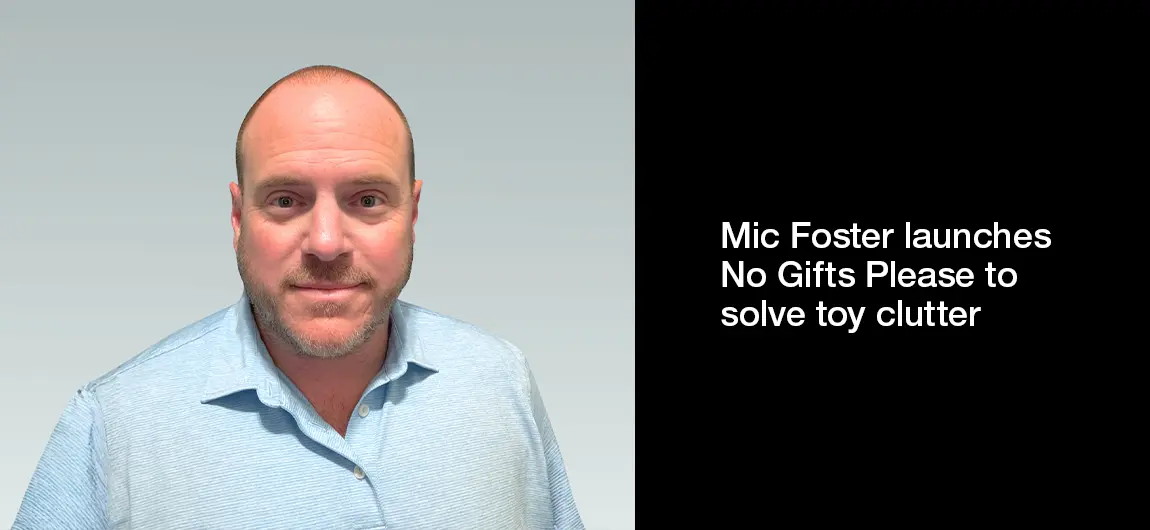
Mic Foster is the founder of No Gifts Please, an online registry platform focused on creating meaningful experiences for children, over gift-giving. Mic shares how watching unused toys pile up after his daughters’ birthdays sparked the idea for a platform that helps families rethink gifting, reduce waste, and create more meaningful celebrations. Mic and Sanjay dive into Mic’s background as a serial entrepreneur, the lessons learned from multiple startups, and the moment he realized the world didn’t need more toys, it needed a better way to give. They also unpack how No Gifts Please survived explosive early growth, the operational challenges that came with scaling fast, and how Mic stayed grounded during intense periods of pressure and uncertainty.
View transcript
Online Gift Registry - Mic Foster, No Gifts Please
[00:00:00] Sanjay Parekh: Welcome to The Side Hustle, to Small Business Podcast, powered by Hiscox. I'm your host, Sanjay Parekh. Throughout my career, I've had side hustles, some of which have turned into real businesses, but first and foremost, I'm a serial technology entrepreneur. In the creator space, we hear plenty of advice on how to hustle harder and why you can sleep when you're dead.
[00:00:21] On this show, we ask new questions in hopes of getting new answers. Questions like, how can small businesses work smarter? How do you achieve balance between work and family? How can we redefine success in our businesses so that we don't burn out after year three? Every week I sit down with business founders at various stages of their side hustle to small business journey.
[00:00:43] These entrepreneurs are pushing the envelope while keeping their values. Keep listening for conversation, context, and camaraderie. Today's guest is Mic Foster, the founder of No Gifts Please, an online registry where family and friends can contribute to real experiences over new toys. Mic, welcome to the show.
[00:01:08] Mic Foster: Thank you. So excited to be here.
[00:01:10] Sanjay Parekh: I'm excited to have you on because what you're doing is, it's actually pretty interesting and pretty unique I think. But before we get into that, talk to us a little bit about your background and what got you to where you are today.
[00:01:24] Mic Foster: Sure. So I've been an entrepreneur pretty much my entire career. I graduated from college in 2001 and had aspirations of moving to Mexico and I was just going to bartend and enjoy myself after college.
[00:01:38] And then I moved there and found out that I was not allowed to be a bartender, so I ended up selling timeshare. For for two years. And so that was an interesting experience. Definitely improved my sales game but not something I could see myself doing for a lifetime. So after two years, I moved back to the US and while I was in college, I I worked at a kennel for police and military dogs. And learned how to train dogs there from the guys. And so when I got back, I started my first business and it was a dog, just a dog training business. And it was kind of at the height of Caesar Milan. I don't know if you remember him, but he was a television dog trainer. And so people were really into it.
[00:02:18] And that business took off to the point where we opened a 10,000 square foot dog training, boarding, grooming facility in Cincinnati, Ohio right in the middle of downtown. We did that for. About 13 years primarily focusing on training. It still exists today. I sold the business a while ago, but still in the real estate that the business is housed in and I'm just the landlord now.
[00:02:41] From there we went into the restaurant business and we opened two craft beer bars called The Brass Tap. The Brass Tap is based out of Florida and was the first franchisee outside of Florida and opened one in Columbus and one in Cincinnati. And we sold those very luckily. In October of 2019. And.
[00:03:01] Sanjay Parekh: Wow. That was good timing.
[00:03:02] Mic Foster: Yeah, it was. We were going to reinvest in an area of Columbus that was closer to where we were living at the time. And we went out of town for spring break, 2020. We were going to sign the leases when we got back. And the world had shut down.
[00:03:17] Sanjay Parekh: Yep.
[00:03:17] Mic Foster: And so we decided that maybe it wasn't the best time to go into a bunch of new restaurants. And so we, we put that on hold and we were going to come back to it later and to the. So far we have not. But during the pandemic I saw the sort of rise of pickleball and in end of 2020 we launched a pickleball paddle manufacturing company. And again, kind of lucked up into just being at that sort of beginning of the boom.
[00:03:47] Sanjay Parekh: Right.
[00:03:47] Mic Foster: And we became the largest manufacturer of custom pickleball paddles in the country.
[00:03:52] Sanjay Parekh: Oh, wow.
[00:03:53] Mic Foster: So that, that was great. And then. Sold that business at the end of last year and this past year in 2025, we, I came up with the idea for No Gifts Please. And no gifts. Please. Started out of kind of a need. I have three daughters. They are now eight, nine, and 14. And that means a lot of toys, a lot of stuff. I mean, so much stuff. And we also were getting a lot of birthday invitations that on the invitation it said, No Gifts Please. Because what we realized is everyone feels like they have too much stuff.
[00:04:30] They don't want the 25 presents that get brought to this party that are going to fill up the toy room or overflow the bedroom or whatever it is. And that created a little bit of an odd scenario because some people would bring gifts, some people would. Would not, they'd follow the recommended advice. And it was sort of a strange situation. And so I started wondering, is there a way a registry kind of like a GoFundMe or a honey fund or something like that for kids for their birthdays that are more focused around experiences? Where people could, they could share the link, and then they would be able to contribute to the experiences. And so that's where No Gifts Please. Were, was born in March of 2025 last year.
[00:05:13] Sanjay Parekh: I like it. Let's step back a little bit. Okay. So you tried to go down to Mexico and be a bartender, but we're not allowed to be one. Why? Why were you not allowed?
[00:05:22] Mic Foster: The general rule, so this was in Cabo San Lucas. I picked the the nicest place that I could think of.
[00:05:28] Okay. And it was beautiful. But the general rule at the time is that there couldn't be a native person that could do the job. The job had to require you to speak English, which bartending did not. And so the general rule of thumb was that Americans could not bartend in Mexico. Ah, and so there was really no. Service jobs that we were allowed to do. And so the main thing that, that all the American transplants did was sell timeshare. Okay. And so I was like, I, well, I'm here now and I had sold all, everything that I own to get there.
[00:06:00] Sanjay Parekh: Yeah.
[00:06:00] Mic Foster: I sold and I just loaded up my Jeep and I drove from Bloomington, Indiana where IU is to, to Cabo San Lucas, Mexico, and my Jeep. And so I only had, I thought I was rich at the time. I only had about 3000 bucks and that really doesn't go extremely far in in Mexico. Yeah. And so yeah,
[00:06:19] least not in Cavo San Lucas. And so I had to find something that I could do and so that's what I did.
[00:06:24] Sanjay Parekh: Yeah.
[00:06:24] Mic Foster: And what's funny about, what's funny about that is I go back to Cabo St. Lucas every spring break to a timeshare that I purchased from the company that I worked for.
[00:06:33] Sanjay Parekh: Oh, wow.
[00:06:34] Mic Foster: So, yep. I ended up being a cu a good customer of theirs as well.
[00:06:38] Sanjay Parekh: Yeah. There you go. Yeah it's funny how our perspectives on our relative wealth is different at different stages of life, right? Like $3,000 back then. I'm like, man, I got it all. Take over the world. Okay. Let's talk about your, you've got such an interesting entrepreneurial kind of history here. Are you the. First entrepreneur in your family? Were there other entrepreneurs in your family, parents, siblings, relatives?
[00:07:06] Mic Foster: Not really. I really was the first to do this from the standpoint of, I mean, with my parents being with Procter and Gamble for 35 years, we were very corporate. Household. The assumption was go to college get your business degree, and get your job at some major corporation and then you spend the rest of your life there. And I went to business school. I did the first part. And it really was not wasn't for me. And so I had to carve my own path.
[00:07:36] Sanjay Parekh: Yeah. Did the family, did the parents, did they think you were crazy when you started that first business? The dog business or anything? Or like what do they think?
[00:07:47] Mic Foster: They do, but they've also always appreciated my creativity. I have very supportive family still to this day. They live in Florida most of the time now, but they have a house. In in Bexley in Columbus where I live. And so I live about half a mile from them.
[00:08:02] And my sister lives a half a mile on the other side. And so we've all ended up here and we're all quite close. Did they think I was crazy or some of my plans were crazy? Yeah. But they were always like, you know go for it. Yeah. What's the worst can happen? You start over again, you know?
[00:08:18] Sanjay Parekh: Yeah. So let's talk about like all of these businesses as kind of one continuum of experiences like in starting each one of these. Is there anything that made you nervous about those businesses and if so, was it like the same thing were different things? Like how did you deal with that?
[00:08:37] Mic Foster: I think it was typically different things with the with the pet services business and in that industry. I scaled up pretty slowly. I mean I literally started by going door to door, putting flyers in people's mailboxes at 23 years of age, selling an hour of dog training at a time.
[00:08:54] Sanjay Parekh: Right, right.
[00:08:55] Mic Foster: And then as that took off and I had more customers than I did, time needed them to come to me as opposed to going to them. That's what inspired the next step. So then it was just. A training facility. And then we slowly added boarding, we added daycare, we added grooming, and it grew into something really massive. And what was unique about it was that it was in downtown Cincinnati and there were no other pet services business like ours in that area.
[00:09:21] And I, my parents actually had told me about the building because they passed it every day on their way to the parking lot at Procter and Gamble. And so that was. Important because all of these p and g employees had dogs and so they would, they really were interested in the daycare idea. So they would bring their dogs with them to work, drop them off at our facility, and then walk into the p and g building.
[00:09:44] Ah, and so that really created a nice. Synergy that that allowed us to do. Well, we also lucked up because we were on the route to the Bengals Stadium. And so I dunno if you remember Carson Palmer, he was Bengal's quarterback. Yeah. A while back in, in the early two thousands or mid two thousands. But he he found us and started bringing his dog. And next thing you know, the entire team is bringing their dogs every day to our facility for training, for grooming, for daycare. So that was always that was always fun for us.
[00:10:15] Sanjay Parekh: Yeah. That, that's neat. Hopefully use those for like endorsements, like, Hey, the whole Bengals tiger team is ..
[00:10:22] Mic Foster: Oh, I mean all the time. All the time. We would have events, so I mean, it was, a lot of it was based around the Bengals. Yeah.
[00:10:28] Sanjay Parekh: Yeah. Yeah. I love that. Okay, let's talk about then the other, we talked a lot about the dog grooming and boarding and all that, but what about the pickleball one? Was there anything there that made you nervous about doing that?
[00:10:42] Mic Foster: Yeah, the, I think the most challenging part of that is most of our manufacturing was done in China.
[00:10:47] Sanjay Parekh: Yeah.
[00:10:48] Mic Foster: And finding when, and the reason that we moved out of that business was tariff related, but we don't necessarily have to get into that. But we finding the right manufacturing partner and making those investments overseas to get to the manufacturing, to the point where it was reliable and we could control it. That's the hardest thing is really finding that sort of. Control mechanism.
[00:11:11] Sanjay Parekh: And remind me, you started this during the pandemic, right? Like this was in the 2020 timeframe?
[00:11:16] Mic Foster: Yes.
[00:11:17] Sanjay Parekh: So you weren't going there to see the manufacturer, right?
[00:11:20] Mic Foster: Nope. It was essentially going, finding different manufacturers, ordering paddles from them, seeing what their. Kind of each challenge they presented us was, and then sort of picking the one that we developed the best relationship with. And then we made some investments with them to try and get them to the scale that we needed to.
[00:11:39] Sanjay Parekh: Yeah. Interesting. Any specific challenges that you had there that really kind of stand out to you, that you know, or made you nervous or anything else like that?
[00:11:49] Mic Foster: Timeline is challenging.
[00:11:51] Sanjay Parekh: Yeah.
[00:11:52] Mic Foster: And communication is challenging, is their English was certainly much better than my Chinese, but it left us with a lot of communication challenges.
[00:12:01] Sanjay Parekh: Yeah.
[00:12:01] Mic Foster: One thing means something to them. It means something different to us. And that caused significant number of challenges. So getting through those communication issues were, is important. And then getting the. Consistency of the individual products was super important.
[00:12:17] Sanjay Parekh: Yeah.
[00:12:17] Mic Foster: And then most importantly, meeting timelines and meeting deadlines. And that was probably the biggest struggle.
[00:12:22] Sanjay Parekh: Yeah.
[00:12:23] Mic Foster: They just don't. When we say 25 days, we mean 25 days. And they mean, ah, you know, 35 to 40 ish or somewhere in there, or
[00:12:33] Plus or minus. And usually plus usually very rarely minus. Exactly. And so we got to a point where we developed the relationships that we needed to, and it got all, you know, fairly smoothed out. Yeah. But those were early challenges.
[00:12:50] Adam Walker: Support for this podcast comes from Hiscox committed to helping small businesses protect their dreams since 1901. Quotes and information on customized insurance for specific risks are [email protected]. Hiscox, business insurance experts.
[00:13:11] Sanjay Parekh: Okay, so two very different businesses. Leading into a third business that's very different as well. What lessons have you taken from those two businesses and brought them into No Gifts Please.
[00:13:25] Mic Foster: I think the biggest lesson that I've learned between the PET services being in the bar restaurant industry and then the pickleball manufacturing is to just start. I feel like a lot of people get held up by trying to make things perfect. If I had tried to wait on the paddle business and try and get everything nailed down where it was absolutely perfect and operating just how it should, in my mind we would've missed. The surge, we would've missed the entire opportunity.
[00:13:53] And so being willing to move forward with a product that's not quite perfect, that you can kind of test the waters with. And I think the other thing is not to get too big, too fast. I think people want to, they want to get to the end as quick as they can. They want to get to where their vision is in that finished product. And it's okay to. Slowly scale up and sort of enjoy the parts of it along the way. And that also ke it keeps you out of a lot of trouble. I think if you get too big too fast, you overspend you make decisions that aren't right for the business because your business isn't there yet.
[00:14:30] And so really scaling up slowly and and just continuing to move forward is really probably the most important thing.
[00:14:38] Sanjay Parekh: Yeah. Okay. Let's pivot to the new business then and talk about it. So obviously as you mentioned, it came from your own desire to not have a. How completely filled with toys. But how have you kind of thought through this business and how it makes sense for not just you, but for other people and designed the experience so that it's something that people want to use.
[00:15:04] Mic Foster: Sure. So we've had a lot of iterations since March. The actual sort of brand launched in August.
[00:15:11] And I'm not a developer, I'm not a programmer. I know very little about that. And so I simply just built a website at no gives please.com. And it was a form to fill out. Had a little description of the idea. It was a form to fill out and. You put in your information around your child's birthday sort of what their interests were, what sort of experiences they were interested in, and the form would come to my email and I would build them a page, basically send them the link, and we would manage the transactions. They would put the link in their ev invitees or text it to friends or post it on social media. And we would build the registries. And a sort of crazy thing happened. I started, you know, an Instagram page like most business owners do, and a couple of sort of mom group. Instagram influencers really liked the idea and they picked it up and they all sh they all shared it with, in like a few days and overnight we got 400 registries.
[00:16:12] Sanjay Parekh: Oh boy.
[00:16:13] Mic Foster: And yeah.
[00:16:14] Sanjay Parekh: So talk about not getting too big too fast.
[00:16:17] Mic Foster: I know it's, the big problem was, is we didn't have any way to build 400 registries. It was just me. And so I got some friends involved. I got my dad involved. I was like, I need help building these pages. To get these out because they're kind of time sensitive. Right. If your birthdays in 30 days, it can't take you 15 of those to get your registry built.
[00:16:35] Sanjay Parekh: Right, right.
[00:16:37] Mic Foster: And each registry was taking me about an hour to build. And so, I mean, at 12, 15 hours a day, I'm just like making these. One after another, and they're still coming in every day we make them and I'm like, I don't know what to do. This business is going to fail before it even gets started because I can't do this.
[00:16:54] Sanjay Parekh: And so, you know, the image I have, I don't know if you're an I love Lucy fan, but when she's in the chocolate factory and the chocolate's going around and she's trying to wrap them, and then it starts going faster and she can't keep up, and she starts stuffing them in her mouth and all these kinds of things. It feels like that's what you were doing. Like they can't kept coming, even though you kept delivering and then, you know, something had to happen.
[00:17:15] Mic Foster: And that's, and what's cool about the business? The reason I think it's going as well as it is every registry gets sent out to 20 or 30 people. Right?
[00:17:22] Sanjay Parekh: Right.
[00:17:22] Mic Foster: Because it's in the evite, it's a, so, you know, it, at least five or six of those people are then suddenly requesting registries. And I was like, this is a wonderful problem to have, but what am I going to do? I mean this is crazy.
[00:17:34] Sanjay Parekh: So it's built in virality into the product, which is great because obviously they're sending it to other parents and other kids. So that's interesting. Yeah.
[00:17:43] Mic Foster: And it spreads quickly across communities. It's real, it's really localized because as, as soon as one person in the friend group gets it, then it goes out to everyone else in the friend group and then they share it, but their family and it just kind of goes on and on.
[00:17:56] So that was super exciting, but we had to come up with a better system to build these registries. I mean, essentially in real time, right? Uhhuh, and I wanted to keep it, I wanted to keep it as painless as possible for the parent. If it was too technical, too complicated, needed too much management, it wouldn't be useful.
[00:18:13] And so I met a developer at a church festival of all places, and I told him about the idea and he really liked it. And he was like. I will help you out. And I was like, I have no money for you whatsoever, just so you know. I appreciate that. But we cannot pay you.
[00:18:32] Sanjay Parekh: I like that as the first response. I'll help you. I have no money.
[00:18:35] Mic Foster: I just wanted to make sure that was clear upfront. And I mean we were able to make a little contribution, but it was very early on, right? Yeah. And so between him and I, we were able to build out a fully AI driven. System where you log onto our website, you create an account very quickly, and then our AI chat goes through, asks you the questions, it can help you come up with ideas.
[00:19:02] As soon as you click submit, it instantly sends sends you the registry link. You're in your dashboard. It's all automated. It has changed my life for the better. For sure. No, no more, you know, midnight all day and all night registry building, which has been great.
[00:19:19] Sanjay Parekh: Yeah.
[00:19:20] Mic Foster: But people have really enjoyed it. And we've. Surpassed a million dollars in total registry value in December.
[00:19:29] Sanjay Parekh: Oh, wow.
[00:19:30] Mic Foster: Which was a big milestone for our little brand. And it's continuing to grow. And right now we're actually trying to raise our our first round of funding because we're going to build an internal marketplace within, within Nogi please. Where you can actually. Pay for the, everything, all the whole transaction happens within no gift space. You can find your experience, pay for your experience, schedule your experience, all of that kind of stuff.
[00:19:55] Sanjay Parekh: Yeah, fascinating. Has there been something that has surprised you in building this? Like obviously you had the idea of it.
[00:20:02] I think a lot of entrepreneurs, when they start building something, they're like, okay, this is the problem I'm solving. And then users come customers come and then they're like, well actually it's this other thing over here. Has there been anything like that for you?
[00:20:15] Mic Foster: I think there's been two big things that we're constantly trying to overcome. One is building trust. I think anytime you're moving people's money around, there's a lot of apprehension about, is this a safe thing to do? Should I give these people my money? Is the person that we're contributing to this experience for ever actually going to see these funds? All of that kinda stuff.
[00:20:37] And so the way we have it set up now is we use Stripe Connect and the money moves. We never even touch the money. It moves directly from the contributor to the experience owner. And so we move that money that way. But building that trust has been an a big challenge and. And the other challenge I think that people face is this awkward or weird? It's kind of a new idea. It's a new way of giving. Right? And so do they feel like, am I just asking my friends for money? Is that what's happening here? Because and that isn't necessarily a good feeling and we've spent a lot of time on developing some sort of education around that where you're not asking for money, you're inviting them in to.
[00:21:19] Share in providing this experience for your child which is way more useful than another plastic toy or something else that you're guessing if they want or not. So I think really those two things, building the trust and overcoming this potential awkwardness of the concept has been our two biggest learning experiences. Because in my mind I thought, of course people will do this. It'll be no big deal. And then immediately people are like, who are you guys? What's going on here? Does this really work? You know?
[00:21:47] Sanjay Parekh: Yeah, that makes sense. I mean, trust is obviously with so many things and I think so many people at this point now have been scammed or whatever online.
[00:21:56] That's, you know, we've all been taught, like that's the first thing that you think about. Like, oh this is a scam and prove to me it's not a scam. Right. Have you gone down that approach any other way, like to prove to people that it's legit? What's the idea there to, to make sure that people understand that's not a scam.
[00:22:16] Mic Foster: I think that the transparency that we were able to create with incorporating Stripe connect into it. Okay. So you can see in your no-GI dashboard exactly what's there, and you can look in your own Stripe Connect account Right. And see what's there. And so people innately kind of trust Stripe. It's been around for a very long time. And many corporations use it. And so just that sheer transparency is much better. Yeah. When we first started, when it was all manual, when a contribution came in. I had to send out an email letting them know they had received a contribution. Right. That is not, that is the opposite of transparency. I mean, I didn't have a better option, but it's not a good system.
[00:22:53] Sanjay Parekh: And you're like, dang it, I gotta stop building pages for a minute to send an email over here. Exactly. And then I'll get back to building pages. But that the whole stripe thing that, yeah, that's great. I think on the gift receiver side, but on the gift giver side, they don't have that visibility. Is there something that you've done to help with kind of the transparency on that side, or has that not been an issue?
[00:23:14] Mic Foster: It's been less of an issue. I think one, it's smaller amounts of money. Right. Got it. So people aren't as stressed about it. I mean, they get an immediate receipt to their email from Stripe and that sort of thing.
[00:23:24] But I think the biggest thing is that if you're contributing 25 or $50, is there a risk? Sure. If you are worried about an account that now has a thousand or 1500 or $2,000 in it, that's a way different feeling. Right. Right. You know, you're much more concerned about, about that side of things. And so, really, we haven't gotten a lot of pushback on the contributor side of things.
[00:23:46] Sanjay Parekh: Yeah. Interesting. Yeah. And that makes a lot of sense. Okay let's switch gears a little bit. You've been an entrepreneur for a long time, many series of businesses different levels of stress coming with each one as you've gone through it.
[00:24:02] How have you thought about that? How have you balanced that with the demands of, as you mentioned, having three kids you know, family life and all of that stuff. How do you think about those things and making sure that you spend time where it needs to be spent?
[00:24:17] Mic Foster: Sure. I think that, focusing. Learning to focus on what I'm strongest at and finding people that are good at all of the many things that I am not has been the most important thing. In the early businesses at the pet services facility, I tried to do it all. I tried to be the owner, I tried to be the manager. I tried to be customer service.
[00:24:38] I tried to solve every problem, and it was brutal because people, you know, people think of their pets, like their children.
[00:24:47] Sanjay Parekh: Yeah.
[00:24:47] Mic Foster: And they take it very seriously, as did we. But that meant that problems were pretty big when there were problems. And so trying to solve all of those issues myself put out all those fires myself really is exhausting.
[00:25:01] And you end up devoting an inordinate amount of hours to doing that and not actually operating and growing the business. And so, and I think that I improved upon that with maybe not as much in the bar restaurant business, but probably so we had some good managers there and I was able to improve that and definitely made huge improvements with impact pickleball the paddle manufacturing company and No Gifts Please, where I stay in my lane. I try not to get involved in the issues that other people are going to be much, much better at solving than I am. Yeah. And that has really helped my stress. Load. It has really helped where I can put my focus as far as my kids and family are concerned.
[00:25:40] Sanjay Parekh: Yeah.
[00:25:41] Mic Foster: And so I think that's a huge lesson. Not try and be everything to everyone. Do what you're good at and find people that are better at the things than you are all the rest.
[00:25:51] Sanjay Parekh: Yeah. That's great advice. Let's talk about technology and apps and systems. Obviously the technology that you had at the beginning of No Gifts Please was not great. And it's gotten better.
[00:26:03] But are there other, systems or apps or technology that overlay onto the things that you've done that you're like, look, if you're going to use something, this is something that you should absolutely think about. And it doesn't necessarily have to be a specific company or anything, but like just an idea of like, find something that works for this issue.
[00:26:22] Mic Foster: Sure. I think that our use of AI has been particularly unique in the way that it can learn. So when we first started out, the AI conversations that were occurring within nogi, please were pretty surface. And over time the more. The more registries the AI builds, the better it gets. And I was commenting to Andrew, our developer, that I don't think I could teach someone to be as good at this as the AI has learned to be. I mean, it is. It is amazing. It is absolutely blows you away the questions that it has learned to ask. I mean, it is nearly problem solving on its own, which is just so awesome. And the way that it communicates with customers, always professional, always clear, always ask the right questions. I mean it's really, it'd be very hard to get that out of a human, you know, customer service rep that was then taking all this information, right? And so that's been pretty amazing.
[00:27:18] Sanjay Parekh: Have l let me ask a question about that. Have you guys used a a commercial tool? Are you using your own version? Is it a custom thing? Like how are you actually building that AI into the business?
[00:27:31] Mic Foster: Now, this is not my strong suit, but it is a.
[00:27:35] Sanjay Parekh: I'm making you go out of your lane.
[00:27:36] Mic Foster: Yeah, you are. I need Andrew to pull up here. But it is a, it's an owner version of chat. GPT I know, I think we're on five two right now at 5.2 now.
[00:27:47] Sanjay Parekh: Okay.
[00:27:47] Mic Foster: I want to say it was 5.0 and just that is the underlying base.
[00:27:53] Sanjay Parekh: Got it.
[00:27:53] Mic Foster: And then essentially you create an agent within that can..
[00:27:56] Sanjay Parekh: Okay.
[00:27:56] Mic Foster: That is knowledgeable about this specific set of an information.
[00:28:02] Sanjay Parekh: Okay. Perfect. Perfect. Okay. Continue on. You were about to mention something else.
[00:28:06] Mic Foster: Oh no, I was just really thinking that the other way technology really is about to play a role for us is within the marketplace.
[00:28:13] Sanjay Parekh: Yeah.
[00:28:14] Mic Foster: We, you know, being able to connect people within our system to these experienced providers is going to be a big deal.
[00:28:21] And we're still working through the technology side of it. Because I really want to focus on the more mom and pop businesses. Certainly the national brands have APIs that you can connect to, and that's fairly easy to facilitate. Right? But the smaller businesses, the local businesses, the ones that I want people to know about you know, more like the kind of businesses that I've owned and maybe that are harder to find, I want to bring them to the surface.
[00:28:46] You can't just plug right into their system. Yeah. Sometimes there's no system but a telephone and so we're working through how to create a marketplace where they're as supported as all of the big players are.
[00:28:58] Sanjay Parekh: Yeah
[00:28:59] Mic Foster: Sure. You want to be able to book Great Wolf Lodge? Sure. You want to be able to book Kings Island or Disney or something like that. I want you to be able to book like Bob and Sue's horseback riding camp. You know what I mean? Yeah. And I want you to be able to do all of that within our marketplace. And we're learning a lot about how to do that and what they need as far as support. And we're working on our experience provider day dashboard right now, so they can come in and set up their own page.
[00:29:25] Sanjay Parekh: Yeah.
[00:29:25] Mic Foster: Which then they can use publicly if they want. So there's kind of lots of cool things going on there that I hope work.
[00:29:32] Sanjay Parekh: I love it. I love it. Last couple of questions for you. M now thinking back in, in all the businesses and all the things, and even going back to trying to be a bartender in Cabo San Lucas if you could go back and do something differently, does something jump out at you?
[00:29:51] That like definitely I would do that. And why is that one thing sta jumping out of you and what would you do?
[00:29:58] Mic Foster: One thing I would do differently I would say a lesson learned. This is more on, well, I probably wouldn't have sold timeshare. That's one thing that was more, I had to..
[00:30:10] Sanjay Parekh: But you got a timeshare because of that. And you've been going every year.
[00:30:13] Mic Foster: So which is one of what, and I haven't missed. A year. Year, except for the COVID year. It was I have not missed a year. I wouldn't, I don't think I would sell timeshare because I'm not sure if that is right for everyone that buys it.
[00:30:25] Sanjay Parekh: Yeah.
[00:30:26] Mic Foster: But I, you know, probably better planning. There was a lot of spontaneous, maybe rash decisions made that could have saved me some headache. I think that, learning to follow the formula in a lot of these businesses, sometimes I'm busy reinventing the wheel where it already exists and that isn't necessarily better way to go. Yeah. But yeah maybe fewer rash decisions, being patient, not trying to get to the end. Of the journey that I'm on before I'm supposed to be there.
[00:30:59] Sanjay Parekh: Yeah.
[00:30:59] Mic Foster: Always trying to be bigger, always trying to move faster, all, you know what I mean? Yeah. And that can, that's expensive. It's what, it's, it really that's what gets you in trouble.
[00:31:09] Sanjay Parekh: Yeah. Yeah. Okay. Last question for you, m if you were talking to somebody who's thinking about launching a side hustle or going full on into an entrepreneurial, you know, full-time business, what advice would you give to them?
[00:31:23] Mic Foster: I just think to kind of reiterate what I said is that start slow. Don't be bigger than you need to be. Little ideas become big ideas really fast, and so just get started. They have to get started every, I think everyone has a million ideas in their head and so, so few people just act on it and you can just do it.
[00:31:43] You can really just do just about anything. You know, you don't have to, don't have to wait to have a lawyer on your team. You normally don't need financing. You know what I mean? You don't need all of these things that people think you need to build a business. You really just need you. And to start doing, start looking, start meeting people, start connecting and just take it one step at a time. Many more things are possible if you just kind of move forward.
[00:32:08] Sanjay Parekh: Yeah. I love it, Mic. This has been fantastic. Where can our listeners find and connect with you online?
[00:32:15] Mic Foster: NoGiftsPlease.com is the best spot for your registry creation. But on LinkedIn, Mic Foster and then on Instagram, No Gifts Please. It's NOGIFTSPLS.
[00:32:31] Sanjay Parekh: I love it. Thanks so much for being on today.
[00:32:34] Mic Foster: Thank you so much. It was great. I loved it.
[00:32:40] Sanjay Parekh: Thanks for listening to this week's episode of the Side Hustle to Small Business podcast, powered by Hiscox. To learn more about how Hiscox can help protect your small business through intelligent insurance solutions, visit Hiscox.com. And to hear more Side Hustle to Small Business stories, or share your own story, please visit Hiscox.com/side-hustle-to-small-business. I'm your host, Sanjay Parekh. You can find out more about me at my website, SanjayParekh.com.
Subscribe to our podcast



Did you start your business while working full-time at another job?
Tell us about it! We may feature your story in a future podcast.