Small Business Bookkeeping: Matt Remuzzi's Story



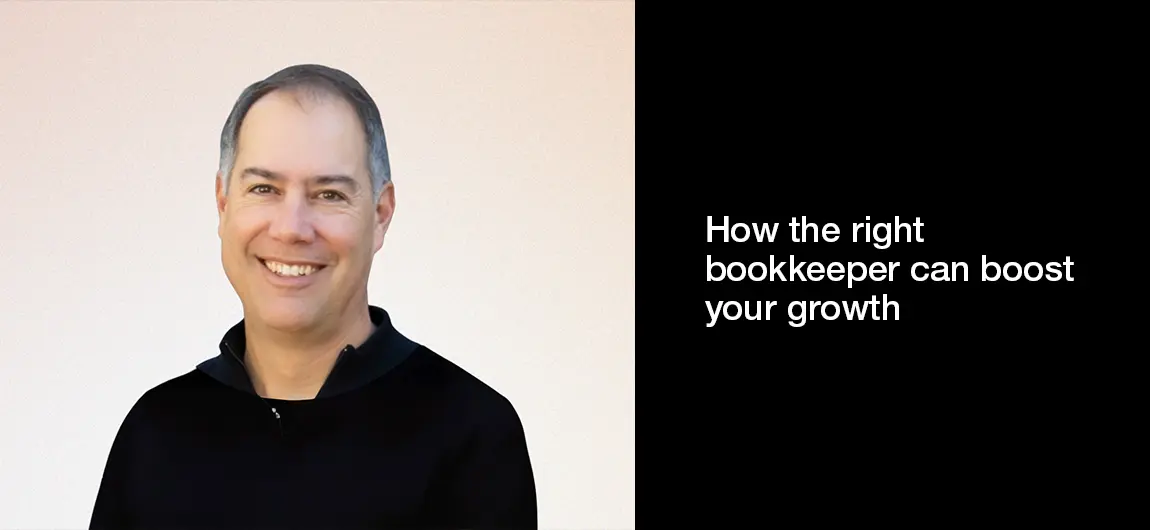
Matt Remuzzi entered the accounting industry twenty-five years ago when he founded CapForge. What began as a solo venture launched from a spare bedroom in his home has since evolved into a thriving business. Today, CapForge employs a team of over 90 people who help more than a thousand clients grow their businesses and meet their obligations with professional bookkeeping support.
View transcript
Small Business Bookkeeping – Matt Remuzzi, CapForge
[00:00:00] Sanjay Parekh: Welcome to The Side Hustle to Small Business Podcast, powered by Hiscox. I'm your host, Sanjay Parekh. Throughout my career, I've had side hustles, some of which have turned into real businesses, but first and foremost, I'm a serial technology entrepreneur. In the creator space, we hear plenty of advice on how to hustle harder and why you can sleep when you're dead.
[00:00:22] On this show, we ask new questions in hopes of getting new answers. Questions like, how can small businesses work smarter? How do you achieve balance between work and family? How can we redefine success in our businesses so that we don't burn out after year three? Every week I sit down with business founders at various stages of their side hustle to small business journey. These entrepreneurs are pushing the envelope while keeping their values. Keep listening for conversation, context, and camaraderie.
[00:00:56] Today's guest is Matt Remuzzi, the founder of CapForge, an accounting firm based in Carlsbad, California. Matt, welcome to the show.
[00:01:04] Matt Remuzzi: Thank you for having me.
[00:01:06] Sanjay Parekh: So you've got a really super fascinating story and I know we're gonna get into some really interesting things about the start of all this and kind of how it's going now. But before we get into all of that, give me a little bit about your background and what got you to where you are today.
[00:01:22] Matt Remuzzi: Yeah, so I mean, I wanted to be an entrepreneur from the earliest days. I was, you know, in elementary school trying to dream up businesses. I didn't want to just sell candy out of my locker. I wanted to have a business. I just didn't know what it was gonna be. And I tried various things, but nothing really stuck. I went to, finally went to the MBA program in San Diego here because they had an entrepreneurship track and I thought maybe I can educate myself into a business. Didn't actually pan out.
[00:01:49] I ended up getting a job right out of the MBA program, but then shortly after I got laid off and I thought, you know, there's still people who need what I was doing when I was an employee. Maybe I could do it as a freelancer, do some consulting and if this doesn't work out fine, I'll go get another job.
[00:02:05] That's what I've been doing. Dreams will be shattered, it's fine, I'll move on. But it actually worked out. I was able to get a client and then another client, and another client and keep enough coming in to pay the bills and actually, you know, build up some momentum. And that was it. That was kind of the beginning of 25 year journey that I'm still on of being an entrepreneur.
[00:02:27] But those first 12 years. I did a bunch of stuff. I owned a restaurant. I had that consulting business. I started a software business. I started a number of things that didn't pan out at all. I tried property management. Oh man, I've nothing, I've never hated anything more passionately than trying to be a property manager. So I learned that about myself. And then 12 or so years in, through a series of kind of events, I realized there was a pretty big gap, or what I thought was a pretty big gap in the market for professional grade, small business bookkeeping. Most small business bookkeepers, and even today it's true, are individuals. They have four or five clients. They may be self-taught on QuickBooks. They don't really run it like a business. It takes forever to hear back from them. Their quality is all over the map. A lot of times they charge hourly and you just don't. How many hours is it gonna be? Why is it so many hour? You know, this month was twice as many hours as last month, but the business is not twice as big this month.
[00:03:25] What happened? So I thought, you know, there's an opportunity here from all I've learned in the first 12 years to create a really solid business. So I started it out of the spare bedroom. And here, I mean, it's out 13 years later. We've got 90 employees. We've got clients across the country. We're opening another office shortly, you know, over a thousand clients. We've added tax, we've added advisory, all these things. So it's my entrepreneur dream come true. I finally am running and growing a successful business, but it was not a straight path to get here. And it's been a, it's been an amazing journey.
[00:04:00] Sanjay Parekh: Yeah. So I gotta ask you, you touched upon the selling candy out of the locker kind of thing.
[00:04:05] And that's how a lot of us, right, like I've talked about that on this podcast before, is that if you find a bunch of entrepreneurs, especially now that are kind of, probably of our age, right? And that you could do this back then, because now they've got vending machines, right? So it, it cuts the legs off of that whole thing.
[00:04:20] But I did this selling candy bars to my classmates and using then that money to buy comic books, a lot of which I still have today. From that long ago, what was your first then entrepreneurial thing? Maybe, you know, in elementary school or.
[00:04:34] Matt Remuzzi: So in middle school, my friend and I bought a kit to do screen printing on t-shirts. So you would make the kind of negative image of each of the layers. And it was a whole process. You had a special light and you would do the design and you would print it on, and then you'd do green and you know, put the green through and then you put red through. And we had designs of being, you know, the next, you know what, Nike or whatever, right? Just as apparel giant, we were gonna start with t-shirts and then we were gonna take over the world shortly after that. It turns out screen printing is a lot harder than it looks, and then designs never came across and people weren't willing to spend a lot of money on our hard our hard work.
[00:05:20] But it was again, I mean, it was a great starter lesson, right? You figure out how much of it is it gonna cost me to get the initial equipment set up? How much does it cost me to make each one? How much do I have to charge? How much time am I putting into it, right? And it turns out, you know, in a good week, we could make about three T-shirts.
[00:05:37] So it didn't really scale. The economics weren't there for us, but you know, every step you take, whether it heads ultimately to the finish line or you pivot. Or pivot again, is an education. And we learn as we go and we figure out, okay, you know what, what didn't work? What could have worked? What do we need to do better? And on you go, right? As long as you never quit, you never fail. You just, it's another learning experience, right? So I've spent, yeah. I don't know, a half a billion dollars on entrepreneurial education and I finally feel like, you know, I'm doing okay, but it didn't happen overnight. Anybody who tells you're an overnight success, you know, you gotta ask some follow up questions because it's probably not the case.
[00:06:20] Sanjay Parekh: So clearly the lesson there was when your break even period is 700 years on the screen printing thing, it's probably not gonna work out well for you.
[00:06:28] Matt Remuzzi: Maybe consider other options. Yes.
[00:06:30] Sanjay Parekh: Yeah, exactly. Were there any other entrepreneurs in the family? Is this how you got the bug or was this just your own thing?
[00:06:38] Matt Remuzzi: It's so my grandfather who passed away before I was even born. So I never had a chance to meet him, but he was apparently very similar. He started a lot of businesses, built them up, would sell them or you know, exit to partnership, you know, sell them out to partners or sell the whole business and move on to other things.
[00:06:56] He had many businesses over the years, so, and then my father was an electrical engineer, which is almost the exact opposite, right. Very meticulous planned. You know, everything is procedural. There's, you try to take all risk out of everything. And of course, entrepreneurship, you have to embrace a certain amount of risk. So I think it might have skipped a generation. I'm not sure.
[00:07:19] Sanjay Parekh: I'll tell you as a electrical engineer myself sometimes there's some crazy ones of us too. So happens. That's true. Yeah.
[00:07:26] Matt Remuzzi: I shouldn't generalize. There are definitely some mad scientist, inventor type electrical engineers I've met who are brilliant business people, so you never know.
[00:07:35] Sanjay Parekh: Engineering definitely teaches you a lot about how to get things done and get from point A to point B. So it's good. So let's talk about the business a little bit. So it sounds like this kind of all came up because of the.com bust for you. I was actually working at the same time, starting a company during the.com bust, but you went, you know, had the experience of the opposite way.
[00:07:57] So tell us a little bit about what happened there.
[00:08:00] Matt Remuzzi: I, so I did, I actually worked at a venture backed startup for Uhhuh almost 12 months. And what that gave me was great exposure to the rollercoaster nature of entrepreneurship, right? You'd have a meeting in the morning with a VC group and you felt like you had all the investment signals were there.
[00:08:18] They loved the pitch stack, they were talking about terms and everything else, and you're like, this is the greatest thing ever. And if you know, 12 months from now, I'm gonna be a millionaire. I'm gonna be, this is gonna be amazing. And then in the afternoon you'd have some follow up meeting and it was a disaster.
[00:08:31] They were like, why are you even doing this? You guys should quit now. You're ahead. Liquidate whatever's in the bank, close the thing down. And so you go from, you know, top of the world to just laying in the gutter in the span of a day, and then you wake up the next morning and start the cycle over again. Right? So it went through that. Post that M, that was part of the MBA program. I got connected with the startup and worked there. After that, I got a job at a consulting firm where we were working with small businesses doing financial projections and writing business plans and helping them do pitch decks.
[00:09:05] And again, very entrepreneurial focused, thinking about who's the market, how much can you charge, how big is the market, how you know, what's the differentiator of your product versus all the competition. So I was very much saturated in the entrepreneurial mindset, but it was a job and they were working largely with venture funded startups, helping them raise money and do all this kind of stuff. When the money dried up, the consulting for that, you know, people just weren't as interested in spending money on business plans, or at least at the rates, you know, that we were charging where I was an employee, but I thought, you know, I could do the same thing. I could charge them a third of what my company's charging to cover my overhead and I could still do pretty well. And so that's what I did for about the first six months. What I realized about consulting was I didn't like it that much because a lot of times in order to get the job, you have to con, you know, somebody has to believe that you're gonna be able to help them raise money, right?
[00:09:59] If I didn't necessarily believe in their idea. Then I would, if I tell them that, then I don't get the job right. So where, so now where do I fall on that? So I would say, I would take the line of, look, I will give, I will build you the best business plan and financial projections and pitch deck that I possibly can with the material you give me.
[00:10:15] But I can't guarantee that you're going to get funding because I'm not the funding person, right?
[00:10:19] And then right in my heart, I would know this thing will never happen Work. I still needed. So, so I pivoted from there into building some software tools that would let people do their own projections and help give them a template to write their own business plans. And that felt much better because now I'm just giving you the tools and however you use it, you know, you, you use it the way you want to use it. I'm not, yeah, no longer have any role judging whether or not you're going to be successful. I'm just giving you the tools.
[00:10:49] Sanjay Parekh: Yeah. Were there any times talking to those folks that you thought like, oh, this is not gonna work, that.
[00:10:55] Matt Remuzzi: Oh, absolutely.
[00:10:56] Sanjay Parekh: They actually made it work That you were surprised?
[00:10:58] Matt Remuzzi: Oh, they made it work. No, I mean, I had one guy whose plan was, he was gonna buy a fleet of fuel tank trucks and do gas, you know, fill people's cars up with gas at home.
[00:11:11] Sanjay Parekh: I might have seen the same guy because I feel like I've heard about this too.
[00:11:16] Matt Remuzzi: I think there might have been more than one guy that, that, that had this idea. But I'm just, you know, that's gonna be a tough sell. You know? What if the... you go to fill their car up and they're not home then, or you can't get your tanker truck turned around and they're narrow. I mean, there's just insurance. I just, the number of logistical problems that you could imagine with that.
[00:11:36] Plus, by the way, gas stations don't make their money selling gas. Right? They make their money from the convenience store sales and the other stuff. Right? So you're gonna, anyway, there was another guy, an electrical engineer by the way whose plan was before cell phones were as ubiquitous as they are, even maybe even right bef.
[00:11:57] Anyway, his plan was to hijack basically, a lot of people at that point had wireless phones. Right? It was a landline, but you then had a wireless right hand set. Right. He was gonna somehow hijack that wireless spectrum and allow that to kind of be cells to hop from phone to phone. And so people could how many, what density of people do you need?
[00:12:18] Right? Signed up for this to work and let's say a given community, nevermind, you know, nationally want to be able to use this to make calls, right? He said probably one out of four homes would have to have this. So all you need for this to work is 30 or 40 million US households to sign up.
[00:12:36] That's all you that's just sort of the starting point. Okay. I can think of a few problems. Right. But yeah, I mean, you don't want to, you don't want to shoot down somebody's dream or ideas or entrepreneurial spirit, but you also want to hopefully prevent them from spending tons of money and time pursuing something that is just yeah. You know? Yeah. A billion dollar company would have a hard time pulling something like that off, right? Nevermind. An individual working out of their garage.
[00:13:09] Adam Walker: Support for this podcast comes from Hiscox committed to helping small businesses protect their dreams since 1901. Quotes and information on customized insurance for specific risks are available at Hiscox.com. Hiscox, business insurance experts.
[00:13:30] Sanjay Parekh: So let's talk about the business then. When you were starting this, was there anything that made you nervous about going down this path and how did you get over that for yourself?
[00:13:41] Matt Remuzzi: No, I mean, so I'm a big believer that the, there is such a thing as a risk-free startup. I felt like I had one. A risk free startup to me is if you're selling a product or service with proven demand, right? The customers are identifiable. There are other people already successfully doing essentially what you are doing, right? So there were already people. Buying bookkeeping services from other providers. So I wasn't, I didn't have to educate anybody. This is why you should have bookkeeping, or how bookkeeping works or, you know, anything. I was just simply saying, look there's 10 people you could buy bookkeeping from. Now I'm here in number 11. But here's what's different about me. I charge a flat rate instead of an hourly rate. I'll get back to your emails or calls within 24 hours, you know, and I, and we will have accountants doing it, not people who are self-trained on QuickBooks, which is two totally different things.
[00:14:35] And as I talk to them and they go, oh yeah, you're about the same price as the other people, but this yours sounds a lot better. I'll try you. So I knew I'd be able to sign people up. The question was, in my mind, not so much could I make the business work was one, could I scale it enough, quickly enough that I wouldn't lose interest or be too frustrated? Because I didn't want to be a bookkeeper. I mean, I started out doing everything right, but I'm not really an accountant. I didn't want to do accounting for a living or just fill myself with enough work that now I can make a living. But I'm. If I quit or I stop working for even a day, right? The revenue stops.
[00:15:10] I wanted to build a business. So my question was, how well can I scale this? And then the other question was, am I gonna hate it or not? Right? Like property management hated it with a passion, a burning passion. I would've paid money not to be a property manager after about two weeks of doing it. So I wasn't sure with bookkeeping, I felt like I'd probably enjoy it because I like small business owners. I like looking at the numbers. I like seeing how the business comes together and works financially. But you never know. Once you get into it, you might, that's not what I thought it was, and I really don't like it as much.
[00:15:43] Sanjay Parekh: Yeah. Looking back I. Was there something like that you had to overcome that you're like, okay, this is the part of the business I don't like? Or has it been all like, okay, I like all of it, that's why I'm gonna keep going on it?
[00:15:57] Matt Remuzzi: I mean, I don't think there's any, I've certainly never thought of one or come across one that's a hundred percent perfect. Right. So the. The challenge with the business that I have and is basically any service business, right? No matter how good of a job you do, no matter how well you perform, no matter how much you try to clearly set expectations and then exceed them with the client, you're always gonna have a certain amount of people who are jerks or aren't happy, or didn't understand, or didn't listen, or you know.
[00:16:27] They signed you up for bookkeeping. Like, great, where's my 10 40? Why isn't that done? Like that's a tax return. That has nothing to do with what we're doing. And in fact, our agreement says this is not for tax services. And they go yeah, but where's my 10 40? It's April 14th. Ah. They're like, I'm gonna leave you a bad review.
[00:16:46] Like for. For what? For not doing what we said we weren't gonna do and you signed it. There's your signature, you set you. So, you know, in any service business, right, there's gonna be a certain amount of that. Just inevitably, no matter how good you are, no matter who, you know, the top rated, most highly rated, you know Beloved brand, there's gonna be a certain percentage of headaches from just being in the service business.
[00:17:12] But I had worked in restaurants, I'd owned a restaurant. I kind of knew that going in and if, like, if you can get. 85 to 90% of your customers feeling pretty good about you, then as far as I'm concerned, that's a win. That's as good as you're gonna really reasonably expect. Anything above that is gravy. Yeah. But sooner or later, someone's gonna come along and ruin your day. Yeah. That's just how it goes.
[00:17:34] Sanjay Parekh: So let's talk about that. Because you've scaled this now and you've got people kind of across the country, it's hard to maintain kind of that level of quality and consistency when you're scaling a team like that. So how did you think about that? Where did you start and how did you face the challenges that inevitably come with scaling like this?
[00:17:56] Matt Remuzzi: It is hard, and I think I had a fantastic education in my early days being involved in the restaurant business. I was a restaurant manager from in college through college, after college, and up right up until I went to the MBA program.
[00:18:09] And what you learn in that environment, or at least the places I worked, is you can't just tell somebody, Hey I want you to provide great customer service because. What does that mean? Right, to one person. That means they spend 10 minutes at the table laughing and sharing stories and having a great time. And to someone else, it means, you know I said thank you. At the end you're like what else do you want me to do? So what we learned is you really have to clearly define exactly the outcomes that you want, and then you can so define them. Train people, make sure they're clear on that, and then hold them accountable to those standards.
[00:18:47] Because if I just say provide good customer service, you could think you're doing an amazing, oh, I said thank you to everybody I talked to. Like, yeah, but that wasn't, you were 15 minutes late. You added wrong, you brought the wrong food. The food was cold. You know, they told you had a peanut allergy. You brought them a freaking peanut sundae. That's none of, that's good. So if, so with the accounting business and specifically we said, okay. Here's what, how we define great service and good outcomes, right? You have to respond in a certain amount of time. You have to send this thing by this date. You have to have checked it this way.
[00:19:21] It has to have this, you know, no errors or not more than this. And you know, really defined everything clearly. And if you do all these things. We'll consider that, you know, meeting expectations and doing a good job. And if you're starting to fall short on these things, then we're either gonna retrain you or give you an improvement plan, or, you know, if you're not a good fit, you're not a good fit.
[00:19:41] But yeah, you can't, I mean, even a small business, even three or four people, I think you really need to have clear specific expectations. But for sure, as you get to 90, you have people working remote, you've never even met in person. You have to clearly define exactly what you want. Or don't be surprised when you don't get it right. Because you didn't spell it out.
[00:20:02] Sanjay Parekh: Yeah. Let's talk about the flat rate pricing. I think this is interesting because for service businesses. It's you know, you look at revenue based on how many people you have and how many people you can keep busy, right? It's a linear growth thing oftentimes, and when you try to go to a flat rate pricing it becomes very difficult because.
[00:20:25] Like we just talked about, sometimes you will have those difficult clients and they will just blow up what you expected in terms of revenue and the expenses of that client to make. So how did you think about that? I mean, I can see the obvious attraction for the client side, right? Like, I know consistently what I'm gonna pay you, and I don't have to, I, it's easy to budget for, but from your side, it makes it a lot harder because you don't know if that client that you're signing up is going to be an easy one or a difficult one. So how did you think about that to get to this point where it makes sense for you?
[00:21:01] Matt Remuzzi: So we spent a lot of time figuring out first as a baseline, how long does something take to do if you have all available information, right?
[00:21:12] And then we kind of categorize clients based on the amount of access we have versus the amount of reliance that we have on getting things from them. And then the more we have to rely on them to get, the more time it takes, because inevitably we have to send reminders. You know, some people are good, it's the second of the month. Here's all my statements, I've sent everything over. I upload it to your client portal, which we try to make it. We always try to reduce friction, right? So rather than getting an email, if we can have them, give them a client portal, they'll put that in. Makes it easier for us, easier for them, great. But we start with kind of a baseline of how long something will take and then have a variable for how much access we have.
[00:21:51] And then we have another variable that rates the client, right? So as we start working with them. Clients pretty quickly distinguish themselves as to whether or not they're going to be involved and proactive and responsive at one end of the spectrum, all the way down to the clients who feel like now that I've paid you to do this, I'm out.
[00:22:13] Right? You don't need anything else. I'm like, I'm done. That's it. That was my responsibility. You do everything else and you know, you know, those people are going to take significantly more time and effort to get to the finish line with, because you're gonna have to keep asking and reminding and chasing.
[00:22:29] So when we do our pricing, we're taking those two variables into account and we let them know, you know, we're starting you here, but if this becomes a problem or we're not able to get things or we can't finish timely, then this rate might apply down. And most people understand, look, if I'm, and we're not asking for a ton of time if they spend 15 minutes, 20 minutes a month working with us. That's usually enough for them to be considered a great client. If they make us chase them for a couple hours, three hours a month, it costs them more. So, and if they're willing to pay, and that's fine, that's how they want to operate, great. But we try to incentivize them. Right. You know, and if you're not, no problem. But it costs more for us to have to do more work to get stuff from you.
[00:23:13] Sanjay Parekh: Yeah.
[00:23:13] Matt Remuzzi: And you know, it doesn't work perfectly, but it works pretty well.
[00:23:18] Sanjay Parekh: Yeah. Yeah. I think that's great advice for others that are in this same kind of line that need to think about that. So I really do like that. Let's change gears a little bit and talk about. Like, you've been doing this now for 25 years, right? And you know, we know very much that entrepreneurship can very easily start blending into other parts of life. How do you think about that and how do you think about the stress of this?
[00:23:44] Because I mean, your business supports other businesses, right? So like if you mess up, if you're not available, if things aren't going right, like that has a cascading effect on a lot of other people. So how do you think about that for yourself to make sure that you have that delineation between family time and personal time and work time.
[00:24:04] Matt Remuzzi: So I've always, again, from an, from the earliest days and probably something I helped, you know, learned in working in restaurants, right? You can't single handedly run a restaurant. Maybe you can single handedly run a hot dog stand, but that's about it. Right?
[00:24:18] After that, you're gonna need some help. So. In order for things to run well and efficiently, you need to have a team. You need to have people who are trained to do the various functions. And as a group, that's what makes the business run well. And if I've done my job right, I should actually have very few things that require my direct attention.
[00:24:38] Maybe a couple of decisions need to be made or some higher level strategic things, but day to day operationally, I shouldn't be a key cog in my own machine if I can possibly help it. Right? And again, when it's, you're a three, four person business, that's challenging. But even then, at that point, you should be thinking about how can I delegate, cross train and get other people to help me?
[00:25:00] Because you never know when you're gonna be sick or you're gonna want to take a week off or whatever. Right? The people who, you know, I've been running this business for five years. I've never had a day off. They say that like it's some badge of honor. No, that's a fail, right? You have failed as an entrepreneur and a business owner.
[00:25:16] If you're not able to step away from your business and not have it instantly crater. Right. So my goal has always been to build systems where there's never a single point of failure, right? Never just one person, including me, who can do any one thing. You'll need at least two people, and ideally three or four or whatever, and you want to organize the whole thing so that there aren't constant decision points where, you know, the only person that can answer this is Matt. Matt has to know Matt, you run it by Matt. Matt's the only one. Right? Again, to me that's a fail. I know a lot of entrepreneurs tend to, they have control issues or they're perfectionists. Oh, if I don't do it, if I'm not the one that do it, this never gets done. You're like, really? because you're talking about installing baseboards in a house. You're really the only one that can do it. Are you Sure? So I feel like, you know, you should be trying to delegate. Trying to cross track. Yeah. Trying to build systems. You're probably never gonna get to a hundred percent absentee.
[00:26:13] I think there's very few businesses that are truly able to run for a long term with no owners involved at all. It just, you know, nobody with a real stake in it being involved. But you can certainly get to the point where you can be largely hands off and have a team that works together and only needs to check in you know, from time to time on high level decisions, or, oh, this customer's really flipping out, or this or that happened. But outside of that, I think you should take your ego out of it, and then you are not your business, right? Then you can step back from it. You can take time off. Or when you go to sell it at some point, you know it's not a big deal.
[00:26:52] It's not like who else could run this business only? Only Matt can run it because only Matt knows all the, yeah, you know, secrets. You really hurt the value of the business. If you do it that way, it's much better to say, look, you could step in. The team's already running. They won't even notice I'm gone for a couple of weeks.
[00:27:10] Sanjay Parekh: You know what's interesting about your point there is I've actually seen this in large organizations too, where you know and I think it's a control thing and it's like a fiefdom thing where it does become like, this person's out on vacation, so we just have to wait until they come back to, to do anything.
[00:27:28] And I think this kind of idea that you've got here of like, yeah, I mean, there shouldn't be a single point of failure or a single point of delay in an organization like that if you want to move effectively forward. But I think that... I think that's a hard sell for a lot of people because they feel like it's going to prevent them from advancing their career.
[00:27:51] So how do you have thoughts on that? Like how do you think about that for yourself? Like as a business owner? It's different, right? But putting your mind in the, like, the organization, like how would you think about that?
[00:28:03] Matt Remuzzi: Right. I mean, I think sometimes people think, okay, let's say I'm the, you know, VP of sales and if I get I'm or the VP of operations, right? If I bring other people up, then you know, why are they gonna keep me? That threatens my position, you know they could get rid of me and they, you know, Joe could step into the role and do just as well. The problem is the opposite happens too though, right? If there's no one to step into your role, how do you get promoted? Right. Gosh, if we took Matt out of VP of operations, what happens to operations? So we're gonna leave him there. Like, where's my promotion? Oh, you can't have one because you're the only guy that, so I think it's always better to be able to bring people up, cross train, advance people under you, and then that gives you the ability to say oh, I noticed there's a director of operations opening. I'd love to step into that role and luckily I've got Joe and Roger and Sally, all of whom can collaboratively work together. Or maybe Joe takes the helm but can work with Sally and Right to, and operations will be great. And I can step into the director of operations role and, oh, okay.
[00:29:10] You've already thought of this whole succession plan. It all makes sense. Great. Yeah, but if you don't have anybody there, you're like, I've just got a bunch of minions, and I keep them all in little silos and I micromanage them and none of them knows how to do anything that I do. Great. Then how do we ever give you, right. I think it's the opposite mentality is, yeah. Holds people back. They should be. You know, building, not trying to control and control.
[00:29:35] Sanjay Parekh: Yeah.
[00:29:35] Matt Remuzzi: Have scarcity or whatever.
[00:29:37] Sanjay Parekh: Yeah. Yeah. That's great. Okay. Last couple of questions for you. Matt if you could go back in time and do something differently. Other than not doing property management what is that and why?
[00:29:52] Matt Remuzzi: I think I mean, you know, I have taken a very circuitous path to get to where I am today, and I think all of it has built on giving me the platform that I have to be able to be successful. I can't think, there's too many parts I would pull out and it still would've been the same that said, right, if I had started on the bookkeeping accounting journey sooner than I think I'd be even farther along.
[00:30:23] So, you know, in hindsight, that would've been smart to start sooner. But again, at the same time, what, which other experiences would I pull out and not have it negatively affect my ability to successfully grow the accounting firm. So it's a hard question to answer and you know, honestly, I love where I'm at and I enjoyed most of the journey to get here.
[00:30:49] Yeah. A couple weeks of property management aside, it's been 25, it's been a good 25 year run of starting from the bottom and building and learning and building and learning and getting to where I am today. And I think there's still. You know, lots and lots of runway to grow from here, and I'm, you know, continue to be excited by the challenge of that.
[00:31:09] When I get to the point where I don't enjoy the challenge anymore, or there's too much, you know, there's more headache than anything else, then I'll, you know, maybe that's the signal to it's time to exit. But so far still loving the run.
[00:31:21] Sanjay Parekh: Yeah I will say that experience probably does also teach you that really good property managers are amazing at what they do because that's a hard business. That is just like, for me, I used to do events and man running events, like it's great being up on stage, but all the minutiae beforehand. It is awful. And I don't understand how people do that as their jobs and more power to them because I could never do it as my full-time job.
[00:31:45] Matt Remuzzi: Yes.
[00:31:46] Sanjay Parekh: No, it's okay. Last question for you, Matt. If you were talking to somebody that was thinking about taking that leap and launching a side hustle like you, or going full-time into a business, what advice would you give to them?
[00:31:58] Matt Remuzzi: I mean, I would say, you know, do your homework, make sure it's gonna work for you, but then don't overthink it. Don't wait too long and just jump in and do it right.
[00:32:07] If I had started my entrepreneurship journey sooner again, I think I'd be farther along. I think until you've done it. There's always a certain amount of fear. I'm not gonna get a paycheck on Friday. You know, what happens if this, what happens if that? How long can I survive on savings and everything else?
[00:32:23] But you know, a certain amount of that fear, I think is motivating and healthy. And I think it's not really as scary as it seems at first. Once you get into it again, you don't want to just complete, you know, don't just quit your job tomorrow and go, I'm gonna figure out entrepreneurship now with the pressure of not having a paycheck, I wouldn't go that I wouldn't do that, but if you give it even a medium amount of thought and you get into, again, kind of a risk-free startup situation, right? If you're gonna go out and try and invent a brand new to the world product, that is a very hard journey. You're gonna have to raise money. You're, you know, that's very challenging. But if you're gonna go start something that already exists. You're just gonna start your version of it and you've thought about why is your version better than the competition and you've thought about how you're gonna find customers and give them that spiel, then I don't think there is a ton of risk. I think you're gonna be motivated to go out and deliver a product, and you're gonna have a reason why they should pick you over the other, our choices.
[00:33:23] And some people will pick you and you'll have customers and you'll have a business, and then it's up to you to just continue to execute on that and grow it. And, you know, make sure that it stays profitable and you know, can scale up. But I don't think there's a ton of risk in doing that. And if that's what your gut's telling you to do, or your passion is pointing you in that direction, then go for it.
[00:33:46] Life is short and there's never gonna be a perfect time. Or all the stars align and say, oh, you know what? Today is the right day to start a business. Today is always the right day to start. Tomorrow is a little too late. Right? And a year from now, you know, who knows right? By the time that comes around. So start now.
[00:34:04] Sanjay Parekh: There you go. Matt, this has been fantastic. Where can our listeners find and connect with you online?
[00:34:10] Matt Remuzzi: Yep. The best place to find out about us or find out more about us is our website, CapForge.com. It has information about our services, about us, ways to get in touch, all that good stuff, and then of course, links to, you know, some of our social media and our YouTube channel, LinkedIn and all that stuff too.
[00:34:26] But I'd start there on the website and and honestly, even if, you know, you don't need accounting or bookkeeping right now or whatever, but you're starting an entrepreneurial journey. You're in the middle of one and have questions and you know, I'm happy to connect, chat and and just kind of, you know, share my experience. My 2 cents. Give you some help if you need it. I love to see other entrepreneurs succeed. I had lots of people in my early journey who gave me good advice and help, so, you know, happy to give back.
[00:34:55] Sanjay Parekh: Awesome. Thanks so much for being on the show today.
[00:34:57] Matt Remuzzi: Yeah, thanks for having me.
[00:35:05] Sanjay Parekh: Thanks for listening to this week's episode of the Side Hustle to Small Business podcast, powered by Hiscox. To learn more about how Hiscox can help protect your small business through intelligent insurance solutions, visit Hiscox.com. And to hear more Side Hustle to Small Business stories, or share your own story, please visit Hiscox.com/side-hustle-to-small-business. I'm your host, Sanjay Parekh. You can find out more about me at my website, SanjayParekh.com.
Subscribe to our podcast



Did you start your business while working full-time at another job?
Tell us about it! We may feature your story in a future podcast.