Photography Studio Business: Lesle Lane's Family Enterprise



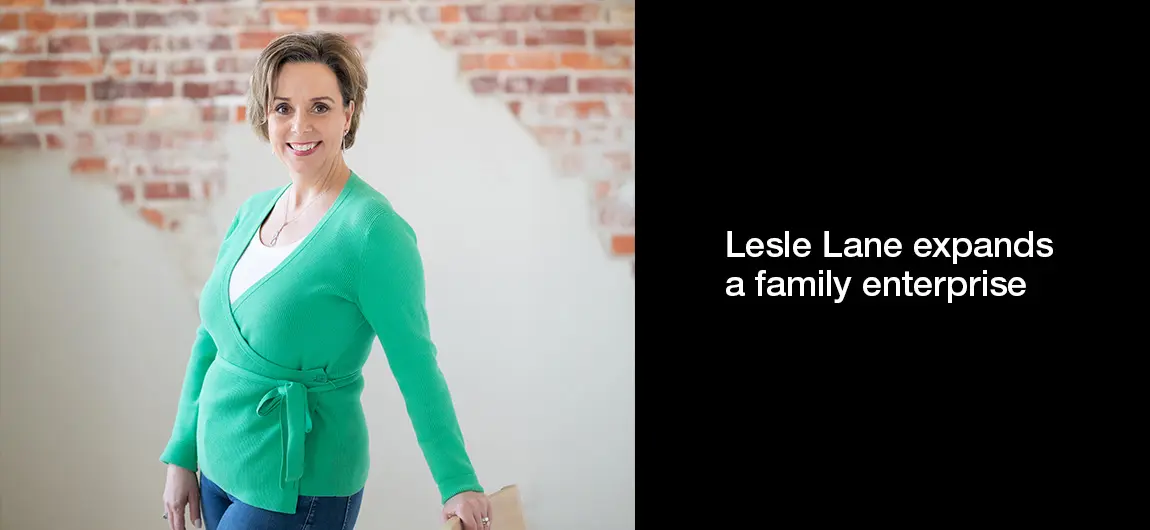
Lesle Lane is the third-generation owner of Studio 13 Photography, which began as a family business founded by her grandparents and has evolved into a respected photography studio known for its craft, consistency, and client-focused approach. Her leadership continues a legacy built over decades, with a focus on adapting to new technologies while honoring the studio’s original artistic vision.
View transcript
Photography Studio Business – Lesle Lane, Studio 13
[00:00:00] Sanjay Parekh: Welcome to the Side Hustle to Small Business Podcast, powered by Hiscox. I'm your host, Sanjay Parekh. Throughout my career, I've had side hustles, some of which have turned into real businesses, but first and foremost, I'm a serial technology entrepreneur. In the creator space, we hear plenty of advice on how to hustle harder and why you can sleep when you're dead.
[00:00:22] On this show, we ask new questions in hopes of getting new answers. Questions like, how can small businesses work smarter? How do you achieve balance between work and family? How can we redefine success in our businesses so that we don't burn out after year three? Every week I sit down with business founders at various stages of their side hustle to small business journey.
[00:00:43] These entrepreneurs are pushing the envelope while keeping their values, keep listening for conversation context and camaraderie.
[00:00:56] Today's guest is Lesle Lane, the owner of Studio 13, a third generation photography studio based in Indianapolis, Indiana. Lesle, welcome to the show.
[00:01:06] Lesle Lane: Hey, thank you so much for having me.
[00:01:08] Sanjay Parekh: So I'm excited to have you on because honestly, I don't know that we have too many business owners and kind of entrepreneurs, founders with multi-generation businesses that have come on the show. So I think we're gonna dig into some interesting stuff. But before we get into that, give me a little bit about your background and what got you to where you're.
[00:01:27] Lesle Lane: Sure. You know, being a third generation photographer, people often ask me, did you have a choice? Kind of, yeah. I mean, I'm gonna say kind of. I had a camera in my hand from the time I was six.
[00:01:39] I loved taking pictures because my parents were taking pictures and I was following them everywhere they went. So as I went through high school and college, though I was a competitive ice skater, I actually had a dream that I would skate professionally. But one thing led to another and my stepfather became quite ill. And so after I graduated from college, my mom said, you know, he's not gonna be able to continue on. You've got to either take it over now or we're gonna have to start, you know, getting rid of it. And so in my early twenties, I took over this family business that is an incantation of what I'm doing now.
[00:02:16] It's definitely a lot different. You know, we were shooting four by five and eight by 10 film when I first came on, you know and now my camera's, you know, the size of my palm. And so a lot has changed, but that's kind of how I've gotten here. The steps between here and there are. Long and some are glamorous and some are not. But that's how I got here.
[00:02:38] Sanjay Parekh: Yeah. Okay. So since you mentioned it, I got to ask like preference film, camera, digital camera, digital. All day long.
[00:02:46] Lesle Lane: Digital. Digital, all day long.
[00:02:48] Sanjay Parekh: Why all day long? Why do you love it digital much more than film.
[00:02:52] Lesle Lane: First of all, film was scary. Okay? You didn't know what you were gonna get. Film was mathematically challenging and, you know, many of us that are in the creative fields did not get into it because we excel at math. And so, you know, I knew how to do it. I knew my f stops and shutter speeds, I mean. For goodness sake, Sanjay, we had to have four by five cameras where you'd have to measure how far the bellows were so that you could figure out what your exposures was.
[00:03:21] I mean, it was a lot of math, so that's the first reason. The second reason is because the digital age has finally now come full circle. So I replaced a lot of my gear this year and I am so impressed with the quality of the imagery that I'm getting now. It is just now really getting, so it's an UNC anxious file that has everything in it. I need to make it into what I want to deliver. And there was a lot of places in between where I was like. This is not good. Yeah. This is not as good as film, but we're there now and I'm super happy with it.
[00:03:55] Sanjay Parekh: Yeah. Yeah. We're there now and then just imagine what it's gonna be like in the coming years. Right. It's only gonna get better and better.
[00:04:02] Lesle Lane: It's gonna be interesting because my grandfather used to say, just because something's progressing doesn't mean it's improving. So it'll be interesting.
[00:04:12] Sanjay Parekh: Wise words.
[00:04:13] Wise words right there. Okay. I got to also ask you about ice skating, competitive ice skating. How did you get into that?
[00:04:22] Lesle Lane: My stepfather was a hockey player and so the first winter we moved up here, I got ice skates for Christmas and I was just hooked. And you know, I know a lot of times you ask people. Did you do entrepreneurial things as a young person? Well, the minute that I could teach ice skating and make money at it, which was the age of 16, while keeping my amateur status, I immediately started coaching. I mean, I was at the rink so many hours a day, and I had plenty of downtime. So why not make money at it? So. I loved it. It has definitely shaped who I am as an entrepreneur. Being a disciplined, independent sports athlete I think really has played a huge role in my business life.
[00:05:06] Sanjay Parekh: Was it like, obviously like managing that probably taught you a lot of lessons about how to manage a business and how to manage a book of business. Is there anything like surprising that you learned from being an ice skater or an ice skating coach that you still kind of lean on today or remember as a lesson day?
[00:05:24] Lesle Lane: Oh, 100%. So in ice skating you have to pass special tests. To get to the next level. So people that are Olympic champions, they're called gold medalists because they've passed all their tests to get there. And it wasn't easy for me. I I'm a DHD. I have some dyslexia. And so back in the day we had to do figure eights where you'd have to be in a quiet place and do circles on the ice on one foot.
[00:05:52] And so as an 8-year-old with ADHD, that was like torturous on me. And so there were some of those tests that they took me Time and time again, I would fail time and time again. And I think that anybody that's been in business has at one point failed or failed forward, or made mistakes or things didn't go the way they wanted them to.
[00:06:15] And so learning how to deal with disappointment and failure so that you pull yourself back up again, as my mom says, put on your boots and get going. It really, I'm grateful for every minute of it.
[00:06:28] Sanjay Parekh: Yeah. Okay. I, this was not the intended point of this podcast, but I got to ask you this. Okay. What is the trick? Because I am awful on ice skates. What's the trick of staying up? Like, is there a trick that you should always think about?
[00:06:42] Lesle Lane: The trick is that you need a good pair of boots. I mean the rental skates are awful. My, my skates were very thick leather that we tied on very tight and that's really the trick to it.
[00:06:53] Having a good pair of skates goes a long way.
[00:06:55] Sanjay Parekh: I was hoping you were gonna say something like training wheels or something like that. Yeah. Like there's like training skates that give you
[00:07:01] Lesle Lane: Oh, there are, I mean, they've now got these little things you push around the rink, but I think that takes the fun out of it.
[00:07:07] Sanjay Parekh: Yeah. Yeah. I can imagine. So. But but also falling down on your face multiple times on the. Probably takes the fun out of it too. So that's...
[00:07:16] Lesle Lane: you learn how to get back up, Sanjay. You learn how to get back up.
[00:07:19] Sanjay Parekh: And is that not true about entrepreneurship Right there? So it is. Okay. Let's talk about the business then, and the photography business not the ice skating business, the photography business.
[00:07:28] So okay, you're in your twenties, you get called in to kind of come in, help with the business. At what point, like was it that you took over completely, you know? Was there anything that made you nervous about making this shift?
[00:07:45] Lesle Lane: You know, I was so young that I didn't know any better. You know, it was what I really I go down, I tell everybody that will listen.
[00:07:53] Being young and stupid was my greatest asset of the time. And so I was close to 24. I think when it became fully my responsibility. My mom was taking care of my stepfather, and so even though she was involved in the business. She was not a commercial photographer. She is a fine art photographer, and so she could not do the photography that my stepfather could do.
[00:08:17] Now, neither could I, but I had, I would started training myself where a client would call and say, we need to shoot stationary in the studio. And so the night before I would go shoot stationary in the studio, we'd run the film, I'd put it on the light box. My mom would look at it and go, okay, you're ready for tomorrow's shoot.
[00:08:34] And that's literally how I did things for about the first three to five years.
[00:08:38] Sanjay Parekh: Yeah. So, okay. When you took over the business, like how big of a business was it? Like, was it just the family? Did you have other people like, talk to me about it.
[00:08:48] Lesle Lane: No.
[00:08:49] My photo, my stepfather was one of three photographers along with two lab technicians. My mom was in charge of sales and business development, and we had an office manager. So I think that puts it at about eight or nine employees that they had at the time. My stepfather was the biggest revenue maker in the business. And this was around the early to mid nineties. And he was the primary producer.
[00:09:14] He did all of the accounting and the bookkeeping and the payroll. My mom doing all the sales, and they were grossing, I think about $650,000 a year at that time.
[00:09:25] Sanjay Parekh: Wow. So that's big shoes to step into, you know, as a first time. Kind of founder, entrepreneur coming out of college. Like how did you manage that transition for yourself?
[00:09:37] Lesle Lane: Well, luckily I had a fantastic assistant, so my dad's assistant stayed on and she truly believed in me. My mom was a little more skeptical because, you know, as your kid you're like, can she do it? And so she was hard on me and so because she was hard on me. I feel like that went right along with my skating days.
[00:09:57] You know, you just got to, you know, go to the light box, be judged and critiqued about the images of the day, and then take the knowledge and move on. So I've always been extremely headstrong. I've always been you know, don't dare me to do something. Don't tell me I can't do something because that is a surefire way that I'm gonna figure out a way to do it.
[00:10:19] But it took a long time. I mean, my success has really been. Probably the last 10 years has been my most successful time of my career.
[00:10:28] Sanjay Parekh: Yeah. I got to ask you like, what did you go to college for? What degree did you get in? Is it like any way related to what you're doing now?
[00:10:36] Lesle Lane: It is not. So my parents told me that they could teach me everything I needed to know about photography.
[00:10:42] Okay. And so they wanted me because I mean, three generations, we got lots of people that can tell you how to take a picture. Yeah. And so they wanted me to go to a liberal arts college, get a fine art edu, a liberal art education. And so I got my degree in religious studies and philosophy. Because my dad said, I want you to be able to talk to the janitor and the senator.
[00:11:02] He said, you should have enough in your brain that you can talk to anybody. Yeah. And so that was what my degree was in.
[00:11:10] Sanjay Parekh: Yeah, very astute because you know, that really is the goal of the entrepreneur or kind of the mission of the entrepreneurs. You need to be able to talk to anybody and everybody because you never know who might be the next sales lead.
[00:11:22] The janitor might be the next sales lead more than the senator. So you just never know.
[00:11:28] Adam Walker: Support for this podcast comes from Hiscox committed to helping small businesses protect their dreams since 1901. Quotes and information on customized insurance for specific risks are available at Hiscox.com. Hiscox, business insurance experts.
[00:11:49] Sanjay Parekh: Okay, so third generation business. You know, obviously there's not tons and tons of people that have that. Like, I don't know what the numbers are. I'm there, there's plenty, I'm sure. But you know, one of the challenges that you have in doing these kinds of things is that you have this family legacy because this history that's there.
[00:12:07] So how do you think about that for yourself in term terms of like honoring that legacy but then also wanting to like branch out and do your own things and do new things?
[00:12:17] Lesle Lane: Well what's the saying that they always say that you learn how to innovate when times are the toughest. And so if you're talking to anybody, any middle-aged entrepreneur right now, they have had so many unexpected things on their Bingo card for their career.
[00:12:36] So we've got 9/11, we've got the Great Recession, we've got COVID. For me, we had a technological disruption between film and digital. And then now we've got another one from digital to ai. And so each one of those things ha had such a huge impact on the business that I had no choice but to think about how to change.
[00:12:58] But probably the biggest one that had the biggest factor on me personally was COVID because. When you're in a business like mine where you're not gonna get business by sitting behind a computer, you've got to go out there, you've got to find it. You've got to meet people. You've not got to get referrals. And I really didn't kick into high gear until about, you know, the 2015s,2018s. And by the time COVID hit, I had a network of people that were surrounding me, bankers and human resources, you know, every single type of person that I could reach out to them and say, what do I do with this? Where I didn't have that in some of the other parts of it, and it was because of them that I was actually able to change and innovate my business. Pivot, which I know is becoming a increasingly unpopular word, but pivot it from being all about me. I was able to consolidate some debt through the funding that was available at the time, and it just put me on a really great footing as I moved forward after COVID.
[00:14:00] Sanjay Parekh: Yeah. So you've shifted the business from where it was before to doing commercial photography. Why that shift? Why was that interesting for you?
[00:14:11] Lesle Lane: Well, I've always done commercial, so my dad did commercial. I did commercial. It was my grandparents that did portrait. Got and it was because I just don't like portrait wedding. I mean as a, my husband says I'm a soulless, heartless woman in, in the most loving way.
[00:14:28] I don't like photographing things that have feelings. I really don't. I mean, I just, I don't want to have to display somebody's. Newborn baby and the feeling that they're having because they have a baby, I want to go out and I want to be in your factory. I want to shoot a processing plant. I want to make industry look beautiful.
[00:14:46] And so it never was really something I ever wanted to do. The pivot in our business was that most of the time you see photographers and their one person shows, they just do as much work as they can do. And when they're slow. And when they're busy, and there's like no. No. Getting around it. And so when COVID started near nearing the end, I realized that I had enough contacts in this area in business that I could grow my business and that I could start training other independent contractors to be on my team and to take the overflow business that I have.
[00:15:24] Sanjay Parekh: So, so that pivot from other stuff to kind of commercial photography that happened during COVID or near the end of.
[00:15:34] Lesle Lane: All of that. It was near the end of COVID that I stopped feeling like I had to capture every dollar worth of business myself.
[00:15:42] Sanjay Parekh: Got it.
[00:15:42] Lesle Lane: That I could start getting other photographers to expand and grow the business where I wanted it to be.
[00:15:50] Sanjay Parekh: Yeah. Okay, so let's talk about that. How did you find photographers?
[00:15:55] First of all, how did you make sure that they were a good fit for you? And then the second part of that is how did you make sure that the work that they did is the same, like brand wise, consistency wise quality wise as what you would do.
[00:16:12] Lesle Lane: Sure. I was very fortunate that as a commercial photographer, I always have assistants with me. When, like I was telling you earlier, I, my, I shipped all my gear to Texas this week, 300 pounds worth of equipment that is you know, in Texas waiting for me. And so, because I've always had assistance to help me with such. You know, big gear. I, they're photographers as well. So when I was ready to start expanding, I already had people in my arsenal.
[00:16:40] There's some things I don't like to do in the corporate space. I'm not a big fan of video, drone and event photography. I personally don't like to capture those. So those were kind of the first spaces where I went to find people that could fill those holes within my business to bring a new kind of service.
[00:16:57] That I don't personally provide. And so we then went through and I set up standard operating procedures. I set up a manual for how they need to not only conduct themselves, but shoot specific things. And so I, I just took the approach that I'm not a small business, even though I am, I took a more large business approach of writing job descriptions and SOPs and getting an administrator to help me handle the schedule.
[00:17:24] So I really just. I just took the photography business and just changed it from a one person operation and thought of myself as more of a business owner.
[00:17:37] Sanjay Parekh: So that's interesting because a lot of people that would be in your position would be like, okay, I just need to find more people to do the same thing that I do, just so that we can do more of it.
[00:17:47] And instead, you obviously you needed that, but you said, let's fill these gaps that we have in the business, the things that keep coming up, right? And so is that what it was that. Drove that desire to get people to do those things because you kept getting asked for it? Or was this an understanding of like, you know, we're not being asked for it because we don't do it, and so that's how we can expand the business?
[00:18:12] Lesle Lane: It's twofold. Yes. People were asking for those things and I was referring that off to other photographers, so that was just money flying out my window right there. And then the second thing is every time I was booked and somebody, because in commercial photography, they want the day that they want E either there's a sales meeting or there's a specific process that's gonna be made that day.
[00:18:34] And so if I'm on a job, I can't call my client and say, you know, I got somebody else that wants your day. And it's really important. And so I would have to turn down work or I would have to refer that work off. And so by bringing in these other photographers, I did train them on a couple of things that I do. So that I don't have to turn that work down. So it was twofold.
[00:18:55] Sanjay Parekh: Yeah. Okay. That's interesting. Okay, let's talk about tech a little bit. You, you touched upon that a little while ago. We talked about film to digital, and you kind of touched on ai. How are you thinking about AI in the business?
[00:19:09] Because now we're starting to see. The ability to generate very photorealistic images and things like that. How do you think that's gonna impact you? Is this something that you're gonna leverage somehow? How are you thinking about it?
[00:19:22] Lesle Lane: Yeah, I very much hope I'm going to be able to leverage it. I mean, I already am in some aspects from the standpoint that you know, AI and editing has made our streamlining process so much faster.
[00:19:34] And one of the things that my competitors don't really do well is deliver on a timely manner. I mean, if you and I'm not talking bad about all photographers, so if you are a photographer, I apologize if this is offensive, but one of the things that artists don't do really well is quote, on a timely basis. Email on a timely basis, deliver on a timely basis and invoice on a timely basis. And so AI is allowing me to do all those things I already do well and do them even better. The other thing is that I go into a client not just saying, Hey, can I take pictures for you? But I say, what's your problem? And a lot of the times especially when I'm doing a big shoot in a corporation with a lot of people, just getting the people to come to whatever the shoot is.
[00:20:19] And getting that scheduled is the pain point. And so we now have the ability to give our clients specific software for their shoot that they can then send out to their people and schedule it without an administrator being involved at all. And so I'm really looking not just for what AI can do for my photographs, for the retouching, for the delivery, but what are other ways that we can use technology to serve our clients better?
[00:20:45] Sanjay Parekh: Yeah, interesting. Do you feel like, people that could be potential clients are now starting to use some of these tools and instead of calling you that they're using these tools themselves has it been good for the business? Do they do that and realize, oh, this is garbage and I actually need to call a professional, or..
[00:21:04] Lesle Lane: We've had it happen both ways. Yeah. So, the thing that's probably impacting my business the most negatively, because I've got a negative and a positive on it, are corporate headshots. So people that want to take a cell phone picture, send it off to a program, and then get a professional headshot back, I have had, I've lost one client to that technology this year.
[00:21:30] I expressed my disappointment, not just because of losing the business, but I feel that you can still tell the difference. Now will you be able to tell that difference five years from now? I don't know, but right now you still can tell the difference. And I feel that it negatively impacts a business that, relies on authenticity. Yeah. So if you're a company out there that people need to know, like, and trust you, you need to make sure that your imagery follows that. So that's where it's negatively impacting me. Where it's positively impacting me is that many of the retailers are refusing to show packaging that does not have real photography on it.
[00:22:07] So think about Target and think about you know, office Depot and places like that. We're seeing a surge in product photography. Because they want to get away from AI on their packaging, but they also want to get away from Amazon. So Amazon does provide a lot of photography, but then you have no control over how your images are used.
[00:22:28] If they're sent off to competitors for them to use also. And so I have seen a surge that with this truth in advertising, I mean, it's always been around in America, you're supposed to show what your product looks like. And the government's gonna have to decide what they're gonna do about this AI situation.
[00:22:46] But for now, the retailers are pushing back and saying, no, we have to see what your product really looks like.
[00:22:54] Sanjay Parekh: Yeah. As a consumer, I have to say I really like that because I can't tell you how many times I've looked at products online. I'm like, wait, is this a rendering? Is this really the thing? I can't figure that out.
[00:23:06] And the word that you used is the exact word that I was thinking of is authenticity, right? Like conveying that authenticity. I mean, we do so much. As businesses to try to convey that, right? We tell these stories. We have websites that, that talk about the people and the team and everything else like that.
[00:23:23] And it does it's never made sense to me why you would do something that's inauthentic to that brand because of that. Although that said like a lot of people do the head shots that are like. Drawn caricatures and things like that. Right. And I think it makes sense if it goes along with your brand.
[00:23:39] But for a lot of people it, it just doesn't, so it, it's never made sense to me. So okay. Let's talk about balance. So you were just talking about heading out for like a three day shoot. You've got these kinds of things kind of all the time. It takes a lot of time. You're away from home, all of those things, like how do you think about life you know, personal life, professional life, balancing these things, making sure that you're being able to spend time with friends and family and doing all the things that are normal human things to do and not work things to do. How do you do that for yourself?
[00:24:14] Lesle Lane: Well, I know this is gonna sound super. Like ridiculous. But I cannot stress enough how much marrying the right person matters. And I mean that from the bottom of my heart. I'm not gonna come home from Texas on Friday and have to start doing laundry, you know?
[00:24:32] Next weekend is my grand baby's second birthday party. My husband is taking care of planning the entire thing. So part of being balanced is having someone in your life. That can make up for it when it's not balanced. Because when I come home next weekend, I'm gonna be able to enjoy my weekend, spend time with the people that I love, spend time with my grandchildren my husband, and I'll probably go on a date and I won't have to worry about me having to take care of the house and do the laundry.
[00:25:01] So that, to me, that's the first thing. If you're gonna partner up in life, make sure it's a true, authentic partner. The other thing is that I tell you not having children in the house. It's a different phase, you know having my children be grown I'm able to do a lot more balancing because I'm not having to run them all over the place.
[00:25:21] So I just think it's the different phase of life that you're in. And I think that you just have to schedule the time off. Normally, I would be very slow this time of year and in fact, I've set myself on a nine day vacation in December because I'm normally slow this time of year. And I just booked it.
[00:25:38] I didn't wait for the time to come. This is what's gonna happen. And I just think that when you work for yourself, that's probably the greatest way to keep your balance, is to just say, this is not happening between these seven to 10 days. You know, I'm gonna take that time so that I could rejuvenate. My 2026 is already looking great, and so I need to be ready. So I'm at my best for my clients and my associates as well.
[00:26:02] Sanjay Parekh: Yeah, you make a really good point there, I think, in terms of the support system and I think a lot of entrepreneurs don't think about that or think about that too late.
[00:26:13] Like you, I was very fortunate I married well and when I first started doing entrepreneurial things. She was very supportive. And ho honestly, there's no reason. You know, the only reason I succeeded was because I had that support system that, that person at home that would support you no matter what.
[00:26:32] And listen to kind of all the bad things that always end up happening as an entrepreneur. So thinking about your support system, so you've got a great partner in life, is there other things that you think about as a support system that help you make it through the day, make it through the week, make it through the month?
[00:26:47] Lesle Lane: Yeah. I'm a very, as many creatives are, I'm a very empathic person, so I feel all the feels, you know, so if I'm out on a job and somebody's having a bad day, I'm probably having a bad day with them. Everything that's going on in the news and in social media right now, it deeply affects me. Not just because of what's going on in the world, but I have people in my life that are being deeply affected by it.
[00:27:10] And so I, I read fantasy novels. That's my guilty pleasure, is that I go into a fantasy world while I'm editing. I'll have it playing in audio. If I'm traveling, I'll be reading it on my Kindle. And that kind of keeps my mind from getting too bogged down in what's really going on. So that's kind of my mental support. The other thing is we live on a lake. And every time we want to go out on the water, the phone stays at home, everything stays in the house, and me and my husband and my dog, we go out on the lake and we just are in that moment. So those are my two guilty pleasures for how to keep myself mentally stable.
[00:27:50] Sanjay Parekh: Okay, so I got to ask is there a series right now or a series that you love that you think is like just the best?
[00:27:58] Lesle Lane: You know, I have been stuck in a Sarah J. Maas. Retrograde is the only way I know how to say it. So her series, assassins Blade, it's a seven book series, Uhhuh. All of her books have strong female, people in them. So I thoroughly enjoy it. But Assassin's Blade is phenomenal. And, but I'm listening right now to the Crescent City series, which is also by Sarah J. Maas. And then I'm about to start the Zodiac Academy, which is a 24 book series that, I'm gonna start that tomorrow on my plane. Right. That has come highly recommended to me. So.
[00:28:35] Sanjay Parekh: Awesome. A bunch of great book recommendations there for listeners. I love it. Okay. Last couple of questions for you, Lesle. Now thinking about like you've been. In the business for a long time. A good while. If you could go back in time and do something differently, like knowing what you know now not being the the uninformed kind of dumb 20-year-old going into the business.
[00:29:01] Like, like is there something that jumps out at you like, oh, now that I know what I know. I would go back and do this bit differently.
[00:29:09] Lesle Lane: Yeah. You know, when you take over a parent's business the first thing you want to do is you want to do it like them and do it well. And I did that for too long. So the nature of photography, especially commercial photography, changed so much during that great recession.
[00:29:25] Not just technologically, but it went from people working in large studios to bringing the business into their home and kind of renting that space when you need it. Instead of being the one that covers the overhead, right? So if I could have done that sooner, if I could have made that change faster, rather than still trying to do business the way my parents did, I really wish I would've done that differently.
[00:29:49] Sanjay Parekh: That's so interesting. Yeah, I never really thought about the big studio space. Like I remember the Olin Mills and all those places, right? Like they had the big studios that you always had to go to, but that's just never the case anymore.
[00:30:01] Lesle Lane: So. Well, and I was shooting cars at the time, you know, I was shooting race cars because we're in the motor sports capital of the world.
[00:30:07] And so that was why we had the facility was to do the large products. And then as things came, now the racing teams have studios in their. Racing headquarters, even auto dealerships. I was photographing an auto dealership last week and they have a studio in their auto dealership to take pictures of their cars.
[00:30:28] And so all of that just happened so quickly that, you know, and I think that's a thing for entrepreneurs where you see that you should change something, but you just can't change it fast enough. Yeah. And so, yeah, I wish I would've made some of those changes facility and overhead changes faster.
[00:30:43] Sanjay Parekh: Yeah. Interesting. Okay, last question for you, Lesle. If you were talking to somebody who's thinking about taking that leap like you did and getting into a full-time business or launching a side hustle, doing something like that becoming an entrepreneur, what advice would you give to them?
[00:30:58] Lesle Lane: I do not believe fake it till you bake it. I don't believe in that. I believe that especially now in this day and age, if you have a deficit, whatever it is, for me, it was, like I said, the math, the accounting, and all that stuff, which is why I went back to grad school and I got my master's in business to shore myself up. There is no reason for an entrepreneur in this day and age to fake it till you make it.
[00:31:21] There's too many resources for you. Too much learning. Even me, I mentor people all the time. You want to learn about photography, I will teach you about photography because you can't do it like I do it. You know, we're all unique. We all have our own unique ways of running a business for, you know, especially taking a picture.
[00:31:38] It's as unique as a thumbprint. So I just highly encourage people, if this is something you want to do, pursue it with everything you have. Find a mentor and make sure you shore yourself up for the parts of yourself that you think are, you know, needing a little bit of extra oomph.
[00:31:55] Sanjay Parekh: I love it. I love it. Lesle, this has been fantastic. Where can our listeners. Find and connect with you online?
[00:32:00] Lesle Lane: Yeah. Studio 13 is on LinkedIn, Facebook and Instagram. I think this, and you have to say, I think, because I have a social media person. Studio13 Indy is what the Studio 13 page is. I'm also Lesle Lane on LinkedIn. And then studio13online.com is the website.
[00:32:16] Sanjay Parekh: Awesome. Thanks so much for being on today.
[00:32:19] Lesle Lane: Thank you. It was a great time.
[00:32:24] Sanjay Parekh: Thanks for listening to this week's episode of the Side Hustle to Small Business podcast, powered by Hiscox. To learn more about how Hiscox can help protect your small business through intelligent insurance solutions, visit Hiscox.com. And to hear more Side Hustle to Small Business stories, or share your own story, please visit Hiscox.com/side-hustle-to-small-business. I'm your host, Sanjay Parekh. You can find out more about me at my website, SanjayParekh.com.
Subscribe to our podcast



Did you start your business while working full-time at another job?
Tell us about it! We may feature your story in a future podcast.