Custom Furniture Making: Kwadwo Som-Pimpong's Story



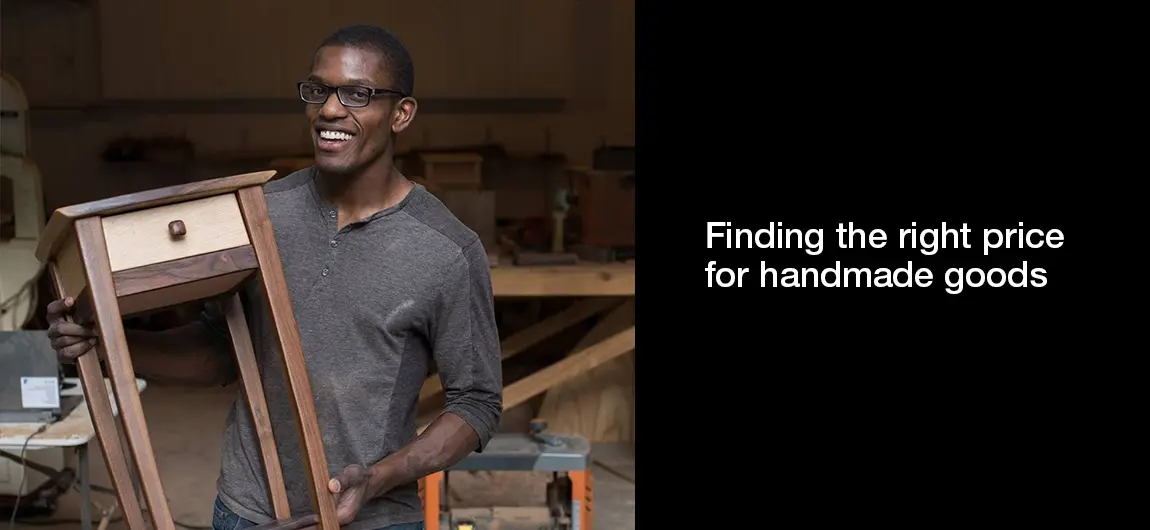
Kwadwo Som-Pimpong founded Crafted Glory, a handcrafted furniture company, after buying his first home in Asheville, North Carolina. Drawing on his engineering background, he mastered the mechanics of furniture making and honed his craft. What began as a personal project has grown into a business that serves customers across the country. Today, Crafted Glory is known for its commitment to quality, craftsmanship, and thoughtful design.
View transcript
Custom Furniture Making – Kwadwo Som-Pimpong, Crafted Glory
[00:00:00] Sanjay Parekh: Welcome to The Side Hustle to Small Business Podcast, powered by Hiscox. I'm your host, Sanjay Parekh. Throughout my career, I've had side hustles, some of which have turned into real businesses, but first and foremost, I'm a serial technology entrepreneur. In the creator space, we hear plenty of advice on how to hustle harder and why you can sleep when you're dead.
[00:00:21] On this show, we ask new questions in hopes of getting new answers. Questions like, how can small businesses work smarter? How do you achieve balance between work and family? How can we redefine success in our businesses so that we don't burn out after year three? Every week I sit down with business founders at various stages of their side hustle to small business journey. These entrepreneurs are pushing the envelope while keeping their values. Keep listening for conversation, context, and camaraderie.
[00:00:55] Today's guest is Kwadwo Som-Pimpong, the founder of Crafted Glory, a leading furniture maker based in Asheville, North Carolina. Kwadwo, welcome to the show. Thank you so much. So I'm excited to have you on. I think you're the first ever custom furniture maker that we've had on the show. So I think there's gonna be lots of, kind of interesting stuff as we get into this. But before we get into that, give us a little bit about your background and what got you to where you are today.
[00:01:27] Kwadwo Som-Pimpong: Okay. Yes. Well, it's an honor to know that I'm the first customer furniture maker on the show. But basically I I was born in North Carolina in Greensboro and went to high school and college out, out of state and studied engineering in college.
[00:01:49] And after graduating, was looking for an engineering job. Ended up landing in Asheville, North Carolina working for an engineering company. And in the process of looking for homes in Asheville I found a house, but quickly discovered that the furniture that was in there when I was shopping for the house was not going to be there when I moved in. And so I had to start my journey of looking for furniture to furnish the house. Couldn't quite find what I wanted. So one day I decided to try my hand at making some end tables there. They're really basic, really crude. But what happened was I felt in love with the process of furniture making and over the course of many weeks and months and really years, I felt deeper in love with the process. Honed my craft and started to develop my aesthetic. So that's what got me into woodworking itself. But in 2017, I discovered Etsy, which is a platform for handmade items. And I listed a few things on there, really small
[00:03:02] items like wooden jewelry and cutting boards, but slowly started getting sales and that's what introduced me into, making my products available for people to purchase. Over time, those cutting boards and earring earrings grew into larger and larger pieces. Fast forward to today, I'm making large coffee tables and dining tables and and large items for clients all over the country. Shipping as far as California and even Hawaii and Alaska, we've shipped to all 50 states.
[00:03:39] Sanjay Parekh: Oh wow. So that's you know, like most entrepreneurs, that's a special kind of crazy that you have there in that you're like, wait, the furniture didn't come with it. Instead of just saying like, Hey, can I buy the furniture, the staging furniture? You're like, I'm just gonna make it. Yeah. And so it's an interesting thing and I think that's. Kind of the hallmarks of most entrepreneurs of being like, well, no I could just do this myself. Was this the first time that you'd ever actually started a business? Was there any kind of entrepreneurial nature, like as you were a kid or in the family or anything else like that?
[00:04:16] Kwadwo Som-Pimpong: Yeah, I'd say that my, my family's pretty entrepreneurial, especially my dad. He is he's a go-getter, self-starter. I did have some other ventures prior to this. I was into filmmaking, so I was doing wedding photography and videography. I had made, started a juice business while living in New York for a year.
[00:04:41] I did a couple other things. None of them really went very far, but it really scratched my itch for entrepreneur entrepreneurship. So I'm an entrepreneur at heart. Even from childhood. I'd love to create things with my hands and just experiment and try things. So it's really part of me.
[00:05:03] Sanjay Parekh: What happened to those businesses? Why did you put them aside or shut them down? The photography film one or the juice one?
[00:05:11] Kwadwo Som-Pimpong: Well the photography and film, you know, that's still, actually, it still comes into play with what I do today, just in a different way. I'm using that skill to create images of my pieces, to photograph them, create video.
[00:05:27] My wife is also an entrepreneur and the things she's doing, I'm using my video and photo talent to help her with that. So real, it, it just changed direction as far as that's concerned. With the juices what I was trying to do is create a hundred percent juice seltzer dr. Or carbonated drinks. I noticed that most of the drinks were first ingredient was water and then you have juices or flavorings. I just wanted to use a hundred percent juice, carbonate it. Bottle it and I was mixing herbs and berries and different flavors. I was realizing that it margins were not there. If I was going unless I was going to market it as a very high end product, so I abandoned that. But it was a really interesting journey. Lots of juice everywhere in my kitchen. Very sticky situation. But it was a great learning experience.
[00:06:26] Sanjay Parekh: Very sticky situation in multiple ways. I'm sure. Yes. So okay then in, in starting this. So I know you, you've got a full-time job as well, and you're doing this essentially as a side hustle, but it's really almost a second full-time job. Was there anything that made you nervous in trying to launch this?
[00:06:46] Kwadwo Som-Pimpong: Well, I think part of what allowed me to jump into it was that I, it was a slow foray into this. It wasn't like I just bought a, got a studio, got a bunch of lumber and tools and everything all at once. It was, I was acquiring tools one by one.
[00:07:10] I was learning something new. Then realized, okay, I need to get this tool or object to help me achieve that. I would someone request a certain item that was a bit beyond what I'd already done and so it would require more of an investment. So it's just a slower, a slow journey. So I didn't really feel nervous going into it.
[00:07:33] As I grew and as my clients become, became more I guess high profile in a way, in the sense like I was, I started to have interior design clients and the stakes were higher. Yeah, that did make me nervous at times. But as I got the reps in and Going through challenging situations more and more, it made me more comfortable with owning my own business, venturing out making pieces for people that I don't know who are hundreds or thousands of miles away.
[00:08:12] Sanjay Parekh: Did you so, you know, one of the challenges for entrepreneurs when they get into a new business like this and I feel like it's probably something that you've had to struggle with, is how do you price your work? Especially when you're doing something that you've never done before, like you've just mentioned. Yes. So how did you figure that out for yourself? And were there missteps? Were there times where you way under quoted, based on the amount of labor, how, like, how did you deal with that?
[00:08:40] Kwadwo Som-Pimpong: Well, Sanjay, I'd say that is probably the most challenging part of my journey has been pricing and getting it wrong.
[00:08:51] Which to anyone listening to any small business owners, just you need to invest time and effort in getting your pricing right, because it can be the difference between succeeding and failing. So yeah I was notorious for pricing my product's too low. When I got married, my wife quickly pointed that out and helped me to correct that, but it would, when I, whenever I did it, what would happen was that all of my profits or a lot of my profits would get eaten away by things like shipping and if there's a mistake, if there's something has to be redone, unexpected
[00:09:33] Occurrences, all of that because my pricing wasn't right, then I would be absorbing all of those costs of those issues. So yeah, that was challenging, but when I started to understand the value of what I was doing and realizing that there are people out there who actually pay for value and they'll pay a lot of money for value, I realized that, oh yeah, I need, I'm cut. I'm selling myself short and. My time is very valuable, so let me get my pricing right. Yeah it's, I mean, but it's still a journey. I don't know if you ever get it really a hundred percent right, but it's certainly much better than it was before.
[00:10:15] Sanjay Parekh: Yeah. How did you you know, you talked about how you went to college and we actually talked about this.
[00:10:22] You were a mechanical engineer and civil and environmental degree. None of that is carpentry. And so how did you teach yourself these skills? Did you work under somebody that did woodworking? You know, like where did these skills come from for you?
[00:10:41] Kwadwo Som-Pimpong: Well, I've always had a passion for working with my hands, and there was, there's always been a bit of intuition when it comes to building something where engineering came to play
[00:10:53] Was or is with understanding how forces work in objects? Just I'd say that during my college career in engineering, it helped to develop the intuition of, okay, this isn't gonna work structurally, this will work structurally. That's really the main thing with the engineering background.
[00:11:16] But. Really, it was just learning as I go. I did watch videos. I didn't get any formal training, but the best training I did get was making mistakes. And more recently though, I've realized the, that I do need more continuing education. A good word worker will tell you that they are always learning, that they've never learned enough. And so that's what I'm leaning into these days. I took a workshop recently in Kentucky under a master chair maker, which was very valuable, and I envisioned doing more of that because when I stopped learning, then I, I start going backwards. So, gotta always be learning.
[00:12:07] Sanjay Parekh: Yeah. Unlike me, I, it sounds like you still remember your statics and dynamics classes from engineering. I don't remember those at all. I remember taking the classes, but if you gave me a tru and asked me to do the forces, I would not definitely be able to do that. So if I ever come across a bridge and I need the trust analyzed, I'm gonna come to you. Yeah. Qua. Oh man. Okay.
[00:12:37] I see. If I got the textbook out, I don't think I'd even understand what I was reading. So I think you're closer to it than I am. That's what happens when you've got an electrical engineer trying to do trusses versus a mechanical engineer.
[00:12:48] Kwadwo Som-Pimpong: Ah, yeah. Trying to do truss. That's it.
[00:12:51] Sanjay Parekh: Do so, so let me ask you do you remember the first time you sold a piece of furniture? To somebody you didn't know. And do you remember what that experience was like and how you felt about it?
[00:13:03] Kwadwo Som-Pimpong: I do. I remember it very vividly and very fondly. I had made a live edge coffee table and it was just something I was, Doing speculatively. I was just interested in trying it out. And then I put it in a local thrift store, actually no, not thrift store, consignment store, and somebody came to that store and purchased it, and I got the email saying that my, my table had been purchased.
[00:13:33] And then later on that person reached out asking me to make something else for her. And that was just exhilarating to know that I had made something that someone else valued enough to give up their money for that. That was very very inspiring for me and helped to spur me forward to do more of my work.
[00:13:58] Sanjay Parekh: Yeah. And even more than just valued it. They liked it so much. They wanted another one. Yeah. Which is. Which is pretty incredible is that person still has been an ongoing customer or was that it after that engagement?
[00:14:11] Kwadwo Som-Pimpong: That was it after those couple pieces. With the thing with furniture is that you may go many years without needing something else. So Right. So maybe she'll come back after another few months or years.
[00:14:27] Sanjay Parekh: Yeah. Yeah. Is there like, so given your background in mechanical engineering is there and now with kind of this rapid rise of computerized work on a lot of these things, you know, like. Cncs and all this kind of stuff. Is there anything kind of in your toolkit that was really a game changer for you that really has helped you kind of drive the business forward more than anything else?
[00:14:54] Kwadwo Som-Pimpong: Yeah, that's a good question. Well you mentioned CNC. Yes. CNC milling has been a game changer for me. I invested in a large CNC machine that took me many years to pay off, but it really was a game changer.
[00:15:10] I still do a lot of, or most of my work without it and without, very high tech machinery. We use machinery for a lot of the processes, but there is a lot of hand carving. There's a lot of hand assembling and hand finishing, which I always want to be part of the process. I'm a traditionalist in some sense, but also a tech guy in another sense. So I like to bring it together in my business. I believe technology is just a tool and ultimately people are buying what I make because they value the craft. They value my creative inspiration, and ultimately they wanna own a piece that I created. So. Technology's great, but it's more than just it, it's just a tool. Like I said.
[00:16:09] Adam Walker: Support for this podcast comes from Hiscox committed to helping small businesses protect their dreams since 1901. Quotes and information on customized insurance for specific risks are available at Hiscox.com. Hiscox business insurance experts.
[00:16:30] Sanjay Parekh: So let's talk about the business then for a second, because that's an interesting point you make where you always want to have kind of hands on pieces that is kind of the antithesis of what a lot of furniture makers are, right? It's about how many pieces you can pump out and lowering the price and that whole thing. So how do you kind of view this as a long-term business and where do you see this going over time?
[00:16:54] Kwadwo Som-Pimpong: Yeah. Yeah. It's been a journey of understanding and grappling with what my business, what I want the business to look like. Initially, I thought that I was com competing with. Brands like RH or one of those, one of the many marketers online on online retailers where it's all about lower prices, higher volume they're making their pieces overseas and all of that.
[00:17:28] But I realized that no, I'm not competing with them. I am, My, my, my mission is to create a brand, to create a name that people will seek after. So they'll say, I want a piece made by Cujo. I want a crafted glory. Piece of furniture and they'll know that they can't get that anywhere else. So, so to that end, the business has become more about elevating the brand, elevating our pieces.
[00:17:58] We are a high end furniture brand, so I'm seeking. People who are willing to pay a lot of money for a piece because they consider it to be an investment, not just a commodity. So initially I was looking at my work as a commodity and that's why I was struggling with pricing in my work. That's why I was people were coming to me and saying, Hey, can you make this?
[00:18:25] Then I wouldn't hear anything back when I gave them my price and everything, because I realized they're just shopping around. They're looking for the lowest. Going the lowest price now, right. More and more I have people coming to me because they say, wow, this piece is like nothing I've ever seen. I want it. And I tell them the price. Okay. They're not concerned about that. They're, I'll be more hands-on with the very unique pieces, right. That really bring me joy to make and would be just very exclusive, I suppose. Yeah.
[00:19:01] Sanjay Parekh: So the idea is to grow the business over time and have a team of craftspeople that are making all of this.
[00:19:09] Like, do you see, like, where does this eventually go? This becomes your full-time gig, your only full-time gig. Is this something that you build up and you sell off as a company? Like what do you think that future holds for you?
[00:19:22] Kwadwo Som-Pimpong: Yeah. Well, what I always tell my wife is that I want us to make our business sellable.
[00:19:29] And what I mean by that is I want all of our processes to be very watertight. I want our finances to be solid. I want there to be a good record of running the business well, so that if someone were to come to us and say, Hey, we wanna, we're interested in your business. They'll look at the financials, they'll look at our processes, our operations, our product lines that have good documentation and it's when they're buying the business, they're buying all of that.
[00:20:00] Even if my desire isn't to sell it, but I want it to be in a state that it could be sold. And that's just to have that. A good mindset of running the business well ultimately I'd love it to be something that stays in the family, something that benefits the family, and also benefits the community.
[00:20:22] I think owning a business is an incredible asset to have, and I envision it being my, the thing that I do a full-time, even though it is a full-time business, but not having to do another business to support my family.
[00:20:39] Sanjay Parekh: Right. So let's talk about that for a little bit. Obviously it's always stressful running a business, but you've been running this essentially as a full-time side hustle on top of working, and I know you're a relatively recent new parent.
[00:20:55] Yes. How do you think about all of this and how do you manage the stress of doing all of this and making sure that you're there and present for, you know kiddo and family and friends and all of those other things, how do you think about balancing these things for yourself?
[00:21:11] Kwadwo Som-Pimpong: Yeah. It certainly has been a challenging thing to balance. It really helps to have an understanding wife and furthermore, a wife who is a passionate about this as well. She really wants the business to grow and to flourish. And she loves entrepreneurship as well. But like you said, I'm very mindful of being there for my son, being there for my wife. I don't want to be a dad who, and or the husband who's always away.
[00:21:41] So, so when I got married that lip a fire for me to start doing things right, get my pricing right, get my operations right, because I didn't want to be always hustling. Then when our baby came, it really lit a fire and I, my wife and I said that, or actually, I said, by the end of 2025, I want there to be a big shift.
[00:22:06] Ideally that shift should be that we transition fully into this business. It needs to be some shift of some sort. I can't be going business as usual. Running out here to the studio, running back home, take a quick shower, go to work, second shift, get off at 2:00 AM and repeat the cycle. Yeah, so basically we're doing a lot of strategy. We are doing a lot of, planning, really strategic decision making to help put us in that direction.
[00:22:43] Sanjay Parekh: Yeah. It sounds like man, you're running on all cylinders right now because of all of this stuff. So how do you deal with And having a young, young child that really throws a wrench into all of this, honestly.
[00:22:56] But how do you deal with sleep for yourself? Because that is a hard thing, even as just a parent with a regular job. Yeah. But then to pile this on, like how do you think about that for yourself and how do you fit it all in? Yeah. Well, Are you looking to take a nap right now? Yeah. Like what, what's going on?
[00:23:18] Kwadwo Som-Pimpong: Yeah. Getting enough sleep. That's been one of the biggest challenges because it just it all takes a lot of time. More recently I've had to be more realistic about where I spend my time, whereas before I was very focused on coming out to the studio. Spinning is all my.
[00:23:45] Extra time in here. Ex executing on orders and just working out here. But as my wife and I have talked, we've realized that more time needs to be spent on things like marketing looking at our books, looking at the numbers in order to make decisions, such as is the work that you're spending all your time in the studio doing really bringing in the profit that you think it is, because it could be that you're spending a lot of time ex executing on orders. They're not moving the needle. When if we were to maybe spend one, two, maybe even a week away from the studio and sit down and do some planning, we could make some decisions that would move the business forward so that when I go back in the studio, I'm working on the right things. So we've been making decisions like that and that's been really helpful uncomfortable for me because I wanna keep moving. I wanna keep making, but I realize that you gotta sharpen your ax in order to make better cuts. So. That's where we are now. Yeah.
[00:24:56] Sanjay Parekh: That, that is a hundred percent an engineer thing where it's like I don't want to deal with the paperwork and the like, let me just get to doing the thing. And it's funny because I very much identify with that. When I was doing my first startup, I very much felt the same way.
[00:25:12] I was kind of forced into having to write paperwork for patents and things like that, which in the end was the best thing ever because those got issued and helped protect the business and everything. But when you're in the heat of it, you're like, can I just wanna write code. Yeah. And I just want to get to building things so that I can see it all work. So super interesting. How are you in terms of that, like are you getting, do you have coaches, do you have mentors? Do you have people that you've leaned on or is this just, you know, things that you've figured out yourself? Like how are you figuring out your path in this?
[00:25:47] Kwadwo Som-Pimpong: Yes, coaches, having coaches has been so crucial for me. The first coach, I would say is actually a fellow woodworker or furniture maker who is really at the top of his game. He's actually in this area the Asheville area, and I've sat down and had lunch with him several times and he has helped me to rethink about myself as a, as a. Furniture maker, not just as a fabricator, not just as a carpenter.
[00:26:19] Essentially moving away from this commodity mindset to an artist mindset, to an exclusive, one of my mentors says Wizard. So you want people that come to you because you know you have the knowledge, you have the solution to their problem, and when you have that position, you're able to command the price that you need to command. So he's been one of my mentors. He helped me to think differently about my design process. Then I have several business mentors and I've joined several cohorts along the way. Really, I put it, we put it into high gear and joined, I'd say about five different cohorts of the past year of group coaching, one-on-one coaching, virtual coaching, because we really wanted to get our finance finances right. We wanted to get our strategy and our processes right? So we invested a lot of time and effort and money into these coaching opportunities.
[00:27:28] Sanjay Parekh: Yeah. So fascinating. So fascinating. Okay, here's another thing that I see that you've done and it seems like pretty well, is that you've gotten. Pretty good press coverage throughout. And you've been tapped and been on TV shows and things like that. How did all of that come about for you? And has it meant anything to the business?
[00:27:48] Kwadwo Som-Pimpong: Yeah, it's been really incredible, really fascinating to see that stuff happen. It's been a big blessing that I don't deserve and I don't know how really they, besides the favor of God that they chose me, but okay.
[00:28:03] The first one was NBC. Nightly news. They reached out and actually came down to My Space and filmed a segment that aired on NBC Nightly News. That was during COVID. They wanted to know about how businesses were navigating that, so I told them my story. There have been several features on by Etsy. There was an, in a CN CNN underscored feature. One of the biggest ones was Etsy flew me out to Mexico City to be in their 2024 Olympics commercial. So if you look that up, you'll see me in there for a brief moment.
[00:28:46] Sanjay Parekh: Oh wow. That's awesome.
[00:28:48] Kwadwo Som-Pimpong: Yeah. That was really awesome. And there is locally a gallery, actually, it's a national gallery, but they have a local site that is featuring some of my work. So the, these features have been really encouraging, just validation to know that what I'm doing is people value it. And also the exposure has helped along the way to bring people to me.
[00:29:20] Sanjay Parekh: I mean, so, you know, we see press and things like that a lot of times for businesses and entrepreneurs and obviously there, there's a reason why they wanna talk to you. Right? It's a great story. It's interesting, it's visual. But has that meant anything to the business? Like has it driven revenue?
[00:29:37] Have you seen any kind of bump because of any of this? Because a lot of entrepreneurs, I think, wonder. Is this worth my time? Or is my time better spent somewhere else? So from your perspective, what do you think about that?
[00:29:49] Kwadwo Som-Pimpong: Okay. Yes. Yes. It has meant something for my business some of them more than others. During, from the NBC feature when that went live, my phone was buzzing, text messages yeah some orders did come through that. There are a couple others that orders have come from. There was one feature that happened that I actually never saw. I never saw the actual feature, and I don't know where it went, where it was posted or what, but when that feature went live, by the end of that day, I had over a hundred orders and I'm in my Etsy shop. But the problem with that was things were not priced well at that time. My lead times were not set up. Right. I just, I didn't know that was coming at all. So it caused, it led to a lot of challenges and problems and in the end, I don't know if it was more good than bad.
[00:30:48] If I had been prepared or someone had let me know was coming, maybe it would've been better, but it did show me the power of media features. It can really drive business for the short run and also the long run because It just helps to reshape how you do things. So for those wondering if they should invest effort in media, I'd say yes.
[00:31:14] And that's actually something that we are doing now because we want our brand to be elevated. We want to tell our story and we know, we, we understand now that people are drawn to story. When people buy our products, they're buying our story. They're buying persona. And so we need to really make sure that is a beautiful story and it's well built out. And doing that through the media is a very powerful thing to do.
[00:31:47] Sanjay Parekh: Yeah. Okay. Last couple questions for you. You've gone through a lot over the years in trying to get this going and getting to the point that it is now. If you could go back in time and do something differently. Based on what you know now, what is that thing and why would you do that differently?
[00:32:04] Kwadwo Som-Pimpong: Oh, that's a great question. Let's see. I can think of three things, and I'll name them real quick. One is to invest in, in team, and that's in the form of hiring somebody, whether that's a contractor or full-time, bringing someone on earlier. Before I was trying to do it on my own. When I brought on our employee, I realized after a short time that oh, this was an incredible addition to our team because now I could focus on other things.
[00:32:40] And he was executing on the day-to-day more collaboration in the form of mentorship. Just learning from others because people have made mistakes that I can. Learn from rather than making them on my own. And then the last thing would be price, really getting price right. Because if you don't get it right it can snowball into many challenges that can even cause you to lose your business.
[00:33:14] Sanjay Parekh: Yeah. Yeah. Great answers to that. Okay. Last question for you, Kwadwo. If you were talking to somebody who's thinking about. Taking the leap like you did and starting a side hustle, or going and taking a side hustle into a small, into a full-time business, what advice would you give that person?
[00:33:31] Kwadwo Som-Pimpong: Yeah. I would just advise them one, to, to stay encouraged to keep pushing and pressing in if you really believe in it. First thing is just make sure that you really believe in what you're doing. Just understanding that every, not everything is a quick you're not going to see the results right away.
[00:33:57] There's a lot of content out there talking about how to make money fast, how to do all these things, but really the, a good business is built over time and just taking your time, going slowly, making wise decisions that are driven by the numbers. Know your numbers and ultimately it will be worth it. Whether it ends up being something that you do full-time, whether it's something that you continue doing or you decide to pivot. That time that you spend attempting to build a business is valuable and you're going to gain. A lot of learnings that you'll be able to carry on into the rest of your life. So it's worth it. I say go for it. Just as long as you believe in what you're doing and that it's really coming from the heart.
[00:34:48] Sanjay Parekh: Well, Kwadwo, this has been awesome. Where can our listeners find and connect with you online?
[00:34:53] Kwadwo Som-Pimpong: Yeah, they can follow me on social media. I'm at Crafted Glory and you can also check me out on my website. It's craftedglory.com.
[00:35:05] Sanjay Parekh: Awesome. Thanks so much for being on today with us.
[00:35:07] Kwadwo Som-Pimpong: Thank you. It's a great opportunity. I enjoyed this.
[00:35:13] Sanjay Parekh: Thanks for listening to this week's episode of the Side Hustle to Small Business podcast, powered by Hiscox. To learn more about how Hiscox can help protect your small business through intelligent insurance solutions, visit Hiscox.com. And to hear more Side Hustle to Small Business stories, or share your own story, please visit Hiscox.com/side-hustle-to-small-business. I'm your host, Sanjay Parekh. You can find out more about me at my website, SanjayParekh.com.
Subscribe to our podcast



Did you start your business while working full-time at another job?
Tell us about it! We may feature your story in a future podcast.