Audiovisual Services: Kris Louis's Entrepreneurial Journey



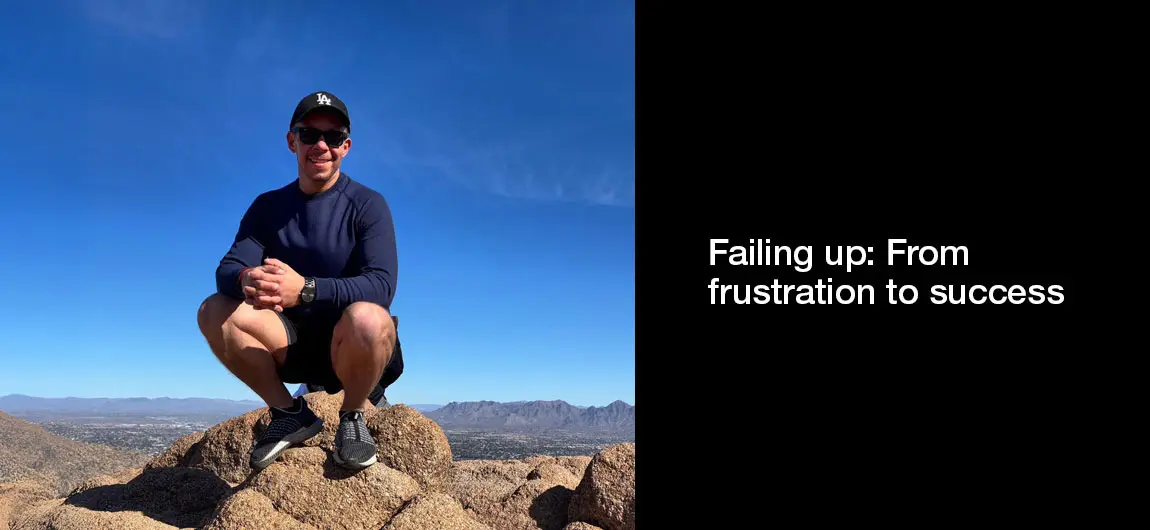
Kris Louis entered the world of audio/visual by chance while job hunting during the 2008 recession. After several years in the industry, his frustration with the way his employer operated pushed him to take the leap of quitting to start his own successful AV company. Kris credits failure for shaping his journey, teaching him to stay open to multiple paths rather than limiting himself to a single direction.
View transcript
Audiovisual Services – Kris Louis, Crate AV
[00:00:00] Sanjay Parekh: Welcome to The Side Hustle to Small Business Podcast, powered by Hiscox. I'm your host, Sanjay Parekh. Throughout my career, I've had side hustles, some of which have turned into real businesses, but first and foremost, I'm a serial technology entrepreneur. In the creator space, we hear plenty of advice on how to hustle harder and why you can sleep when you're dead.
[00:00:21] On this show, we ask new questions in hopes of getting new answers. Questions like, how can small businesses work smarter? How do you achieve balance between work and family? How can we redefine success in our businesses so that we don't burn out after year three? Every week I sit down with business founders at various stages of their side hustle to small business journey.
[00:00:42] These entrepreneurs are pushing the envelope while keeping their values. Keep listening for conversation context and camaraderie.
[00:00:55] Today's guest is Kris Louis, the founder of Crate Audiovisual, an innovative supplier of audiovisual services, rentals, and solutions. Kris and his company are based in Georgia. Kris, welcome to the show.
[00:01:08] Kris Louis: Hey, thanks for having me, Sanjay. Appreciate it.
[00:01:11] Sanjay Parekh: Um, so I'm excited to have you on because, I didn't tell you this before, but, I used to do events as well, and so I've had to not like execute them my, like holding my own events.
[00:01:21] And so I've had to deal with uh, AV stuff and disasters and all kinds of stuff, and I'm sure you got I'm so sorry to hear that. I know, right? Like, I don't know how you guys do this business day in and day out. It's so stressful. But before we get into all of that, give us a little bit about what your background and what got you to where you are today.
[00:01:39] Kris Louis: Yeah, absolutely. Well, I started an audio visual in 2008. I was fresh outta college looking for a job in my field, which was hospitality business. And the av, uh, world in Orlando at the time was the only world that was hiring. As you know, we were right in the middle of a recession and I was getting decline after decline, after decline.
[00:02:02] And this AV company came in, scooped me up at a pretty fair hourly rate. Took me under their wing and kicked me off. I knew nothing about the industry. I knew nothing about the, uh, mechanics. I had a decent head for technology, but basically started from nothing and, uh, worked my way up through the world of audio and the world of lighting and the world of video, and grew with that company into some management roles that took me to the Caribbean and Atlanta.
[00:02:30] Uh, and that's kind of where my time with them ended and led me to my small business.
[00:02:36] Sanjay Parekh: Okay. Awesome. So before this, had you done any AV kind of work or had you been in any kind of, you know, like efforts of doing events like this?
[00:02:47] Kris Louis: No, before I got that job in 2008, I didn't even know anything about that life or, or anything, uh, related to those components.
[00:02:55] Um, so it was definitely like jumping into the deep end and, you know, I spent about seven years with that company before launching my own thing and sometimes I look back on that time and I think, wow, I really had a good foundation and other times I'm like, nothing I did in that seven years applies anymore.
[00:03:12] Sanjay Parekh: Yeah.
[00:03:12] Kris Louis: So I'm really just sort of winging it.
[00:03:15] Sanjay Parekh: What, what drew you to, uh, this industry of all other industries?
[00:03:20] Kris Louis: They were hiring. I mean, to be honest, that's, that's the blunt answer they were hiring at the time. Okay. In the middle of a recession.
[00:03:26] Sanjay Parekh: Yeah. Yeah. Interesting. Okay, so, uh, first time being an entrepreneur or have you been an entrepreneur in the past, like when you were a kid or anything?
[00:03:36] Kris Louis: It, it was my first time being an entrepreneur and it was scary. Yeah. I had some really lofty ambitions at, at the beginning. I, I dreamt wildly of things like an app that could connect clients with technology and sort of deliver it in an Uber style. My head was very much in the clouds. Of course, none of that panned out.
[00:03:55] Um, and we just kept whittling away at it until we got to a business model that worked.
[00:04:00] Sanjay Parekh: Yeah. Um, okay. So, uh, talk about that a little bit. So, first time starting a business, what encouraged you to make that leap and, and quit and go all in on this?
[00:04:12] Kris Louis: Well, uh, you know, the company I worked for was great, but when you change regions, your leadership will change.
[00:04:19] And basically the thing that caused me to jump ship was my leadership. They, they put me in a new area that had just a very different set of rules and a very different set of standards compared to what was happening in other regions. And I struggled to acclimate to that so much. I was in a performance based position, so my salary was tied to my performance and everything that was being asked of me was sort of directly contradicting that goal. So frankly one day I just woke up and rage quit. I sent an email, I said, I'm done.
[00:04:58] And, uh, I went and got my things that afternoon. I shook a few hands and I left the building and didn't, didn't ever look back.
[00:05:06] Sanjay Parekh: Really? So you, so you like just one day woke up and did like, it wasn't planned beforehand?
[00:05:12] Kris Louis: No plan. I mean, it had been itching, it had been itching in me for a while. Um, so it wasn't just a, a super spontaneous thing, but I definitely didn't have a plan. I always look back and think, I wish I had made more headway on the business before I quit. So there wasn't so much of a gap, uh, and I had more runway, but ultimately it all worked out.
[00:05:34] But I think if I could do one thing differently, I would've waited longer.
[00:05:37] Sanjay Parekh: Yeah. So you hadn't, you hadn't started your own thing yet until after you quit?
[00:05:42] Kris Louis: My own thing was still an apple in my eye, you know, it was up in the sky. I could see it, but I hadn't done anything to work on it.
[00:05:49] Sanjay Parekh: Yeah. So, okay. Uh, Monday is, is, is it, was it a Monday? Was it a Monday rage quit? Or was it...
[00:05:55] Kris Louis: I don't remember what day it was. I'm sorry.
[00:05:57] Sanjay Parekh: Okay, so, uh, rage quit day plus one. Um, yeah. What did you do? How did you get this kicked off?
[00:06:04] Kris Louis: Oh, we, you know, we started with a website. You feel really good about yourself when you buy that URL, you know, oh, I did something. I bought the domain.
[00:06:12] Uh, we started brainstorming about all these ingenious ways we could revolutionize the industry, which, like I said a moment ago, was really lofty and out of hand. Um, and thank God for my wife, you know, she kept funneling it down and funneling it down to what is what, how did we get the first dollar, you know?
[00:06:36] And I think it took eight or nine months until we got the first dollar and it was $65, which is not a very big transaction. But we were over the moon about it, like 65 bucks. We had rented a projector to a client in our, in our town, and we had connected all the dots and figureduh out like how we get in front of the client, how they find us, how they inquire.
[00:07:00] How we push out a quote, how we hassle and negotiate, and how we, um, bring that transaction home, get the payment, and get the contract signed and execute the business.
[00:07:12] Sanjay Parekh: Yeah. Anytime somebody is willing to give you money for doing something, I think it's meaningful because it shows you that what you're doing is, is a value.
[00:07:21] Kris Louis: Yeah. Yeah. That 65 bucks felt like a million bucks, you know?
[00:07:25] Sanjay Parekh: Yeah, exactly. Yeah. Um, was there any point in time then when you quit that you thought, Hey, maybe this is the time for me to leave this industry and go do something else?
[00:07:36] Kris Louis: There wasn't, um, it very much was the world I knew and I, I thought if I do anything, it's gonna have to at least stay in this same orbit. I didn't wanna branch out and just start from scratch anywhere, so. Right. This seemed like in a world of risk, this seemed like the safest thing to do.
[00:07:54] Sanjay Parekh: Yeah. Yeah. So, um, okay. So in doing this then, how did you hone in on what you do now? Right? Like, was that the idea from the very beginning or did it shift and change over time?
[00:08:09] Kris Louis: It was not the idea from the very beginning. I very much wanted to pursue a hands-off. Uh, business model, um, where I could just set things to automate and things would happen. Uh, but what we do today basically is very much a client facing direct in the room solution. We spend a lot of time on the ground with our clients building, designing, executing events, and doing all their audio visual hands-on.
[00:08:36] We have a lot of boutique clients who ask for very custom and interesting setups. We have a lot of, uh, regular clients who are looking to get the, the work done at a very cost affordable price. Um, so it varies, but what I had in mind was something I could sit behind my computer and do. And what I do now is something that keeps me on the road over 150 nights a year.
[00:09:00] So two totally different things. Um, but the way we got here is just through failure. We just kept failing and every time we would fail, we'd get redirected a little bit into what was working until, you know, the revenue started rolling in pretty regularly, and then it's like, well, this is obviously where we need to be.
[00:09:18] Sanjay Parekh: Yeah. So talk about that a little bit. Do you remember what the first failure was for you and, and what shift it caused in the business?
[00:09:26] Kris Louis: Yeah. I think the, the big first failure was dedicating so much time to building an app. We, I'll take responsibility. I got so caught up in it needs to be an app, it needs to be an app, and it never needed to be an app. Of course I can say that now, seven years later. But, you know, we got so far down that road and it was a huge waste of time. And I think that's. A humble reminder that you can get hung up on something and, and, and maybe that's okay, but, but don't dedicate all of your efforts to just that one idea.
[00:10:03] You know, be open to exploring other ideas more early on in the process, because I could have saved half a year if I had just, you know, started working on other things in conjunction with that app. When the app didn't work out, I could have pivoted more easily rather than being frustrated.
[00:10:19] Sanjay Parekh: Yeah. Was there anything from that experience of trying to build that app, that remains in the business now? Like were there any pieces that.
[00:10:27] Kris Louis: Yes.
[00:10:27] Okay. Like what?
[00:10:28] Kris Louis: We always, always start small with any new endeavor, with any new, uh. Offering or product or service. We always start small, so we won't jump into anything whole hog anymore, the way that we tried to jump into that app.
[00:10:42] Sanjay Parekh: Right.
[00:10:43] Kris Louis: We'll, we'll try it out on a very limited basis and see how it goes, and we're not afraid to walk away.
[00:10:49] Yeah, and that's kind of the beauty of a small business, right, is if you're small enough, you're always nimble enough to keep. Pointing in a new direction, the bigger the organization gets, the harder it is to redirect. Right. And we love being small so that we can redirect very quickly.
[00:11:05] Sanjay Parekh: Yeah. I think that's one of the big mistakes right, of a lot of small businesses is they try to boil the ocean and it's like, you're not the size and scale that can boil the ocean and, and honestly, right. Even big organizations cannot boil the ocean. So, yeah. Try to do something, try to boil the thimble, not the ocean.
[00:11:24] Adam Walker: Support for this podcast comes from Hiscox. Committed to helping small businesses protect their dreams since 1901. Quotes and information on customized insurance for specific risks are available at Hiscox.com. Hiscox, business insurance experts.
[00:11:45] Sanjay Parekh: Okay. Let's talk about like your industry as a whole and how things kind of keep changing and shifting. Like, like I mentioned, I used to do an event, uh, a one day conference. Uh, I did it once a year and man, that just that, just pulled the life out of me. So I don't know how you do 150 days on the road. And just the stress and constant, we'll talk about stress and all that stuff in a minute, but the other side of this is the changing technology, like. I look at events now and as somebody that's done events now, I think you go in with a different eye and a different appreciation when you go to other people's events.
[00:12:18] And you see those little things that most people miss. But you know, I think about like LED walls, right? Like 10 years ago or 15 years ago. Like those were not a thing, and those are now a thing and they've gotten even better over time, right? I've seen some walls even just recently, like the quality of the output is so phenomenal, but they require a technical expertise That you just didn't need to have 10 years ago or 15 years ago. So how do you keep up with that for you and and your entire team to make sure that you're ahead of everything that's coming?
[00:12:50] Kris Louis: Well, really the number one thing we do, and this goes back to taking a, a tiny step or, you know, getting into the shallow, into the pool first is we let our clients guide our innovation. When a client comes to us and asks for a solution, that's when we start thinking outside the box for them. When a client comes to us and says, hey, I want to go, I wanna go big, or I wanna, I wanna do some decor, or I want to do in, in your case, an LED wall. Um, we're small enough that we can. One off those components and find the right talent and the right product to accomplish that for the client.
[00:13:30] But then we also don't have to take on ownership of that product. So we actually don't own any LED walls. Our, um, entire business model revolves around us owning as little as possible actually. Um, but we will sub rent things and we will make profit off of labor and smaller items that we have in house.
[00:13:52] Um, but that innovation is so important because clients see it as a big part of their program and they, they get really attached to those ideas. So that smallness allows us to, to one off something, and then boom, they've got their solution. We've booked the client. Are we passing through that LED wall at at rack rate? Yes, we are. But we've, we've captured all this other business around it.
[00:14:16] Sanjay Parekh: Right.
[00:14:16] Kris Louis: Um, so we're happy to innovate and we're happy to, to scale to new things. Yeah. We just do it in a very tepid way.
[00:14:23] Sanjay Parekh: Yeah. So, uh, there, there's an interesting point that you made there. I, I don't think, um, it might have been clear to everybody, but I, I wanna ask you a question around this.
[00:14:31] So. You're obviously very technical, um, and you've become very honed in on what your business is, and that transition for a lot of people is difficult to going from, you know, a technical person to a business owner. So how did you develop that expertise for yourself and really understanding. The business that you're trying to deliver and what's most important, and trying to know what's most important in terms of focusing on revenue because like that, that kind of comment of passing the rack rates of, of LED wall, like most people are gonna be like, well, I'm just gonna wanna make money on everything.
[00:15:08] Right, right. And, and you uh, it sounds like been very deliberate about like, understanding. What's the most important for the business? So how did you get to that point for yourself?
[00:15:19] Kris Louis: You know, just like we said a few moments ago, we keep failing and re getting redirected. Um, so I can't tell you how many big pieces of tech I bought five or six years ago thinking this is gonna be the thing that everybody wants. I remember to give you a specific example. During Covid, um, when Covid started, I bought a whole multi-thousand dollars streaming studio kit because I thought everyone's gonna wanna do this for a long, long, long time. This is gonna be the future and hybrid events are here to stay. That's, that is for sure.
[00:15:52] But this was a really elegant and expensive asset that we purchased. And we sold it 18 months after we bought it because it got used three or four times, never recouped its revenue, or, excuse me, never recouped its cost. Right. And, just to, it was collecting dust in our warehouse and it also had a whole bunch of other limiting factors like usability and portability that made working with it really, really difficult. And there were just other solutions that were not quite as elegant, but way more cost effective and way more reasonable. That made way more sense. So clients didn't wanna pay money for this elegant solution. They didn't see the value in it, right?
[00:16:34] They just wanted to have a hybrid event and they didn't care how smarmy or shiny it was. Um. And, and that's a good example of, of knowing when to not buy something or knowing not when to, knowing when to not jump in the deep end. Right. Because that has bit me in the butt a few times now and, and we just avoid things like that at all costs.
[00:16:54] Sanjay Parekh: How much of a haircut did you end up taking on the, the sales price of that piece of equipment versus what you paid?
[00:16:59] Kris Louis: I don't recall exactly, but it was a good one. That was a good one.
[00:17:03] Sanjay Parekh: Yeah, just the, the, it's something that you're putting outta your mind, obviously, because you're not remembering it.
[00:17:07] Right. Um, so let, let's talk about it since we are talking about money. Let's talk about money for a little bit. Like you talked about the first, uh, kind of dollar that you made, the $65, like, how did you uh, end up like getting the word out and then ramping and, and where was revenue for you kind of year to year and, and when did you start feeling good about where you were at?
[00:17:28] Kris Louis: I think, I think the key is you never really truly feel good. You have good weeks and you have bad weeks, and they all sort of, even out. Uh, or at least that's been my experience. But yeah, the, the first year I wanna say, um, obviously it was not a full year, but it was about. $10,000 in revenue, which felt amazing at the time.
[00:17:51] Right, right. We came into 2018, which was our, our first full year and probably did about $30,000 in revenue, which again, at the time felt amazing. We've, we've scaled so much, but let's leave out the fact that we were only operating for a portion of the year, right. In 2017. Um, in 2019, things looked incredible.
[00:18:12] Uh, we were on our way to, uh, almost six figures and we had accrued some clients that were doing regular business with us.
[00:18:20] Sanjay Parekh: Right.
[00:18:21] Kris Louis: Um, we had fallen into a groove. We had found some subcontractors. We had expanded our, our equipment roster and our technician roster. And then March 2020 is upon us. Right? I don't know if you know anything about Covid, but events in Covid do not mix.
[00:18:39] Sanjay Parekh: Yeah. So what, what happened? How did you pivot from that then?
[00:18:43] Kris Louis: We tried a couple different things, and I, I'll just say right up front, not a single one of them worked out.
[00:18:50] Sanjay Parekh: Yeah.
[00:18:50] Kris Louis: Um, we, we were very lucky.
[00:18:52] Sanjay Parekh: I think that's you and almost everybody else. Right? That was a lot during that time.
[00:18:57] Kris Louis: We were very lucky to have some very flexible clients who wanted to go the distance with us.
[00:19:01] They did not see the doom and gloom. They said, we're just gonna put things on hold. So there was no reversal of contracts. There was no reversal of deposits. So we were very, very fortunate in that, in that department. Um, we used that revenue to boot special Covid related events, um, in, in the country. Uh, we, we did a Halloween event and we did a Christmas event.
[00:19:28] And we had all this technology just sitting. So we, we put that to use and did those events. We booked entertainment, we booked, you know, operations and we put up these two events. Uh, we tried them for a few years for as long as Covid was sort of top of mind and they just never were profitable. Uh, new events like that, that are entertainment based, rarely are profitable in the first five years.
[00:19:51] So we didn't feel awful about it. We knew it was gonna take time to build up an audience and, um. A loyalty, but as, as the covid situation, uh, got more under control and, and concerns about it wavered, um, there just wasn't a market for it anymore. So we could see the trend was going in the wrong direction.
[00:20:13] So we pulled out of all that. On the flip side, as co concerns over covid started to dwindle, we saw the events business pick back up. So it was just a perfect inverse, uh, graph of, of a situation. And we were lucky that whenever one leg of the business was struggling, another leg of the business was succeeding. So we really loved that.
[00:20:37] Sanjay Parekh: Yeah, interesting. Okay, so, you know, challenges obviously all throughout. Um, what other challenges have you faced in terms of scaling the business and, and how do you think about those as you hit those?
[00:20:51] Kris Louis: Scaling the business is by and large the hardest thing that we do, uh, because we want to be cautious never to scale too much and overgrown. So we try to always be around, able to serve around 90% of the business that we are able to book, um, which does mean we turn away about 10% of business. And then as we see an excess of business being turned away. Then we start to scale up a little bit. We're based in Atlanta. We've been scaling in Atlanta now for the past, uh, since 2022, so three years.
[00:21:29] And as we scale, we notice a trend where if we keep adding to our assets or adding to our, uh, our sub vendor talent. All of a sudden we just have way more business and we're busier than we've ever been this year. Now the challenge is how can we duplicate those efforts in other cities and, and have that same kind of impact?
[00:21:50] Um, but it's, it's so challenging because everything sort of moves with client demand and getting into a new region can, can pose risks. Um, you don't want to commit to, you know, a rental for a physical space or commit to a contract until you know you have the business to support it. And sometimes the business comes and spits and, and, and starts. So you have to really navigate that and, and know when it's time to take the plunge and, and when it's time to go another route and not commit to anything. Um, so we can be very commitment averse and that, I think that keeps us safe from, from over, uh, overindulging, if you will, in a, in a new whatever it may be, in a new, line of products or a new contract.
[00:22:44] Sanjay Parekh: Yeah. Um, so your answer there also I think to me kind of highlights another important aspect of the business, which is your team and, and building team culture. Um, and in the business that you're in, you know, this is kind of a zero mistakes, high pressure situation. Um, when you've got like hundreds if not thousands of people waiting for this event to happen and like microphone's not working or something.
[00:23:09] So how do you think about, um, your team culture and how do you foster that in this kind of situation where people are getting upset? I mean, right. Like, it could be the clients, it could be your team, like whoever it is, like people are gonna get upset. So how do you think about that?
[00:23:25] Kris Louis: Well, first of all, um, a, the AV world is full of mistakes. The best way to handle that is just to make sure the audience doesn't notice.
[00:23:33] Sanjay Parekh: Right.
[00:23:34] Kris Louis: Uh, so we understand that technology is gonna fail usually at the worst possible time. I always tell my clients the rehearsal's gonna go great, and then you're gonna have a gremlin in the system in the first half hour of your show. The best clients we have all know this, they expect it and we plan for it. Um, so we're, we're grateful for that. Um, but with my team, you know, we, we just try to foster an environment where we're never too hard on people. Uh, we, we do note our mistakes and we do try and prevent them from happening again a second time.
[00:24:09] And we understand that sometimes even the best laid plans can go awry.
[00:24:15] Sanjay Parekh: Right.
[00:24:16] Kris Louis: Uh, the other big thing that we do to, to foster team culture is. Part of the events business means we get to go out on the road. And that's really, really fun. At first, it stops being fun. After a few years, I will tell you, I thought, oh my goodness, I'm gonna go to all these great hotels in these great cities and I'm gonna have the greatest time when I'm not working.
[00:24:38] No, uh, AV requires a lot of hours, early mornings, late nights, right? Uh, overnight turns, and I will fly to the most beautiful Ritz Carlton in Dallas, Texas, for example, and I will never see anything but the inside of that ballroom.
[00:24:57] That said, we have started to figure out like if we're gonna send a tech to a city to do an event. Give them the option, let them stay an extra night at the end of their, at the end of their program. Yeah. You know, they, they, um, they'll pay for it outta their pocket, but we're happy to book the travel for them that accommodates their trip so they know I'm, I'm gonna go to Los Angeles, I'm gonna work for four days, but on that fifth day, I'm gonna have time to get out and see the city.
[00:25:21] Sanjay Parekh: Right.
[00:25:21] Kris Louis: Uh, which, which makes a trip like that seem a lot more worthwhile than just go and be buried in work and then leave and, and do nothing fun.
[00:25:30] Sanjay Parekh: Yeah. I mean, you're there already and you're gonna fly back already, right? Yeah. What's one more night? Go get some in and out and have a good time, you know? Right. Exactly. Um, so, uh, one last question before we kind of change topics. Um, I, I wanna stay on this for a minute. So, thinking about, um, employees and the people you've got. Um, what do you look for when you're hiring these people and how do you make sure that you're hiring the right kind of people for your team. Is there any tricks that you've got, any questions that you ask, uh, any behaviors that you're looking for?
[00:26:02] Kris Louis: We do a small test with some tech, like we put them through a few hoops, technology wise, to make sure they can, they can kind of pass those hurdles and we do make it a little bit intentionally confusing. But what, what we're looking for is so that we can glean that you can read instructions, parse things out, and work around and troubleshoot. To get to the end goal, which is the interview, the, um, the online interview. Other than that, the only other thing we're looking for is a willingness to learn and, and sort of a no ego attitude.
[00:26:35] You can tell sometimes when people have a little bit of a chip on their shoulder in this industry, and other times it's just, I just wanna work. I just wanna make some good money. I wanna find the right people. And those are the people we tend to gravitate to. No ego. Um. Uh, they work out really well because we all just have a, a goal in mind of getting the job done and, and going home.
[00:26:59] Sanjay Parekh: Yeah. Yeah. Um, great, uh, great tip and interesting that you're, uh, giving them confusing things because I think probably one of the worst, people that you can have on a team is somebody that gets stuck and then just gives up. Right? Sure. And, and needs somebody to micromanage them.
[00:27:15] Kris Louis: Exactly. Um, exactly. And, and the reality is, is that we get a lot of contradictory and confusing instructions from our clients out on the road. God love them. Um, so if you can work around my interview process, you can probably work around a client.
[00:27:30] Sanjay Parekh: Yeah. Um, okay. Let's talk about, um, stress for a minute. Uh, and, and just managing that, I mean, 150 days on the road outta 365. So that's almost is, is that like it's a little bit less than half the year. Um, that's gotta be stressful. That's gotta be hard. How do you manage that stress for yourself? Uh, and also extending that. Is there anything that you do to help your team manage their stress?
[00:27:55] Kris Louis: Yeah. Um, we like to keep everybody well fed. You know, if, if a day's getting away from us, I'll be the first one to pull out my phone and DoorDash dinner or lunch for everyone. I literally have a, a line in my profit loss spreadsheet that says, oh ****. Um, which is, is like usually 4% of the top line revenue for any given event. And it's just there in case things like this come up. We have a long day, things are getting away from us, and I got a DoorDash dinner for everybody and it ends up being like 250 bucks. Um, but that's one of the things that we'll do, you know, just to, to make it easier and know, like good food is coming. Good hot food. This day has been a, a pain in the butt, but at least we're gonna have a good meal and we can sit and relax for 20 to 30 minutes while we chow down.
[00:28:41] When I'm on the road, I try to prioritize sleep. I try to prioritize getting a little bit of exercise. I try to prioritize watching content that, that I enjoy. I really like baseball. I really like catching up with sitcoms. Um, another thing that I'll do that I'm very blessed to be able to do is to bring my family with me.
[00:29:00] So that means occasionally when I'm on the road, I'll have my wife and my kids with me, and we turn it into a little mini staycation or um, you know, they don't see me all day because I'm, I'm still working, but they're there at the end. I can grab dinner with them or if I get a break during the day, I can hop over to the pool with my oldest kid. So those kinds of things are really fun. And they do, they do put everything in perspective and make it worth it.
[00:29:24] Sanjay Parekh: That's fantastic. Um, and I will, uh, kind of highlight what you just said there about gr good food. When I was doing events, that's one thing that I always, always, always focused on and I can't tell you even to this day how many people will tell me, like they don't remember a lot about the event, but they remember the food was really good.
[00:29:43] Um, and if you feed people really, really well, right, with good quality food, it goes a long way. Like people will forgive you for all kinds of other issues that end up happening at an event. Um, because they're happy that there's good food and, and everything. So, um, I love that.
[00:29:58] Kris Louis: True. You're very, you're very correct.
[00:30:01] Sanjay Parekh: Um, okay, uh, one, uh, couple last questions for you. Um, if there's anything that you could go back in time and do again, do differently, um, what is that and why?
[00:30:14] Kris Louis: Well, I mean, we talked about the app and how focused I was on that for half of the year, I think just to distill that down. Really, I think don't box yourself in. If you're a small business, leverage that you know, revel in that power. Stay, stay small and, and use that as a pro, not a con. And always keep looking for alternative paths. Don't shut anything out too soon because you never know where you're gonna find success and what business model is gonna work out for your idea.
[00:30:51] Don't be like me. Don't get hung up on one thing and stay stuck on it for half a year. Uh, so if I could go back in time, I, I would just be more open to other possibilities sooner.
[00:31:03] Sanjay Parekh: Yeah. Uh, great advice. Okay, last question for you. Uh, if you were talking to somebody who's thinking about taking the leap like you did, uh, maybe rage quitting, maybe not rage quitting, uh, and, and launching a full-time business, what advice would you give them?
[00:31:17] Kris Louis: If I could, if you're thinking about rage quitting, awesome. I wholeheartedly support you to be honest. However, put that rage into taking baby steps every day. With launching and growing your small business idea, and then when you've got some, some actual traction and you've got some revenue, even if it's just a little bit and some clients and some promise, then send that rage
[00:31:45] quit email. On a Monday or a Friday, I don't care, which.
[00:31:50] Sanjay Parekh: Um, that is absolutely fantastic advice. Kris. Where can our potential rage quitters contact you or find you online?
[00:31:59] Kris Louis: Oh, I am on Twitter at Kris meets world. That's KRIS meets world. And you can also find me on LinkedIn as Kris Louis. www.crate-av.com.
[00:32:09] Sanjay Parekh: Awesome. Thanks so much for being on today, Kris.
[00:32:12] Kris Louis: Alright. Thanks for having me.
[00:32:16] Sanjay Parekh: Thanks for listening to this week's episode of the Side Hustle to Small Business podcast, powered by Hiscox. To learn more about how Hiscox can help protect your small business through intelligent insurance solutions, visit Hiscox.com. And to hear more Side Hustle to Small Business stories, or share your own story, please visit Hiscox.com/side-hustle-to-small-business. I'm your host, Sanjay Parekh. You can find out more about me at my website, SanjayParekh.com.
Subscribe to our podcast



Did you start your business while working full-time at another job?
Tell us about it! We may feature your story in a future podcast.