Pet Portrait Artist: Katherine Klimitas's Story



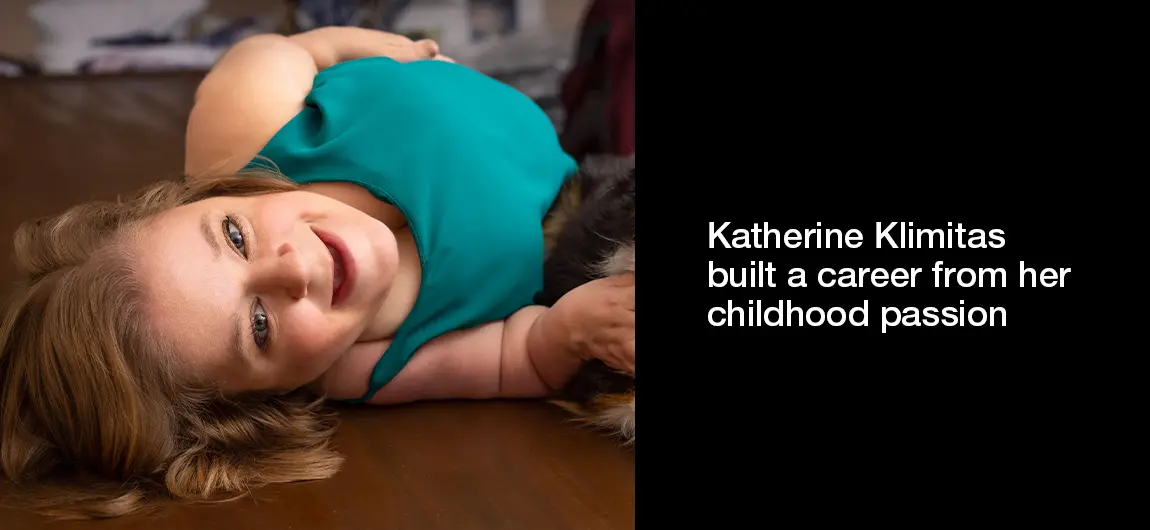
Katherine Klimitas is the Founder of KAK Art & Designs, which began as a childhood hobby painting animals for her parents’ veterinary clients and has evolved into a thriving business specializing in pet portraits and graphic design. Her innovative approach supports artists and pet lovers alike through personalized artwork and creative design solutions.
View transcript
Pet Portrait Artist – Katherine Klimitas, KAK Art & Designs
[00:00:00] Sanjay Parekh: Welcome to The Side Hustle to Small Business Podcast, powered by Hiscox. I'm your host, Sanjay Parekh. Throughout my career, I've had side hustles, some of which have turned into real businesses, but first and foremost, I'm a serial technology entrepreneur. In the creator space, we hear plenty of advice on how to hustle harder and why you can sleep when you're dead.
[00:00:22] On this show, we ask new questions in hopes of getting new answers. Questions like, how can small businesses work smarter? How do you achieve balance between work and family? How can we redefine success in our businesses so that we don't burn out after year three? Every week I sit down with business founders at various stages of their side hustle to small business journey.
[00:00:43] These entrepreneurs are pushing the envelope while keeping their values, keep listening for conversation context and camaraderie. Today's guest is Katherine Klimitas, a watercolor pet portrait artist, keynote speaker, author, and graphic designer based in New Orleans, Louisiana. Katherine, welcome to the show.
[00:01:09] Katherine Klimitas: Thank you. I'm glad to be here.
[00:01:10] Sanjay Parekh: So I'm excited to have you on because I think you have a very unique story especially for our podcast.
[00:01:17] But before we start diving into that, and. Pet portraits which I don't think I've ever talked about on this podcast before. Give us a little bit about your background and what got you to where you are today.
[00:01:27] Katherine Klimitas: Yeah, sure. So as you said, I am from right house outside of New Orleans, Louisiana. I am 37.
[00:01:36] I have a genetic bone disease called osteogenesis imperfecta, which is basically a lot of big words that mean that my bones break easily and they grow abnormally. So I had already broken 500 times by the time I was 10. Yeah it's a lot. And so I am only two seven. I use an electric wheelchair to get around and I usually have somebody with me most of the time to help me do things like get food and go to the bathroom and bathe and all of those things that most people can do by themselves.
[00:02:15] And so. When I was young, I went to a regular school, like a mainstream school. I was actually the only person in a wheelchair in my school until my senior year of high school. So yeah, so I, I had friends that, you know, were just able-bodied, you know, they were normal bodies, and so they would go and do all normal kid things, right?
[00:02:41] They would go play sports and play outside and be rough and all that stuff. And there were a lot of those things I couldn't do. And I mean, you know, I was included as much as I could be, but obviously there were points where it just wouldn't work. And so my parents were constantly trying to find things that I could do.
[00:03:02] And so my mom gave me my first watercolor set. When I was about five, and it was just one of those really cheap watercolor sets that, you know, you get a normal 5-year-old. Right? And I blew through it and, you know, all the computer paper in the house and whatever. And, you know, although I was five, it was pretty obvious that I was kind of hooked at that point.
[00:03:30] Like, I really liked art and I really liked being creative and creating things. And so from there, my parents got me into other art classes. Like I had art and school, but then I had, you know, outside classes and private classes and summer camps and all kinds of things. And so I just started learning more and more art.
[00:03:55] And my parents were veterinarians. So I grew up with two parents who were veterinarians. Always had animals. But on Saturdays I used to have to go to work with them and so I would get bored and I'd bring my paints and stuff, and I'd just start painting the clients while they were waiting to see one of my parents in the waiting room and just kind of naturally, I mean, I didn't asked for this, but eventually they started paying me to do that.
[00:04:29] They'd say, oh, I'll give you $20 if you know you will give me that painting of my dog you just did. Or you know, if I give you a picture, will you paint my dog too and I'll pay you whatever. And for a 10-year-old, I mean, that's pretty cool, right? And so it kind of morphed from there. I mean, obviously my paintings today do not look like they looked when I was 10. But you know, like it just kind of went on from there. And I went to I went to Loyola University for what I thought was gonna be art, but then I realized how much art I would have to put out physically to, to make any kind of money.
[00:05:11] Sanjay Parekh: Right.
[00:05:11] Katherine Klimitas: Because there's a reason they call it starving artists. And so I said, well, that's not gonna work. So I switched my major to graphic design. So I do today I run my own business out of my home and it's kind of half and half. Like I do design for clients that are. Primarily nonprofits, but not exclusively. Okay. And then I paint, so.
[00:05:37] Sanjay Parekh: Yeah. Okay.
[00:05:38] Katherine Klimitas: Yeah.
[00:05:38] Sanjay Parekh: Interesting. It's funny when you said paint the clients at first I was thinking the people no. But those are not the clients. It was it the animals, like Yeah. That were coming in. So it sounds like, somewhat of an accidental entrepreneur, right? Like these just kind of stuff just happened kind of along the way.
[00:05:58] Katherine Klimitas: Yeah and I mean, the most accidental part is the name of my business, which is KAK, art, attack, art and Designs. Because that's my initials. And it's something I used when I was like 10 Uhhuh when I made my first business card on, you know, print shop deluxe and printed them at home and then it just stuck. And then I couldn't change it.
[00:06:27] Sanjay Parekh: Right.
[00:06:27] Katherine Klimitas: After that, you know?
[00:06:29] Sanjay Parekh: Right.
[00:06:29] Katherine Klimitas: So I, you know it's fine. It works like it's. I don't know if I would change it, if I could, but it's just way too complicated to do that at this point.
[00:06:39] Sanjay Parekh: Yeah. I think sometimes we we overthink some of those things that honestly don't really matter that much at the end of the day. Right. Like, yeah. It, I mean, unless it's a really bad name and has a bad connotation.
[00:06:53] Right, right. Like, other than that it, you know, for most people it doesn't really matter. You know. The two of us are not doing companies that are gonna be plastered on super Bowl in a commercial or something like that. Like wish, maybe mean I wish Of course. No, probably not. Of course. That would be great. But but unlikely. So okay. So it sounds like, so your parents, it sounds like they were entrepreneurial as well. They had. Yeah. A business that they were running. Was there anything other than painting the clients and stuff, did you ever get involved in that business? Did you see stuff? Yeah. Did you learn stuff from them?
[00:07:31] Katherine Klimitas: Oh, absolutely. I mean, so my parents worked together until I was about six in an, in a clinic that my dad opened. And, eventually my mom split off, which was really good for everybody involved because it, it's really hard for those out there. Like if you're married and you live together and you work together, that's a very hard situation.
[00:07:55] So so anyway, it was really good when she split off, but she ended up specializing in a holistic medicine which. I, she, I mean, my dad did start his own clinic and his own practice, but she is kind of more the entrepreneur because what she does, nobody does in this area. I mean, she has clients come from other states to see her. And so like for her. She is a really niche, you know, like a niche business, like there's nobody else. But my dad was much more a business person than she is. Yeah. And so, you know, I learned a lot. You know I would, I mean, when I was little, when I'd have to be there, I'd go in and like count the money at the end of the day, you know, and I was like, four.
[00:08:45] Yeah. You know, and, but you know, in the nineties everybody used cash, right? So, you know, I could count like stacks of twenties, you know, because that's what they used in the nineties. Yeah, exactly. And so I learned how to do that. I mean, thank God my dad passed away several years ago, but thank God he was still around when I started my business.
[00:09:07] Sanjay Parekh: Yeah.
[00:09:08] Katherine Klimitas: Because you know, when you have somebody to help you through, like. The paperwork and the taxes and the, you know, forming the LLC and all those things like Right. Because that is not my strong suit. I firmly believe in having a good team around you and hiring. People who are good at something you're not.
[00:09:30] Sanjay Parekh: Yeah. Yeah. And so, you know, he is no longer around, but, you know, I have a bookkeeper and a CPA and you know, those things that I am absolutely terrible at. Right. Yeah. So I get, I gotta ask you, so your mom went and did holistic medicine. Did she stick with animals or did that switch to humans?
[00:09:51] Katherine Klimitas: No. She is a holistic veterinarian.
[00:09:54] Sanjay Parekh: Oh, really? That's, yeah. That is very unique. I've never heard of that as a thing.
[00:09:59] Katherine Klimitas: Oh, yeah. No, I mean, it's a thing. Actually you have a couple in Atlanta okay. Because it's a tight group, you know, they all kind of know each other. But yeah it's good for me, it was good for, in a couple ways, right. She was doing something totally different and pretty much she's it in this area, you know? Yeah. So that's good. Right. But for me, b medically, like, you know, my disease is pretty rare. You know, there's only about 40,000 in the United States with it. And at my severity, we're talking like in the hundreds.
[00:10:40] We're not talking a lot. Right? Wow. And so doctors don't really know what to do with me in general, you know, because it's a paragraph in a book. Right? You know, unless they are an orthopedic specialist that has chosen to specialize in this disease they got nothing.
[00:10:58] Sanjay Parekh: Right.
[00:10:59] Katherine Klimitas: And so you have to think outside of the box a little bit and do things a little bit differently. And the way she was trained really helped us do that.
[00:11:10] Adam Walker: Support for this podcast comes from Hiscox committed to helping small businesses protect their dreams since 1901. Quotes and information on customized insurance for specific risks are available at Hiscox.com. Hiscox, business insurance experts.
[00:11:31] Sanjay Parekh: Okay let's turn to the business a little bit. Yeah. So you went to Loyola, got your graphic design degree. Yeah. And then were on your own. Was there like a point in time like doing this that you were like, okay, I can make this work. Like, was there that first client or like what was it that made it.
[00:11:51] Katherine Klimitas: No, it was many years past that. It was many years past that. No. I mean, my first clients came from my parents. Pretty much, yeah. You know, my first big client came from a client of my mom's like friend kind of thing. Like it was through somebody else. I mean, word of mouth is always the best, right? You know, that's pretty much how I got design clients initially.
[00:12:22] I mean, you know, they say it takes a certain amount of years to build a business, and that's totally true. I mean, I don't think I was in the black until maybe five years down the line, and if that just barely, and I've been in the red be after that, like it's not, you know, it's not like, it's not like it's stable. You know I would say just the last, so I officially started my business in 2011. I would say maybe the last, I would say after COVID. So the last two or three years have been good. Like the, like way more stable, way more solid. I've changed the way I charge people. You know, I've changed just the way my business functions.
[00:13:14] I've changed how much time I spend painting versus how much time I do design work. I mean, you know, those kinds of things. And you can't. You can't just know that right out the gate, you know, you have to just play with it and it's trial and error. Yeah. And see what works and what doesn't.
[00:13:30] Sanjay Parekh: So what, like, so, okay, so you kind of changed the levers of, in terms of kind of the types of work that you were doing to maybe get more lucrative. Were there other things like was it advertising, was it marketing? Like how did you make sure that stable of clients, because I imagine. Going into the red was probably because you just didn't have enough clients Right. To fill up the time. So how did you think about that? Right.
[00:13:54] Katherine Klimitas: Well it was a couple of things.
[00:13:56] It was not having enough clients, but also not being experienced enough to charge what. You know, I Well, you were worth, yeah. Right. And I have my mom has a really hard time with this too. Like we have a really hard time charging what we're worth. Like that is we feel bad, you know, like charging people. And you know, when you look at it from an objective point of view, it's not like the energy company feels bad charging. I mean, it's not like a doctor. When you go to a doctor, it's not like, you know, they feel bad charging you. Right. But, you know, for some reason it's just, you know, you I don't know. You just feel bad.
[00:14:34] So anyway I recent, I mean, very recently, like within the last. Eight months to a year. I had a friend who I graduated with from Loyola, and she's like, Catherine, this is ridiculous. Like, you've got to, and you don't realize how little you're charging and well, you look it up and you're like, oh, well that's now what they're charging right out of school.
[00:15:00] Sanjay Parekh: Right.
[00:15:00] Katherine Klimitas: And I've been out of school for 14 years.
[00:15:02] Sanjay Parekh: Right.
[00:15:03] Katherine Klimitas: Like, that's not gonna work.
[00:15:05] Sanjay Parekh: Yeah.
[00:15:05] Katherine Klimitas: You know? Yeah. And so, so yeah, some of that, like I said, it's just a lot of trial and error.
[00:15:14] Sanjay Parekh: Yeah. So it's interesting this kind of thought you had here of being embarrassed to charge kind of oh yeah. What you're worth. I think that's a common thing with a lot of entrepreneurs because we feel like, oh, you know, this is embarrassing how much like I'm asking for, it's too much money or whatever. So how did you get over that for yourself mentally?
[00:15:37] Katherine Klimitas: Oh, I'm still not over it. I mean, I'm, I mean I'm better. I'm better. Yeah. Like, especially with design work, because you know, when you, like I said, a lot of my clients are nonprofits. Right. And when you realize that a lot of these nonprofits get. Grants specifically to pay me.
[00:15:59] Sanjay Parekh: Right.
[00:15:59] Katherine Klimitas: Like, and it's not like they don't have it.
[00:16:02] Sanjay Parekh: Right. You know?
[00:16:03] Katherine Klimitas: And that's not for all nonprofits, certainly. Right? Right. I mean, there are certainly nonprofits that don't have it and whatever but more than likely. You know, they have and I do a discount for nonprofits. Yeah. Like I don't charge them my full rate, you know and they get a deal based on the number of hours they use a month and, you know, all that kind of stuff.
[00:16:23] But yeah, so it's not like I'm, you know, saying, oh, nonprofits have all the money, so I'm gonna just charge, you know, the maximum amount I can I'm not doing that. But they do have some, you know. Yeah. So, I mean, you just have to kind of and some of it also has come from me hiring people to do my job for my business because I think it's very hard to advertise yourself. Like it's very, like, it's so much easier to have somebody who's objective come in and say, Hey, you know, why don't we do a series of Facebook posts about this because I think it's really interesting. And I'm like, that's not interesting at all to me. Right but to somebody else, it is. Right. And so I think too, from hiring people to do that for me and seeing what they're charging and what I'm paying them is really helpful as well.
[00:17:24] Sanjay Parekh: You know what, so let's talk about the businesses. So you talked about how you've had these periods where you've been in the red, the black, and the you know, like all these challenges. I, is there like one setback that you can think back to that was like the hardest in kind of your journey and kind of what did you pick up from that and you know, kind of build into the business because of that?
[00:17:48] Katherine Klimitas: I mean, COVID was hard because I. I mean, I lost all my clients basically, except for two, you know and of course there were so many people out of work that it's not like they're buying a painting, you know, like, you know, that's, that, that is a challenge throughout my business is that side of my business at least, is that's a luxury item. You know that's not, and it's an expensive luxury item. So it's not like it's something that. You know, if you're choosing between eating and buying a painting, I mean, I feel like most people are going to eat right. So.
[00:18:30] Sanjay Parekh: Unless it's edible art in, in which case then, right. You know, that may be different.
[00:18:33] Katherine Klimitas: I haven't moved into that yet. But but yeah I, that was hard and I kind of just took the time to do some painting for myself. Like I just decided to do something and it's paid off in the long run because. The paintings I did during that time, I've since made prints of and have sold a good bit of, you know, and so, so it worked out.
[00:18:59] But during that time like I pay my own aides out of pocket. Okay. And so that's an expense, a major expense for me. And so, you know, and it's something I have to have. So, you know, finding a way to do that. During that time was a definite challenge. I mean, you know, but yeah. I mean, everybody kind of was in the same boat there.
[00:19:24] Sanjay Parekh: Yeah, no, absolutely. Yeah. Yeah. So let's talk about like you know, the business of creative stuff like this is definitely hard, right? It's not like other things where it's like, okay, I want you to make this, and then you make it and then kinda you're done. because there's a lot of. Subjective analysis in terms of this. And so how do you deal with that in terms of like rejection or criticism in terms of the work that you do?
[00:19:53] Katherine Klimitas: Well, for my paintings, rarely do I get somebody who doesn't like what I've done. Yeah, it does happen. It has happened a couple of times and then I just. Go in and make adjustments because, and it usually happens with pets that have died and they've given me pictures and I paint. I mean, I don't know these animals, right? I've never met them, right? And so I paint what's there, you know, I paint what I can see and sometimes people remember their pets differently. Than what's in the picture.
[00:20:30] Sanjay Parekh: Yeah.
[00:20:31] Katherine Klimitas: And so, you know, sometimes that is a challenge and you just have to work with them. I mean, like, I remember this cat, this one particular cat that I did, and the cat looked off in the picture and it looked in the painting, and the lady was like, why does it look so angry?
[00:20:48] I'm like, well, I mean, this is the picture you gave me. And so I had to work with her a little bit. To make the cat look less angry. Now, did it look like the cat in the picture? No. But was she happy? Yes. Did my prices go up the next week? Yes. I mean, like, it just, it that was a particularly difficult one. But that's rare. I mean, that that doesn't happen often. With my design clients, it's a little bit different because when you're designing for like a nonprofit or a company or whatever you're designing for a purpose, other than it just looks pretty. Yeah. You know, so like, it has to do something and at the end of the day, if it doesn't do it, it doesn't do it.
[00:21:34] Sanjay Parekh: Yeah. Right. Yeah.
[00:21:34] Katherine Klimitas: So I mean that's it's subjective, but not as much. Yeah. You know? Yeah.
[00:21:41] Sanjay Parekh: Yeah. May, maybe the lesson here too is when you're doing cat portraits you should ask how ticked off do you want the cat to look? Because feel like
[00:21:49] Katherine Klimitas: Exactly.
[00:21:49] Sanjay Parekh: All cats to some extent look ticked off. For some reason.
[00:21:53] Katherine Klimitas: They do.
[00:21:54] Sanjay Parekh: I think it's just inherent. I know in terms of their personality.
[00:21:58] Katherine Klimitas: My mom always said, cats are like teenagers. Dogs are like kids, you know? So, yeah.
[00:22:04] Sanjay Parekh: Seems about right. Mostly. Mostly as a general stereotype. Probably true. Okay, so let's talk about the challenges that you face, which I think are, as you say, are very different than most other people. Given how small of a grouping that you're in with some of these health challenges. How do you deal with those in terms of the business and you know, all the things that you probably have to do to take care of yourself as a person. And then the demands of the business, like how do you balance these things for yourself?
[00:22:35] Katherine Klimitas: That's quite challenging and I'm not doing it well right now because this is my busiest time of year. You know, because I have people doing pet portraits for Christmas and you know, I have people buying my products and I have shows all through the end of the year, and I mean, it's. You know it's a decent amount of stuff.
[00:22:54] So, you know, body wise, it's not necessarily being taken care of at the moment, but not as well as it should be, at least. I try to. I just try to prioritize like what's the thing that needs to be done the most? Like, that's where I'm at every day is what's the thing that needs to be done the most?
[00:23:18] Whether is it that I need to exercise? Is it that you know I need to rest because some very rarely, but sometimes that happens. Is it that I need to get stuff done? Like, you know and so it just depends. In a perfect world, I try, we have a pool and I try to swim at least three or four times a week.
[00:23:41] In a perfect world, that has not happened recently for a number of reasons, but not all that are my fault. For a number of reasons. You know but that takes time. You know, that takes an hour out of your day. Right? And that's, you know, that's hard right now. Yeah. So it, it's just about figuring out what the most important thing is. And doing it.
[00:24:08] Sanjay Parekh: Yeah. What about engaging in community work and mentorship and being involved with like other folks that are differently abled, like you, like, you know is that something that you've integrated into your life or into the work? Like how do you think about that and fitting in When
[00:24:25] Katherine Klimitas: I get offers, so I like doing public speaking.
[00:24:29] And and meeting people and like. Like, I like this time of year because I do shows and I get to meet people and talk to people and you know, because I work at home and I live at home. Yeah. So I don't see a ton of people on a daily basis, you know? Right. So I like this time of year where we are doing events and that kind of thing.
[00:24:47] I mean, it's also incredibly stressful, but I mean, that part of it I like, when I get offers for things like that, I usually try to do them. Yeah. It depends, you know, obviously it's not always feasible, you know, but if I get offers for it, like, I just talked to a kindergarten class on what, a week or two ago on Zoom and oh my God, that went off the rail so fast. But it was hilarious. It was very cute. And, you know. Normally for public speaking, like, you know you charge something, you know, you try to like. You know, or I have them buy a few of my books or something. But for things like that, where it's like humanitarian type thing, you know I like to do those kinds of things, so, yeah. You know? Yeah.
[00:25:41] Sanjay Parekh: Yeah. That's great.
[00:25:42] Katherine Klimitas: Yeah.
[00:25:43] Sanjay Parekh: Okay. Let's let's talk kind of retrospectively. You've been now basically running a business for I forgot how many years now. It's been like almost 15, 14, 15 years. Yeah. Almost. Yep. You've gone through, I'm sure, so many struggles now at this point. Thinking back, is there something that you can think of that if you could go back in time and do differently, you would and what is that thing and why?
[00:26:10] Katherine Klimitas: I don't know. Actually I don't know. I'm not real big on regrets, so I don't, well, maybe not regret but yeah, now you learn something like, oh, I could have done this better. I could have done it differently because now I know what I know. Yeah. I don't know because I feel like the process of getting to where I am has not been bad.
[00:26:38] Sanjay Parekh: Right.
[00:26:38] Katherine Klimitas: It's been challenging but it's not been bad. Honestly. The only thing I can think, and I mean he is died, so I can say this out loud, but my dad did a lot of my business, like the business side of my business because by that point he had retired when I started my business. And that was probably not the best decision. Like it, it's I think maybe I should have probably had an outside. Business person sooner Yeah. Than I did, you know? But, you know, you don't wanna hurt people's feelings and.
[00:27:18] Sanjay Parekh: Yeah.
[00:27:18] Katherine Klimitas: You know It is what it is kind of thing.
[00:27:20] Sanjay Parekh: What do you feel like that did that, that didn't help you as much as it should have? It just Technology and him were absolutely oil and water. Got it. And so, you know, like, like. The idea of me getting QuickBooks was like a huge problem for him. You know, he did not want me to he had a ledger, which I still have somewhere that he wrote down, and like, he wanted my ba, my bank account, balanced in a ledger.
[00:27:47] Katherine Klimitas: And I'm just like but this takes too long. Like, there's such an easier way to do this.
[00:27:53] Sanjay Parekh: Right.
[00:27:54] Katherine Klimitas: You know? And yeah. He, it just wasn't, it wasn't the best. For that time now. I mean, I know that's how he did his business.
[00:28:04] Sanjay Parekh: Yeah.
[00:28:04] Katherine Klimitas: But that's when that didn't exist.
[00:28:06] Sanjay Parekh: Right? Yeah.
[00:28:07] Katherine Klimitas: You know, but all of those things existed when I started mine.
[00:28:09] Sanjay Parekh: Right. Yeah, that makes sense. So, and so I think that, you know, that's part of it. I think I, I wish that I had maybe because I've kind of specialized, it's not by choice, just by the way it developed, but in nonprofit. Work and so, and things like donor appeals and, you know, annual giving campaigns and social media and things like that for them.
[00:28:40] Katherine Klimitas: And I wish I had maybe advertised that more earlier because for a long time I only had one. Main nonprofit that I worked for and I learned through them, you know, but like I kind of wish I had, because I may have been able to get more clients earlier. Yeah. Really. But, you know.
[00:29:02] Sanjay Parekh: Yeah.
[00:29:02] Katherine Klimitas: It is what it is.
[00:29:03] Sanjay Parekh: That's interesting. Yeah. Yeah. So let me ask you about that. So then since you talked about technology and everything, do you have any technology or apps or systems that you use that you find critical to running your business and that you would recommend to others?
[00:29:18] Katherine Klimitas: I mean, I use QuickBooks. I don't know if I'd recommend it. I use QuickBook. I do like it. For the most part, they just changed the whole interface just changed and it just, it's very frustrating to try to figure out all over again.
[00:29:35] Sanjay Parekh: Yeah. You know?
[00:29:36] Katherine Klimitas: But I like it because I can use their credit card system into it and I can like when I'm at a show. It just records in my QuickBooks automatically. Right. Like, I'm not having to go from square to QuickBooks and you know, like, and figure out, and then when my CPA looks at my books at the end of the year, it's already there. Yeah. You know, I don't have to, we don't have to figure that out. So I mean, that, that is really nice. Because it's turnkey. I mean, I don't have to do anything for it.
[00:30:09] Sanjay Parekh: Right. Yeah.
[00:30:10] Katherine Klimitas: Otherwise, I mean, I am, I use Adobe Creative Suite, so yeah. You know, to actually do my work. So obviously there's that. I'm trying to think if there's any other, like, apps or I mean, if I did not have my to-do list on my phone. I would be lost. I would have no idea what I'm supposed to be doing when, yeah. You know, with alarms going off. I mean, like I would never be able to function. I'm in my calendar. Yeah. Like, I would never be able to function. Without both of those things.
[00:30:45] Sanjay Parekh: Yeah. Yeah. Great pieces there. Okay. Last question for you, Catherine. If you were talking to somebody who's thinking about taking that leap like you did and launching a business, is there. Some advice you'd give to them.
[00:30:59] Katherine Klimitas: It just takes time. It just takes time. Like I, I hear of people who, you know, I guess get lucky and end up like their business is successful right out the gate, you know? But I find that a lot of those businesses don't last, you know? I mean, yeah. They're successful work for what, five years and then they're done.
[00:31:25] So I it just takes time to build clients and to build, you know, your systems and what works for you. Like for example, I do most of my work laying down because it's just easier for me. It's easier on my back physically. It's just better. And so part of what I needed to learn was how to draw laying down. Because things look way different when you're looking at something sideways than when you're looking at it straight on. You know? And so like, you know, and I had to learn how to type laying down and all of those things. But it, but everybody has something. They have to out, you know, you just have to figure out what works for you and it just takes time.
[00:32:11] Sanjay Parekh: Yeah. I love it. Katherine, this has been fantastic. Where can our listeners find and connect with you online?
[00:32:18] Katherine Klimitas: So my website is KAKArtNOLA, like New Orleans, Louisiana, .com. And I'm on Facebook and I'm on Instagram. I am sort of on TikTok, but not really. And I am on YouTube and LinkedIn and, okay.
[00:32:38] Sanjay Parekh: Yeah. Awesome. Thanks so much for being on today, Katherine.
[00:32:42] Katherine Klimitas: Okay. Thank you.
[00:32:46] Sanjay Parekh: Thanks for listening to this week's episode of the Side Hustle to Small Business podcast, powered by Hiscox. To learn more about how Hiscox can help protect your small business through intelligent insurance solutions, visit Hiscox.com. And to hear more Side Hustle to Small Business stories, or share your own story, please visit Hiscox.com/side-hustle-to-small-business. I'm your host, Sanjay Parekh. You can find out more about me at my website, SanjayParekh.com.
Subscribe to our podcast



Did you start your business while working full-time at another job?
Tell us about it! We may feature your story in a future podcast.