Web Development Team: Justin Abrams' Entrepreneurial Journey



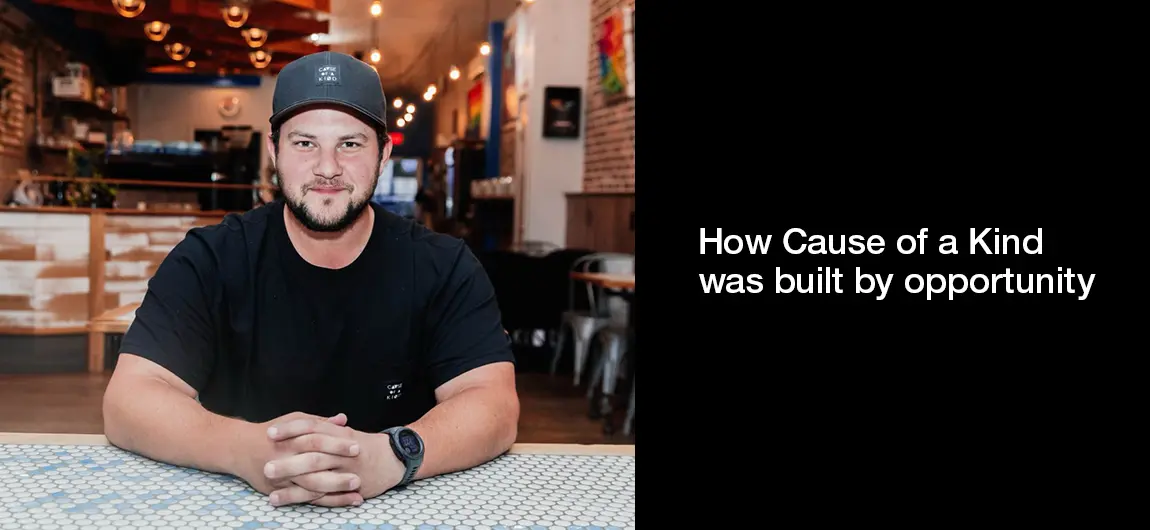
Justin Abrams is a lifelong salesman, with a career in the industry spanning over a decade. However, when Justin and his friend Michael tried to pivot into the tech startup space, they found they were facing challenges getting into market. It was at that point that the two were asked to design a web application. This opportunity turned into what would become Cause of a Kind, a successful web development company.
View transcript
Web Development Team – Justin Abrams, Cause of a Kind
[00:00:00] Sanjay Parekh: Welcome to The Side Hustle to Small Business Podcast, powered by Hiscox. I'm your host, Sanjay Parekh. Throughout my career, I've had side hustles, some of which have turned into real businesses, but first and foremost, I'm a serial technology entrepreneur. In the creator space, we hear plenty of advice on how to hustle harder and why you can sleep when you're dead.
[00:00:22] On this show, we ask new questions in hopes of getting new answers. Questions like, how can small businesses work smarter? How do you achieve balance between work and family? How can we redefine success in our businesses so that we don't burn out after year three? Every week I sit down with business founders at various stages of their side hustle to small business journey. These entrepreneurs are pushing the envelope while keeping their values. Keep listening for conversation, context, and camaraderie. Today's guest is Justin Abrams, the founder of Cause of a Kind, an onshore web development team based in Island Park, New York. Justin, welcome to the show,
[00:01:06] Justin Abrams: Sanjay. Thanks so much. Pleasure to be here.
[00:01:09] Sanjay Parekh: So I'm excited to have you on because I think your approach to, uh, kind of startups, businesses and helping founders is a little bit different than a lot of other folks that we hear, uh, talking about this kind of stuff. But before we jump into all of that, give us a little bit about your background and what got you to where you are today.
[00:01:25] Justin Abrams: Yeah, I mean, it's definitely been a whirlwind for myself to even keep track of. I I did not expect to have a career in tech. I did not have. The, any, any forethought of creating a business in tech or in service, specifically in tech?
[00:01:40] You know, I'm a, I'm a local Long Island kid. I come from a family of multiple generations of entrepreneurship. I think the thing that I did know is that I was always gonna end up as an entrepreneur. The question was when and for what. So, you know, I went the traditional path of going to school. I, I went to school, Justin's college tour. I went to three different universities. Uh, I started as a pre-med student, but quickly just got outpaced by the curriculum and so kind of devolved into social sciences, specifically in sociology with a minor in anthropology. And ironically, while I felt, while I was getting my education, that that really was like the generic education that I could have adopted.
[00:02:18] I am a career salesman. I'm a career client services professional, and learning how people in groups and culture function through a sociology and anthropology degree really have ended up to be a very valuable educational experience for me. So, kind of full circle on my education. No secret, I am a salesman.
[00:02:34] I am a client services specialist for my entire career. Uh, and I do specialize in omnichannel marketing, and it's one of the things that I provide as a value add for the customers that come through our program. And I'll talk a little bit about that when the time is right during our chauffeur today. Um, you know, I went to work first traditionally for about 15 years. I worked for two startup organizations. One was more mature than the other. When I was there, I was employee number seven at an early stage FinTech company that specialized in, uh, employee trade monitoring right on the tail of Dodd-Frank and regulation change. And I was focused specifically on the compliance sector and worked for a technology company that participated in that arena. So that's really where I cut my teeth in tech. That was totally by accident. My dad was like employee number six there, and I needed a summer job. And so I'm leaving some pieces of that out how I got into that organization, but found my way into a simple data entry job, which I matriculated into just frontline customer service.
[00:03:34] And that's just how the ball started rolling. Stayed at that organization for, uh, I wanna say six years, six or seven years. And then got poached to go to a different organization within the marketing technology space, specifically within SEO and organic optimization. And, uh, spent about the same five or six years there, just growing my career to the point where I became, um, you know, a professional in the SEO space. I, I traveled the world as an implementation specialist and solutions architect for that organization, and had the privilege and pleasure of working with some of the most recognizable brands on the planet, the, the Fortune 100. Uh, which is just an amazing way to start up a career and build a network.
[00:04:18] And so I often do give the advice to young people if you're not sure what to do, follow opportunity. And that's really what I did. I followed opportunity. It turned into a significant career over 15 years. And during a couple of the last years, uh, working professionally, I decided to moonlight a business, which again, was really following opportunity. I founded the organization Cause of a Kind with my best friend since I'm 15 years old and my early rock climbing buddy, uh, his name is Michael Rispoli, the CTO and chief architect here of Cause of a Kind. And we founded this organization just by chance. We, we started by trying to build a couple of technology companies ourselves. Two different apps that we just could not find traction for or any product market fit for. And we just, again, followed opportunity. Somebody came along and asked us if we could build their simple web web application. And so that's what we did. It was the very first customer experience and we had the bright idea, well, if we can't figure out how to build something for ourselves, we should build everybody else's idea.
[00:05:14] And so that is the origin. Nine years ago of Cause of a Kind. Five years ago, I was lucky enough to have the opportunity to feel comfortable enough we can talk about all the things that gave me comfort, if you'd like, uh, to step full time into the organization and be able to comfortably leave my career behind. Simultaneously, that's when COVID was happening, and I had my first child and bought a home and got married. And so I'm just a glutton for punishment. And so we can unwrap my formula as much as you want, Sanjay, it's, it's your show for sure.
[00:05:47] Sanjay Parekh: Yeah. Um, uh, let's talk about the, the entrepreneurial background there. You mentioned that, uh, family has had kind of an entrepreneurial streak. What was your first, very first kind of entrepreneurial startupy thing as maybe as a kid Yeah. That you did.
[00:06:01] Justin Abrams: You know, I have quite a few, but like some of them are just funny and some of them are for real. You know, I definitely did the lemonade stand thing with my little sister. We definitely got out there. I was very much entrepreneurial with my mother. She would always give me tasks that would either earn me cash or privilege. Um, you know, my mom is a solopreneur for the last 40 years and a specialist of her domain. Uh, she's a fine art broker and dealer interior designer and like, so solopreneur, so like I was, I was a little bit of her labor force back, back then, but truly that was not really, you know, that was my influence.
[00:06:31] But my true first entrepreneurial experience was actually with my buddy Chris, who's still a very dear friend of mine. We're, we're grown families together. He is in the tech space and, uh, probably somewhere in the age of maybe eight or nine years old. There was a big snowstorm. This is in like the late nineties. There was a big snowstorm. Chris was the muscle and his dad ran a landscaping company and we had, uh, access to a gas powered snowblower. And I had the gift of gab. I had no fear of going and ringing on a doorbell and asking a neighbor for 20 bucks to do the, to, to pave the driveway and, you know, move the snow off the walk.
[00:07:06] And that was really my first true experience of being entrepreneurial and trying to figure out how to balance with a partner and how to divide labor and how to divide cash for effort. And you know, the simple things of door knocking. And I remember it being a game back then, but then I made an entire career out of straight door knocking and cold calling and figuring out how to take no on the chin. And so that was my real formidable entrance into entrepreneurship. And I've been entrepreneurial truly ever since.
[00:07:37] Sanjay Parekh: Yeah, I think people underestimate and, and it's very unfortunate. I feel now, I think I've said this many times on this podcast that, um, kids are not able to knock on doors and sell things anymore, uh, because people just don't answer the door, uh, now at this point.
[00:07:51] But when I was a kid, I did the same thing. I, uh, sold custom and printed holiday cards. And man. Getting the door closed in your face when you're trying. I'm like, it, it teaches you a lot about how to pitch and how to sell and how to convince people. Especially when you knocked on the door and you just woke up the baby and the mom answered the door. Not happy over this whole situation. And you're still trying to sell. So, um, great, great skills that you have, uh, from that and, uh, so awesome that you were able to to do the same, uh, kind of as me. So, um, let's talk about like, uh, starting this business and, and kind of taking this leap. Um, was there anything that made you nervous, uh, starting it? I mean, obviously you had these things that you tried and failed, so maybe there was no downside, but was there, were there things that made you nervous trying to take that leap?
[00:08:39] Justin Abrams: You know, I think when it was time to actually take the leap, it wasn't so much, uh, nerves of of participating full-time or were we gonna have enough work? It was more, more apprehension of leaving the comfort and the regularity of income of, you know, the consistency of having a job that you can fall back on when something goes wrong. Points of escalation, uh, various cultural things to participate in. When I, you know, before COVID, I, I, I was out of the country like the day before the country shut down. I was flying home from Paris. I, I was traveling 200 days a year on the back of somebody else's business and, and really trying to evangelize somebody else's dream. Leaving all of that behind. I really had a glorified career. I, I, I would travel the world speaking. I was, I was a revered individual going into boardrooms, talking to the most impactful individuals, working for the craziest businesses of all time, and like leaving all of that behind to go and chase your own dream.
[00:09:37] That was really like the sketchiest part for me. I think my partner might have a little bit of a different experience. He didn't just, he just didn't have the visibility of the career. Different, different type of nervousness for him. But I think for me, mine was less about is this going to work? More about like the self-serving, self-serving ego side of it, which is like how long till I get back to this coveted career and I'm still not there, right? Like still, five years later, stepping fully into the sun. It's gonna take and probably a decade to get back to where I was at. But along the way, like humility comes into to the mix and like I'm building something from absolutely zero. And so you gotta give yourself a little bit of grace. And for me, I'm very much aware that those things are kind of vanity metrics and what I'm really focused on is building a business of impact and, and doing the best customer experience that I possibly can.
[00:10:29] And we're putting out work that I truly feel is second to none in the industry on the planet. And maybe that's a little bit biased, but I think you have to be a little crazy and biased to try and run a business this day and age. So. Yeah, I mean we, we, we were definitely afraid, you know, I took, I took out small business loans to hedge the bet. We, I, my house is fully leveraged. I have no outside money from investors or anything like that. It's, we still are 50 50 on the business, but I definitely took out cushion to protect us. In hindsight, that was a wimpy move I probably could have gotten by without taking all of those, with running a p and LA little bit tighter with not bloating for staff so quickly.
[00:11:06] All sorts of things that in hindsight, we could have done that maybe would have you know, reduced the requirement for things like collateral, but I'm not so sure that I'd be where I'm at today and the successful program that I have without those things standing on my neck and like keeping me showing up every day grinding for purpose.
[00:11:25] Sanjay Parekh: Right, right. Yeah, that makes sense. Um, let's talk about the business a little bit. Um, so you kind of took it from like, Hey, we're gonna make our own products to, let's make products for everybody else. Um, was there any kind of feeling that you had there of like, oh, this is like a second class kind of company at this point? Because that wasn't really the goal in the beginning days, right? Or is there a feeling now even of like, we're keep working on everybody else's product, but one day we're gonna have our own?
[00:11:58] Justin Abrams: Such a good question, honestly, and like depending on the day of the week, I might give you a different answer. Today's answer is, I am never more encouraged and empowered to build other people's ideas. I think with the advent of ai, it has changed my business in the way that we're producing ideas for people. And so the, the, the barrier to entry has reduced the cost burden for folks coming to us with ideas has reduced the acceleration to value has, has just increased astronomically.
[00:12:33] And so today, I feel very much inspired by all the different ideas that people bring to us. Now, on the other side of it is I do run tons of things in-house. We build our own solutions all the time. I'm a big believer in buying in, in, in building, rather than buying, right? I have access to the talent and to the acceleration that we're selling as a service to other folks that don't have the talent to build these things themselves. But I drink my own juice. So my partner is out here building our own internal tooling so that we don't have to subscribe to different platforms and services for the life of our organization. We're adding certain intellectual property to the business so that it becomes an investible, so it becomes a sellable or acquire acquirable entity.
[00:13:14] So we're doing both and I'm not so sure, like if I was going to bet on the future, I'm not so sure how the SAS climate is going to continue to perpetuate because it is so affordable to build custom tooling for a business. For today, most businesses are tech organizations. So if you already have this type of internal initiative and you're already running maybe proprietary platform that you're your own enterprise SaaS business, why not build versus buy? And so I'm thinking that like the climate is going to change, especially for technical organizations. It's death by a thousand cuts with the subscription model. I mean, if you think about it, everything from your CRM to your marketing automation, to your, your sales program, to, you could pay for LinkedIn or whatever the heck you could pay for Riverside.
[00:14:02] You know, like all of these tools forever, just death by a thousand cuts into a small business. As you watch your p and l, this stuff gets really real, really fast. And so we're doing both and that scratches really the itch. I, I, I think. For us, I emotionally maybe have missed the thing of trying to build my own product and hang my hat on that own thing, and I love my life in service. I'm positive of my impact, so. Yeah, that's probably my answer. Maybe you'll have a different one tomorrow.
[00:14:30] Adam Walker: Yeah. Support for this podcast comes from Hiscox committed to helping small businesses protect their dreams since 1901. Quotes and information on customized insurance for specific risks are available at Hiscox.com. Hiscox business insurance experts.
[00:14:52] Sanjay Parekh: Let's, uh, let's dive into something you kind of touched on there. Sure. With, uh, ai, um, I, you know, that is like constantly something that it get gets talked about. Sure. Um, what are your, I I've got opinions about ai. I, I use it in a lot of different ways and I see the, the pros and the cons of it. Um, how do you feel like AI has impacted these people that are coming to you and the ideas that they're bringing and the quality of those and their ability to actually take that, not just, uh, evolutionary leap, but that revolutionary leap.
[00:15:27] Justin Abrams: It's a great idea and it's transforming so rapidly. Like what I'm about to say wasn't even possible three months ago, like, just was not even a thing. So the acceleration that we're getting for today is in the order of hours versus months. A couple months ago, it was weeks versus months, but now we're talking about hours versus months to get to proof of concept. So when you have somebody that comes to you, um, you know, I run a startup accelerator in the truest form. Individuals are coming to us that are typically bootstrapped or have a business and wanna layer in some type of business tooling.
[00:16:02] They want to take a minimum investment approach, not because they don't have, you know, the staying power to put the investment behind it, but because most people wanna fail fast. Succeeding fast is a, is a joke like that's just like most people are just not capable of succeeding fast. That's an anomaly. And anybody that did succeed fast is going to say, well, you didn't see the five to 10 years of effort that I put into failing and then became an overnight success. So most people just want to go the other route, which is fail as fast as possible. And so the advent of AI has allowed us to fail as fast as possible with the least amount of overhead required.
[00:16:37] So least investment, least, least amount of manpower. Least amount of ambiguity and the time to market, or time to first user, um, is now so far beyond what we were doing years ago when we first started this organization. So I require way less staff. I require way less time to prove a concept. Now what we're doing is a, a discovery call.
[00:17:02] Um, I have a, I have a agent on the side building the product as we go through specification verbally. On a call like that was never possible before. So like you're coming away in the time, like maybe it's an hour or a 90 minute call, you're going over specification. That's another thing that's just accelerated. After years of doing this business, nobody ever came with a specification or, or a tech requirement stock or anything. But now you could plug your lay idea into, let's say a chat GPT, and say, can you please create a specification, a timeline for development? Can you please come up with like a cost evaluation and milestones?
[00:17:38] And I'm being handed, not RFPs, but specs. And so right in the time that I take that initial discovery call and I'm reviewing specification, I have an agent listening on the side, building your application, and then I hand it and say, is this what you were thinking? And so my rate of close has changed my way, my, my way of turning customers from pipeline. Or prospects from pipeline into paying customers has totally changed. Now, I'm more in the business of volume, like I need to find more customers that want to do this type of a turnkey, hyper accelerated growth mindset. Before it was, you know, find your six figure customer four or five, seven times a year, and you're a million dollar organization.
[00:18:21] So it definitely has changed the game, but I'm a student of the game and I'm, I'm agile enough and nimble enough as an organization to be a true player in how we innovate here. And so that's more of our intellectual property of how we're trying to craft this organization, a, a, a sellable acquire able, valuable way of providing service. It's not necessarily the enterprise play, but it is the play for the average person that maybe was not able to afford a minimum imaginative product. I'm not talking about like MVP where you might need, you know, six months of dog fooding your first beta users or path to revenue. I'm talking like, scratch your itch, like you had a dream, wake up in the morning, put a couple grand behind it to make it a real product.
[00:19:06] Now is possible with minimum investment and minimum time. So the playing field has totally changed and, and we're trying to stay ahead of it as rapidly as we can. But what's gonna happen in the next three months? I, I can't tell you, but we're positioning ourselves to evolve through it.
[00:19:21] Sanjay Parekh: Yeah. Um, let's change gears a little bit. Let's talk about, um, how do you balance all of this? Right? So we talked a little bit before, uh, we, we started going here. Um, you're in a, uh, small office in your backyard. Yeah. Uh, because you've been pushed out of the house. Yeah. Um, I've got a small office as well. Uh, I kind of secluded away from, uh, the rest of the family. So, um, let's talk about that. Like how do you balance kind of uh, having a business, running a business and family life and, you know, all the obligations that come with that and friends and all, you know, like all of these things. How do you think about that? How do you build those boundaries for yourself?
[00:20:00] Justin Abrams: You know, I'm really lucky in many sense because again, if you asked me this question maybe two days ago, I probably would've given you a different answer, but that answer probably wouldn't have been as genuine as the one that I'm about to give you. I have my own podcast called Strictly From Nowhere. I feature founders from Zero to Market and their stories, just like you're doing. And yesterday I hosted a founder, his name is Mike Fota. And Mike Fota changed my perspective on the question that you just asked me. He waged war against the word balance a long time ago because nothing's ever in balance in life like that.
[00:20:33] That's the truth, man. Like you wake up tomorrow, just, it could hit the fan, you know what I'm saying? Like, you have no control over what's gonna happen. All plans lay waste, you know, and I, I think. The way that he changed my perspective, literally as of yesterday, real time is about rhythm of life. The rhythm of life. So I find that to actually be the thing that I'm going to carry right now. It's not really about balancing. I never really feel in balance. You know, I'm always like moving a million di a million different directions. I have a newborn, I have a 4-year-old son. I have a wife. Like I have a family extended that always wants a little bit of my time. I, I got friends and business partners, tons of extracurricular activities, all the things that kind of culminate me into a well-rounded person, but every piece of that wants either a piece of my wallet, a piece of my attention. And so to me, I was enlightened yesterday on my own show about it's really the rhythm of life and falling out of rhythm is what we try to prevent.
[00:21:30] So the things that I do to remain in rhythm. I'm in love with my, my job, my business, my career. Like that helps me. Like I, I'm not faking that at all. Like, that helps me show up on a daily basis and not give myself the pressure to perform because this is what I eat, sleep, and breathe. So that doesn't really take a burden from me.
[00:21:49] The things that do take challenges from me or trying to find ways to enjoy the rest of life. So how can I find time to go golf or surf or rock climb, or how can I go hang out with some friends or. Uh, you know, I run an event series here on Long Island called Long Island Technologists. That's a passion of mine too. I gotta find the rhythm to include that and do all the marketing and the sales strategy behind all of that. And like everything for me, if you did it all at once, you'd be totally split, split your differential out of whack, probably in depression mode. I, I don't know where to start. So for me, I, I was enlightened yesterday.
[00:22:23] This is really about finding rhythm and sometimes just like playing music, you kind of fall out of rhythm. But to me that that really resonated, which was like, give yourself, again, a little bit of grace. I'm trying to juggle a million different things and some days you're gonna over index in certain areas. And you know, my partner told me once upon a time, you can only carry so many buckets in life and, and you gotta make sure that your buckets are equally distributed, otherwise you're gonna tip over carrying one to one side. So I'm a big analogy guy, but I think the rhythm of life is really what I'm in pursuit of.
[00:22:58] Sanjay Parekh: Yeah. Yeah. Um, by the way, I like the, um, the acronym that you've probably got for Long Island Technologists Lit. Uh, I, I, I don't know if that was intentional or not, but Lit. Lit.
[00:23:09] Justin Abrams: That's right, that's right.
[00:23:10] Sanjay Parekh: I love it. Love it. Um, so let, let's talk about rhythm then just for a second. Um, do you account for sleep and wellness kind of in your day, in your, in your life? Like, how do you plan for that? How do you make sure that you're getting enough?
[00:23:23] Justin Abrams: Yeah, so I, uh, I often make the joke to my wife and to others, but I, I sleep, like I'm a Navy seal, so I sleep the minute I'm told or minute I tell myself, now is the time to close your eyes. So I have a good relationship with sleep. Uh, that, that doesn't necessarily mean that I accumulate. You know, I recently heard on probably another podcast, uh, maybe it was like Steven Bartlett's podcast and he was featuring probably like somebody in the neuroscience and sleep space. Some people have a gene where they can just function on very little sleep.
[00:23:51] I'm probably one of those people, you know, you give me three hours of sleep. I wake up, I'm cranking, you know, and like athletically. So I'm fully capable and so I don't, I don't really have any relationship with sleep. I, I, I sleep because I have to and I sleep because, you know, it's critical to recovery and it helps to balance the rest of the life. But I have a newborn right now and I take the night shift because my wife has a bad relationship with sleep. You know, she's the textbook delayed onset insomnia, like just the textbook bad relationship with sleep. And so again, glutton for punishment, I, I, I take it all on the chin and it's my choice to take the overnight.
[00:24:29] And I'm sure, you know, with a newborn that, that sleep is irrelevant, is absolutely irrelevant. But the rest of the equation is truly important. You know, I have a very well-rounded, balanced life as far as health and wellness and fitness. You know, I focus substantially on my diet. I, I, I have all sorts of extracurriculars that keep me focused on wellness and activity. Everything, everything from like weightlifting. I'm, I'm a historically a big CrossFit guy, uh, all the way down to, I'm an avid rock climber. A couple days a week. I play golf a couple days a week. Uh, I'm a surfer, snowboarder, a hiker, like I'm a high altitude mountaineer. All sorts of things that kind of just keep me focused on my wellbeing and longevity.
[00:25:09] Which has evolved over the years, like fitness used to be my number one priority. That was before I had a family and before I had a business and like I was freakishly fit because like that was where I could focus my attention and what I could control and where my bandwidth allowed. Today it's again, it's more about rhythm. So I work out when I'm able to, I do some type of activity or exercise every single day, rain or shine something, but it's not consistent and I have to make a decision as to what I'm gonna do at that time. The most difficult thing and the most consistent thing, ebb and flow, which is nutrition. And like, that's probably the hardest thing running a young family and like, do I have to cook three versions of dinner tonight to like satisfy me, my wife and my son?
[00:25:50] Like that that's probably gonna happen in the next couple of hours. So nutrition is probably the hardest one at this point to really maintain. And I'm quite social so, uh, you know, alcohol plays a very small role in my life, but it certainly is there and that kind of, you know, kicks out some of your goals and gains, but again, it's just about rhythm. There's a right time, right place for all of it. But I always come back to the foundation of like, what is going to help me achieve my goal of the moment? You know, I don't really look super far ahead. I'm really lucky to be here today and I'll, I'll be lucky if I wake up tomorrow. So how can I maximize today in the remaining time that I have this afternoon?
[00:26:27] Sanjay Parekh: Yeah. Love it. Okay, last question for you, you Justin? Sure. Um, if you're talking to somebody that was, uh, thinking about doing something similar to you. Maybe not the same business, but similar to, you know, launching a side hustle or taking that side hustle and going in full time all in. What's the advice you'd give to them?
[00:26:44] Justin Abrams: Oh, I love this and I'm gonna go contrarian. I'm hoping you never heard this before. Stay at your job as long as you can. Probably not the craziest, probably, probably the craziest advice that you could probably tell somebody that really is itching to get into their side hustle.
[00:27:00] But let me tell you why. You know, I left my job romantically. I left my job December 31st. I started on this job January 1st. Absolutely no break and ha in hindsight, staying at the job, at your career, at whatever is funding your side hustle at the moment for longer than you think you need to, to the point where like you've replaced your income with your side hustle and you're now collecting two incomes. Staying at your job for as long as possible only hedges your bet. So while it's uncomfortable for people like run, run, the risk of getting fired underperform so much so right up until the point where you feel like you could leave your side hustle to the point where you feel like you can get fired. I, I left my job in like the absolute best terms.
[00:27:52] I gave like 12 weeks notice. I transitioned all my clients like I the best possible terms. In hindsight, I probably should have milked it for a year, sacrificed President's Club like degraded my little reputation a little bit like I should have slowed down. It would've de-risked me. I wouldn't have needed a small business loan. I wouldn't have immediately needed to take a six figure salary out of my business to maintain my lifestyle, to support my family, to support my mortgage. You know, like certain things that I had to de-risk myself by going and getting small business loans by. Reducing my income, you know, six months into this full time because we were gonna run out of cash, you know, bloating, C, bloating the staff up to 17. Within the first six months of starting the business, when I probably only needed like four or five guys, like I just thought the right thing to do was blow the staff because of course the pipeline's gonna explode, which doesn't freaking happen. Yeah. So my advice a little bit contrarian is if you think you're ready to go stay an extra six months.
[00:28:57] Tell me if I'm right because lots of times folks are a little bit, um, car before the horse, you're, you're super energetic. You're like rearing to just put your full on founder hat on. You wanna just create something and just give this your full-time blood. But at the end of the day, if it fails, guess what?
[00:29:15] You gotta go back to work anyway. So if you're just starting a business, if you're just trying to get off the ground, if you're trying to turn the side hustle into the hustle. Subsidize yourself a little bit. First, try not to use other people's money. Try not to take on investors unless you have some significant reason. And then again, I would double check that, triple check that, make sure that that's viable. Um, you know, the worst case scenario, the worst reflection in the mirror is I failed and I have to go back to work after, after all the effort it takes to start a business. So I prevented that. You know, I did all the things that I advise against not to, and, and in order to maintain staying alive and and collecting my paycheck and continuing to move for the first year. Now, this is the greatest investment that I've ever made, is in myself and in this business, and it's paying dividends and you know, we could talk about tax burdens in some other time. because that's a different net nut you have to crack that you're, you don't think about on a day one of starting a business is Uncle Sam's coming for a piece of that money. So again, stay at your W2 job for as long as you can at least subsidize what your business is gonna make. It never really works out to be as much as you think it's gonna be.
[00:30:23] Sanjay Parekh: Yep. Exactly. Uh, Justin, this has been great. Where can our listeners find and connect with you on that?
[00:30:28] Justin Abrams: Absolutely. I'm cousin Justin on all platforms, C-U-Z-Z-I-N, Justin, on all, all platforms. Everybody's favorite cousin. Uh, I run a company called Cause of a Kind. We build software and websites for pretty much every industry, but I focus on cause backed, mission driven and innovating businesses primarily.
[00:30:45] We're at CauseofaKind.com. I run strictly from nowhere. Strictly from Nowhere is a podcast for founders by founders, and we feature the Journeys from zero to market. And last but not least, as Long Island Technologists. I was so tired of running into Manhattan after a career, 15 years worth of commuting into Manhattan every day, going to networking events and just having to schlep into the city. So my partner and I decided to create our own networking event and bring business and people and networks and relationships to us. So that's LongIslandTechnologists.com. We have an event coming August 7th. All are welcome. It's free and always will be. Uh, and it's subsidized by incredible sponsors and local partners that help us put on an incredible event. So that's a little bit about me.
[00:31:31] Sanjay Parekh: Awesome. Thanks for being on the show today, Justin.
[00:31:33]Justin Abrams: Thanks, Sanjay. It's a pleasure.
[00:31:36] Sanjay Parekh: Thanks for listening to this week's episode of the Side Hustle to Small Business podcast, powered by Hiscox. To learn more about how Hiscox can help protect your small business through intelligent insurance solutions, visit Hiscox.com. And to hear more Side Hustle to Small Business stories, or share your own story, please visit Hiscox.com/side-hustle-to-small-business. I'm your host, Sanjay Parekh. You can find out more about me at my website, SanjayParekh.com.
Subscribe to our podcast



Did you start your business while working full-time at another job?
Tell us about it! We may feature your story in a future podcast.