Production Company: Joshua Lipkin's Founder Story



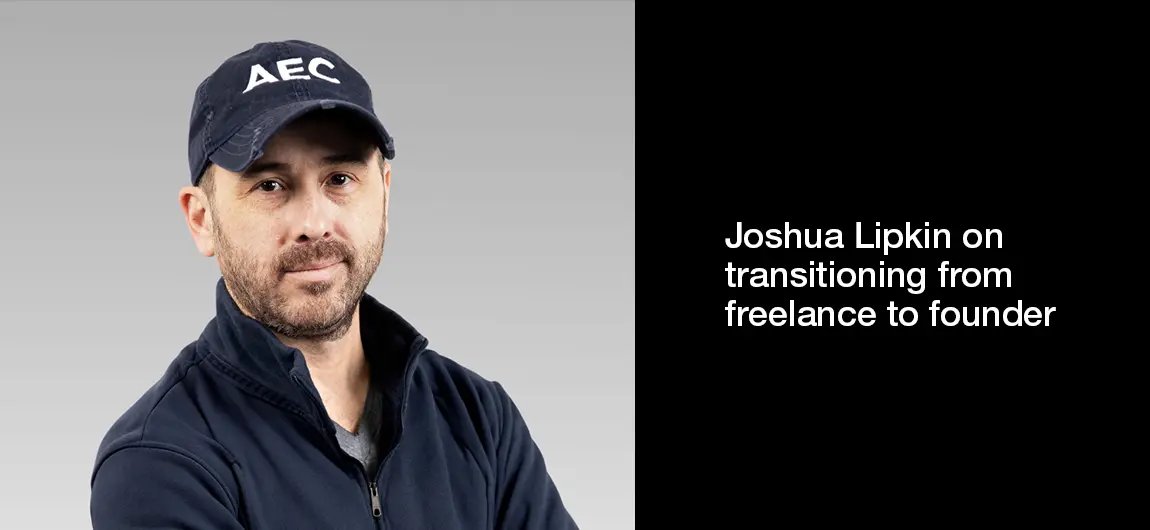
With a background in media production, Joshua Lipkin, like many people in the media space, found himself freelancing. When he landed a large contract, he decided it was time to found GreyLee Creative, a full-service production and post-production company that focuses on crafting high-quality visual content that captivates and engages audiences. Sanjay and Joshua discuss Joshua’s transition from freelancer to business owner, finding your niche in the business, and starting Atlanta’s Editor Collective, a community of over 800 editors.
View transcript
Production Company - Joshua Lipkin, GreyLee Creative
[00:00:00] Sanjay Parekh: Welcome to The Side Hustle to Small Business Podcast, powered by Hiscox. I'm your host, Sanjay Parekh. Throughout my career, I've had side hustles, some of which have turned into real businesses, but first and foremost, I'm a serial technology entrepreneur. In the creator space, we hear plenty of advice on how to hustle harder and why you can sleep when you're dead.
[00:00:21] On this show, we ask new questions in hopes of getting new answers. Questions like, how can small businesses work smarter? How do you achieve balance between work and family? How can we redefine success in our businesses so that we don't burn out after year three? Every week I sit down with business founders at various stages of their side hustle to small business journey.
[00:00:43] These entrepreneurs are pushing the envelope while keeping their values. Keep listening for conversation, context, and camaraderie.
[00:00:56] Today's guest is Joshua Lipkin, the founder of Grey Lee Creative, based here in Atlanta. Joshua, welcome to the show.
[00:01:03] Joshua Lipkin: Thanks for having me.
[00:01:04] Sanjay Parekh: I'm excited to have you on because I don't think we've ever talked to anybody kind of behind the scenes in TV production. And so hopefully there'll be some good stories here somewhere. But before we get into all of that, give us a little bit about your background and what got you to where you are today.
[00:01:19] Joshua Lipkin: Yeah, of course. So I, I started you know as any person in the entertainment industry starts, I went to film school in Boston at a college called Emerson College. And then we from graduation went out to California to kind of start that Hollywood career as most people do.
[00:01:38] And I worked there for just over a decade. And I worked on a new network that kind of was growing called G4 and it was a video game network. They had just bought tech TV outta San Francisco. So it was a lot of exciting new programming and getting my feet wet. At a network like that was great because it allowed me to.
[00:02:02] Really, you know, get into the aspects of production that normally I wouldn't get into being, you know, fresh out of college. They, you know, it was, the access was a lot more because they were a lot young, a lot younger of a network. And then I was there for about 10 years and moved back to the east coast to right outside New York City starting a family. And that's where our family was located. So we swapped coast. Realized New York wasn't for us. Saw the growth of the film industry down here in Atlanta and got an opportunity with a colleague that was working on a show down here. Did that for about two years before we finally made the the full move down to Atlanta. And that was about 2017. So I was working down here for a few years before before coming down full time. But I've been down in Atlanta enjoying the growth and the surgeons of production down here in the film industry for a few years now.
[00:03:00] Sanjay Parekh: Yeah. Love it. I gotta tell you. I so much Miss Tech TV, the Screensaver, Le Lepo, all those folks. Yeah. Like, man, what a great night. I watched so much of that. I'm sure I watched some of your work then too. Oh yeah. Yeah, absolutely. I watched many shows of tech tv and I remember when G4 bought them as well and they were like, oh, is it gonna go? And then after a while it all went away. So it all went away. Yeah that was sad. So what made you decide then to go from working and then, you know, switch and start your own production company?
[00:03:35] Joshua Lipkin: Y you know, it. It's interesting because when you're working for network and then you leave that and you start freelancing and you just, you're picking up gigs here and there.
[00:03:46] You're working for shows as they're shooting and when they go dark you're hustling for the next one. And I realize I'm essentially my own business owner doing that already without the, without being official. So, you know, during those freelance parts where I was kind of hustling for work and connecting with companies and businesses and doing corporate work as well you know a opportunity came along to do a big package for a corporate client.
[00:04:19] And that just led to kind of having to form the actual business side of things, which before then you can work as an individual and just get hired. And work on their payroll. But when you start doing corporate content and they're hiring you to do, you know full service from production to, to post you kinda have to think of it as a business and then get all the real business ducks in a row. So, you know, LLC, insurance, all that stuff.
[00:04:46] Sanjay Parekh: Yeah. So let's talk about one of those aspects, which is the name. So your name's Joshua Lip Lipkin. But the name of the thing is Gary Lee Creative. Who's Gary Lee?
[00:04:55] Joshua Lipkin: It's actually Greay Lee Creative.
[00:04:56] Sanjay Parekh: Oh, Grey Lee. Sorry. Greyley. Yeah.
[00:04:59] Joshua Lipkin: Yeah, so that, so the name of the company is Grey Lee Creative and it comes from my children's names.
[00:05:05] Sanjay Parekh: Ah.
[00:05:06] Joshua Lipkin: So my oldest is Avery Lee. And my second was a boy. His name is Greyson. So I put the Grey for Greyson and Lee from Avery Lee together and got greatly creative.
[00:05:20] Sanjay Parekh: I like it. I like it.
[00:05:21] Joshua Lipkin: Yeah. And you know, and I went with the creative in the name instead of productions just because I look at what I do as creative. It's, you know, it's not just production. We're not just pointing a camera and collecting footage. We're, yeah, we're making something that's creative. So yeah, I like that kind of artistic aspect of it.
[00:05:41] Sanjay Parekh: Does anybody ever call the business and say, can I speak to the owner Grey? Does that ever happen?
[00:05:46] Joshua Lipkin: No, no one's done that yet, luckily.
[00:05:50] Sanjay Parekh: So was there anything like, so when you made this shift so you said like, look, there's a lot when you're a freelance kind of working in the industry is very similar to Bus being a business owner because you're doing all the work anyways. Was there anything that was. Different though, like was there a hard part of making that shift, like communicating the story or anything else like that?
[00:06:13] Joshua Lipkin: Yeah. I mean, I'm not I was not used to doing that. That business side of it. I mean, that. That aspect was completely foreign to me. Yeah. And I can, my wife would even attest to this early in my career when I was, you know, working for the networks and everything was all in one, one package and I didn't have to worry about freelancing. I, I would tell her, I was like why would I ever want to, you know, be my own production company? Why would I ever want to do that? It's, you know I'm on a network here. Why would I wanna do that? And then, you know you go 10 years later and it's exactly what I'm doing. But it I'm a creative mind.
[00:06:49] I don't the filling out paperwork and taxes and insurance and invoicing and all those tedious paperwork side is, was completely new to me. And I still struggle with it because it's stuff I don't want to do. And it's usually the stuff that I procrastinate the most about. Yeah. You know, I got my 10 90 nines into the, to the IRS right at the last day of the month.
[00:07:16] Sanjay Parekh: Sounds probably about right for most most entrepreneurs because that's for a lot of us, not the fun part of the business. Oh, let's talk about getting clients. And so, you know, a lot of clients, when they come to you, you're starting this thing up, they're gonna ask these natural questions like, what have you done and how much does it cost?
[00:07:32] And how quickly can you get it? Like, how do you deal with some of those questions and make sure that you're not. You know, over promising, under-delivering. That's the death blow to any kind of business. Right. That and how do you make sure that you answer them in a way that gets you that business and wins you the work?
[00:07:49] Joshua Lipkin: Yeah. I mean, I think honestly, what you have to do is exactly that. You have to be honest about what it is you're providing and what you can provide. And I'm upfront with that. I'm upfront with clients about, you know, things that I'll be handling myself versus, you know, if I have to bring in other freelancers to cover other aspects of it and what those costs are.
[00:08:12] And everyone knows that, you know, we're doing this as a business. We're not doing this. For fun. While you wanna have fun doing it, it's still, it still needs to pay the bills so that, that's where the costs are. And there have been some awkward conversations with clients that, you know, they say, oh, well we can do it for X amount. And I'm like, yeah you probably can, but then you have to do it. And they, the price. That you're paying for us to do, it reflects that. And, you know, you start understanding what the rates are. And I've always liked to be fair and I'm not, I try not to, you know, gouge for the sake of gouging.
[00:08:47] And, you know, some of these corporate clients, they don't know where the money goes half the time. So, you know, people can take advantage. But I feel that if you're honest with the clients and you give them your best case. Proposal. That's how you keep them coming back, and that's how you create relationships with them. And it's not, we can, you can do a hundred one-offs, you know, for the next 10 years of clients, but the ones that are best are the ones that you, the next 10 years you're working with them.
[00:09:17] Sanjay Parekh: Yeah, that makes sense. Let's talk about the breadth of things that you do at GreyLee. You're doing like TV editing, you're doing podcasts, you're doing e-learning, you're doing this whole range of services. Was that something that you decided to do and you planned? Or was it that clients pulled you into these things?
[00:09:35] Joshua Lipkin: It was mostly a lot of client being, you know, clients pulling me in. One of my first jobs or first clients with the company was doing. The educational content and was full production and like my background was post-production on the editing side.
[00:09:55] So, you know, I worked with a partner for that, the, that first production. To kind of set up what we could do for shooting on the production side and not just post, you start out with like your base skillset of what you can do, and then you offer that. And as things grow, they ask for different things and you kind of adapt and learn who you can bring in to help with that and add that to the skillset of the business to kind of grow from there. So, coming in as a post-production editor post-production specialist, it I wasn't offering a lot of production stuff at the top, you know, mostly graphic work, which, you know, was part of my background. But as clients needed more stuff and more requests they liked working with us we would kind of grow our specialty out a little bit to, to include some of those other aspects of production that we can offer.
[00:10:47] Adam Walker: Support for this podcast comes from Hiscox committed to helping small businesses protect their dreams since 1901. Quotes and information on customized insurance for specific risks are [email protected]. Hiscox business insurance experts.
[00:11:08] Sanjay Parekh: Okay, let's shift gears a little bit. So you got into the thing that you said 10 years ago you weren't gonna do in the first place, and then you decided to add in another thing. You started this Atlanta Editors Collective and you've grown it to 800 members. Over 800 members.
[00:11:24] Joshua Lipkin: Yeah.
[00:11:25] Sanjay Parekh: So. A why did you start this thing? Like what did you see as the gap there and how is it that you've kept this thing going and run it while you have, you know, another full-time business essentially?
[00:11:37] Joshua Lipkin: Yeah, so it, you know, it's the exciting part of what I'm doing. The business is great and I love production. I love editing, I love but you know, there's something about the community of.
[00:11:50] Of people working in this industry. And if anyone that works in this industry or has experienced it, you realize that it's tight knit, it's small, even in the big markets. Who you know is how you get through things. And so you, you create those relationships. So the Atlanta Editors collective kind of formed through, pretty much through COVID. We started right before COVID and then when COVID hit, kind of shut everything down. And it kind of stalled out for a little bit. But then coming outta COVID, we saw this need for connection community and people getting back to being with each other and face-to-face and having conversations that we couldn't have had for the last few years.
[00:12:30] And we started with our first, social meetup. And that's essentially how it began. It began as you know, a bunch of people in the industry that, you know, would talk via Messenger or Facebook. Facebook group is our main landing spot where we created out of, and we just wanted to get together. So we, you know we got some beers and we hung out for a night and, you know, created the collective and we've done. That social meetup every single month since the group was created. And the need was there. You know, we, not to be too long-winded with it, but the Atlanta entertainment industry is fairly new compared to New York, compared to la.
[00:13:16] And there's a lot of growth here. There's a lot of change here. And when you come to this. This environment of growth with the industry, you realize that you can be part of the growth of it. You can be part of the direction it goes into and the, you can be part of what you want it to be. You don't have to just. Coming into you can't be, you still have to be like the fish that comes into the stream and just go with the flow and it's already established and you're just in LA and you're doing whatever the studios have done for 50 years. You realize that you can make things different.
[00:13:47] You can change it to be a better way to do things. And that was kind of the biggest goal was to, you know, be part of the growth and the change of the industry here on the post side. And, you know the post-production. Aspect of the overall production was lacking here. Films would come in, they'd shoot, they'd do all their, you know, studio work here, and they'd take it back to LA or New York and do their posts.
[00:14:13] So there was a need for awareness as well. For post-production here. And that's what we've kind of mostly grown into at this point. The community of it, bringing people together, connecting, and then the awareness. Letting productions know that when they're here, there is posts you can stay, you don't have to take it out of town.
[00:14:31] You can do a full, you know, soup to nuts production right here in town.
[00:14:36] Sanjay Parekh: Yeah. Yeah. I love that. So what is the idea then behind a EC? Is this. Just a community, a social thing. Is it there an actual business behind it? What's the mission, what's the goal there?
[00:14:50] Joshua Lipkin: Yeah, so there's an actual business behind it. And it's placing talent. And I say talent not on like the actor side talent, but on the postproduction talent. People talented at editing, at colorists at audio mixing with productions. So we do a lot of, outreach from productions. We will come, we will outreach to us and say, Hey, we don't know anyone in post in Atlanta, but we need to post there.
[00:15:17] I need editors. Can you find us some? And it's growing still. You know, right now it's a curated business where we'll curate a list of people for whatever their needs are, but it'll eventually grow into a self. Self-serving website database where productions can come in and they can find people themselves, and they can, the people can reach out directly to themselves and connect that way.
[00:15:46] Sanjay Parekh: Yeah. So interesting. So was the idea to do that kind of born in the beginning of doing this? Or did this just kind of evolve over time?
[00:15:57] Joshua Lipkin: It was always a goal to. Connect the productions with the talent. Yeah. It's just becoming, with our growth and awareness, it's just becoming more attainable at this point. You know, when we're small, it was hard to be recognized. So we built up the community first. Once we had the community there, like you said, we have over 800 members now between all of our social platforms and our website with our database. And now it's, we're able to give that value back to our members of finding work and finding jobs.
[00:16:37] And in this day and age, right now with where the industry is, you know, getting work is. Not the easiest thing to do.
[00:16:45] Sanjay Parekh: Yeah, exactly. Yeah let's talk about kind of the, this industry and kind of what's happened here in Georgia. The film and kind of post-production scene has exploded because of these tax incentives that we've got. How do you think about that for you and kind of a EC but also with Grey Lee and positioning yourselves so that you don't get kinda lost in the shuffle of all of this stuff, because there is a lot that's going on.
[00:17:13] Joshua Lipkin: Yeah, I mean the tax incentives are obviously the main factor when talking about the growth here in Atlanta and Georgia.
[00:17:22] You know it's been focused around Atlanta, but you're starting seeing some of the other communities in Georgia build out their infrastructure a little bit more so they can take advantage of it. Out in Savannah, out in Columbus a lot of the other areas are trying to take advantage as well.
[00:17:39] And we have, you know the main tax incentive that has existed for a few years now. And then there's a new post-production focused tax incentive that just. Came out the beginning of this year and that is solely focused on post-production. So you, if you're a production shooting somewhere else, you can still post here in Atlanta and get that tax incentive. So with all of that happening at the same time, it just. Rose. It created a new situation where we needed to have the awareness of post-production here in Atlanta because, you know, people were gonna come in and start doing work and they didn't know how to find us. Right. So it became even more important to, to focus on the awareness and the, you know, the connection of the individuals and the talent here.
[00:18:35] Sanjay Parekh: Yeah. Makes sense. Okay Joshua, I got a couple last questions for you. What's one thing now that you know about running a creative business like this that you wish you'd known from the get go?
[00:18:47] Joshua Lipkin: Oh, that's a tough one. Because there's so many it's not, it's too many. I mean, everything you do wrong, you do, you're doing wrong. The first round.
[00:18:56] Sanjay Parekh: I mean, that's entrepreneurship, honestly. Right?
[00:18:58] Joshua Lipkin: It's. And I don't know if this, I mean, and this is important no matter what business in freelance and in a, you know, if you're a staff somewhere. But it really hits more, hits home harder when you are working for yourself is to know your value.
[00:19:12] Know what you're worth in the services you're providing or the, you know, the goods you're providing and know that worth and stand up for it. You know, anyone will want to get the cheapest version of anything, you know and. They can get, they can find that cheap version of whatever they want, but the quality suffers because of it.
[00:19:34] So if you're providing a quality service know what that's worth and stand by it and, you know, be true to it. Because that's what people are respecting them. They're, they'll be okay with spending more money on a product that's worth it. And if you show 'em it's worth it, then that's important. And that's something you don't realize when you're first getting going. You know you want everything cheap and cheap because you wanna get those clients you wanna. Hook them in, but it's not sustainable. So you gotta be able to know what your worth is and hold to it.
[00:20:02] Sanjay Parekh: Yeah. So so last question kind of related to that then, for somebody who's has creative skill and wants to start their own thing. What would you recommend to them in terms of their first step or things to think about?
[00:20:16] Joshua Lipkin: I guess probably a different day and age now with all technology getting things going. So a lot of the hurdles that I ran into, trying to figure out all that stuff out yourself probably is a little easier these days.
[00:20:29] But, you know, education is probably, you know, something that I didn't do enough of. Before getting into it learning the books, learning the finance side, and simple as taking a, you know, a small business class at a college nearby or online. But definitely, you know, learn those skills and connect with people that have already done it.
[00:20:52] Get a mentor. Get somebody that's been through it that you can bounce ideas off of and check, you know, just to check in with and say, Hey, I know I messed X, y, and Z up, but, you know, does this still look good? Do you, am I still in the right direction? Just so you're not, you don't have to do it alone, even though if you are doing alone, if you're a solo founder and just getting that community and getting that support.
[00:21:15] Sanjay Parekh: Yeah. Well that great advice. Joshua where can our listeners find and connect with you online?
[00:21:22] Joshua Lipkin: Okay. Well, so there's always the website for the editors collective, which is www.atlantaeditorscollective.com. And then my production company www.greyleecreative.com, GREY. Not GRAY, which my son gets a lot. He's A-G-R-E-Y. And those are the two websites you can find me at or you can just, you know, email me directly, which is Jay [email protected] or. [email protected] and both of those are on the websites. So you can go to either one of those and find me.
[00:21:59] Sanjay Parekh: Awesome. Thanks so much for being on today.
[00:22:01] Joshua Lipkin: Yeah, absolutely. Thank you for having me.
[00:22:04] Sanjay Parekh: And that's a wrap on this episode of The Side Hustle to Small Business Podcast. But before we go, I want to take a moment to share some news with you. After an incredible run, we're putting the podcast on pause. It's been an absolute privilege to sit down with so many brilliant entrepreneurs, hear their stories, and hopefully help a few of you along your own journey from side hustle to something bigger.
[00:22:27] This community means a lot to us, and we don't take that lightly. The good News, Hiscox isn't going anywhere. If you want to keep learning, keep growing, and keep getting the resources you need to protect and build your business. Head to the show notes. We've left links to some great Hiscox tools, articles, and content that can help you on your way.
[00:22:49] It's been a genuine pleasure hosting this show, and we hope these conversations have been as valuable for you to hear as they were for us to have. Thank you for every download, every share, and every moment you chose to spend with us.
Subscribe to our podcast



Did you start your business while working full-time at another job?
Tell us about it! We may feature your story in a future podcast.