Graphic Design Branding: Jordan Lawson's Creative Journey



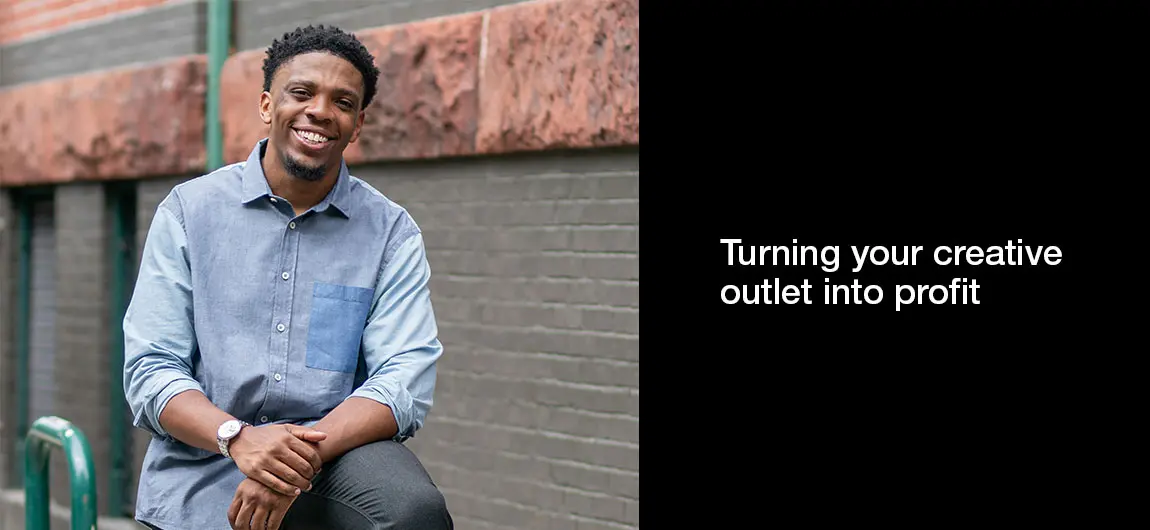
Jordan Lawson has always loved drawing, coloring, and creating art as a whole. When he was in college, he was inspired by an art entrepreneurship class to start his own business. However, when he graduated, he started working for the government instead. After nine years there, he was ready to make the leap. Jordan founded Ground Zero Studios, a branding studio that helps organizations stand out from their competition.
View transcript
Graphic design branding – Jordan Lawson, Ground Zero Studios
[00:00:00] Sanjay Parekh: Welcome to The Side Hustle to Small Business Podcast, powered by Hiscox. I'm your host, Sanjay Parekh. Throughout my career, I've had side hustles, some of which have turned into real businesses, but first and foremost, I'm a serial technology entrepreneur. In the creator space, we hear plenty of advice on how to hustle harder and why you can sleep when you're dead.
[00:00:21] On this show, we ask new questions in hopes of getting new answers. Questions like, how can small businesses work smarter? How do you achieve balance between work and family? How can we redefine success in our businesses so that we don't burn out after year three? Every week I sit down with business founders at various stages of their side hustle to small business journey. These entrepreneurs are pushing the envelope while keeping their values. Keep listening for conversation, context, and camaraderie.
[00:00:55] Today's guest is Jordan Lawson, an artist and branding expert based in Maryland. Jordan is the owner of Ground Zero Studio and Branding Studio Jordan, welcome to the show.
[00:01:06] Jordan Lawson: Nice to be here. Thank you for having me.
[00:01:07] Sanjay Parekh: So I'm excited to have you on, um, because you've got like a very interesting background, um, and, uh, there's been a little bit of twist and turns and places that you've worked at, so, um, for sure. Super fascinating. But before we get into all of that, give me a little bit about your background and what got you to where you're today.
[00:01:24] Jordan Lawson: For sure. What's going on everybody? My name's Jordan Lawson. Uh, like you said, I'm an artist, branding expert, and it all started as, uh, being a child, always being invested in the arts, always drawing, always loved coloring, and it, it snowballed into, high school when I was able to go to a magnet high school here in Baltimore, Maryland. It's basically a specialty trade school that we go to where we focus on one track skill to get us ready for the real world. Uh, it was one of those things that my parents recommended for me and I was able to, uh, enter the graphic print and design program there where I was able to hone in on my skills to become the entrepreneur that I am here today.
[00:02:04] Sanjay Parekh: Yeah. Uh, I, so I gotta ask you, you mentioned coloring, uh, mm-hmm. Favorite color in the, in the kind of, I don't know, maybe is it Crayola or, or some other brand? Like what's your favorite color? What's your go-to color when you're picking out a crayon?
[00:02:18] Jordan Lawson: Yeah. Yeah. My go-to color is blue. That's my favorite color. Got it. Um, there's so many different hues that you can choose from, and I just love the range of it, for sure.
[00:02:26] Sanjay Parekh: Yeah. I was gonna ask which specific blue, because there's so many in the cre the Crayola box, right? Like there's. I don't know, Ilian Blue and there's, I, I don't remember the names, first of all.
[00:02:37] Also, whoever comes up with the names, that's an incredible job as well.
[00:02:40] Jordan Lawson: But for sure, and I feel like that's a, a job that changes all the time because there's always colors being added. But, uh, my favorite color is like a Cerulean blue, so it's kind of like a, a mellow light blue, but it kind of has a purple tone into it as well.
[00:02:55] Sanjay Parekh: I like it. I like it. So, Jordan, is this the first time you've done anything entrepreneurial or has there been entrepreneurial stuff that you've done when you were younger or are there entrepreneurs in the family, anything like that?
[00:03:08] Jordan Lawson: No. This is the first thing. The first thing that I've done. Being an entrepreneur don't have many entrepreneurs. I can't even think of one that I have in my family. So I'm kind of starting the, the turn a new leaf, you know, in my family, the legacy. So I'll, I'll take that challenge for sure.
[00:03:24] Sanjay Parekh: Yeah. It's sometimes good, sometimes bad to be the first. Um, exactly. Uh, you know, you probably have the challenges of like, wait a minute, what are you doing exactly?
[00:03:33] You don't understand. You had a good job. Uh, why are you doing this? Um, yes. All of us have had to do deal with that. So you're not alone. Exactly. Um, so what kind of, uh, kind of motivated you to start this on your own? Out of nowhere you had a job? Uh, yes. What, what gave you the nudge?
[00:03:51] Jordan Lawson: It's, it's interesting. So while I was in college, I had an internship with, um, the government being a graphic designer. So I had a job ready for me waiting for when I was done college. But my, during my senior year of, uh, college, I took a, final class with my professor in the arts field and it was called Entrepreneurship in the Arts.
[00:04:12] And that just opened my mind up to so many things that I could do. I really thought, you know, being a graph designer working for an agency was gonna be the end all be all of my career. I was able to balance, you know, being creative and doing some artwork, but also being in the corporate setting, but shout out to my, professor Carolyn Fucile if she's listening to this. She really opened my eyes up to a lot of different things that I could do, whether I wanted to be a freelance artist, whether I wanted to run my own agency, uh, whether I wanted to display my artwork in different exhibits. Different things I didn't know that was possible. So that that class really, uh, changed my life to take on this path and this journey that I'm on right now.
[00:04:53] Sanjay Parekh: Yeah, it's amazing how just that right experience at the right time can nudge you in a totally different direction and open your eyes for sure. That's awesome that that happened for you and happened at the right time for you.
[00:05:05] Definitely. Um, so I gotta ask you, so government, uh, worked you were doing that. Um, I think most of us are listening and going like, well, don't all their things look the exact same? What do they need a graphic designer for? Exactly. What kind of things were you working on there?
[00:05:19] Jordan Lawson: So, uh, like you said, it is government work, so a lot of people think boring, repetitive, and you are right. You know, a lot of things that we do. Once you have the process in place, you do the same thing over and over. But a lot of things that I were doing, uh, it did get exciting because I created a lot of the awards for different ceremonies. Directional signs that went into the hallways. Um, if they were having career fairs, job fairs, I would create those as well. So things that happened, uh. Throughout the year, those were the things that were boring and repetitive. But sometimes you have new awards that you create, you have different events that pop up. So there were some new things that came, you know, into the scope of work. But overall, it was kind of mundane work, I must say.
[00:06:02] Sanjay Parekh: Yeah. Did you ever have that experience where, uh, you made something and you knew how it was gonna be used, and then you saw how they used it and it was not the right way and it just killed you because they were doing it wrong?
[00:06:13] Jordan Lawson: I don't know if we live the same life, but yeah. If you ever worked in an agency or worked in that type of environment, you have the briefing with the client. They tell you what they want, you tell them what the end product is gonna be, you get it to them and maybe you go to the event or you know, you're able to get eyes and ears on what's happening.
[00:06:35] And it's not anything of how it was supposed to go. It's, and at the end of the day, they, they got the end product. You did your job and you can't control what the client does. But it's just so frustrating because you know the vision, how it's supposed to go. Uh, so it is definitely. Part of the, you know, the nature of the work, but um, it's not the, the best experience.
[00:06:55] Sanjay Parekh: Yeah, I mean I imagine if this was me and it's probably good that I'm not a graphic designer because I would wanna run up there and be like, no, you're doing it wrong. Exactly. This is how it's supposed to be displayed for sure. Y'all just stop and this is not okay. Like, what are you doing? Um, definitely, definitely. For sure. So prob probably good because I'd be fired on the first job and never be able to work again. Um, okay. So. First time entrepreneur, nobody else in the family doing this. Um, what, uh, you know, when you, you had that urge to do it mm-hmm. Um, like what was the thing that tipped you over and, and were you nervous about it when you decided to take that leap?
[00:07:31] Jordan Lawson: Yeah, I was, I was very nervous. Uh, just coming from my family background. Uh, my parents just always taught me I had to go to school. I had to get a education for me to get a job because they went through the same process where they saw how their parents, uh, struggled a little bit. So they changed the path for themselves and their family.
[00:07:50] So I can only commend my parents because they show me the path of what worked for them. And if you can't show somebody something that they don't know, but that class really just sparked it in me, for me to take that leap. And what really, uh pushed me over the edge was myself, you know, doing the art shows and getting client work, and I have to do these things in the evenings and on the weekends, and I go back to work and I'm just not fulfilled. I'm there for eight hours a day and all I can do is thinking about what I'm doing after I get off of work. And you can't be your best self if you don't show up in your greatest capacity. So that was going on for years because after I took that class um, in college. That was in 2015. I didn't actually take the leap until 2019 to become a full-time, you know, entrepreneur.
[00:08:38] So it definitely was a lot of planning, a lot of going back and forth and, you know, talking to my parents at the time I was living at home and they were, they always pushed me to follow my dreams, but one thing they will is give me their best recommendation. And they did not want me to leave my job because the, the, the idea of the unknown just it doesn't sit right with them. And when you have something good, you keep it. So, you know, you have a government job, you have stability and everything like that. So with me taking the leap, um, it definitely wanted something for me to chase my dreams and they support it. But they were hesitant. They were definitely hesitant, yeah. Towards it.
[00:09:14] Sanjay Parekh: So, I, I mean, for yourself though, were you nervous about anything and, and how did you get over that?
[00:09:20] Jordan Lawson: Yeah, I was definitely nervous because it's something that I've never tried before as well. And when you go from getting a steady paycheck for. Basically nine years I was working with the uh, government to not knowing if you're gonna get paid tomorrow. It's a, it's a big leap of faith. Uh, but I will say at the time, I was in my early twenties and I was living at home. So the true risk, it really isn't true risk because I know I have a roof over my head. I have my parents there to help me, and if I have to get another job again, then I can get another job.
[00:09:54] It's not the end of the world. So what really pushed me to the edge was I was able to do my own artwork and get my own clients. My income was actually starting to reflect the same income that I was getting from my job. And I'm like, if I'm able to do this for three months straight, I can believe in myself that I'm able to do it.
[00:10:14] And that's what I was able to do. And I set myself my own goal to, you know, reach that threshold. And I reached it and I said, I'm just gonna take the leap of faith. I remember walking into my boss's office and telling him, and he was just surprised at the, you know, at the statement that I made. But I'm glad that I put that pressure on myself because telling someone else and putting it out into the world makes it reality.
[00:10:37] Keeping it in my head is not, you know, believable unless somebody else knows. So yeah, that's what pushed me to do that, for sure.
[00:10:43] Sanjay Parekh: Yeah. Um. Great story there. And, and I think you're right in, in so many things, right? All of us were a first time entrepreneur at some point where we'd never done it before. Um, exactly. Having that support system and having, um, you know, your parents, living with your parents, I know through a lot of American culture, it's a stigma. I, I think it's actually a great thing because yeah, it does give you that safety thing. It gives you that flexibility to be able to pursue, you know, what is considered a risky thing that look for sure.
[00:11:13] Plays out then that's fantastic, right? Like Exactly. You've really built something phenomenal. And then your last point too, like, you're gonna come out of this experience better. Exactly. Who is not gonna hire you after this. Right. For sure. Like a lot of people think about that. Like, what if I fail? And I, I, I think the alternate of that is, is that's okay because exactly.
[00:11:32] You're just gonna be so much better. So let's talk about that for a second. What are the things that you've seen? So you were nine years in the government. Mm-hmm. And then probably very rapidly on your own, your skills started changing and adapting because you're being thrown all these other things that you never had to deal with before.
[00:11:50] So what are those areas that you feel like, um, you rapidly improved your skills? And also, like reflecting back, do you wish you'd had, you know, either classes or, or learnings or something like that that would've made you better and, and short circuit that experience?
[00:12:06] Jordan Lawson: For sure. Um, I think it's a big change to go from, you know, being in a system, working a job. Things that basically American culture grooms you to be going through school to after you graduate, this is what you're supposed to get into. So to change to something else where it is self-motivating, you have to get up on your own. It's nobody telling you you have to be here if you don't get to work by this certain time is gonna be consequences to pay when you're doing it on your own. It is. It's just yourself. You have to have that self accountability. And I always was a person that, you know, I felt like I'm responsible when I did those things, but you gotta understand that when you work a job, you're being self accountable, but it's based on other people's expectations. When the expectations are only yourself, there's no guilt trip. There's nobody else to feel bad, that feel bad for you. It's literally just your own. So that self-motivating factor, uh, what played a big part when I first started, but over the years, a lot of things just come.
[00:13:07] You know, those nuances that you need and being a business, things that I never think of. You know, when you're working a job, you show up, you, you do your tasks and you go home. But you know, when you own a business, of course the main thing is doing the task for the client or coming up with different artwork to sell to your, to your customer base, but on top of that, there's grant funding that I can get. There's other types that I, other types of ways to fund my business to have it grow. And those are the things that they don't teach you in school unless you go, you know, specifically for entrepreneurship, for business. And I didn't go for that. So I kind of learn as I go along, uh, shout outs to YouTube University, uh, to, you know, learn those things when I'm curious about a topic to knock those things out.
[00:13:50] And I think that really played a part to, you know, where I am today.
[00:13:55] Adam Walker: Support for this podcast comes from Hiscox committed to helping small businesses protect their dreams since 1901. Quotes and information on customized insurance for specific risks are available at Hiscox.com. Hiscox, business insurance experts.
[00:14:16] Sanjay Parekh: So in, in taking this leap, um, you intentionally went into building basically a branding studio. Why that over any of the hundreds of other things that you could do as an artist? Why specifically that?
[00:14:29] Jordan Lawson: Uh, I just felt like I, that's one of my god-given gifts that I've been given to help people identify their, you know, visual identity for whatever purpose that they have.
[00:14:39] So whether you're an e-commerce business, whether you're a service based business. I feel like I have a great talent to convey what somebody's speaking and show them visually to the masses. Because at the end of the day, with any business, you need marketing and you need branding, you need advertisement, and those things all play a part.
[00:14:57] I don't, I don't focus much on the advertising and marketing aspect of it, but the visual aspect that goes along with it, you need that vehicle to be able to market to the people. If they don't have anything to see anything to, you know, take home and take a hold of, then there's not much that you can, you know, market about yourself or about your business.
[00:15:16] So with me having the talents and having the skills of doing that through college and also having, you know, the graphic design experience at my former job, I just thought that was a great way for me to segue to my own business. That's my passion. That's what I love to do. Yeah, I thought being a asset to the other businesses is a great way to start my business.
[00:15:36] Sanjay Parekh: Yeah. So in, in terms of that, um, obviously you're an artist, your background is art, uh mm-hmm. You know, that doesn't always lend itself to the commercial side of branding. Um, and so how do you kind of balance that for yourself so you have that outlet of artistic expression, but you're still, doing something for the client.
[00:15:56] Jordan Lawson: I think that's a, a great balance that I com that I consider to be an asset to me and to set me apart from others because with my artistic and creative background, I'm able to bring that different spin to your company to see it through a different lens that, you know, maybe a traditional agency won't be able to provide for you.
[00:16:16] So I think it's a great balance and, and having the commercial aspect of, you know, I need a logo that's on trend with what's going on in today's times, but also having creative twists where people will stop and look at the logo or they will stop and look at the messaging that you're having on a billboard, um, to gain their attention throughout this world because I just think in today's times is much different from, I would say even 20 years ago, where media comes at you so fast, so fast, so fast, and you have to have that type of factor in your business that makes people stop in their stopping their tracks, stop scrolling for them to focus on what you have to say and benefit to them.
[00:16:54] Sanjay Parekh: Yeah. Has, has doing this for yourself, running a business, changed your perspective at all in terms of your clients and kind of what they're going through?
[00:17:05] Jordan Lawson: Oh, for sure. Um, I feel like when you're.. When you have, when you're in the vehicle as them, you're serving them as, you know, they're your client. But you gotta understand, I run my own business as well.
[00:17:18] You know, the nuances of the things that they're going through that you can kind of relate to, right? Compared to if I just worked for an agency and you know, that's my job and they're my client, but I don't know the nuances that go outside of the scope of work that I'm providing for them. So I think I'm able to relate to my clients and a lot of the clients that I work with, um we have the same problems or the same occurrences that happen in our businesses where I'm able to relate to them as well from doing the work, but also owning the business as well.
[00:17:49] Sanjay Parekh: Yeah. Do you feel like that's helped you in terms of what you deliver to them? Or is it just really about building relationships? Because you're like, yeah, I get it.
[00:17:58] Jordan Lawson: Yeah. Uh, some, some companies that I work with, if they're in the same lanes, if they're like in a creative industry, that does help. But a lot of times it's just relationship based. Uh, it makes it easier to, to talk to the client, to relate to them, for them to get ideas, um, relay them to you more efficiently as well, because you know, you gotta do the work.
[00:18:20] Of course, but a lot of times the, the client has to be able to relay the information to you as well, and to have that great relationship for them to talk to you, you know, in an understanding manner plays a big part, and I think people don't realize how important that is when you're. This, uh, line of work.
[00:18:37] Sanjay Parekh: Yeah. So let's, let's talk about getting clients because mm-hmm. Um, you started this, you're working for the government, uh, and then you go out to do this thing. Um, how did you find your first clients? And did the government stay a client? Like a lot of people will do that where their old, you know, company remain a client. Did that happen for you?
[00:18:55] Jordan Lawson: Yes. So, uh, just the, the work that I've done, that I've done there, I was, I would consider myself a very valuable employee. Uh, they hated to see me go. Um, so I even did the due diligence of telling them way ahead of time that, you know, I plan on leaving. So if they, if somebody they needed in a replacement, they could do that.
[00:19:14] It's just like a, you know, respect is given, give respect back. So a lot of times, you know, in this day and age, you give your two weeks notice and you're out. You know what I mean? Yeah. But I just know how much benefit they've, they've had to my life, to my career. Um, and I just wanted to give that back to them, whether they, you know, gave it back to me as well.
[00:19:31] I just thought that was the right thing to do. Yeah. So, you know, off the gate, uh, when you leave the government, in my particular situation, uh, I did work that work with them as a contractor as well, but the.. I guess the transition wasn't like immediate. So, um, when I left there, I, you know, worked on my own for about six months and I actually got a call from them to see if I wanted to be a contractor, uh, for them.
[00:19:57] And that was great for me because you know, when you own your own business and you're getting those clients, sometimes you're getting work that, you know, are one-off projects. But when you get that client that's, you know, a retainer fee and you're able to, you know, something that's coming monthly, it just changes the game to your business. So I'm definitely grateful for them. Um, the timing is crazy because I literally left, uh. My job in August of 2019, and then Covid hit in 2020, so Oh, wow. It was just, yeah. Yeah. So it's like I made this leap and then the world shut down literally six months later. So during that time, um, it was just, it was just very interesting just.
[00:20:37] Being in the space that I am because you think that the world shut down. But a lot of people went to the digital route of, you know, using their business. So I really came in handy to a lot of people, uh, showcasing my talent. Social media, I know a lot of people have, you know, a love hate relationship with social media, but I think it's one of the most powerful vehicles that we have in today's time to be an entrepreneur because I just think about before the internet, or even before social media, how much you had to pay to advertise your business and showcase your talents. And I was able to do that, you know, free on platforms and just build organically through Instagram. Uh, mostly to showcase my talents to people that maybe could use my services.
[00:21:18] So, um, to gain my first client, it came from word of mouth. And I still think to this day, that's the best way of advertising because you're having. Um, you are having the backing of somebody that's real, that people can, uh, depend on their opinion because they know that person. And from there it kind of just becomes a snowball effect. You do the work in social media, but on top of that, people having their own experience speaks volumes as well.
[00:21:46] Sanjay Parekh: Yeah. Uh, so I've gotta ask you, you, you said you gave them a lot more heads up than two weeks. How much heads up did you give them?
[00:21:53] Jordan Lawson: I gave them five months, actually.
[00:21:55] Sanjay Parekh: Five months?
[00:21:56] Jordan Lawson: Yes, I did. Wow.
[00:21:58] Sanjay Parekh: Yes. That is a really, really long time.
[00:22:00] Jordan Lawson: Uh, a really long time. Uh, it actually happened during our promotion cycle, uh, during the review. And, you know, they gave me my review and then after they gave me the review, it was a good review. I didn't get a raise, but it was a good review. Uh, I told them what I was planning to do and I gave them that heads up because I know.
[00:22:18] In the government hiring. It takes a long time. It's not just a quick, you know, somebody quits and somebody's there the next day, so, right. I just thought I owed them to them to do that. I don't know if I recommend this to everybody, but I just felt like it was the right thing to do.
[00:22:31] Sanjay Parekh: Yeah. Um, okay. Let's switch gears a little bit and talk about, uh, balancing all of this stuff. As entrepreneurs, as, as business owners, work can consume a hundred percent of your time, 150% of your time For sure. Um, how do you, uh, balance that for yourself, and then how do you also balance stress for yourself? Because you've got deadlines and clients and demanding, uh, issues that happen. How do you think about that and how do you manage it?
[00:22:57] Jordan Lawson: Um, a a lot of times it's a learning battle. Um, I would be, I would be lying to you if I said I, I haven't went through those times where I've been very stressed. Has it been detrimental to my health? Um, not detrimental in terms of very bad, but I felt it affect my health in the past. So, uh, you know, it's a learning process and I've learned to incorporate definitely fitness.
[00:23:19] Um, I feel like that's a natural way to be a stressful reliever where you're able to get, you know, for me it's 45 minutes to an hour where I shut everything off in terms of like, my phone. I just have my music and I'm either, you know, doing cardio or I have a, you know, workout routine that I'm working on. Actually have a great friend who was a who I'm a client for his training business and he helps me out as well. It just has changed the way that I go about dealing with, uh, stress and things like that. So, um, on top of that, you, I gotta make sure that I'm really deep in my faith, so regardless of what's going on, I just know everything will work out.
[00:23:56] If you know I'm having a bad client, not bad client, but I'm having a, a stressful client, uh, and you know, the deadlines are very tight or there are a lot of changes that are, that are needed, no matter what happens, I put my best foot forward, life goes on, it's not gonna kill you. Um, really having that in the back of my mind just helps my psyche, you know, go through things like this because I'm a person where
[00:24:20] I need everything to go, that it's supposed to go. I put my best foot forward, so everything should work out, but that's, that's not life. Yeah. You can do the best work that you've ever done and somebody can hate it or you know, something will just go wrong. So I just have to believe that everything will work out at the end of the day and it's not gonna kill you for sure.
[00:24:38] Sanjay Parekh: Exercise routine? Is that a, a five day a week thing? Seven day a week thing? One day a week thing? What is it for you?
[00:24:43] Jordan Lawson: Yeah. Yeah. It, it's four days a week, uh, four days a week, and one day on the weekend of, uh, recovery cardio. So five days total. It's been a, it's been a game changer. I started in February, um, started to prolific fit, uh, really changed my, my work balance lifestyle in terms of staying, you know, just healthy mentally and physically.
[00:25:03] Sanjay Parekh: Yeah. Um, okay. One, one last, uh, question I just thought of, uh, kind of on the business side of it.
[00:25:09] Jordan Lawson: Mm-hmm.
[00:25:10] Sanjay Parekh: Um, AI has become a huge thing, right? Oh, man. And, and we're seeing some of the, the, even the newer things, I feel like every day there's a newer thing, um, but there's these impacts and now visual design, right? Yes. What do you think about that? How do you think that's gonna impact you and your business? Um, and what are your recommendations for people that are thinking about some, using some of these tools because maybe they can't afford somebody like you and, and they just need to get something together?
[00:25:40] Jordan Lawson: Definitely. That's a great question because that's the talk of the town. I was actually just talking to a couple colleagues two days ago about this. Um, and I, I think the best way to go about AI is to just know that. AI is to enhance. It's not to create. And I think that's one thing that you really have to think about is you run the ship and you tell AI to do the mundane and the more and the boring things.
[00:26:03] And I think that's the best way to go about it. It's interesting because it's starting to get to a point where you can type in a prompt and it will come up with, you know, the visual things that you're needed. And when I see that, I'm starting to think about my own industry, my own business, it's probably still gonna be an asset, but one thing that I, who knows what the future holds. One thing I don't feel like AI has is that human component. And when you're talking about advertising, you're talking about branding. Yes, you're seeing something behind the screen or you're seeing something you know, visually on a billboard or something like that. But at the end of the day, it has that human component in the elements of the design that reaches you into why you want to buy whatever it is or why you want to invest in this service or anything like that. So the human component is what I feel like is gonna save, I guess the, the design industry. Because when you really know how to communicate to an audience, when you really know how to know who you're really talking to, your customer base, that really plays a big part and it's almost the most important vehicle before you start designing, you start branding. And I don't think AI or machine can do that. Yeah. At this point in time anyway. So I don't think there's a threat on the true branding and visual identity aspect of, you know, my industry. But I do feel like you can use it as a tool to enhance, and especially if you're doing a lot of things that don't have to be as effective. So, you know, if you're, if you're just creating something quick and you need something to just share to the masses, I don't, I'm, I'm not against using technology because you can't fight it. So you might as well grow with it and know how you can be an asset to it because it's, it's gonna leave you in the dust if you just plan on blocking it out and not en being endearing in the growth of it.
[00:27:53] Sanjay Parekh: Yeah. Yeah. Um, good thoughts there. Um, it is, uh, interesting to see kind of the development, and I think you're exactly right, right? Creativity is the thing that we still have over AI that may not always be true. Um, we'll see what happens, but, uh, it has been true for a very long time, even been true in terms of competing against others across the world, is that if you're the more creative you are, the ability to make those, uh, nonlinear leaps in thought, I think gives you an advantage, uh.
[00:28:24] Jordan Lawson: For sure. One thing I wanna say, yeah, yeah. Go before we go forward, is, yeah. When you think of AI, any prompt that you went, that you put into AI is not something that you've never seen before. So just remember that.
[00:28:36] Sanjay Parekh: Yeah. There you go. Um, okay. Let's talk about like a, a kind of a retrospective now at this point. Um, you've been running this business. You've probably realized things that you've done not as well as you should have. Uh, definitely. because you were doing it for the first time. Yes. Talk about one of those, like if you could go back in time and do one of those things over again, knowing what you know now, what, what is that thing that you do?
[00:29:00] Jordan Lawson: I think, uh, one of the things is networking. Networking is, is very big in this business, and I, I basically say that because you can really get caught up in the work that you do. And when you run a business and for myself, I don't have employees as of yet, so a lot of the work that I do and a lot of the help are contracted work.
[00:29:20] So a lot of the work that I do is solo. You know, I'm working by myself. I have a home office and I also have a studio. But a lot of times I'm not going in, you know, different places to complete my work just so I stay focused. But you have to incorporate the networking aspect into your business, and that's something that I feel like I'm starting to do here in 2025 a lot. Be in those rooms with people that you know, because they'll lead you to your next client and they'll lead you to your next opportunity. And I think a lot of things over these past five years beforehand. I get a client, but I, I left out the aspect of going to the conferences, going to the, you know, the new, uh, introductions of new products.
[00:30:02] Just going to networking events that are in your industry because you don't know who your meet. And expanding your network and spanning your clientele is crucial because I've been down this road. Multiple times where you're, you have multiple clients at once and then they go silent for a month or go silent for two months. So you know, there's ebbs and flows in businesses always, but I think one of the most challenging parts of my business is having that steady clientele where it's never a dull moment.
[00:30:32] Sanjay Parekh: Yeah. Um, absolutely. Um, well, Jordan, this has been fantastic. Where can our listeners find and connect with you online?
[00:30:40] Jordan Lawson: Yes, for sure. Uh, you definitely can find me on Instagram at Art by J Law, A-R-T-D-Y-J-L-A, wre, and you can also find me on my websites artbyjlaw.com and groundzerostudio.com.
[00:30:56] Sanjay Parekh: Awesome. Thanks so much for being on today.
[00:30:58] Jordan Lawson: Thank you so much. I appreciate your time.
[00:31:03] Sanjay Parekh: Thanks for listening to this week's episode of the Side Hustle to Small Business podcast, powered by Hiscox. To learn more about how Hiscox can help protect your small business through intelligent insurance solutions, visit Hiscox.com. And to hear more Side Hustle to Small Business stories, or share your own story, please visit Hiscox.com/side-hustle-to-small-business. I'm your host, Sanjay Parekh. You can find out more about me at my website, SanjayParekh.com.
Subscribe to our podcast



Did you start your business while working full-time at another job?
Tell us about it! We may feature your story in a future podcast.