Luxury Interior Design: Jodi Peterman's Story



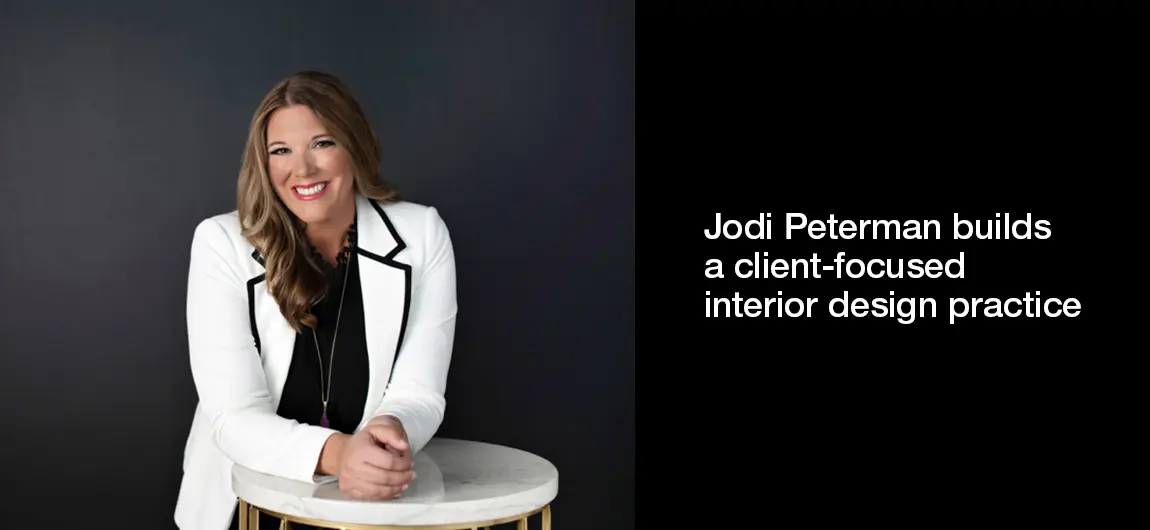
Jodi Peterman is the owner of Elizabeth Erin Designs, a full-service interior design firm known for creating timeless, functional spaces tailored to each client’s lifestyle. What began as Jodi’s passion for design has grown into a respected business serving clients with a commitment to exceptional service and practical, elegant solutions.
View transcript
Luxury Interior Design – Jodi Peterman, Elizabeth Erin Designs
[00:00:00] Sanjay Parekh: Welcome to The Side Hustle, the Small Business Podcast, powered by Hiscox. I'm your host, Sanjay Parekh. Throughout my career, I've had side hustles, some of which have turned into real businesses, but first and foremost, I'm a serial technology entrepreneur. In the creator space, we hear plenty of advice on how to hustle harder and why you can sleep when you're dead.
[00:00:21] On this show, we ask new questions in hopes of getting new answers. Questions like, how can small businesses work smarter? How do you achieve balance between work and family? How can we redefine success in our businesses so that we don't burn out after year three? Every week I sit down with business founders at various stages of their side hustle to small business journey. These entrepreneurs are pushing the envelope while keeping their values, keep listening for conversation context and camaraderie.
[00:00:56] Today's guest is Jody Peterman, the founder of Elizabeth Erin Designs a luxury interior design firm based in Fort Walton Beach Ford. Jody, welcome to the show.
[00:01:06] Jodi Peterman: Thank you so much for having me on. I'm super excited.
[00:01:09] Sanjay Parekh: So I'm excited to have you on too because I think we're going to get into some interesting things and maybe you'll be able to give me some tips about interior design of our home. But that's not really the point of this podcast, but we'll see what happens. But before we get into all of that, give us a little bit about your background and what got you to where you're today.
[00:01:26] Jodi Peterman: Oh my goodness. Okay, so I graduated with a degree in fashion design and I moved out to New Jersey and I always wanted to do interior design.
[00:01:35] So I took a couple courses in college, didn't end up going that route with the fashion route. Moved to New Jersey and was a mom of twins. And I'm like, I have to have, there's something missing from my life. I love my girls, but there's something missing. So I started another company with a business partner to start off, and we started interior. She had a interior design company already, and I learned through the rest of the stuff through her, and then decided to take over the company in 2000 and seven. But we, I officially joined her company in 2004, and the rest is history. Lots of moves. Lots of pivoting.
[00:02:10] Sanjay Parekh: Yeah.
[00:02:10] Jodi Peterman: All the things.
[00:02:12] Sanjay Parekh: Is this the first time you've done something entrepreneurial or did you do anything entrepreneurial as a kid or entrepreneurs in the family?
[00:02:18] Jodi Peterman: I mean, I had my own babysitting company where people would hire me to do babysitting. My grandma, it's in our blood. Like my grandma had a a business rich Ard on knits and she used to sew jogging suits, you know, the cool eighties jogging suits with the things applicate on the front, like she used to do that for people. And she started her own company and it's just fall from there.
[00:02:43] Sanjay Parekh: Yeah. So babysitting hustling then, when you were young, did you do anything marketing wise when you were babysitting or just like.
[00:02:50] Jodi Peterman: Oh yeah. Word of mouth. No. Made flyers.
[00:02:53] Sanjay Parekh: Love it.
[00:02:54] Jodi Peterman: You know, did the whole thing. Went door to door. Did all that.
[00:02:57] Sanjay Parekh: Door to door. Oh, wow. Yeah. That's awesome.
[00:03:00] Jodi Peterman: Yeah, our town was small. Our town was small. There's so many people there. It was good.
[00:03:04] Sanjay Parekh: Yeah. Yeah. I like it. So, okay. So you started this business up with a partner and then decided to of take over the entire business. How did that go?
[00:03:14] Jodi Peterman: Yeah, and she was going to be out and moving and working with her partner on their, you know, his business.
[00:03:21] And I had the opportunity come up, so I was like. Talked to my hu my ex-husband, and I said, Hey, how is this going to go? Do you want to do, are you okay with me doing this? And he's like, yep. Don't really have a choice. You want to do it or you're headstrong, just go for it. So I took over the company and two little girls in tow, I would, and promises of, if you're really good and let me get my stuff done, we will go to the decorating store. You know, and they could go to Michael's. They were into like dinosaurs and like, you know, all the animals, the zoo animals. They were like, they're not girly girls. They like, they were going to open. They were going to be paleontologists at two years old. They would tell people they were going to open the first free zoo in New Jersey. Like it was hysterical. I loved it.
[00:04:02] Sanjay Parekh: Yeah. Yeah. I kind of like that. Are they still destined to be pale or are they've given up on that dream?
[00:04:09] Jodi Peterman: No, that's how we ended up in Florida. One's in was in the Air Force as a linguist, and then the other one is in Chicago working for a up and coming bakery that's gluten free, that they're just getting all their things into Whole Foods and stuff like that. She's super excited.
[00:04:26] Sanjay Parekh: Oh, wow. Yeah. That's very different than dealing with dinosaurs. Both of those. I guess in the bakery maybe you can bake them in the shape of dinosaurs and I don't know, maybe it's an option there.
[00:04:34] Jodi Peterman: Absolutely.
[00:04:35] Sanjay Parekh: Who knows? You should what that girl, maybe you should make that suggestion and they'll really take off. Okay. So okay. You're, so you're going into this business and then you're taking over the whole thing. Was there anything that made you nervous? On this process about like now it's all on you at this point. Right? And if so, did, how did you get over that for yourself?
[00:04:56] Jodi Peterman: Well, a lot of it was me just like, I was just very headstrong at seven years old.
[00:05:01] I told my family where I was going to go to college and what I was going to do. I was going to do design and I was going to go to Iowa State and I did it. I've always been like, who knows? At seven years old, like, I thought that was just typical, like everybody knew where they were going and it was like, that's.
[00:05:14] That's the dart that I, you know the bullseye and I just threw it, and that's where it's going to go. Didn't know that wasn't the case for everybody, but like, I knew I wanted the business and I just, I'm like, I don't have an option. I don't have an option to fail. I've invested a lot of money, or we, at the time, my husband and I, ex-husband and I invested a lot of money into the business.
[00:05:34] It's not going to fail. Like, I'm not going to use money. There's no option for me. Like failure's not an option. I just manifested it and I'm like, I'm bringing my girls with me. Like I started a mom's club. We would do this babysitting swaps where one mom would watch if you had two kids, you earned so many hours and you could watch other people's kids on your day off. And then if I had a client appointment, they would watch my kids. So I wasn't, you know, having to pay a babysitter on top of everything. Speaking of babysitter, like I just figured out ways how to make it all happen and come together because like failure's not an option. Yeah.
[00:06:06] Sanjay Parekh: I got to say at seven years old I was not figuring out what college I was going to, I was doing I was reading comic books and doing door-to-door sales of custom and printed holiday cards. I love that. So I was doing the, I love that the startupy thing at that age, the entrepreneurial thing at that age as well. But I do like it. I appreciate the the manifesting, you know, a decade in advance of where you were going to go.
[00:06:30] Jodi Peterman: Yeah. Like the, all the how's and like whatever was, you know, a little crazy.
[00:06:33] But like with my partner, she was like very insecure about everything. And so she would tell me, you're not really good at this. You're not really, because it kept me needing her. Right. Like, here I am, 20 something with twins. Like a little unsure, you know? So like, you know, you coming in and you have to like, you know, just.
[00:06:49] Get over those things and I'm like, I'm just going to do it. Like I know this is what I'm supposed to be doing, and so I'm going to do it.
[00:06:54] Sanjay Parekh: Yeah.
[00:06:54] Jodi Peterman: And it wasn't easy.
[00:06:57] Sanjay Parekh: Yeah. And I think that's like, it's a common refrain, right? Like with entrepreneurs is that, look, there's always things that you don't know how to do. You just got to get in there and do it the best you can, and you're. It going to fail? Yeah. And that's okay. And you'll get better.
[00:07:10] Jodi Peterman: That's okay.
[00:07:11] Sanjay Parekh: Right?
[00:07:11] Jodi Peterman: It's absolutely okay. I think if I, if my now self could talk to, when I first took over the business self, like if I could give myself any advice, it would totally be just who is going to hit the fan?
[00:07:25] Like, it's going to hit the fan everywhere. It's okay. Like you need to get tools in your toolbox to help regulate your nervous system so that you can like. Go along with the flow. Like I wish I would've learned a lot or knew a lot about regulating your nervous system because I think a lot of entrepreneurs are also people pleasers. You want to make people happy. There's a reason why you're doing it. And sometimes you can people please yourself to death until you're the last one. Like there's no pleasing, there's no time for you to do anything for yourself, and that's really a detriment to your company, your clients, your employees and so on.
[00:08:02] And so both it's just. That's what I've been learning the past three years that I wished I would've known then, but then I wouldn't be who I was if I didn't go through all that and be able to help people.
[00:08:12] Sanjay Parekh: So, that's true. Yeah.
[00:08:13] Jodi Peterman: There you go.
[00:08:14] Sanjay Parekh: Yeah. So let's talk about the business a little bit. And thinking about like, where you've come from and now gotten to in terms of clients. So what was the client. Kind of prototypical ones that you dealt with before maybe even when you were with a business partner and now the ones that you deal with, and has that changed over time for you?
[00:08:35] Jodi Peterman: It sure has. It sure has. So with my business partner we would go to clients or I would go to clients and they'd be like, I have $80,000 for one room. And now mind you, this is like in the early two thousands, like 2004, $80,000 is still a lot of money, but it was a lot of money for one room. Right. And would be on what I call the husband payment plan.
[00:08:55] They would give me part cash, part check, and part card. Right. And I'm now, we get to design this room with this amount of budget in mind. It was just, it's totally different. Like that's the part of like. Right now what I talk a lot about is livable luxury. And a livable luxury isn't just expensive things like buying something because it's expensive to have in your home to talk about it.
[00:09:16] Like, those aren't the type of clients I want anymore. Those are not what we're doing. A livable luxury to me is that the clients that I'm trying to manifest now are the clients that we're bringing to us are, it's intentional design. So it livable luxury is. Having the forefront to not work off of allowances, which is what a lot of builders want you working off of allowances, making decisions based off of the dollar amount that they put into that slot. Cabinets, get this amount, doors get this amount, cabinet hardware gets this amount that's fine and good until you start having to design a kitchen. You have to pick out your appliances. Well, now you're like 10 to 15,000 over no big deal. Then you start cabinets, and then you're over and you're over.
[00:09:57] You're over so much you don't realize how over you are because you're signing off on things as you have to approve them. Not seeing the whole thing come together as a whole. Right. Maybe you wouldn't have spent that much money on appliances had you known. To get the design you want, you're going to end up spending X and that's why 80% of projects go over budget by 20 plus percent, which I happen to think is more than that. But that was just. On a realtor website. And that's why people get frustrated and they don't like giving out budgets to people because they think that you're just going to blow it. But when we ask for budgets, we are design forward. We are design forward company where we design things the way you want it, the way you tell us you want it.
[00:10:35] Then we show you visuals and then we, it's our five D process. And then we work with your contractor and say, okay, these are the designs they want. How much is it going to take? To get this, because we're not going off of concepts. This is the exact cabinet, this is the exact yeah. Backsplash. This is the exact grout we want to use.
[00:10:53] This is the exact hardware for the window trades. Everything's done and put into the budget with are you got to be outta your house when we're doing the remodeling? Let's put money in for an Airbnb. You need money for meals, let's put that in there. Like, everything we can think of is going into this budget. Right? So then you don't end up having to like, where are we going to come up with this money from? Or having to say. Man I have, which happened to one of my clients, it was a $2 million home, and she brought me in at the very end to help pick out light fixtures. She had 55 light fixtures to pick out, and I asked the contractor how much of the budget was left for this, and he's like, what budget?
[00:11:32] He had no idea. She was on a budget. She had a budget. She was $1 million over that budget already. He had not been showing her dollar amounts at all, and now I've got to pick out 55 light fixtures with, she has over a million dollars over budget. Like what am I supposed to do? So I had to break that news story. Right?
[00:11:48] Sanjay Parekh: Yeah.
[00:11:48] Jodi Peterman: Yeah. It was not good. So designing it the way we do it, we take a lot of time to design it upfront, and then we work with the contractor saying, now let's give that accent wall a dollar amount. Yeah, let's give that light fixture a dollar amount. So then you can say, as a client, you know what? Light fixtures really aren't the thing for me. I really want that cool accent wall. Let's go less expensive on the light fixture so we can get that. And then we kind of wiggle it down.
[00:12:12] Sanjay Parekh: Yeah.
[00:12:12] Jodi Peterman: Into where the lane it needs to be in, if that makes sense.
[00:12:15] Sanjay Parekh: Yeah. So let me ask you about this. You know, a lot of people do that process of working just directly with a contractor and kind of just kind of going down that path, is there like a fear or reason why people don't engage with somebody like you, like a designer before? Like what is the reason and how do you deal with that reason?
[00:12:38] Jodi Peterman: Well, it's education is how I deal with it, but it's fear of going over. Designers have been like notorious for like, I don't know how many people I've talked to. One, one woman just hired me from San Antonio because her condo, she had hired a designer.
[00:12:51] He just went like, took all the money and bought what he wanted and 10 months later she's still not done with her house. So she fired him and hired me and I'm like, you are going to see everything upfront. It's going to take us a while. It can take anywhere between. Eight weeks and up to 12 weeks to get the design done to a point where we can get bits. But it's going to be done with intention. It's going to be how you want to live, and there's going to be a rhyme and reason, and you're going to see visuals to go along with that. So you can say, yeah, not worth it to me. I love that wallpaper, but nah, let's just do an accent color instead. Whatever. It's how it's important to you. So then we'll show you how it all ties together. But yeah.
[00:13:27] Sanjay Parekh: So the challenge I hear is, look, you're in an industry. Where a lot of people act in a certain way that has caused clients. And I think I understand it too because honestly, like most of those people that work with these clients, it's a one and done thing, right? You're never going to, you're unlikely to get repeat business from this person.
[00:13:48] Jodi Peterman: I always get repeat business.
[00:13:49] Sanjay Parekh: Right?
[00:13:50] Jodi Peterman: I get a lot.
[00:13:51] Sanjay Parekh: But for the people that are in the industry generally, that, that's probably the way that they're dealing with this and they're acting and that's why they kind of, you know, it doesn't matter to them necessarily, if blow budgets and things like that.
[00:14:03] Jodi Peterman: I think a lot of designers are pretentious. I think it's like they know better and we promote it more as a team effort, right? Like we want to show you based off of like, okay, so I always say there's two things. There's routine and ritual, right? The only difference routine, a routine and ritual is intention.
[00:14:19] Routine is you go to take your kids to school and you don't even think about it. You go to your favorite coffee shop, you don't even think you drive there and you're like, how did I even get there? The only difference between that. A and a ritual is like, I'm going to sit down and think about what I'm doing before I do it. There's intentionality behind it. So when we go into design, my designers, we do it with intention. We're going to pull information out of you. It, that's why the design process takes so long and people get really annoyed. They're like. Okay, where's my design? I paid you yesterday. And I'm like no.
[00:14:47] There's intention behind it. We're intentionally doing this to set us up for success. The design part takes longer, but then once the design is done the contractor has everything they need to move it forward. Then it's on the contractor. because we've done our part. You know, so yeah, a lot of combating that is like literally just education and teaching people. There's a better way because what I'm doing is not brain surgery. I feel like every designer should be doing it this way, but the reason people don't want to do it is they feel like designers are expensive. We clog up the we're a cog. That c clo clogs up the whole flow and system when we're really not.
[00:15:19] And a lot of that has to do with builders because builders are used to, sometimes builders will work with the realtor and make the realtor do the designing or their wives or whatever, and it's, there's it. It's not the five D process. The five D process really puts the client in control of the budget. They also think that hiring a designer is going to be so, so crazy expensive, but when they don't realize is like one of my clients hired us and she's like, okay, I'm just going to hire you to do the furniture part of it. I'm going to do all the selections. Well, because she did all the selections. She didn't do a paint chart like I told her.
[00:15:49] So she called me after the painting was done and she didn't realize the builder's standard practice was to use flat paint on the walls unless otherwise noted. Well, she had four little girls under the age of six. Do you think the builder even like, why didn't the builder know like, Hey, are you sure you want to use flat paint? You sure you don't want to upgrade? No. They didn't have those conversations because they didn't care. Their standard is put flat paint on the walls if you want. She had to pay $15,000 to repay just the main floor of her house. I'm like, do you know how much design work you could have gotten for $15,000? Like.
[00:16:20] That's a lot. So a lot of people think we're like a waste of money and it's not. It's to help protect your money. And just like that one client that went a million dollars over budget that she didn't even realize is because. Of the communication that was lacking, very much lacking.
[00:16:36] Adam Walker: Support for this podcast comes from Hiscox committed to helping small businesses protect their dreams since 1901. Quotes and information on customized insurance for specific risks are [email protected]. Hiscox, business insurance experts.
[00:16:57] Sanjay Parekh: So okay. Let's talk about you know, the business as a client focused business there. There's a lot of service businesses like this. And how do you think about obviously you've kind of already mentioned that you have repeat clients which is I think unusual maybe inside of this industry. But how do you deal with you know, the other side of it, which is difficult? Clients. The ones that. Keep changing their minds, kind of mid-process and things like that.
[00:17:27] Jodi Peterman: Like a lot.
[00:17:28] Sanjay Parekh: How do you.
[00:17:28] Jodi Peterman: Of love and a really good contract because what we do in the beginning, that's why we take more time to de the design up front. Because if we have a true north, if we have visuals that we show a client that's our true north, when they came back after a weekend of going to all the home shows and getting more things on Pinterest, we say, okay, but you're original. Reason for doing X, Y, and Z is this doesn't align or it does align and this is how we can do it. And this is the additional fee it would be for us to redo all the documents and get everything on board and readjust so they have a choice.
[00:18:08] Sanjay Parekh: Yeah. Yeah.
[00:18:09] Jodi Peterman: So it's not saying no, it's just our contract is very specific about when I do a, we do a complimentary consultation for all of our clients with me for an hour, and I get to ask questions and show them a little bit of our process so they can see if we're a good fit.
[00:18:25] But I also need to understand what is their timeline? Is it realistic? Do you have a budget? Is it realistic? One client called me and said they wanted to move the kitchen, do an addition. A whole new main floor remodel and they had $200,000 and move stairs that were going downstairs into a whole nother location. And I said, just moving the stairs and moving all the plumbing is going to be 250. Like you need to double or triple that dollar amount. Like that's not going to happen. Their jaws dropped.
[00:18:52] Sanjay Parekh: Yeah. I thought you were about to say they wanted it done in a week or something like that.
[00:18:57] Jodi Peterman: No. It's the dollar, like people don't know what it costs. Right. Which is why I love doing it the way we do it, because it allows you to say what's important to you because what's important to me and what's important to you are two different things. Yeah. Like what's important to you versus your partner is two different things. Like, do you want to spend, you know, $5,000 on that really cool light fixture or do you want to have heated floors in the bathroom?
[00:19:17] Like when you get a dollar amount assigned to something, you can say. Hey, you know what? Like, I guess the heated fours really aren't. That big of a deal. I'd rather put the money into this. Like you've come up with all these things that you love. Yeah. But then maybe it's not worth it when you see the price tag.
[00:19:29] And that's why we do all the designing. Then we take all of our documentation to the contractor. Yeah. The contractor bids it out, gives us price, and then we all meet as a team. Yeah. It's not like the contractor over here, the designer over here and the client, like somebody needs. We're both all need to be protecting the client and making sure their vision comes to life. And that's why we do the partnership way.
[00:19:48] Sanjay Parekh: Do you feel like just one of the things I feel like this, in this industry, it's. You know, the pricing and the cost of all these things are very opaque. And one of the things that I feel like is when you see home shows and you see the things that they build on there, and then they show you like dollar amounts. I don't know that those are rooted in reality necessarily.
[00:20:09] Jodi Peterman: No, they're not.
[00:20:10] Sanjay Parekh: And do you, they're not. Do you feel like that is something that has hurt in terms of what people's expectations are?
[00:20:15] Jodi Peterman: Yes.
[00:20:15] Sanjay Parekh: In terms of what they can get for the dollar amount?
[00:20:17] Jodi Peterman: Yes, absolutely. I call it HGTV syndrome. That's ex, like you see it like I can get new floors for two, $2,000.
[00:20:23] Like that is not. That is not realistic. They're getting a deal. It could be the certain, that episode, like I watched an episode that was really kind of designed forward at the time, but it was like 15 years ago. So the pricing they gave it is not even like you have to look at when the episode's even done. Right. You know? because with, you know, there's a lot of things that's, you know, copy, you know, just. On rerun with all things. So you just don't know what you're looking at for accuracy. And plus, you know, you see a lot of really cool ideas, but then like, how does that translate into your own home? Like how does that relate to the four plan and footprint that you have currently? And so we, you know, take our time and do elements of that to.
[00:21:01] Sanjay Parekh: Yeah.
[00:21:02] Jodi Peterman: Put on there. But yeah.
[00:21:03] Sanjay Parekh: Let's talk about balancing kind of business and life now. Talked about having.
[00:21:10] Jodi Peterman: My favorite topic.
[00:21:11] Sanjay Parekh: Twin girls and they've kind of grown up in the business with you along the way. Like how do you think about that in terms of balancing kind of your time doing this and then your time with family and friends and self and like all of those other things?
[00:21:27] Jodi Peterman: Yeah, that's so important. That's been my journey this year and it'll be my journey going in next year. I just got back from a, I gave myself a two week retreat with like a little to no technology and just kind of worked on where I wanted business and Elizabeth Erin Designs to go in 2026. And what type of a leader did I want to be? I've been on this with like a lot of people on this, you know, this journey, awakening journey, whatever you want to call it, like self-reflection journey because when you are in that flow. Things just come into flow, like things just slow down and happen when you let go of perfection of it. Perfection isn't in control.
[00:22:06] I could do a whole hour long plus topic on that part of it. But yeah, it's just when you're taking care of yourself, you're not pouring from an empty cup. Like today, for example, I was supposed to go to a networking event later tonight, and I'm like, I. My sister just left. I'm a little tired. I need to do a little bit more work on marketing. I'm like asking myself, do I really need to drive an hour and a half to this event, do the two hour event, and drive an hour and a half home and get myself all stressed out and not set up for success tomorrow? What's more important? No, I want to be set up for success tomorrow, so I'm going to not go to that event.
[00:22:41] I'm going to get my marketing done today. I'm going to get myself set up for success tomorrow so I can have it. It's okay to say no, and it's okay not to do all the things. It's just prioritizing yourself first, because if you are completely depleted and empty you hear this all the time, you can't pour from an empty cup. But I don't know if I really understood it until I went through like. Baby stepping. Like, what does that mean? What does that mean? You can't perform an empty cup? How do you have a full cup? Well, it's filled when you have joy. Well, what brings me joy? Well, I don't know because I've been taking care of everybody else for so long.
[00:23:14] I don't even know what would make me happy anymore. Like what makes me happy? What gives gets me excited? What part of the business do I love doing and what parts don't I love doing? Can somebody else do those? Do I automate those? Do you know, just sitting down and thinking about all of that, like really taking time for yourself. To think about what you want to do, because when you start living in alignment, then all the things just start happening. It's amazing.
[00:23:39] Sanjay Parekh: So it's interesting. So you're talking about taking time and everything, but your business, you've got clients kind of nationwide, you've got multiple offices in different states, different time zones. So how does same time zone such?
[00:23:52] Jodi Peterman: Yeah, so the panhandle is actually in central time zone, so we're all in the same time zone.
[00:23:57] Sanjay Parekh: Oh really?
[00:23:57] Jodi Peterman: Isn't that weird? I know, I thought all of Florida was in East coast, but it's not.
[00:24:01] Sanjay Parekh: So, wait. Des Moines is in the same time zone as really?
[00:24:06] Jodi Peterman: Yeah.
[00:24:06] Sanjay Parekh: Okay. So I clearly, I did not look this up beforehand, so, okay. So that helps in terms of alignment, in terms of like the day, yes. But like location wise it doesn't help. So you've got people on the ground, but are you traveling a lot in between these places for work?
[00:24:24] Jodi Peterman: Yeah. I have a client in Florida that moved to Asheville, North Carolina. I go up, so what we do is we have the discovery call.
[00:24:30] It's always virtual, and then when people decide they want to sign on, then we'll do an exploratory meeting where a designer will come to their place, measure. So like a two to six hour appointment where we talk about like, what do you want? Let's pull up pictures, let's talk about this. Like, I have an idea, are you open to this?
[00:24:49] And then we just have those kinds of con conversations and making sure we're sourcing the right thing. Like setting those intentions. Like how do you want to live in this space? Like, do you want to, when we redo this primary bathroom, do you want it so you're aging in place? Do we need to put grab bars in? Do you want Its sunken down like. Do you want it? So it's like super easy to clean? Like do we want a protective coating on the glass so that everything just slides off? You know, like what type of things are important to you so that we can, when we're designing that, we make sure that we're designing it with.
[00:25:18] Intention with a ritual. So our exploratory meeting is a ritual. And so that's in person. And then the next meeting may or may not be in person, which we go quiet for like three to four weeks. We're designing it. We're doing all the renderings. We're ordering all the samples. And then, so if it's. If it's virtual, we'll send you a box, a cute little box with all the samples and your designer has a set and then we kind of go over the documents in person. And then if it's not, if they come there, you know, because it all depends on the weather too. Like, we don't want to hold designs up based on the weather. If we can't get there, it's easy to ship a box of samples and then just kind of go over, you know, it there. Yeah. At least in Iowa or like, you know, Tennessee, you know, places that get the SNOW, although Florida got, we got eight inches.
[00:26:02] But I was stuck in Iowa. I missed all the snow here last year. But so like that's a whole unusual thing. So it's kind of like a hybrid. It's kind of like an in-person and virtual, but yeah, a lot of times I'm traveling, like we do a lot of multi-family properties too. So I partnered with a company out Brooklyn during the. COVID years. And so I was traveling a lot for them. And we were in Virginia Beach, we were in Tennessee, we were in Texas, we were in, you know, Florida, Miami. We were like all over the place. So we just kind of learned how to do it there. And then of course when we do, if there's furniture involved and there's installations we're, I'm always there, or some, one of the two of the design team members are always there with the movers, making sure i's, are dotted, t's are crossed. Right. That's part of the concierge service that we offer.
[00:26:44] Sanjay Parekh: Yeah, makes sense. Yeah. Okay. Jody last question for you. If you were talking to somebody that's thinking about launching a business like yours or doing a side hustle, what kind of advice would you give to them?
[00:26:58] Jodi Peterman: Oh my gosh. I would say like, make sure you have your true north. Like why are you doing what you're doing? Because if you're doing it for money it's going to be a rough road to succession. You've got to be doing it. There's got to be some other passion involved there, and then things are going to go awry. So having tools in your toolbox, just like if you were, you know, having somebody over and you're cooking a meal together and you're like chopping away and you like cut your finger, like you've got tools in your toolbox.
[00:27:25] For medical to like, you know, super glue together, like bandages, neosporin, something. And so a lot of times I don't think we have mental tools in our mental toolbox to help us through things. So whether it's, you know, box breathing, which is just breathing in for four, holding for four, exhaling for four, holding for, and doing that box breathing or walking outside barefoot just to feel that energy from the grounding or X, Y, and Z.
[00:27:52] You have to have some sort of tools in your toolbox. To help you make the best decisions forward, and always pour into yourself. Be a little selfish because you're going to be able to give more if you have your cup full.
[00:28:05] Sanjay Parekh: Love it. Love it. Okay, Jody, this has been fantastic. Where can our listeners find and connect with you online?
[00:28:11] Jodi Peterman: Okay. We are elizabetherindesigns.com and Erin is spelled ERIN. So it's elizabetherindesigns.com. We are on. Instagram, TikTok. I have a personal TikTok. We have, I'm on LinkedIn. We have two LinkedIn's personal, like everything. We're on everywhere. Elizabeth Erin Designs.com.
[00:28:28] Sanjay Parekh: Perfect. Thanks so much for being on today.
[00:28:31] Jodi Peterman: Thank you so much for having me. It's been a pleasure.
[00:28:38] Sanjay Parekh:Thanks for listening to this week's episode of the Side Hustle to Small Business podcast, powered by Hiscox. To learn more about how Hiscox can help protect your small business through intelligent insurance solutions, visit Hiscox.com. And to hear more Side Hustle to Small Business stories, or share your own story, please visit Hiscox.com/side-hustle-to-small-business. I'm your host, Sanjay Parekh. You can find out more about me at my website, SanjayParekh.com.
Subscribe to our podcast



Did you start your business while working full-time at another job?
Tell us about it! We may feature your story in a future podcast.