Creative Direction for Social Impact: Jo Skillman's Story



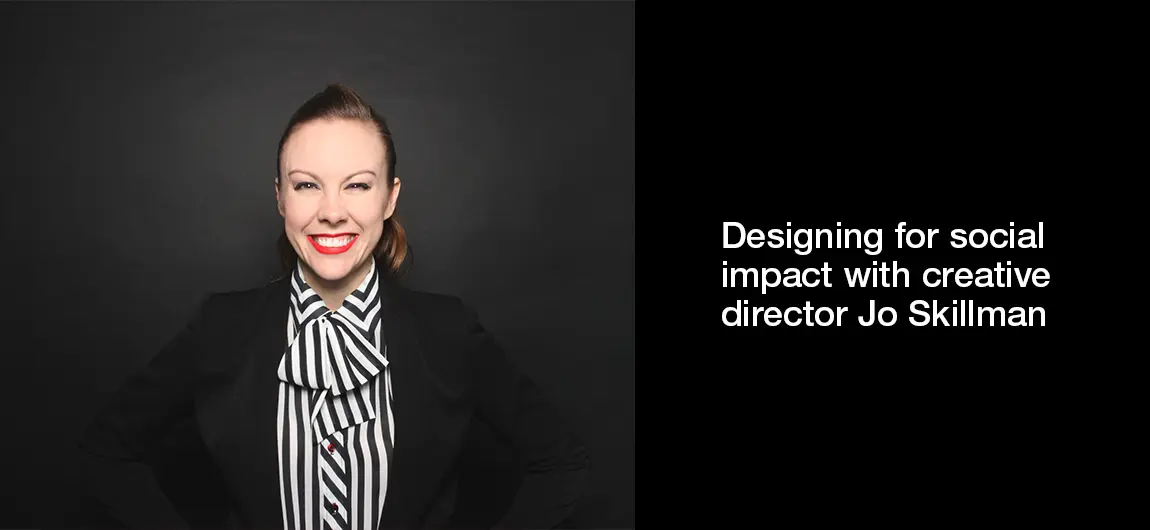
Jo Skillman is a Houston-based Creative Director and the Founder of Jo Skillman LLC. Known for her thoughtful, cause-driven work, she’s partnered with clients like the City of Houston. With expertise in both design and copywriting, Jo brings a well-rounded, strategic approach to every project.
View transcript
Creative Direction for Social Impact – Jo Skillman, Creative Director
[00:00:00] Sanjay Parekh: Welcome to The Side Hustle to Small Business Podcast, powered by Hiscox. I'm your host, Sanjay Parekh. Throughout my career, I've had side hustles, some of which have turned into real businesses, but first and foremost, I'm a serial technology entrepreneur. In the creator space, we hear plenty of advice on how to hustle harder and why you can sleep when you're dead.
[00:00:22] On this show, we ask new questions in hopes of getting new answers. Questions like, how can small businesses work smarter? How do you achieve balance between work and family? How can we redefine success in our businesses so that we don't burn out after year three? Every week I sit down with business founders at various stages of their side hustle to small business journey.
[00:00:43] These entrepreneurs are pushing the envelope while keeping their values. Keep listening for conversation, context, and camaraderie. Today's guest is Jo Skillman, a creative director based in Houston Texas. Jo, welcome to the show.
[00:01:09] Jo Skillman: Thank you. It's great to be here.
[00:01:12] Sanjay Parekh: So I'm glad to have you I think this is gonna be a really fun in and interesting conversation. But before we start jumping into all of that, give us a little bit about your background and what got you to where you are today.
[00:01:17] Jo Skillman: Oh yeah, totally. So unlike a lot of people that I know, my degree is actually the exact thing that I'm doing right now. So I have a, B, FA in communication design. I started life as a graphic designer moved up, became an art director. I have always loved writing and writing Copy became a creative director. And I got my chops at ad agencies, creative agencies, brand strategy agencies. I worked a little bit in-house for a tech startup and eventually after being told like 18 times by the people around me I started doing my own thing. So now I have Jo Skillman, LLC, because you know, when you're a working creative, you just name your company after yourself, I suppose.
[00:02:04] Sanjay Parekh: That's I like that. The creativeness kind of fell apart there, but I like how the fact is that you knew from the very beginning what you wanted to do and you stuck with it all the way through. There's very few of us, myself included that actually make it through all of that. So kudos to you on that. Oh, thanks. Is this the first time you've done something entrepreneurial or is there anybody in the family that was entrepreneurial that, you know, as you were growing up.
[00:02:31] Jo Skillman: Oh yeah. I mean, when I was in third grade, I think I was selling hand lettered posters.
[00:02:36] So when I said I started life as a graphic designer, I was not actually being that, that facetious. But also my dad is an inventor, so he started out in jewelry and metalsmithing and that somehow transitioned to oil and gas pumps, valves, that kind of thing. And so he had been doing that since before I was born. So I grew up kind of with my dad either traveling or you know, in our front yard, messing with things and making blueprints and all that jazz. So I knew from a very young age I did not want to be an entrepreneur in charge of my own business. Yeah. Here we are.
[00:03:14] Sanjay Parekh: Funny how that all works out, right? I know. So I gotta ask like, how much jewelry do you have? If your dad was a jewelry maker for a while?
[00:03:23] Jo Skillman: Oh gosh. You know what? I only have like little he did that in like his younger years, so I have inherited some pieces. Like an aunt gave me like a necklace he'd made, my sister has a belt buckle. But it's like throwback stuff. I don't have anything current or like created with me in mind whatsoever.
[00:03:44] Sanjay Parekh: Well, I would imagine a big belt buckle fits right in, in Texas, so you know that Oh yeah. You pull that out and wear it all the time. Right.
[00:03:52] Jo Skillman: Yeah, well, unfortunately my sister got it, so I will have to get it from her first.
[00:03:56] Sanjay Parekh: Man. There you go. Okay, so what caused you to kind of go all in then? So you were a creative director working your way up. What caused the kind of urge and itch to launch your own thing, even though you just named it for yourself and nothing else?
[00:04:15] Jo Skillman: You know I was very difficult to convince. I think in college I had some inklings that it might be fun to, you know, go out on my own and be able to work remotely and travel and, you know, the ways that we often romanticize entrepreneurship. But after my first job and all of my other ones, all of which had been founder led, so I had kind of a, like an up close and personal front seat to these people kind of going, oh my gosh, I have to figure out insurance and you know, and I have to figure out my own brand and I have to, you know, go have 18 meetings on a Sunday. All these things. I was kinda watching this and I was like, okay maybe I don't, maybe I don't. And then I got laid off like three times in Four years. It was just some silly things.
[00:05:04] We had companies merge and folks, someone shuttered the company. And I just kind of found myself having to do business development anyway just to find my next role or to find freelance work in the interim, which I had always done. So I had always, like, this was truly, you know, like a side hustle come to life because I had always side hustled.
[00:05:28] Eventually, I just thought, you know what I seem to be able to actually get work when I look for it, and I really enjoy working with my clients and because before I would talk to clients maybe once and then go be in the background and be like, making things on my computer. And so, I was actually client facing and I liked it and it wasn't too bad and I got to set my own rates and I got to set my own hours and I was like, this actually seems feasible. Like I think I can in fact actually do this and it would be okay. And so it was not like a snap decision or like a boost of optimism. It was literally just I think I'm doing this already and I need to just call it what it is.
[00:06:14] Sanjay Parekh: And the great thing is you live with the person that could lay you off and so unlikely they'll lay you off, which is yourself. So, you know, there you go.
[00:06:21] Jo Skillman: So I'm trying.
[00:06:25] Sanjay Parekh: So okay. So going through that process, was there anything that made you nervous about doing this?
[00:06:34] Jo Skillman: Oh yeah, absolutely.
[00:06:35] Sanjay Parekh: I mean, sounded like it took a while to get there, right? Like what was the thing that.
[00:06:38] Jo Skillman: For sure, for sure. It was like 90% fear of business development. I had tried networking events historically, and when you're a graphic designer, what that seems to consist of is people coming up realizing they don't need you, and just turning around and walking the other way or. Someone going, oh my God, I need a graphic designer. If I get you pizza, will you build my logo? And you're like, no. Do you know how expensive logos are? And so I was just kinda like, networking. My God, this is not serving me well. I clearly, I should never be in, in business development. And then instead my fiance kind of helped me realize, he was like you get business like, no one I've Ever seen, stuff falls into your lap. You love going to lunches with people. You voluntarily go to events. Do you know how few people do that? You're stellar at this. I think you just need to, you know, be in better places or go to events that are more aligned with what you actually do.
[00:07:41] And I thought, oh, you know he is right. Like I, I have always been able to easily reach out to folks and go. Hey, do you have any work for me? And they're like, yeah, I would love to work with you. And they throw me work and it turns out that it was not that scary and it was okay and I could write off all of my brunches.
[00:07:58] Sanjay Parekh: Well, was he disappointed that he wasn't gonna just get free pizza all the time because you went down that path instead of the pizza for logos path.
[00:08:07] Jo Skillman: I mean, I think he prefers that I can just buy him pizza anytime that he wants and not just when I've designed a logo.
[00:08:16] Sanjay Parekh: I like that. Okay. One other thing you kind of mentioned this and touched upon this. You talked about the romanticized version of, you know, being a business owner and remote work and whatever, like, how much of that has actually come true for you? Like, have you ever done remote work or is that not a thing? Like which pieces? Did you think existed but don't actually exist for you as a side hustler, small business owner.
[00:08:43] Jo Skillman: Oh gosh. I think because I was so opposed to being a small business owner, I've only had mostly pleasant surprises. I mean, I grew up, you know, with my dad who would work crazy hours and was, you know, would like panic when the UPS truck missed a pickup or something. And so like my anticipation was just all of the negative things.
[00:09:03] And so. Becoming my own boss and actually experiencing the positive things that entrepreneurship is in fact known for. Like, we're all just very pleasant and unexpected side effects for me. But I have gotten to work remotely and in fact, I drove into town this morning from out of town because I took a long weekend and didn't have to be anywhere.
[00:09:24] And I think that's one of my favorites. I definitely have found the idea of like working super remotely, like traveling the world and being in other countries is not a thing that I can do while working. Because I'm just mad that I'm not like full-time outside experiencing everything. Right? I'm just like, I'm paying for this expensive hotel to like work for like seven or eight hours and I'm only getting the evenings, and so I've just, I've accepted that I have to vacation like everyone else.
[00:09:57] In small chunks with a, you know, vacation email responder on. And that's fine, but getting to like road trip around locally and, you know, spend a little more time at a friend's house or with my family has been really fun.
[00:10:11] Sanjay Parekh: All right. That, you know, it's an interesting insight because we do always talk about how, oh, you go anywhere in the world and work and maybe that's just not
[00:10:18] the right thing for every entrepreneur. Even though in theory that's the thing that we're all shown that this is what is possible. Okay. So let's talk about why you decided to go into the creative aspects of all of this stuff, even though it sounds like it started out in third grade, but like what drew you to creative industry?
[00:10:42] Jo Skillman: I wanted to be an artist from my mom. Kept a little cute child books where you ask your kid questions every birthday and then you fill them in. And I said artist. Up until I think fourth grade, I learned that there was such a thing as a designer. And then I switched and I just said designer for up until, you know, she stopped keeping the books.
[00:11:05] And I love design specifically because like just the pragmatist in me likes the problem solving. So I think if you're an artist, you're like putting so much of yourself out into the world and into the work. And I preferred having a specific challenge given to me by someone that I could then figure out how to solve.
[00:11:26] And so with creative work, a lot of people kind of misunderstand it as like, oh, you know, designers, they make things pretty which is not the case at all. We are very much a person that is in the room for business challenges and communication challenges and behavioral psychology is very tied into what we do because you are in fact trying to change people's behavior.
[00:11:48] And I love that. And I did not foresee this, you know, when I was getting my degree in kind of early career, but where I've ended up is actually in the cause-based space. So that means that I work a lot with, nonprofits civic organizations. So, for instance, earlier you mentioned the White House.
[00:12:07] I've worked with the US Chamber of Commerce. I've worked with the SF Fed I've worked with the City of Houston. I've worked with the county, I've worked with downtown Houston. Just these really large organizations who are trying to make change for people. And so you need to know how to communicate with people and how people behave and what people respond to.
[00:12:30] And so, you know, my, my degree was more focused on design, but I have also always written, and now I get to do both. And it's very often in the space of trying to, you know, I'm not like selling someone potato chips or trying to make, you know, a carton of eggs look good on the shelf. I am trying to figure out how to change someone's mind about something that they have maybe never thought of. In their lives because it has just not impacted them. And trying to get them to consider that, maybe consider it differently than they're inclined to, is just really interesting to me. Yeah. So I think I'm gonna stick with it for a bit. Yeah.
[00:13:08] Sanjay Parekh: Yeah. So how do you kind of think about that and deal with that in terms of these different market segments that you work in, right? And how do you think about taking these clients on and how do you make sense? Because you know, you could be really good at something like healthcare, let's say, but those ideas and thoughts are not going to translate into a you know, civic engagement necessarily, unless it's healthcare related.
[00:13:32] Right. So it sounds like you kind of go across the whole spectrum. And so how do you think about that for yourself in terms of what interests you and how you get good at delivering something for those clients that are very different from one another?
[00:13:46] Jo Skillman: Ooh, that is a very thoughtful question. Well, first I would actually disagree with it.
[00:13:52] I think that if you can do kind of social justice or civic, you can do healthcare because all of this starts in research. In talking to people who are involved and talking to people who aren't involved, but maybe could be, and trying to figure out what might make them more inclined to be. And so research is at the heart of everything, and then knowing your audience is at the heart of everything, and that's different for every client.
[00:14:18] Even if they happen to be in the same field. So whether you're talking to, you know, B2B about how your web hosting should be over here, which, you know, tech is also an industry that I've worked in, tech, cult care, social justice, there are quite a few of these. But if you're talking to someone about, you know, why they should learn the symptoms of a stroke, or you're talking to you know, middle school kids about why they should care about civic engagement. Like both of these start with knowing your audience and gaining empathy for them. You know, what are they interested in? What are they challenged by?
[00:14:57] What are they struggling with? What is their life like? And then figuring out kind of how to convey this information after you've done that part. You know, I think that's, yeah, that's true across any audience and any sector. And yes, I might have more experience in one than the other, but I can flip like that as long as I get access to who the audience is and what they care about.
[00:15:18] Sanjay Parekh: So then let's flip that question on its head a little bit. Because sometimes the challenge, and a lot of times the challenge for entrepreneurs and sole business owners like you is that clients will then look at your portfolio and pigeonhole you in, oh, she just does healthcare. Oh, she just does, you know, whatever.
[00:15:36] Right? And you're trying to go across the spectrum. So how do you. How do you deal with that? How do you position yourself to be like, look, I just deal with people and convincing them to do the things that you want them to do and kind of tell the story Well, because they're gonna look at you and be like, oh, you know, you're just an ex.
[00:15:58] Jo Skillman: Yeah, absolutely. So I definitely have had that happen. I've had folks look at my website and go, wow, she's got a lot of social justice stuff. Which, you know, as I said earlier, I have not. This was not my area that I like, trained for and searched for. This happened to me. And then I found the challenge really interesting and so I've kept it up.
[00:16:17] It's definitely, you know, an area of creative that I love. But You know, I have just been extremely intentional about going out and talking to clients that are very different. So, for instance, I actually had a new business call yesterday and I specifically spoke to this person like, Hey, yeah I've actually been trying to expand my work.
[00:16:40] I am, you know, a little bit heavy on kind of the nonprofit and civic side and I've been looking for more civic, but, or excuse me, for more corporate. But my corporate experiences are actually pretty complex. And let me tell you about this global risk management company that I just wrote a lot of content for in the realm of AI.
[00:17:00] And so, you know, eventually I'll have a little bit more of that and I can put more of that on my website and I can balance it out a little bit, which is something that I'm still doing. But I have to be extremely proactive when I reach out to folks about, you know, it's very. Easy, I think, in my field to kind of name drop some of the big nonprofit and civic entities.
[00:17:20] And instead I have to balance that by talking about recent projects that I've done. So something that I think that I'm pretty good at this point, probably because I'm a copywriter is writing cold emails. And so I'll just think about like, what is the most likely thing to get this person to respond back, right? And if it's, you know, dropping like B2B, global risk management, you know, experience in terminology, or it's talking about tech and AI then I will lead with those things. And then I do keep, like, because I'm slow to get stuff up on my website as many of us are, but I do keep kind of a running PDF that talks about some of my more corporate work.
[00:18:00] Even if it's stuff that maybe I'm not allowed to put on the website or I have to like, obscure names because sometimes that's my contracts. Then I can just, you know, send that over and go, Hey, you know, don't be fooled. This is something else that I work a lot in.
[00:18:14] Sanjay Parekh: Yeah. How do you think about, because you kind of mentioned it, doing copywriting. How do you think about your writing kind of influencing the visual branding work that you do? Are they interrelated or kind of two separate islands?
[00:18:29] Jo Skillman: Oh, absolutely. They're interrelated. And in fact it's, you've stumbled upon, one of my selling points of me as a business is so very often you are having to pay two different people.
[00:18:40] You have to pay a copywriter and then you pay a designer. And sometimes there are disconnects that happen between those two folks where you know, the designer isn't necessarily treating the copy with the correct hierarchy. Or the copywriter will give you tons of copy and you don't actually have the room to design anything.
[00:18:58] Because it all has to fit on a single page whereas I do not have that problem because I have both of these things in my head as I'm writing them.
[00:19:08] Sanjay Parekh: Right, right. Yeah. Is there something that you see like at the front end or during the process that you're like, okay, this is gonna be a successful campaign.
[00:19:19] And is there something that just kind of clicks when you realize like, oh this is gonna be awesome.
[00:19:24] Jo Skillman: Yes. And it's not like that with every client. So I often build in multiples. So unless a client is really limited by budget or, you know, scope in some way I'll often build a couple of different directions and let them choose.
[00:19:39] And I think that's nice. And that usually works pretty well because often people just like to feel involved. And if their involvement gets to be, you know, I chose between two good things that you know, Jo was happy about then that's wonderful. But occasionally I do have some where I just feel like I have like nailed it perfectly and I'm so excited.
[00:20:01] And I think the common denominator in those is usually that it's something really unexpected. It's like something that has not been done before or is going to be like really sticky in people's minds just because it's so new that I think it's gonna be really memorable. Or it's something that's like really rebellious in the industry.
[00:20:22] So, like you and I were talking earlier about folks who, you know, say a bank, a financial institution comes to you and they say, we want something really creative. And they do not, in fact want something really creative. They want to look like every other bank that they have seen, because that is what banks feel like.
[00:20:40] That I think if you can convince that bank to do something that is very unbank like. That is when they become the most memorable to people and you kind of open up this totally new door for them with regard to, you know, what their ongoing content can be. Yeah. On their socials or in their emails. All of their ad campaigns can be completely unique and different now.
[00:20:59] And you're just really helping them stand out. And so I think when you've got a client that you're like, I know that this is gonna resonate with them, and I have like worded it perfectly, and it looks the right way is when I'm the most confident that like they actually wanted something creative. Yeah. And like I've brought it to them.
[00:21:17] Adam Walker: Support for this podcast comes from Hiscox committed to helping small businesses protect their dreams since 1901. Quotes and information on customized insurance for specific risks are available at Hiscox.com. Hiscox business insurance experts.
[00:21:38] Sanjay Parekh: Let's talk about the and I think you mentioned this a little bit earlier the big elephant that's, that remains in the room nowadays the ongoing big elephant AI. Are you using AI at all in your work? How are you using it? Are you concerned about it? What do you feel like.
[00:21:58] Jo Skillman: Oh man. Yes, I'm using it. I have been using it for a couple of years now. I actually started out with visual ais, so things that I am not capable of, like drawing or painting or generating, I would often use, They're really great for things like storyboarding where you're like writing a video script and you need to generate images that accompany your script, like different frames of video.
[00:22:25] Because then you don't have to be as concerned if like people have the wrong number of fingers or their eyeball looks weird from the side. Which is a problem that AI is like very quickly getting passed. That was the first couple of years, that's what we were all making fun of is. Like, oh, look at this man with like 18 total fingers that my AI decided to generate for this medical stock image I needed.
[00:22:50] And we are getting away from that. I've used it for motion, so they're actually like motion graphics ais out there. And of course, like these are all kind of an AI replacing a skillset that I don't otherwise have. And often for clients that, you know, it's not like I'm replacing an illustrator or something because the budget wouldn't have allowed me to hire an illustrator anyway.
[00:23:10] What the visual AI is replacing is kind of just my ability to generate like cooler or more appropriate, you know, images that I might not be able to on my own. The writing ais I think are getting a little bit stickier and more interesting. So for a long time they couldn't do logos because they couldn't do text.
[00:23:30] Now they can and their writing is just wild. I mean, you can feed it a brand guide and go, Hey, build my website out of this brand guide. It can, which is amazing. And you can tell it like, hey, juice it with these SEO keywords so that you know your content more closely aligns with like the terms that people are searching for.
[00:23:49] And it can do that too. Now I can't do it on the level that you know, a copywriter can do it. It is still learning. So I do think to some extent it's coming for our jobs. But here's the way that I always talk to people about it. And I'm actually a brand advisor for a lot of the tech startups in the Houston area because I'm connected to rice University.
[00:24:12] And so I do a lot of talking with folks who are like, can't I just do my logo with ai? And I'm like, yes. You absolutely can. Now that they can do text, you can. But where I have still seen weaknesses in AI and I think it's a great brainstorming tool. It's great for naming, it's great for like headline suggestions.
[00:24:32] I mean it's kind of an average of what's on the internet, so if what you're looking for is better. More unique or more unexpected than what is average on the internet. It's going to struggle to meet that. And that's what a really good copywriter or, you know, brand person should be able to do anyway.
[00:24:50] You're not trying to look like everyone else. You're trying to look unique, and that is not something that AI is particularly good at right now. On the other hand, if what you're looking for is just to have like better than nothing. So like you haven't been blogging, you haven't been sending out an email letter, you haven't been posting on Facebook.
[00:25:08] Your AI can in fact help you do that. And even if it's a little bit. The same as what's mostly out on the internet, that's still an improvement for you. You're still getting content, you're still getting people interacting with that content. As long as you make sure that it's not, you know, silly or making things up, you're in good shape.
[00:25:26] Sanjay Parekh: Yeah. I think that's a really insightful thought there, that AI is and I'm gonna rename the ai the average of the internet, right. AI average of the internet. There you go. That's basically what it's giving you. And so, yeah, you're right. If you needs something that takes that creative leap. You don't want the average of the internet.
[00:25:46] You want something that's a little bit above that. So great insight. Okay. Let's switch gears a little bit. Okay. You've been doing this solo now for a bit. How do you think about this in terms of delineating personal life, family, life, work life, all of these things, these blend together really easily for entrepreneurs if we're not careful. How do you manage that for yourself?
[00:26:14] Jo Skillman: I mean, I don't know that I would say that I'm managing it well. I'm extremely a night owl and a giant procrastinator. And I knew this about myself already, but being my own boss has just really blown it up. So one of the things that I've done to kind of counteract my desire to work on things in giant 12 hour chunks at the expense of, you know, like not making dinner is that my, I bill hourly on most projects.
[00:26:50] Not all of them, but most, and I will actually delineate. In my billing on which day I did, which hours, and it looks really bad to my clients to receive something that says Jo did nothing for the first two weeks when she was working on your project. And then she did all of it the day before and the morning of the fact.
[00:27:10] Or sorry, when it was due. The morning of when it was due. Exactly. And so I've had to build in just some discouragement for my own self because otherwise, like I am a terrible time manager. And something that a lot of creative agencies do is you have to assign all of your time to a client or a task, right?
[00:27:32] And so you have, you can see where your eight hour day went, how much of it was admin all of that. And so. That it turned out was giving me a lot of good habits that once I became self-employed, I realized I no longer had. So I'm trying to be a bit better about just like, tracking my time, even my admin time, even like, how long did I spend accounting? How long did I spend putting together this new business pitch? How long did I spend, you know, researching this new client? Before reaching out to them. And that's been really helpful for me because it forces me to look at how I'm spending my time and go, would I want to show this to a client? No. Okay let's figure out how to make that look better. Because yeah, apparently I myself do not have the self-control, but I definitely want my clients. To feel like they're working with a responsible person. And I will say I, I am communicative, I am responsible, and I don't miss deadlines. So I am, I'm, I am managing, but it was a learning curve.
[00:28:39] Sanjay Parekh: I really do like that self shaming thing here. Like I'm just gonna tell you when I've worked so that, that way I will do it all. Right, right at the end. Yeah. You know, if only I had something like that when I was in school from yeah, basically first grade through college that would've been helpful because man, you and I are in the exact same boat of just leaving stuff till the end.
[00:29:02] It's not so much of an issue now, but man, it's easy to get distracted. Oh, yeah. Even though the internet can be pretty average out there, man, there's a lot of things that distract you on there. So okay. Let's talk about you know, you've been doing this for a while. Is there anything that. You know, now you think about like, Hey, if I could go back in time and do this differently I, I'd do that a different way. And what is that?
[00:29:25] Jo Skillman: Oh, absolutely. So one, one really big one for me, and I mentioned that I have kind of an agency background, ad agency, creative agency all these folks they tend to operate fairly similarly, at most creative agencies there is a person, whether this is their title or not, that handles what we call traffic, which is just
[00:29:45] all of the incoming projects, how long they take to do, how they get prioritized, and who they get kind of, you know, assigned to. In this case, most of my projects are assigned to me, though I do have some collaborators that I work with. And when I first started doing just solely freelance, it took me a good six or eight months to be able to like sleep well because I think I was kind of stressed out about it and I was kind of anxious, which is not my norm. Because I was trying to kind of do this entire full traffic role myself. And so a client asking me in the middle of the day, like, Hey, when can we expect the first draft of that annual report would like throw me for a loop because I would go, oh my God, I have to put together a time estimate of that annual report and then I have to put together time estimates of all of the other projects that I'm working on.
[00:30:36] Then I have to stack them together and prioritize them and figure out exactly what day. And now I'm just like, two and a half weeks from now on Tuesday the third. And like I have not done any of the traffic stuff there. There was no need for me to do that. I just have to make up a deadline that is far enough out that I know that I can complete all of the work that I have.
[00:30:59] And it, it mystifies me how it took me that long to figure it out. But I think, you know, when you become a small business owner, there are just a certain number of things that you kinda have to go, you know what, that's good enough. Or like. I have to let that go. And it turns out that being not like precise within like the hour of the day that I would be able to complete every job.
[00:31:22] That was just a ridiculous level of detail and so unnecessary.
[00:31:27] Sanjay Parekh: I feel like you, you should create like a magic eight ball for traffic people in agencies and they can just shake it and it just comes up with a number and that's what they say. Probably save them a lot of time if you just did that, right?
[00:31:40] Jo Skillman: Oh yeah. They would love that. I'm sure all of the designers working under some would also..
[00:31:45] Sanjay Parekh: I'm sure that would turn out totally fine. There would be no problems whatsoever and everything is okay. Nothing would be on fire, for sure. Okay. Last question for you, Jo. If you were talking to somebody that's thinking about doing what you did and going full-time into their own thing, what advice would you give them?
[00:32:05] Jo Skillman: Oh man. I mean. It's to network. I hate that's what it is, because I just talked about how much I didn't like it. But it has found me every job that I've ever had, all of my work comes to me from people who, like I was on the board of a design nonprofit and I work with some of those people and I met the last podcast I was on
[00:32:29] the reason I know those two co-founders who are lovely and have also hired me for work is because I went to an event that a friend invited me to. And I just, the number of people that I have connected with from going to stuff, and I mean, I know, especially since COVID, we like to joke about how like, I've taken my bra off and I'm home for the evening, or you know, like I am
[00:32:54] i'm home. I'm not going back out again. I don't need to social, I need to pizza. These are like the kinds of memes that we see around, but honestly, like dragging yourself outta the house and you know, like putting on a, some memorable, something that you can wear that will cause someone to come up and talk to you.
[00:33:12] Is the absolute best thing you can do. And I think just being open about what you're looking for and what you want. So, you know, I had told people, like, I want more corporate work to kind of balance my nonprofit and civic work. And folks have tried to give me that and they've connected me with people that I know.
[00:33:31] I've had folks take me to every place that they've worked with them and give me, you know, copywriting and or design work. I feel like such a broken record because it's the same thing everyone says. It's the, you know, who you know, not what you know. Yeah. But my God, is it accurate?
[00:33:48] Sanjay Parekh: Yeah, it's absolutely true, right?
[00:33:49] I mean, people don't hire people they don't know exists. Right. You've gotta be known by somebody for them to be like, I need to hire you for that. So Jo, this has been fantastic. Where can our listeners find and connect with you online?
[00:34:08] Jo Skillman: Yeah, absolutely. Thanks for having me. My website is my name, which is just JO no e. Women, women named Jo are just Jo, JO. This is my little PSA. But you can find me on my website at Joskillman.com. Just my name, very uninteresting, and on LinkedIn with the same. You can search me. I'm the only one.
[00:34:31] Sanjay Parekh: Awesome. Thanks so much for being on today.
[00:34:33] Jo Skillman: Yeah, thank you. Have a good one.
[00:34:39] Sanjay Parekh: Thanks for listening to this week's episode of the Side Hustle to Small Business podcast, powered by Hiscox. To learn more about how Hiscox can help protect your small business through intelligent insurance solutions, visit Hiscox.com. And to hear more Side Hustle to Small Business stories, or share your own story, please visit Hiscox.com/side-hustle-to-small-business. I'm your host, Sanjay Parekh. You can find out more about me at my website, SanjayParekh.com.
Subscribe to our podcast



Did you start your business while working full-time at another job?
Tell us about it! We may feature your story in a future podcast.