STEAM Fashion Brand: Jaya Iyer's Story



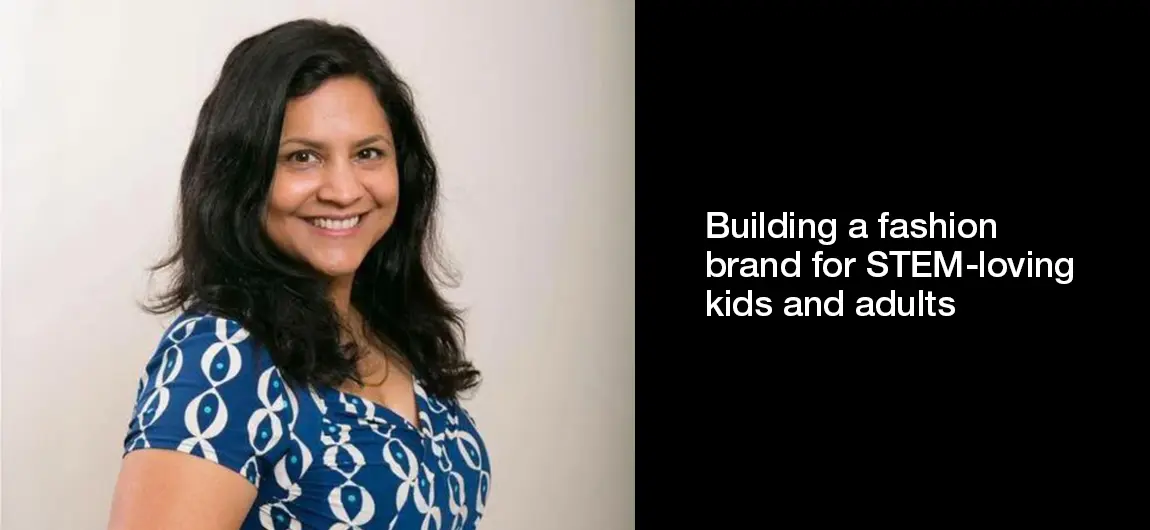
When Jaya Iyer couldn’t find science-themed dresses for her daughter, she realized that other parents must be feeling the frustration. Wanting to empower her daughter and others, she launched Svaha USA, a STEAM-based fashion brand that creates clothing for the entire family. What started as a mission to challenge gender stereotypes in kids' clothing has grown into a thriving business known for its bold, brainy designs.
View transcript
STEAM Fashion Brand – Jaya Iyer, Svaha USA
[00:00:00] Sanjay Parekh: Welcome to The Side Hustle to Small Business Podcast, powered by Hiscox. I'm your host, Sanjay Parekh. Throughout my career, I've had side hustles, some of which have turned into real businesses, but first and foremost, I'm a serial technology entrepreneur. In the creator space, we hear plenty of advice on how to hustle harder and why you can sleep when you're dead.
[00:00:21] On this show, we ask new questions in hopes of getting new answers. Questions like, how can small businesses work smarter? How do you achieve balance between work and family? How can we redefine success in our businesses so that we don't burn out after year three? Every week I sit down with business founders at various stages of their side hustle to small business journey. These entrepreneurs are pushing the envelope while keeping their values. Keep listening for conversation, context, and camaraderie.
[00:00:55] Today's guest is Jaya Iyer, the founder of Svaha USA, a STEAM based fashion brand for both children and adults. Jaya, welcome to the show.
[00:01:07] Jaya Iyer: Thank you for having me.
[00:01:09] Sanjay Parekh: So I'm excited to have you on because honestly, like I think your background is so unusual for folks that we've had on the show and kind of where this has all led. But before we start diving into that, give us a little bit about your background and what got you to where you are today.
[00:01:25] Jaya Iyer: Sure. I was born and raised in India and I had I went, did all my schooling and undergrad there, and I had my undergrad in something called textiles and clothing. And I decided I wanted to study further, which got me to the US almost 25 year ago now. I went to UGA University of Georgia in Athens for my master's in fashion merchandising. And then I decided to get a PhD in from Iowa State University in fashion merchandising. So my background has been in fashion for the longest time. And after teaching for a few years, I was teaching fashion buying. And I've worked in the industry as an apparel buyer. And some other things happened that got me to want to start my own business, and that's how I started Svaha USA.
[00:02:15] Sanjay Parekh: Yeah. Are there any any entrepreneurs in the family, anything entrepreneurial that you did maybe as a kid?
[00:02:23] Jaya Iyer: As a kid, I would say yes, but no entrepreneurs in my family. A lot of engineers.
[00:02:31] Sanjay Parekh: What about something that you what did you do as a kid that was entrepreneurial?
[00:02:34] Jaya Iyer: You know, I always liked to create, so I remember I had a bit of, like, I had six months break between my undergrad and when I decided to, you know, start applying to colleges, I didn't want to just sit at home.
[00:02:47] I would go, I would buy clothes, I would just sew clothes for my friends. I would just sew clothes and go and ask the local stores if they would sell them for me. And then I would make greeting cards. If my friend said, hey, I wanna make a 15th or 16th birthday card, I would just create them for them, and then I would sell them to my friends.
[00:03:09] So I just always wanted to create things and make them, and that's, those are the things I did. But yeah, nothing, no proper business as such.
[00:03:18] Sanjay Parekh: I mean I think I'd call those proper businesses. I'd call those hustles. So I think those are kind of how a lot of entrepreneurs start when they're younger because that's what you have access to. So let's talk about the business then. So how did it start? How did you get this? How did you come up with this idea of wanting to do STEM or steam? Kind of fashioned clothing.
[00:03:42] Jaya Iyer: Yeah. So after I worked as an apparel buyer at Think Geek I had taken some time off to spend time with my kids who were very little at that time, two and four.
[00:03:53] And luckily for us, we had access to the Air and Space Museum, which we live really close to that. So I would take my kids there every weekend. Every Friday was our trip to Air Space Museum and, my daughter fell in love with the space shuttle that was on display and she said, oh, I'm gonna grow up to be an astronaut.
[00:04:14] And she said, I have decided I'm only gonna wear clothes that have space theme on them. So I said, yeah, that's easy. You know, I was already buying fighter jet clothes for my want to be my son who wanted to grow up to be a fighter pilot. So I said, sure, I'll go looking, look for them, and I kept looking, I could not find anything at all.
[00:04:33] Wow. I did end up finding something, but it was in the boys department and that's what made me realize that, what am I trying to tell my daughter That, hey, you cannot be an astronaut if you're a girl. And that was something that was just not okay with me at all. And then I started researching and I noticed that there were so many things that were not available for girls because they're supposedly male, only for men.
[00:04:59] The professions only for men. Right? Right. And so I said, if I don't encourage my daughter to feel that she can grow up to be whatever she wants to, irrespective of her gender that was just not okay with me. And so I said, I'm gonna create a line. And luckily for her, and for me, I had a background in fashion. So I decided I'm gonna create a line that was going to be completely STEM focused. And then I said, why just STEM, art is always a part of everything that you do, right? It's a part of science, it's a part of engineering, everything. Even to do math, you need to be able to draw stuff, which is art, right?
[00:05:36] Right. So so I said, you know, I'm gonna make it steam. And so that's what made me create this clothing line.
[00:05:43] Sanjay Parekh: So I gotta ask you how much do you regret committing to going every Friday to the Air and Space Museum because I imagine that place doesn't change that much week to week. Like did you get bored going there every week?
[00:05:56] Jaya Iyer: I got bored, but my kids didn't because they were just so fascinated. You know, kids love repetition, they love familiarity, so they loved it. They wanted to go without fail. They were excited every Friday to go there. Also, it's such an open space. It's, they loved running around over there.
[00:06:13] Sanjay Parekh: So yeah, it is. I will admit, when I was a kid, I did really like that museum. Unfortunately, I'd never lived that close to it. And so, you know, when I have gone, it is actually a fantastic museum and I love the fact that you can touch that little lunar rock that they've got there in the display. I hope they still have that there. I don't, they do. I don't know.
[00:06:32] Jaya Iyer: It's been, but the museum that I live close to is the Hazy, the one that's near the international airport.
[00:06:38] Sanjay Parekh: Oh, that's a different one than, that's different than the one I'm talking about.
[00:06:41] Jaya Iyer: That's a D one that has a space shuttle. The one that you're talking about is the Smithsonian one. That's the one that's in the mall area.
[00:06:47] Sanjay Parekh: Right. Okay. Okay. Yeah, so I've not been to that one, so maybe I'll have to make a trip there and maybe I'll change my whole tune about going there every week based on how great that one is. Okay. So let's talk about the business then. First of all, I find this very interesting that you got a PhD in fashion marketing and really it sounds like you were kind of on that track of being an academic and then yet got diverged into business. And you know, like traditionally what a lot of people think is that people that are academics are not gonna be good at business.
[00:07:23] But I think you proved that wrong. So let's talk about like the challenges of starting this business. Was there anything that really made you nervous about launching this? Like what was it? How did you overcome that for yourself?
[00:07:36] Jaya Iyer: You know, this was not my first business. I had tried a few other things before while I was doing other things because I always felt that it's so cool to be able to control your own time and to not be answerable to a boss, which is something I you know because I always felt that I had such a mind of my own that that's what I really liked a lot. So I had tried a few businesses and I had not been successful in that, and so I'd just given up on them. You know, one was a clo another clothing business, and one was, I wrote children's books and because I had published a few books for when I was in a faculty, right, like it was retailing in emerging markets.
[00:08:19] It's a book that still is used by undergrad students in a lot of colleges. So I had written those and so I know all of those things I had tried before. But I was worried that what if this one doesn't do well? You know, that's, it's obviously, that's the fear every entrepreneur has is what if I fail? So this time I took a little bit of a different approach. What I wanted to find out if I am a mother, if I'm having this kind of issues, I'm sure there are other mothers who are having this same issues, like when you go shopping in a mall and if you just are I only seeing pink and purple and orange dresses for girls and black and gray and red for boys, it has to be annoying, right? Like even in terms of colors, it's annoying. Forget about designs. That's like the next step. So I said I need to find out if it's me or if it's many other parents who are having the sim having similar issues. And so then I luckily there is something called Kickstarter, which is available, and I launched my company through a Kickstarter campaign.
[00:09:24] So all I did was I created five T-shirts, just five t-shirts, which is not too difficult to make. And I launched my Kickstarter campaign with that, and I said if.
[00:09:35] Sanjay Parekh: Okay, so let, let me stop you there. So these five designs that you had, did you design them? Did you get a designer to do them? Like how did you figure out? What those designs are gonna be and how did you put them together?
[00:09:46] Jaya Iyer: So I basically picked professions that I know that are not typically for girls. Right? Like firefighter. Got it. Or I made a t-shirt with a pink race car a pink t-shirt with a race car on it because Right. You know, if a boy wants to, so I wasn't even just thinking about girls at this point. I was like, if a boy likes pink, but he likes race cars, there's no problem. But you will never find a pink t-shirt for a boy with a race car on it.
[00:10:11] Sanjay Parekh: Right, right.
[00:10:11] Jaya Iyer: So it was just something like that. So I just made five. I actually found a designer because I'm good with creative in terms of coming up with the ideas, but I'm not a designer. Like I cannot draw stuff as beautifully as a designer can. So I hired someone to do that for me. And you know, funnily, I still work with that person 10 years later. Wow. So so this designer made the designs for me and I got them printed at a local printer, like the kind that you can print any, anybody you can go and print right from local printers. Right. So I just did that. So I literally invested $500 and I launched the campaign.
[00:10:52] Sanjay Parekh: Okay. And tell us what happened with that campaign.
[00:10:56] Jaya Iyer: So the first time the campaign was not successful. I had wanted, I had said I want to raise $25,000, and the campaign was not successful. I think I raised maybe half of the amount. And I said, you know what, maybe that just shows me that nobody wants this.
[00:11:11] Sanjay Parekh: Right. And so when you only raise half the amount, you don't get any of the money. Right?
[00:11:15] Jaya Iyer: No, you don't. The people give their money back.
[00:11:17] Sanjay Parekh: Right. Okay.
[00:11:19] Jaya Iyer: Right when my campaign ended, like maybe a couple of hours left for my campaign to end, Huffington Post, decided to do a story on the problem in kids' clothing these days and how they are so gender defined. And they decided to include my company in that, my Kickstarter campaign in that.
[00:11:41] Sanjay Parekh: Ha.
[00:11:42] Jaya Iyer: But by then the Kickstarter campaign had already closed. Suddenly I noticed I had created a social media page, and I all suddenly noticed the number of followers like just shot up. And I said, I was like, what happened? Because I wasn't even told that this article was coming or if something was gonna get written about me, right?
[00:12:01] And suddenly I see so many more followers and everybody's texting me saying, Hey, I want to buy this t-shirt. Where can I buy it? And I said, you know what? Just the timing was so off. And I said, I'm going to relaunch this campaign.
[00:12:17] Sanjay Parekh: Okay. And this time, so exact same thing, exact same t-shirts, everything. Okay?
[00:12:21] Jaya Iyer: Yes. I just added a few extra t-shirts this time, but I didn't even like create them. It was just a mockup, a few t-shirts. Okay. I said I'm going to do a few more t-shirts. And I just relaunched it, and this time it was successful. Okay? So I got all the funding that I needed to get started.
[00:12:39] Sanjay Parekh: Did you, so the second time around, did you ask for the same amount of money that you did the first time?
[00:12:44] Jaya Iyer: No, I actually asked Was it a different, no, I asked for more because I had more t-shirts instead of five. I had nine t-shirts this time.
[00:12:51] Sanjay Parekh: Okay.
[00:12:52] Jaya Iyer: So so instead of 25, I believe I asked for 35. That's what I, my memory, if, my memory 30, 35,000 thousand. So not that much more.
[00:13:00] Sanjay Parekh: Okay. And you got there or did you go past it?
[00:13:04] Jaya Iyer: Just a little past it. But I did. Okay. See, but the thing is to just make basic t-shirts, you don't need $35,000. Right? So what I did with the money and the profits that I got is I made extra t-shirts and I, in fact, even made some dresses.
[00:13:21] Sanjay Parekh: Okay.
[00:13:21] Jaya Iyer: And then the minute I did that, I was able to fulfill all my orders that I got from Kickstarter campaign. Right. And I was able to make extra that I, again, sold. And then I was able to reinvest the money from the company back to create. So I just was very careful about, you know, how much I'm ordering and all of that. So I was never investing my money. Right. I was able to use the money I earned from the business to invest it back into the business.
[00:13:51] Adam Walker: Support for this podcast comes from Hiscox committed to helping small businesses protect their dreams since 1901. Quotes and information on customized insurance for specific risks are available at Hiscox.com. Hiscox business insurance experts.
[00:14:13] Sanjay Parekh: Let's talk about the actual process of making all of this stuff. Obviously you've got experience because of the experience with Think Geek and all that, but how did you figure that out of like, okay, I need somebody to manufacture, I need somebody to fulfill, or were you packing boxes at home?
[00:14:28] Like how did you plan all this because $35,000 worth of T-shirts. That's a lot of t-shirts.
[00:14:34] Jaya Iyer: Yes. Now I had to find a manufacturer while the, while I could tell that this campaign was going to be successful, right? Because I had not found a manufacturer while I had just launched the campaign, but I had the.
[00:14:46] Sanjay Parekh: That's a later problem. That's a later problem.
[00:14:49] Jaya Iyer: But the thing is, because of my background, I had the confidence that I will find someone in India. So I went to LinkedIn. In LinkedIn, there is an apparel manufacturer's group. Okay. I in the group and I posted saying, listen, I'm just starting out my new business. I'm not gonna be able to order a thousand t-shirts, right?
[00:15:07] Like everybody usually wants thousand in one design. I said, I'm probably going to order 200 in one design. But I want really good quality t-shirts, and I want someone who's willing to take a chance on me if I grow big. And I will continue working with you, and if you're ready to take a chance on me I will give you an order and we can get started.
[00:15:30] And very randomly, one factory person responded to me. He said, I'm new too. I'm just starting out, so I'm willing to make small orders if you promise to continue giving me more orders. And I was like, yep, let's do it. So he made samples, sent it to me. 10 years later, I'm still working with him, and now he owns his own huge factory.
[00:15:52] Sanjay Parekh: Wow. Wow. Hopefully he gives you a good break on the cost as well, because you were there for him first, just like he was there for you first. Yeah.
[00:16:01] Jaya Iyer: Yeah. He definitely does that.
[00:16:03] Sanjay Parekh: Yeah, that's great. That's fantastic. So your kind of background, I think. Obviously really fits in well with what you're doing here. Did it influence you in any way in terms of how you decided to set this up? Like did you see things previously at Think Geek. Or other businesses that you're like, okay, I want to do it that way, or I don't wanna do it that way?
[00:16:23] Jaya Iyer: Definitely. I think that my luckily my entire background, like I was in manufacturing, I worked in exports.
[00:16:32] I've, I knew what an American consumer is like because of my experience with ThinkGeek. So I think that all of those things put together, they really helped me with my business and I am a very cautious kind of person. I don't like to take big risks. I mean, of course starting a business is taking a big risk.
[00:16:50] I shouldn't say that, but in terms of like, I did not want to immediately get an investor. You know, invest a million dollars into the business. I just said, I'm gonna grow slowly. I don't, I'm not in a rush to, you know, make this business into like a hundred million dollars business right away. I want to go slow.
[00:17:09] And so it, I, so like, I started only with kids clothing first. After one year, I just got tired of telling people why I was not selling women's clothing, because women wanted to wear dresses with dinosaurs on them too. And so I said, okay, fine, I'll make it happen now. And so I launched a Kickstarter campaign for women's dresses this time, and they were all steam themed dresses, like, so I actually had a chemistry experiment on one.
[00:17:36] I had constellations that glowed in the dark and on the other. And just different things like origami for art. DNA double helix for science and things like that. Believe me, I said, okay, I'm gonna ask for 30 thou, 35,000 for this one too, because I don't know how many women are gonna want it, right? It got funded in two and a half days. Wow. And I ended up raising $65,000.
[00:18:02] Sanjay Parekh: Holy moly.
[00:18:04] Jaya Iyer: Yeah.
[00:18:04] Sanjay Parekh: That is fantastic. So a lot more orders. Your partner in India was probably very happy to produce all of that stuff. Were there any like given how much of a surprise that is, that's almost double of what you were asking for.
[00:18:20] What kind of challenges did you face then in terms of manufacturing, fulfillment? Anything? Like, was there any hiccups because it was just so much more than you were expecting?
[00:18:29] Jaya Iyer: Yes, there were in fact, the first batch of dresses that we got, we had to reject them because. My manufacturer got the sizing all wrong.
[00:18:40] And oh, they did not fit well. They did not, they were not good. So I literally had to get them to be remade, all of it. We have come a long way since then because my manufacturer had only made kids' clothing. He had not made women's clothing and so when we did send them, send him all the measurements, and we did tell him exactly what we wanted, but it's not, you know, it's not the same. For women, it needs to fit well for it to Right. You know, be po be accepted. So it, it was a bit of a challenge. Also then, you know, kids' clothing occupy much less room than women's clothing, so we. We were just functioning from the basement of our H home. So, so it was not and then, you know, the shipments would, we would only get them by air, so they were coming in the air cargo at the airport.
[00:19:29] Luckily, we are not that far from an international airport. So I would drive my car and then we, I'd go to, you know, pick up my boxes and the guys there would say, ma'am, go. Please go pull up your truck. And I'm like, oh, this was my truck and I was pointed at my car. I would take the boxes, put them in the car, you know, get a friend to get the her car and fill up those boxes in that.
[00:19:55] Sanjay Parekh: Wow.
[00:19:55] Jaya Iyer: So yeah, all of that stuff we did in the beginning. And I think after two years of doing that, we literally because the women's clothing line is what really grew the business. Because I feel like because kids outgrow their clothing so quickly you know, parents are a little more careful about how much they spend on kids' clothing than, you know, you don't outgrow your clothing as often so you can spend a little more. But so the, when we launched women's clothing line is when it really grew the business and we couldn't keep it in our basement anymore.
[00:20:30] Sanjay Parekh: So, so, so you've grown out of the basement and doing fulfillment for yourself. What did you move on to? Do you have a 3PL that now does it for you, or how do you do it?
[00:20:40] Jaya Iyer: So we decided never to use 3PL. We actually rented a space for our warehouse and that went on for about six years. And last year I actually bought my own warehouse because we outgrew that space too. We had half a size of a warehouse and we doubled it. But it, you know, the rent was getting too much.
[00:21:00] Right. So we figured it's easier to just own your own space and that way we can put the right kind of shelving, we can do a lot more. Right. When you have your own space than when you're renting a space.
[00:21:12] Sanjay Parekh: Right. Okay. So this is interesting to me why the intentional decision there to not go with a 3PL?
[00:21:20] Jaya Iyer: That's a good question. I think that for clothing. It's a lot more expensive when you use a 3PL because they charge you, first of all, number of skews are high. Like for me, for one dress, I have nine sizes. Right. So imagine if I have a hundred dresses on my website right now, that's 900 skews just for dresses, and I have jewelry, I have bells, I have bags, I have t-shirts, leggings, shots blankets and purses.
[00:21:51] And I have so many different skews. And with clothing also, the return rate is much higher than a regular other product. Right. I see. And but when you use a 3PL, they charge you for stocking, restocking for processing returns. So if sometimes, if your margin is, let's say, you know, 30% on a dress after, if that dress gets returned, then your margin immediately drops to significantly.
[00:22:20] Sanjay Parekh: Right.
[00:22:21] Jaya Iyer: And those are the reasons I feel like for a clothing business, it's. I mean, of course you have to deal with having to hire more people, having to manage the people and all of that. But I have really invested a lot in automation in terms of systems, right? We use Shopify as our backend system, but within Shopify we use a lot of apps to automate as many things as we can.
[00:22:47] So, so I have just the minimal number of people. That are required even with the automated system. But otherwise, I do everything that I can. So I feel like that works out for me much better that way.
[00:23:01] Sanjay Parekh: Well, I mean, to me that's pretty much on brand too, right? Like if you were gonna tell me like, oh, we don't automate, we don't use technology at all, and you're a STEAM brand, it'd be like that doesn't seem like that fits.
[00:23:13] Exactly. So I feel like that's probably a pretty good marriage right there. Okay. Let's talk about you know, like a lot of the things, it seems like you've done some things around kind of mission driven brands. You've been involved in. Kind of campaigns as well or you focus on giving money back into the community, like where did that develop from and how has that gone for you in terms of the business?
[00:23:38] Jaya Iyer: So I always believe that you know, if a consumer feels good if I if a consumer feels that you are the kind of company that cares. They feel a different kind of connection to, to you. And that was always something that I was very much in into.
[00:24:01] I always believed that if my customers can connect with our product and they know that we are, we care is going to make them feel good about buying from us. And I always feel that if every company could give back, the world would be so much better a place. And so I constantly create designs and especially when I create designs, I don't want it to ever be like I don't wanna be creating designs to only profit from it. For example, if I've made a pride collection, I make sure that we pick a charitable cause that, so we always, every year we make a pride collection and we give money to the Trevor Foundation. So sometimes, and we also try to on a regular basis give money for cancer research because that's something that's very close to my heart you know, and so I'm always looking at doing things like that.
[00:24:59] Collaborating with companies, collaborating with people and trying to bring awareness because I feel like when US team focused company should be a part of. Doing something different and doing something special because our whole concept is something special. Yeah. And so that's the reason I've always been involved in it.
[00:25:23] And I, I think that it's, it gives customers a completely different connection with the company.
[00:25:31] Sanjay Parekh: Okay. Let's change gears just a little bit because you said something earlier, and I want to drill into this a little bit. Let's talk about the stress and demands of owning a business like this and family life. Part of the reason why you said you didn't keep working was because you wanted to spend more time with the kids and now you've got this big giant business with a big giant warehouse which probably takes quite a bit of time. So how do you balance that for yourself across family, business, you know, personal friends, whatever it is. How do you balance your time?
[00:26:07] Jaya Iyer: That, that's a great question. I get asked that a lot. Yes, I did quit my job because I wanted to spend more time with my kids, but surprisingly, I have never compromised on that and it has worked out for me really well. I am. When I know I have a fixed amount of time to do my work in a day, I am extremely efficient.
[00:26:31] I make my to-do list, I just get down to it get it all done, and I, I only work, I still get up in the morning, get my kids lunchbox ready, get them you know, drive them to school. That's one thing I never said I will never compromise on, is like I will be the one driving them to school because the conversations I have with them in the car are the best conversations ever.
[00:26:55] So I drive them to school. I come back you know, get ready for the day and then I work until it is time for me to go pick them up from school. So I get all my work done in those many hours. It's not always eight hours, but I get them back home. And then I cook dinner for them. I feed them, and then once they are busy with doing their homework or other activities, I get back to work.
[00:27:20] And because usually my factory also is based in India, so I, they're, they start working when it's my time. At night. Right. So it works out great. So all the follow ups, all the questions, all the communication that can happen at that time. Yeah. And rest of the time, like if I'm waiting in the line for pickup for my kids, I can always be on the phone responding to emails.
[00:27:43] So I do that. I mean, I must say that because of that I, it probably impacts my social life a little bit because I don't have time to go for lunches or, you know, dinners with my friends. But then, you know, you make up for that over weekends. I don't know how many working people actually have time to socialize if they have kids have time to socialize anyways during a weekday.
[00:28:05] Right. Unless, yeah, you leave your kids with someone else and then go out, which I never wanted to do. So I never wanted to have a nanny ever. Yeah. After I quit my job. So, yeah, the whole goal was.
[00:28:20] Sanjay Parekh: Yeah. What about boundaries like you, you mentioned the weekends. Does work ever bleed into the weekends? How do you keep those things separate?
[00:28:28] Jaya Iyer: It does, it does sometimes especially if there is a problem, like, you know, if there's a problem on the website, if there's, I suddenly see I can't expect my employees to be working on weekends, so I keep an eye on. But it's, I think in the beginning it was a lot more because there were a lot more problems in the beginning, but now it has become like I just checked the social media to see if something is a miss. You know, if something is going wrong, if somebody's complaining, Hey, you said there was a sale and it's not working or something like that. Those are the things I keep an eye on, but I feel like because of having my own business, I also have a lot more flexibility. In terms of if I want to go away somewhere for two weeks if I'm traveling with my family for two weeks or if I want to even go away for a month because when I go to India, two weeks are not ever enough.
[00:29:19] I go for a longer time but I'm able to work from there too. You know, because I have developed the system is such that I'm able to manage that very well. So I feel like there are all those advantages of running your own business is the flexibility of your time. So I think it's okay once, I'm not gonna complain about having to work once or twice on a weekend.
[00:29:40] Sanjay Parekh: Right, right. Yeah. And also I guess the benefit is if when you're, you know, in India you're close to the manufacturer, so if you need to go check out the factory, yeah, that's an easy thing.
[00:29:52] Jaya Iyer: Yeah.
[00:29:52] Sanjay Parekh: And then that trip becomes a business trip.
[00:29:54] Jaya Iyer: Yeah. My la my last India trip, I have man managed two, I found two more new manufacturers who have now started making clothes for me because my, I mean, I really wanted to branch out a little bit because, you know, you don't wanna put all your eggs in one basket.
[00:30:07] So I Right. Found two more new manufacturers and I started working with them. So yeah, it does end up becoming a business trip.
[00:30:14] Sanjay Parekh: Yeah. Yeah. Fantastic. Okay, last couple of questions for you here. Thinking back now over this time and maybe it's not just the time that you've started the business, but even before then, if you could go back in time and do something differently, what is that thing and why?
[00:30:32] Jaya Iyer: Ah. You know, I was just talking to somebody today and I said that not one day of my work life feels like work to me, because I absolutely love everything I do, so I don't think I would change anything. The pace at which I have grown is perfect for my lifestyle because it has not taken me away from my kids.
[00:30:54] I feel like I could have grown this company 10 times if I really gave it all my time. Right. But that's not what I ever wanted in my life. Yeah. I wanted to be there for my kids that I never wanted my kids to grow up thinking I had a missing mom. And That, that's always been my, that, that's my number one priority in life is spending time with my kids.
[00:31:18] Number two comes, everything else, you know, so, so I have done everything exactly how I would have done it. So if I was to go back and redo everything, I would probably redo the, I would do it the same way.
[00:31:31] Sanjay Parekh: Yeah. Yeah. I love it. Okay. Last question for you. If you were talking to somebody who's thinking about taking that leap like you did, and either starting a side hustle or going full-time in a business like this, what advice. Would you give to them?
[00:31:45] Jaya Iyer: Well, I think one of the most important things is that if you believe that you have an idea that's unique enough that will have a demand, then I think it's so worth taking a risk. But the most important thing is to believe that whatever your idea is something that people are going to be as excited about as you are and to be able to portray it that way, right?
[00:32:10] If you can show your excitement about the product and make other people get excited about it, I think that's like the best thing you can do for your business idea or your project or whatever you want to do. And then of course, it's, I think there are mediums now, which allow you to try out instead of, you know, putting all your money into the business and like Kickstarter like I did.
[00:32:34] I think that's a great way to experiment and try and see if it's as exciting to others and that's the best way to go. And I, I really feel that being an entrepreneur is the most amazing thing. It is a lot of hard work a lot of sleepless nights. A lot of tears a lot of sweat when you have to lift boxes.
[00:32:59] Sanjay Parekh: When you don't have a truck at the at the airport for those boxes to load. It could be a challenge, but the Absolutely.
[00:33:06] Jaya Iyer: But the thing is, it's so fulfilling. It's so totally worth it. Totally worth absolutely everything.
[00:33:11] Sanjay Parekh: Well, this has been fantastic. Where can our listeners find and connect with you online?
[00:33:17] Jaya Iyer: So my website is svahausa.com. But to connect with me, I'm on LinkedIn and I'm also I'm quite on top of all our customer service email. So if anybody sends a customer service email to us at [email protected], they get forwarded to me because we are a small team, so we are all always on top of everything that's going on. So you could also reach out to me that way.
[00:33:40] Sanjay Parekh: Awesome. I love it. Thanks so much for being on today.
[00:33:43] Jaya Iyer: Yeah. Thank you for having me. This has been amazing.
[00:33:49] Sanjay Parekh: Thanks for listening to this week's episode of the Side Hustle to Small Business podcast, powered by Hiscox. To learn more about how Hiscox can help protect your small business through intelligent insurance solutions, visit Hiscox.com. And to hear more Side Hustle to Small Business stories, or share your own story, please visit Hiscox.com/side-hustle-to-small-business. I'm your host, Sanjay Parekh. You can find out more about me at my website, SanjayParekh.com.
Subscribe to our podcast



Did you start your business while working full-time at another job?
Tell us about it! We may feature your story in a future podcast.