Fractional Executive Assistant: Ethan Bull's Story



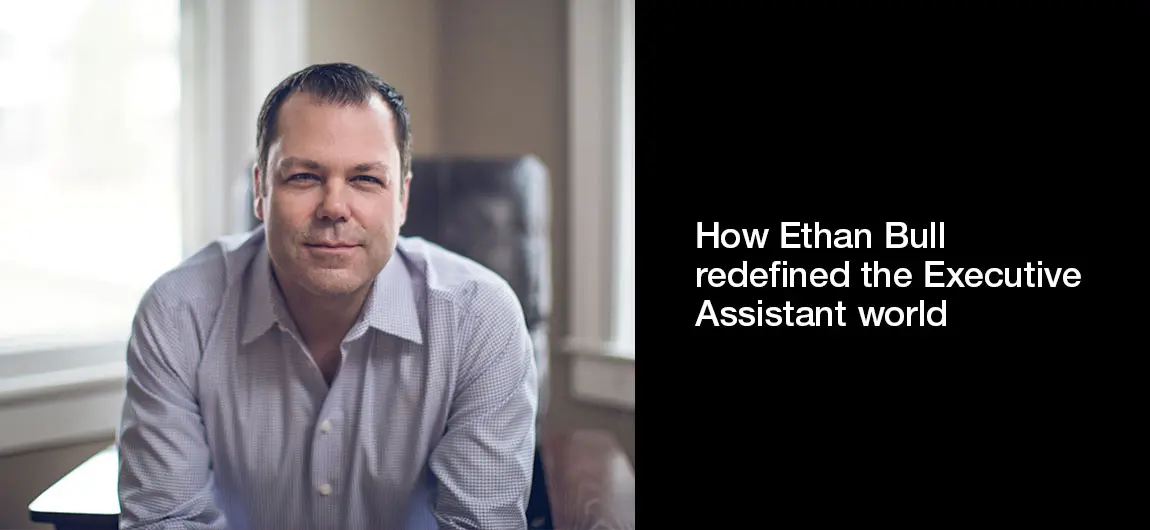
After spending many years as an Executive Assistant, Ethan Bull unexpectedly faced layoffs, forcing him to reconsider his career path. With his severance package as a financial cushion, Ethan and his wife, Stephanie, launched ProAssisting, a fractional EA company. Their business focuses on connecting highly skilled EAs with top-level executives, offering flexible, high-quality support without the need for a full-time hire.
View transcript
Fractional Executive Assistant – Ethan Bull, ProAssisting
[00:00:00] Sanjay Parekh: Welcome to The Side Hustle to Small Business Podcast, powered by Hiscox. I'm your host, Sanjay Parekh. Throughout my career, I've had side hustles, some of which have turned into real businesses, but first and foremost, I'm a serial technology entrepreneur. In the creator space, we hear plenty of advice on how to hustle harder and why you can sleep when you're dead.
[00:00:21] On this show, we ask new questions in hopes of getting new answers. Questions like, how can small businesses work smarter? How do you achieve balance between work and family? How can we redefine success in our businesses so that we don't burn out after year three? Every week I sit down with business founders at various stages of their side hustle to small business journey.
[00:00:42] These entrepreneurs are pushing the envelope while keeping their values, keep listening for conversation context and comradery.
[00:00:55] Today's guest is Ethan Bull, the co-founder and CEO of ProAssisting, an organization that provides fractional remote executive assistant support at, to companies at a fraction of the price of hiring a full-time EA. Ethan, welcome to the show.
[00:01:10] Ethan Bull: Thanks for having me, Sanjay.
[00:01:12] Sanjay Parekh: Uh, so I'm excited to have you on. I think you might be one of the only, maybe one of a handful of, uh, executive assistants companies, uh, that we've ever had on the show. So, um, it'll be interesting to kind of dig in. But before we get to that, give us a little bit about your background and what got you to where you're today.
[00:01:31] Ethan Bull: Well, uh, I, I actually grew up in upstate New York in a really small town. I wanted to run away as quickly as possible. Ended up going to Bentley University, which is a specialty business school outside of Boston. I also was playing in a band and, um, I, I ended up leveraging my business, um, education into an internship for Warner Brothers Records. And that actually, uh, led me to taking a job with Warner Brothers as a production assistant on a movie shooting in New York City right after graduation and through that role, I, I was a production assistant. I was a production coordinator, a production secretary, a um, you know, an office assistant. Basically all those roles are an executive assistant role on steroids. Uh, I realized that I wanted to write and direct. And I leveraged my assistant capabilities into a role working at Deutsch, which is a billion dollar ad agency, and I supported the chief operating officer there for 13 years.
[00:02:39] Uh, you move up the ranks, you roll over one day and poof, you have a career. Uh, and so I, I ended up leading a team of assistants and, uh, at the end of that part of our career. And then our son Henry came along and we decided to leave New York City and now I'm back in Canandaigua, but now I love it.
[00:03:02] Sanjay Parekh: Yeah. Okay. You, you glossed over the movie. Can you share which movie it was that you worked on?
[00:03:08] Ethan Bull: Yeah. I was Addicted To Love. Okay. Uh, I was shooting in 1996, my first morning going to the production office, I stand in the lobby and Meg Ryan steps up next to me and we get on the elevator, just the two of us. I'm completely starstruck. I tell her. And she just brings me right down and said, oh, how long have you been in New York? I said, one day. And she was like, one day. I'm like, yeah. She's like, where'd you come from? I'm like, I graduated from Bentley. And um, she really just made it really, really relaxed. And the thing was, is that was really pre-internet, so none of the information about what movies were shooting, where, who was in it, I had no idea. So, um, and you know, I spent the next four months getting her steamed broccoli for lunch and she couldn't have been more gracious throughout that whole period.
[00:04:04] Sanjay Parekh: Yeah, it's really nice to hear the, uh, about folks like that, that are just genuinely nice people, right, that are, uh, celebrities and people that you've seen from afar. Um, because then it's like, okay, all is right in the world. Like these are nice people and, and you're very happy for them for the, the, uh, the success that they've had. So, um, great to hear.
[00:04:23] Ethan Bull: I have stories on the other side of that equation, which I won't go into.
[00:04:28] Sanjay Parekh: I had a bad feeling You did and I didn't wanna ask. Yeah. So I, I gotta ask you, so is this the first time that you've done anything entrepreneurial or have there been entrepreneurs in the family, or, or is this the first time for you?
[00:04:42] Ethan Bull: My dad, uh, is an entrepreneur through and through, uh, he, uh, graduated college and, and worked three years as a sixth grade teacher and then said, I'm never doing that again. He got into real estate. He opened a bar, he opened a construction company. He sold the bar. Bought a bowling alley. Sold the bowling alley, bought a restaurant. Was in the restaurant about 23 years. Owned trailer parks throughout. Still has a couple trailer parks, but is mostly retired. For myself, I actually had a business when I was a junior in high school.
[00:05:23] I bought a 900 number. Where these are, these numbers where you would call and be charged an amount. Um, I found a company in Wilburn, Massachusetts that had glow in the dark condoms and novelty condoms, and I wanted to promote safe sex, uh, because that was kind of the height of the AIDS epidemic. So I took an ad out in Rolling Stone Magazine for a quite a bit of money at that time. Uh, set up the 800 number, went and recorded the ad, uh, and with a professional voiceover artist. And that was my first experience in terms of, you know, return on ad spend and customer acquisition cost and all of that. And all those numbers were negative. So it was a very short-lived experience, I tell you that to say yes, I've always been entrepreneurial at heart.
[00:06:13] Sanjay Parekh: Yeah. So this was in the, the late eighties, I take it?
[00:06:16] Ethan Bull: Yeah.
[00:06:17] Sanjay Parekh: Wow. Yeah, you, you can only throw money at things for so long until you realize like, this is, this is just not working. So, um, good that you figured that out sooner rather than later.
[00:06:29] Ethan Bull: Exactly.
[00:06:29] Sanjay Parekh: In terms of that.
[00:06:30] Ethan Bull: Exactly.
[00:06:31] Sanjay Parekh: Um, okay, so, so, uh, always been entrepreneurial. Um, you know, how did you start this business? How did this come about? What was the, the point in time where you decided to take the leap and go all in?
[00:06:43] Ethan Bull: Well, what what's interesting is that I was a career executive assistant in New York City as well as my wife.
[00:06:50] So, she supported two different hedge fund CEOs as well as the CEO of J Crew, Mickey Drexler, for a stint. And in those roles, I mean, we're making well into the six figures working a 24 7 mentality, uh, really providing high level support that covers both business and personal worlds. And when our second son came along, we had to question, do we wanna jump into the nanny game again? And in New York City, it really is a game and in a very expensive one, um, to pay the mortgage on our condo just so we could go work these two jobs. Or did we wanna completely change our life? And we decided on the ladder and we moved back to Canandaigua, New York. What's interesting is that we're about 20 minutes, 25 minutes from Rochester, New York, which is a town of less than a million people in the city proper.
[00:07:45] And so finding a role that was commensurate with our experience was, um unlikely. But fortunately I was recruited to support the CEO of a $16 billion healthcare, or $2 billion healthcare network with 16,000 employees, and my wife was at home and she got a call from a friend of ours who said, I know you're not working. You're, I have, I know a Fortune 100 consultant. She travels the world. She needs great support. She doesn't need full time. She doesn't care where you are. Are you interested? My wife was pulling her hair out with two young boys at home and said, absolutely, I'm interested. And that was in 2017, kind of sent us on this market research role on what the remote or virtual assistant support space looked like, and we saw a gap and we decided to fill that with ProAssisting.
[00:08:42] Sanjay Parekh: Yeah. Um, interesting. So when you were working during that time, were you also in person or were you remote or how was it for you at that
[00:08:49] Ethan Bull: point? Oh, I was full-time in person, so I had a 45 minute commute both ways. Okay. And I was also director of admin services, so I oversaw a team of about 80 assistants, supporting 250 executives throughout the, throughout the network.
[00:09:02] Sanjay Parekh: Okay. So, um, okay, so your wife starts working kind of remotely part-time. When does the idea kind of come of being like, Hey, let's do this as a business and get outta the game of providing support and finding other people to do it.
[00:09:17] Ethan Bull: Yeah. Well, after two years of supporting the CEO, uh, he decided he wanted to go a different direction. I had basically reorged the support staff and I may have been, um, in his mind, comped at a spot where he wanted to readjust and, and, and use a different assistant. So I got let go and, um, you know, and what we did is right out of the gate, um, took my severance package and put it into you know, launching, ProAssisting. We had seen that gap and Stephanie was filling it with one client and we said, there's gotta be more people out there like this. And so, um, it, it, it was a natural progression, um, and risk, but yet I think the easiest and best types of businesses to start initially are service-based businesses, um, leveraging your expertise, and that's what we did.
[00:10:23] Sanjay Parekh: It's interesting though that, uh, and, and I think this is a very common story, is that the forcing function for you was really getting fired because it, this wasn't necessarily in your mind to do this before you got fired.
[00:10:37] Ethan Bull: No, it was in my mind. Um, but there was also, I was already two years into a right, five year, um, um, vesting of, of retirement. And, and figured, you know, we can wait and, um, and get through it that way. And, and, and, but it obviously, uh, my boss always told me I would go on to do bigger and better things. I just didn't know it was gonna be at his choosing rather than mine. So no, it all worked out and it was the best thing to ever happen to me, and I have to give him a lot of credit because he was very generous in the severance package and
[00:11:18] Sanjay Parekh: Yeah.
[00:11:18] Ethan Bull: You know, and that, and that really was able to give us that runway Yeah. Um, that we needed.
[00:11:25] Sanjay Parekh: Yeah. So in starting this, was there anything that made you nervous? I mean, that's a, I mean, I, I imagine there had to have been, because this is, you're going from, you know, full-time job. You thought you were gonna be there for at least three more years, and that's how they get you, by the way, uh, with, with that vesting of stuff, um, to like, Hey, I'm gonna be a founder and, and entrepreneur and start my own thing.
[00:11:48] Ethan Bull: Yeah, you know, it wasn't helpful when every time I saw my dad, he would say, so are you looking for a job?
[00:11:58] Sanjay Parekh: And oh, parents are always like that.
[00:12:00] Ethan Bull: I would say, I would say, no, not at the moment. Um, but really, honestly, Sanjay, the, the best thing about being an executive assistant is it is a trade. It's a very valuable trade that you can take anywhere. It's industry agnostic, it's principle agnostic. So we always knew, Stephanie and I were always like, well, we can go get jobs, but can we fill ourselves up with clients? And six months later we had.
[00:12:25] Sanjay Parekh: Yeah. Uh, that, that line right there I think is very common. And, and you being a parent, me being a parent, I think we recognize it too, right? Like, you always are worried about your children, regardless of how old they are, uh, and wanna make sure that they're, you're, you know, being taken care of. Like they're doing the right things for themselves
[00:12:41] Ethan Bull: Well, or be caught holding the bag and having to, uh, write checks for your kids to, to keep them rolling.
[00:12:47] But, I, listen, I, I get the conservative nature and, and all of that, and um, we're just, we're just grateful that there was a lot of timing that had to happen right on the technology side of things for us to do what we do. Um, and there was just that serendipitousness of talking to the right people at the right time.
[00:13:09] Sanjay Parekh: Yeah. So when you started this, um, it was pre covid. Pre pandemic. Mm-hmm. Um, and so, you know, some of the tools were probably there, but those have obviously all of us have experienced a wide acceleration that's happened afterwards. How do you think that helped you shape the business by doing this kind of before everybody else realized that remote was a thing?
[00:13:34] Ethan Bull: Well, I would, I would say that. The convergence of technology in the browser separated and, and the the need to have, whether you needed a PC or a Mac. And the iPhone also brought along an app economy that allowed ubiquitous between Android and Apple. And so it really, at that point in 20 17, 20 18, we were saying to ourselves, it really doesn't matter what platform you on, you're on. So that was, that was awesome. Um, and that really reinforced the idea that we can do this for different kinds of clients and different kinds of people on different technological platforms. Um, but also the, the pandemic, um, opened people's eyes to the ability that it can work and that didn't, we didn't have a huge influx of business, but it just meant I didn't have to explain remote work anymore. And that in terms of the sales process was, was really kind of encouraging.
[00:14:50] Sanjay Parekh: Yeah. Has the, um, the embracing of technology changed for you from kind of pre pandemic post pandemic? Like how has that shifted and how has that helped in terms of. Effectiveness, productivity, all of those things for your team?
[00:15:07] Ethan Bull: Well, I mean, everyone on our team is, is constantly trying to keep up with AI uh, I mean, that is always, I think we're always on that. We're gonna be on that train for a while now. Um, which is a good thing. Uh, at first I was really scared. I kind of was that ostrich with his head stuck in the sand after November of 2022 when, ChatGPT was announced. But I also, I follow technology religiously, and I think that we're getting to a point where you're even seeing Apple come up to some headwinds around what's gonna really be possible. And what we found is that our clients. Want us to be steeped in AI so they get the benefit of that leverage without having to keep up with all the headlines and understanding what to put in a prompt and realizing what the technology can do for them and their business and their office. So they're leaning in to us in that way rather than pulling back.
[00:16:16] Sanjay Parekh: Yeah. So you think, um, AI is really gonna help you kind of sell your services, so I mean. How does that then change for you in terms of the people that you find?
[00:16:28] Ethan Bull: I don't know if, I don't know if I completely agree with that. It's gonna help us sell our services.
[00:16:32] The thing with us is that we're, we're providing a higher level service than, uh, a virtual assistant. Okay. And we are really leaning into fractional. And where fractional, um, like remote is kind of included in fractional, right? And so when you say fractional executive assistant, we partner with assistants who would command $120,000 in New York City or Atlanta, um, salary wise, and you don't get that level of talent in the virtual assistant space, and we limit the number of clients that our assistants has so that they can really provide that feeling of full service support for a fraction of what it would cost. Hiring an employee.
[00:17:22] Sanjay Parekh: Yeah. So, so, uh, just kind of diving a little bit deeper into ai, I'm kind of thinking about what you're saying here.
[00:17:28] It's, it's almost like you're, you're saying the people that are. Leveraging the people that you've got are, are kind of looking at for AI assistant assistance, right? So people that are really smart about using AI or using different tools like this, um, to be more productive and effective. Um, how have, how are you thinking about that in terms of. Finding the right people to bring onto your team because, you know, before AI there was probably a, a skillset that you were looking for. Now it's that skillset plus this, and then, you know, five years from now it's gonna be that plus ai, plus something else that we maybe don't know yet. So how do you think about that in terms of finding the right people for your team?
[00:18:14] Ethan Bull: Well, we're in a unique time right now where, frankly, the market is flooded with very high level executive assistants looking for roles. Hmm. Um, and a lot of them came from big name tech companies that were providing that training and providing that guidance. Um, so some of our assistants can run circles around me with artificial intelligence.
[00:18:39] Um. So I, I don't, I I would also say that a great executive assistant is going to meet their client or their principal where they are, and they're going to learn the technology that the client or principal leverages. They're be gonna become an expert at that. And then they're gonna start to run ahead and see where can they look around the corner.
[00:19:02] Where can they see five steps ahead? Yeah. Where can they see, oh, I can take artificial intelligence, put it with notion and figure out the best invite to send for this event that's coming up. That's just something I pulled off the top of my head, but asking the question is key, uh, and, and leaning into our assistance, they know
[00:19:25] they have to get smart on something if they're unfamiliar. But what we train to is understanding the technology landscape as a whole, understanding the terminology and how the pieces fit together, and then allowing them to get smart on what they need to when they need to.
[00:19:44] Sanjay Parekh: Yeah. Um, you know, one thing that I think comes up often, uh, you know, I talked to a lot of entrepreneurs and founders, obviously, um, is that, that sense of control, right? Like that, that, that's probably one of the biggest things that people struggle with before they hire a virtual assistant or an executive assistant or, or you know, somebody to help them become more productive. Uh, and really that, and, and the other part of this is, is that initial like, well, it's gonna just take me so much time to get them up to speed.
[00:20:14] I, it'd just be faster if I did it myself. True in the short term, maybe not true in the long term. So in terms of a business, like how do you think about these things and, and messaging these things in terms of marketing, um, to get people to understand that this is really something that will help them in the long run.
[00:20:34] Ethan Bull: Yeah. The quote unquote, I can do it faster myself mentality. Um.
[00:20:39] Sanjay Parekh: Which when you're dealing with entrepreneurs is, is a very common thing.
[00:20:42] Ethan Bull: Yeah, no, of course. Of course. Um. One. One thing is that we explain to them that yes, you may have to slow down to impart this knowledge onto your assistant, but imagine never having to do it again.
[00:21:00] And what we tackle are those things on the to-do list that continually get pushed down, the list that happen repeatedly, and where the assistant could actually do it. The other thing we leverage is our book. We wrote a book, the 29 hour workday, and that's how we kind of provide an instruction manual to our prospects, even if they don't choose to partner with us and our clients to give them a framework to start thinking about the things
[00:21:36] they can hand off to their assistant. And the other thing I'll leave you with is that given we partner with such high level EAs who've done this for a long time, they're really good at managing up and getting those things out of the hands of the principal.
[00:21:55] Adam Walker: Support for this podcast comes from Hiscox committed to helping small businesses protect their dreams since 1901. Quotes and information on customized insurance for specific risks are available at Hiscox.com. Hiscox business insurance experts.
[00:22:16] Sanjay Parekh: Okay. Let's talk about like the, the future and what you see for you and this business and, and just fractional services like this. Like where do you see it heading? Where do you see the challenges coming from?
[00:22:30] Ethan Bull: For us, the challenge is education, uh, in terms of educating the market that we actually exist because everybody compares us to virtual assistants and we are, we sit between where those companies are, whether it's overseas or on shore, and where a full-time assistant would be. And so with us, you get the e experience of that high level EA, but you, and, and the cost savings, but it is more expensive than a straight virtual assistant. Um, so there's that. But I am, man, I think it is the the best time to start a business from a fractional perspective because, uh, small and medium sized businesses have the ability to get expertise from a CMO/CFO/COO fractionally versus making one bet that on one person higher to move their business forward. It's allowing small and medium sized businesses to bridge that space that they need to get over to then start hiring C-Suite full-time.
[00:23:52] And, and so I'm really excited. Uh, I, I, as I said, I was, you know, an ostrich with my head in the sand for the first six months after AI now I'm complete 180 on it. And I mean, and we've kind of proven it. I mean, we've had, we have clients who've been with us since 20 18, 20 19, and so we're a sticky service, but I also consider it a win when a client says, all right, Ethan, it's been a great 18 months, but we're gonna go hire a full-time assistant. And I say, that's fantastic. And then we help in the hiring, the interviewing, the training, and then we part the relationship. And so, there are a lot of 50-year-old plus executives out there who may not be aware of the fractional world and the role that they could play, and I, I, I, I just think the future is really bright there.
[00:24:49] Sanjay Parekh: Yeah. How, how do you kind of think about then attacking that segment and how do you access it really, right? Like you're talking about a, a group of people that don't know you exist. And I, I think this is a question that applies to so many businesses, right? Like, there's a group that you can help, but they don't know you can exist.
[00:25:07] How do you get them to know about you and be interested in buying?
[00:25:11] Ethan Bull: We've, we've done it all. Um, we, we've done, um, you know, just.. To get our initial clients back in, in 2018, we paid 2000 a month for three months for 15 phone calls, five a month, and we landed two clients there. One of them, uh, Karen Feinman on the um, CNBC show Fast Money. She's been a client of ours since 2018.
[00:25:41] Sanjay Parekh: Yeah.
[00:25:42] Ethan Bull: Um, and, uh, so the r you know, that was amazing. But, um, we also got amazing clients through LinkedIn outreach. Uh, frankly, we tried pay-per-click last year very aggressively, and it didn't work. Hmm. Um, and what we're relying on now is we're really leaning into search engine optimization still, even though artificial intelligence is playing a role there.
[00:26:09] Um, and we we're very optimistic there in the next 12 to 18 months. And frankly, we're referrals just are the lifeblood of our business. But it goes back to the idea of what's a great business to start and a service business, if you do it right, you can be in the black from day one.
[00:26:32] Sanjay Parekh: Yeah.
[00:26:32] Ethan Bull: And you can, if you have play the long game, which we are, um, it's really hard to beat you.
[00:26:40] Sanjay Parekh: Yeah. Um, I, I gotta ask this question because you kind of mentioned it and I wanna understand this exactly. So you said in those early days you paid $2,000 a month for three months to get 15 calls. So five calls, so $400 a call. Who were you paying to get those calls?
[00:26:58] Ethan Bull: It was a company called Sapper Consulting. I think they're still around. Um, you know, and they just emailed and bombarded email. Um. People consistently until they wrote back and said, no thanks, or schedule a call. Some of those calls were really gruff. People were not happy to speak with me. And frankly, the one that we landed to get, Karen, it was her husband who is, um, Lawrence Gallup of Gallup Capital, um, CEO of Gallup Capital is $70 billion private equity firm.
[00:27:31] And he kept replying to the emails, not yet. Not yet. Not yet. It went on for two months and then he finally said, call now. And that was it. I called him, he, he told me what the deal was and ironically, my wife interviewed to be his assistant when we were living in New York. Oh, that's so funny. And got very far along in the process. So you take, it's, it's, it's, it's serendipitous, you know? Yeah. When you land a client like that, and that's the thing, you know. You gotta put yourself in those positions and open yourself, and then when the opportunity comes along, you need to take it.
[00:28:12] Sanjay Parekh: Yeah. Um, absolutely. Okay, let's, let's, uh, change gears here a little bit.
[00:28:17] Let's talk about just work-life balance and, and managing the stress, um, of running a business like this. Um, you know, you, when you started, as you had younger kids, a little bit older now. So talk about that, like how do you think about that for yourself and for your wife in, in terms of balance and, and managing stress?
[00:28:36] Ethan Bull: Well, I was not aware it, you, you know, the grass is always greener. Uh, I, being a, a full-time employee for so long, I wasn't aware of just the inherent level of stress of running your own show, being your own business, not having that safety net of a large company behind you. Even when things are going well, even when things are, everything's perfect, and yet you can't sleep at night.
[00:29:07] And that was really surprising to me. And fortunately we have, as I said, a very sticky service and that creates recurring revenue. And we're finally to a point where it's like, okay, this is, you know, after four or five years, you finally get comfortable in it. Um, and, and used to it. At least that's how long it took us.
[00:29:30] But I have to also give a ton of credit to Stephanie in terms of the relationship that we have, uh, the communication, um, you know. And that goes all the way back to being two executive assistants in New York City. And, and frankly, she was making three times the amount of money I was making, um, given the industry difference, um, me being in advertising, her being in finance, um, and those conversations mattered. And then in terms of running our own business. She, you know, it, it's, it's great because we're kind of siloed. She has her side, I've got my side. Um, but again, it's a constant communication, um, to talk through the stress. Right. And I'm just grateful I have someone to do that with.
[00:30:15] Sanjay Parekh: Yeah. You, you talked about, uh, a minute ago, like, you know, staying up at night, you know, sleepless nights because of the business and whatnot. What, what's the last time that happened? What do, what do you remember the, the issue being that kept you up and kept you worried?
[00:30:31] Ethan Bull: Well. I don't know if I'm a full on empath, but I'm very, very empathetic and, um, it that can still happen with me with an individual client that really doesn't affect our balance sheet.
[00:30:46] So, but I still care, right?
[00:30:49] And I still wanna make it right, and I still know that I've got two sides of the equation. I've got an assistant that I, I wanna make sure I'm coaching properly and is that I'm, that I'm standing by and that they're able to put food on the table. And I have a client who came to us for a certain reason, and I need to make sure we're meeting that expectation.
[00:31:07] And if we're not, I need to find out where we're not aligned. So, I'm kind of a hard person to ask that question. I'm, I can be very optimistic and happy, but underneath I'm always thinking like about, you know, client A is not doing very well right now, and or client assistant C is not, you know, aligned with this client and they're concerned. And so that I, I take that to heart.
[00:31:33] Sanjay Parekh: Yeah. Yeah. I think that's a good mark for, uh, a founder as well. Right? Because you care about the business. It's not just Absolutely you're doing transactions, you actually care about what's happening in the business. I think that's a lot of times the difference between the successful startups and businesses and the ones that are maybe less or so.
[00:31:49] Ethan Bull: Yeah, absolutely. Thousand percent. Yeah.
[00:31:51] Sanjay Parekh: So thinking back, um, it's been a few years of this, is there anything that stands out to you like, man, if I could go back in time and do that differently? Oh, I would, and this, this is how I would do it.
[00:32:02] Ethan Bull: You know, I, I, I, I guess in my career, uh, when I stopped working for, I was working for the chairman of a studio when we made Traffic Uhhuh, a movie that won the Academy Award that year.
[00:32:17] Sanjay Parekh: Yeah, great movie. I, I know that movie. Yeah, yeah.
[00:32:20] Ethan Bull: Yeah. Steven Soderbergh, Michael Douglas. Yeah. Um, and I had an, I had a, an A window. To move to Los Angeles and really go after the entertainment industry full bore. And I didn't wanna leave New York, so I guess that may be a regret. Um, but frankly how things have turned out, I have absolutely no regrets right now.
[00:32:45] Sanjay Parekh: Yeah. Yeah. If you, if you think, if you'd done that, what would be different, uh, with life now? Like, would you have gone just all into movies and, and stayed there and progressed that way and not done the executive assistant thing?
[00:32:58] Ethan Bull: Well, I mean, the reason that I went moved after that role moved into working in advertising was because I wanted to be a writer director.
[00:33:07] I mean, I've written 12 screenplays. I'm a published graphic novelist. Um, I got really far along with that graphic novel and, and screenplay in terms of working with a really na, a known name producer. Um, we couldn't get across the finish line. Um, that's, you know, the film business is probably the most entrepreneurial world there is, because everyone is working as an independent contractor, you're dealing in something that you can't put your finger on, on what's good and what's not. Mm-hmm. And, uh, taste plays a huge role. So you have just a ton of ambiguity. So, you know, I, I, I leveraged the assistant career to allow myself to work nights and weekends, typing away writing stories.
[00:33:56] Yeah. To one day write and direct. So, yeah.
[00:34:01] Sanjay Parekh: So now you're, now you're doing a side hustle thing with your own business too, on top of it.
[00:34:05] Ethan Bull: So it's not a side hustle, it is a full business. Uh.
[00:34:08] Sanjay Parekh: The, the EA thing is the, the full business, the, the directing or like writing screenplays is the side Hustle.
[00:34:14] Ethan Bull: Correct. I have that one idea that I'm still noodling with, but, but yeah, that and, and playing music are definitely hobbies now.
[00:34:22] Sanjay Parekh: Side hustles or side until they become big. Until they become big. Yeah, exactly. Okay, last question for you. Um, if you're talking to somebody who's thinking about taking the leap like you did and doing a full-time business or already has a full-time business and thinking about a side hustle like you're doing, um, what advice would you have for them?
[00:34:39] Ethan Bull: Um, if you have a partner. I would say, uh, have a really open and honest discussion around your relationship, but more importantly, your finances, um, to make sure that you are situated properly to take a risk. And if you don't have a partner, I would have an open and honest discussion with yourself about where your finances are.
[00:35:08] Uh, about knowing what your run rate is, what your burn rate is as a human being, and where that line is. Um, you know, coming up this way as bootstrapped, it's really hard for me to wrap my brain around, you know, landing seed or series A funding to start a business. And, and, and that's a totally different ball game.
[00:35:36] So take my advice with a grain of salt in that in mind. Um, but, but I would say the... it.. You know, Sanjay, I'll say this as well, and then I'll leave it at that. Whenever my wife and I are out on a date and we're sitting at the bar and this young couple Sids up next to us and they're all giddy and happy, and they show us the ring. See we just got engaged last week, and it's like, oh my God. And then they say, well, how long have you been married? And we're like, almost 20 years. And they're like what's your advice? And Stephanie and I say the same thing every time, be on the same page about your finances. It's not sexy, but it, it's really kind of a strong foundation whether you're gonna get married or start a business.
[00:36:21] Sanjay Parekh: Yeah, absolutely. Absolutely. Ethan. Uh, this has been fantastic. Where can our listeners. Find and connect with you online.
[00:36:27] Ethan Bull: Uh, you can connect with me on LinkedIn, Ethan Bull, uh, or uh, check out ProAssisting. Uh, it's ProAssisting.com, P-R-O-A-S-S-I-S-T-I-N-G.com.
[00:36:41] Sanjay Parekh: Awesome. Thanks so much for being on today,
[00:36:43] Ethan Bull: Sanjay.
[00:36:43] Thank you so much.
[00:36:51] Sanjay Parekh: Thanks for listening to this week's episode of the Side Hustle to Small Business podcast, powered by Hiscox. To learn more about how Hiscox can help protect your small business through intelligent insurance solutions, visit Hiscox.com. And to hear more Side Hustle to Small Business stories, or share your own story, please visit Hiscox.com/side-hustle-to-small-business. I'm your host, Sanjay Parekh. You can find out more about me at my website, SanjayParekh.com.
Subscribe to our podcast



Did you start your business while working full-time at another job?
Tell us about it! We may feature your story in a future podcast.