Packing Tape Solution: Douglas Bard's Story



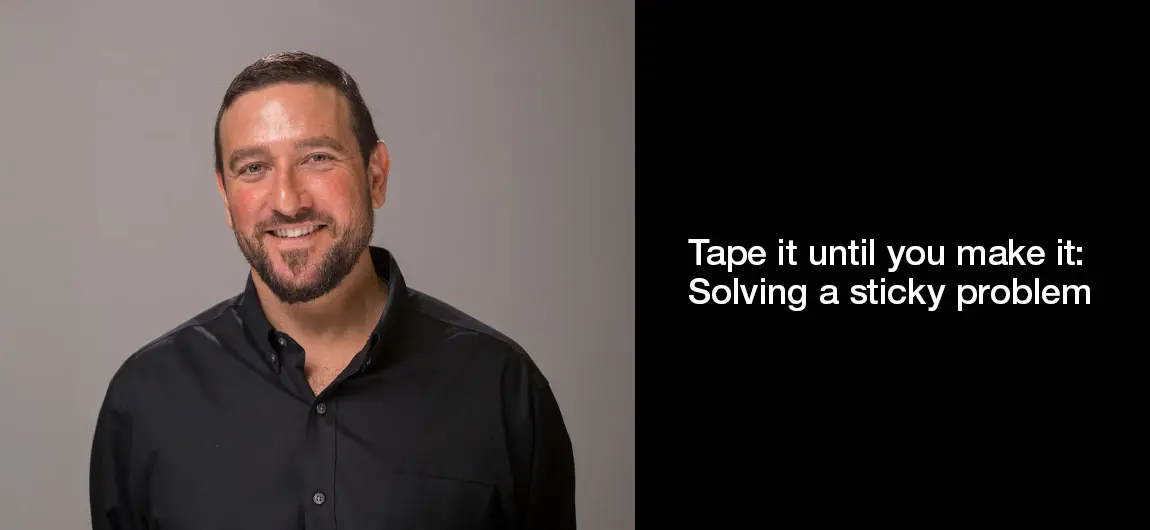
Doug Bard and his father, Bob, have been inventing for most of their lives. However, their greatest idea yet is that of tape. Specifically, moving tape where you can always find the end of the roll. It’s called The Wave Tape. Now, as they reimagine a simple solution to a universal issue, the duo is continuing to find success in the market.
View transcript
Packing Tape Solution – Douglas Bard, The Wave Tape
[00:00:00] Sanjay Parekh: Welcome to The Side Hustle to Small Business Podcast, powered by Hiscox. I'm your host, Sanjay Parekh. Throughout my career, I've had side hustles, some of which have turned into real businesses, but first and foremost, I'm a serial technology entrepreneur. In the creator space, we hear plenty of advice on how to hustle harder and why you can sleep when you're dead.
[00:00:21] On this show, we ask new questions in hopes of getting new answers. Questions like, how can small businesses work smarter? How do you achieve balance between work and family? How can we redefine success in our businesses so that we don't burn out after year three? Every week I sit down with business founders at various stages. Of their side hustle to small business journey. These entrepreneurs are pushing the envelope while keeping their values. Keep listening for conversation, context, and camaraderie.
[00:00:55] Today's guest is Doug Bard, the co-founder of The Wave Tape. A tape that makes moving more efficient. Doug started the company with his father, Bob. Doug, welcome to the show.
[00:01:06] Douglas Bard: Thank you very much. Great to be here. Appreciate it.
[00:01:08] Sanjay Parekh: So I'm excited to have you on because I honestly, I find this super interesting what you made here.
[00:01:13] Uh, and it's a side hustle too, which is super fun to talk about. But before we get into that, give us a little bit about your background and what got you to where you are today.
[00:01:21] Douglas Bard: Yeah, thank you. Um, so, uh, you know, my full-time job, I've been technology sales have been for a very long time, but I grew up as the son of a, an aerospace engineer.
[00:01:31] So in my house there was always kind of uh, innovating. I, I I impro improving, uh, coming up with solutions, unique solutions. So I always used to say that my father enjoyed more when things broke versus them when things were, because it gave an opportunity to solve things in a unique way. So, um, you know, I, I went to business school.
[00:01:50] I, you know, I grew up at the beach, fishing and surfing, have a love for water. And once I graduated college and, and got a full-time job, I also started working with my father on different inventions. So together we have, uh, he's got six US patents to his name. I'm co-inventor on three of them. So this started, you know, well over 20 years ago.
[00:02:10] Uh, so we've had some really kind of cool products. Um, some really cool mechanisms. But you know, bringing things to market is a, is a big challenge. You can come, most people come up with an idea then actually getting the prototype and we were prototyping way before. There were these little prototyping machines, you know, 3D printers, all of that.
[00:02:27] I had to really cut my teeth on all of that. So lo and behold, about three years ago, um, you know, like I've got a, a wife, two beautiful children, I a job. My dad comes to me, he is like, uh, I've got a new idea. And I'm like, okay. Uh, he says, uh, and, and his next sentence is, I was in the bathroom. I'm just like, oh, what, you know, what is, what is this? And so the real story here is my dad. So I'm, I'm now 52 dad's. 82. He was in the bathroom and could not find the end of a roll of toilet paper. And so that is where the, I, you know, so he, again, at that point, he's what, 79, 78. So I, and then, so he started telling me about it, and we started talking about it. I said, dad, I, you know, toilet paper, I just, I haven't run it. I couldn't really relate to it. And then through just a little bit more conversation, we're like, you know. Tape, like holy cow, clear packing tape like that is. Yep. And there's not a single person that we talk to unless they're a baby or too small and haven't actually used clip everybody can relate to this problem.
[00:03:26] And so probably about a, a year and a half of trying to like figure out how to get sampled. Like who knew? I knew nothing about, uh, polypropylene tape or all the different, you know, how do you get somebody to print on tape and, you know, what, what are the prop, what's the proper marking? So we had to go through a process, but lo and behold, about two years ago we had a, call it V 1.0. We kind of released that and, um, it was a, it was a, a red version of the tape. I'll, I'll show you just something that we have right here. So this here is the actual Wave Tape. So you can see, you can always find the bra, the break. So that is our, our tagline, Wave Tape. Find the break every time or see the break every time.
[00:04:02] But originally we had a red version with a, uh, a, a wavelength that was shorter. And so through our kind of experimenting, we realized that that wavelength actually perfectly overlapped taking away the utility of the marking system. And other people said it looked like hazmat material, uh, like hazmat mark, like. We're like, that's not good for Mark, you know, marketing. No, let's not do that. So we're sitting there and we're talking. We're like, ah, I gotta change the wavelength. And like I'm, you know, I surf and I'm maybe checking out the surf report and like wavelength, change the wavelength, bam. Wave Tape. And then it just started, you know, you know, wave tapes, see the break every time.
[00:04:38] Wave goodbye to the hassles, wave hello to the ease ride, the wave of packaging ease, it just all started coming together, right? And that's what gave life to what we're, uh, side hustling today, which is, you know, The Wave Tape. We've been, um, we've been at market for about nine months now and we, we've done really well. We just came back from our first trade show. That's the really cool shirt. Um, so, and we had the whole family out there. It wasn't just me and my dad. My brother came in from California. My mom even came. So my parents 82, mom's 78, my brother from California, and we were at the National Hardware Show in the inventor section. Yeah. And it was so validating. It was so unbelievably validating. Everybody has this problem, so we're. We're really excited. Yeah.
[00:05:19] Sanjay Parekh: Yeah. Um, a hundred percent have had that problem. Can't tell you how many times. And then you start peeling it and then the tape rips and then you gotta still find the edge of it. It's very frustrating and irritating.
[00:05:30] Douglas Bard: And a very interesting point on that, which is really bubble to the surface. Like we are saving, you know, kind of time and frustration, but to your point, the amount of tape that is wasted, we did a calculation. If we save one one inch per roll sold domestically annually, that is tons of waste averted annually. And so the big manufacturers have tried to come up with all these different materials and things, but sometimes it's heavier. It eliminates the reduction in carbon footprint. So ours is just very simple. You're going to waste less and tape more. It's that, that simple.
[00:06:02] Sanjay Parekh: Yeah. So I was gonna ask if this was the first time you've done on something entrepreneurial, but it doesn't sound like it. It sounds like this, there's been a series of stuff. Is there other entrepreneurial stuff that's still running in the background or is this kind of the main side hustle?
[00:06:15] Douglas Bard: Yeah, no, there, there are. So we, a couple of patents have expired. Actually I have one that sits on my desk that's expired. This is called Stop a spill. Gravity operated, uh, a drink holder. So you simply place your cup can bottle in. That one was super cool. That gave way to the, uh, self actuated Christmas tree stand, but we got beat to market by Black and Decker. Uh, we have something that's still available called trunk ta, the trunk table, which is a, basically a, um, a car camping and tailgating table for, uh, not SUVs, but like, um, sedans and things like that, that one we're still working on.
[00:06:45] The big most altruistic one is a device for people with walkers and their caregivers, so allowing them to go for, from sitting to standing and standing to sitting. And that is a, what they call a transfer and mobility device. So that one's still got, you know, it's still very, very viable and we're very excited about it. But the Wave Tape is really kind of was the, the one to that we could bring to market, that we could produce, that we could, you know, stock inventory and start selling and, uh, is most kind of applicable to universally applicable. Right? Yeah. Everybody can relate to the problem.
[00:07:17] Sanjay Parekh: So let, let, let's talk about the business, like how you came about this. So, okay. We understand the the background story of how the idea came up. Yeah. But yeah, I, like, I, I wouldn't know who to go to to talk about manufacturing a role of tape for me. So how did you approach that process and, and how did you figure it out?
[00:07:35] Douglas Bard: That's the, that's definitely the hardest part of all this, right? Like when you're, when you're going into a space that you, you're completely, uh, unfamiliar with. And I'd say it probably used to be harder. Uh, but now there are so many resources just. So through friends that I have that I've developed, like I've been very fortunate to develop a great professional network through LinkedIn. So I mean across industry. So I have friends that, um sell products, uh, you know, on Amazon who have sourcing partners. So I was able to, you know, get to them, talk to them about being able to like source actual tape and then talk to them about printing. So literally it's just conversation to conversation.
[00:08:14] Mm-hmm. Now you can probably use, uh, any of the AI tools, anything, and you can at least find a source right away. But this is, you know, just, just earlier to the, I guess the, the wide use of something like a ChatGPT. So through friends, um, who, who were sourcing products, we were able to get some prototypes made. And that's the first part of the, the process, right? You have to have some prototypes made. And we've made the mistake, like that device that I showed you before, stop a spill, we thought we were addressing a market need of stopping desktop spills, not so much the case, right? So that, I think that's a really important lesson that I learned.
[00:08:48] We had spent a lot of time working on something that really wasn't addressing a need, and if you're not addressing a need, you're gonna need a lot of marketing dollars. So to get a prototype built to kind of, as they say in a couple of different industries to to fail fast so you can like, you know, then move on. I think it's important to have prototypes made and bounce it off of like a, an objective, you know, focus group to get some, some solid feedback because then you can really start to understand. If we had done that with The Wave Tape, essentially, we probably wouldn't have gone with the Reddit first too. So kind of forgot some of the lessons learned, you know, then you, you start to kind of remember some of those as it gets more and more expensive. So.
[00:09:27] Sanjay Parekh: Yeah. Yeah. So how, how are you running this business then? Is it like, are you actually fulfilling yourself? Are you getting it's, you know, manufactured to ship you tape? Yeah. And then you're shipping out to other people, you using a third party? Like how are you managing?
[00:09:40] Douglas Bard: Excellent, excellent question. So again, really kind of depends on stage of life. I think for those things previously have tried to do it all myself.
[00:09:47] Sanjay Parekh: Yeah.
[00:09:47] Douglas Bard: And, um, you know, I have a full-time job. I have two kids who are 11 and 13. I have a full-time wife. Uh, I've got a, I've got, uh, a lot of demands on me, but I also am a loyal, my family is my life, not just my family here, but my, my parents, my friends. That is the number one priority in my life. And so to make this happen, uh, in order to make it happen for, for my dad, for my family, for myself, I realized that, you know, I was willing to give up a lot more, at least on the front end to get things going. So, uh, through some connections, again, networking through the guy that I worked with on some of the marketing design, I was able to connect with a, um, an individual, a company that actually has a supply chain that has warehousing and distribution.
[00:10:32] So clearly they wanted something for their effort, so we're able to negotiate a deal. I feel very fortunate in that those individuals are just, I've run into enough people. They're, they're more the exception than the rule. They're, they're fair, they're nice, they're fun. Not that people are bad, but I've run into enough. They're just great. And so they were able to basically be that infrastructure. To, to source the product now to warehouse the product and then fulfill through, uh, Amazon. They also have, uh, distribution of relationships. So they've got people out there talking to some of the other e-comm retailers, which I don't have the time to do that. I'm a sales person, right? But again, so many hours in the day. So there's that whole piece. And for that, they take a nice chunk. But they also allow me to do the Amazon piece, which we're, we're selling on Amazon today, and we have a lot of things to follow up from the trade show as well. So they're able to basically be our source should we get a big order.
[00:11:25] Sanjay Parekh: Um, yeah. Yeah. So talk to me about, um, how that works out. So it's been nine months that you've been doing this? Mm-hmm. Um. What is revenue looking like? Uh, what's the sales distribution? Are you selling to individuals like me? Are you selling to like contractors? Like, who's the buyer here? And, and how are they finding out about you?
[00:11:43] Douglas Bard: So we've been able to, um, so definitely, you know, with the, the... and let me make an important distinction. So The Wave Tape is patent pending. And you know this tape right here, it could be anybody's clear tape. It's not really about the tape itself, it's about the marking system, right? So that's a key piece of it. So it's patent pending and also, um, uh, the, the marking system, I mean, really it's not related to the color we we're doing... so our brand The Wave Tape is definitely targeted towards the consumer. Anybody in the stores, anybody watching like an infomercial. Anybody shopping on Amazon. But the reality is that this marketing system could change colors, it can be used in a warehouse. So right now we figured the quickest path to revenue would be direct to consumers under this brand where we could promote on social media, thus The Wave Tape. And so, uh, in the nine months we've been to market, we've done about $21,000 in revenue. Okay. Um, there's a, a good portion of that that came through a test on home shopping network.
[00:12:40] Where we were very well received. Uh, but they have very specific numbers about, you know, kind of the revenue per minute. Um, so that can be a challenge with something like tape. But we've also done well on Amazon and now we're available online at, at Walmart, Lowe's, uh, Tractor Supply, Target, and internally at ACE Hardware. So these are all kind of newer relationships, but we need to allow people to know about it, which is why we went out to the National Hardware Show, which... then we start talking to like, maybe there's a B2B play where it can be used in warehouses. And we also auditioned for Shark Tank, and we got the callback, did everything, did our, did our video.
[00:13:18] We were one step away from where they started actually, um, uh, you know, kind of videotaping us and they said, right, not this season, which is cool. We, you know, yeah. You know, just keep on hacking at the thicket, so to speak.
[00:13:29] Sanjay Parekh: Well, let me ask you about that specifically then. Um, because you, I, I'm, I'm a Shark Tank watcher. There's a lot of things on there that annoy me. Because I, I think the way they say it is not the right exact way. Sure. Um, where they're positioning it, but yeah, it's, it's like I, I'm bickering over small things. I think for the general public it it's just because I'm, you know, entertainment business.
[00:13:50] Douglas Bard: Entertainment too. A good TV.
[00:13:51] Sanjay Parekh: Right, right. Exactly. Yeah. So what was your motivation in thinking about going on to a show like that? Is it really for promotion or are you actually looking for an investment because this is a side hustle for you?
[00:14:01] Douglas Bard: We've been, you know, for a lot, so while I've made these concessions with, you know, going to market with this partner and things like that, we've kind of kept, kept it mostly to ourselves. And so we felt like, um, we really could probably make things happen without taking significant investment. Um, so Shark Tank was a little bit promotion, a little bit investment. We have people around us that we could probably take, uh, you know, take some money and give away some of the company. But the reality was we thought, like a lot of people think if people saw us, if people liked us, there's enough buzz, then maybe they just start buying it in mass.
[00:14:37] So, and there's also an element where I knew my dad would absolutely love it. I, my, my i 11 minutes of my 15 minutes of fame were used up on this, this segment on, uh, good Day New York when I was caught surfing during work hours. But that's a, a story for another time. But, uh, I, you know, it would, it would've been fun and we're still not ruling it out. But right now, the, the trade show has given us a lot to chew on because we've had, we've had some folks come up to us where they've got an infrastructure set up, let's just say it's a direct to consumer infrastructure. And they might have these audiences sussed out as well. They just need products to plug into their, their machine. Right. Right. And if the, the metrics work out, then so be it. So those, those conversations are taking place right now. So I feel I'm excited about that. You know.
[00:15:21] Adam Walker: Support for this podcast comes from Hiscox committed to helping small businesses protect their dreams since 1901. Quotes and information on customized insurance for specific risks are available at Hiscox.com. Hiscox, business insurance experts.
[00:15:42] Sanjay Parekh: One thing I wanted to ask you, uh, thinking about your, your kind of distribution partner. Yeah. Like, I've obviously never bought your product yet. Um, when you power of the word yet, yet, yet. Um, when you get the product, is The Wave Tape used on the outside of the product to ship it?
[00:15:58] Douglas Bard: You had to, you had to ask that question. Did you? Yeah.
[00:16:02] Sanjay Parekh: You're you're a brand guy. You're, you're an guy. I know, I know. I wanted to see if everything connects.
[00:16:08] Douglas Bard: And No, it's not until we, we know the company that actually, um that, that wraps every single Amazon box or does, does all their packaging. And actually we talked to some of those folks at the show, not that they'd be using ours, but, um.
[00:16:22] Sanjay Parekh: Right.
[00:16:22] Douglas Bard: But yeah, it's just, uh, we're, we haven't earned that right yet. We, hopefully, one way we will, because again, if you think about the amount of tape that's wasted, that's really, that's probably one of the most compelling aspects that really wasn't immediately apparent to us. Right? But you literally see these big tape companies that have VPs of sustainability, and it all kind of comes back to just waste less, you know? I mean, so, you know, it's, yeah.
[00:16:49] Sanjay Parekh: Yeah. The amount that one of these, uh, online sellers probably was than a day is. Probably mind boggling.
[00:16:57] Douglas Bard: Uh, it, it's, and they could take it and like, so any of the, the guy like UPS could make this brown and gold, FedEx blue, you know, blue and orange, right. Home Depot. So it's the, the, the opportunities with Wave Tape are really kind of wide open when it comes to that private labeling, um, you know, type, type approach. Not, I mean, even school book stores at like, you know, these big, you know, division one schools with their, you know, it. The, the, the colors Right. You know, it's..
[00:17:25] Sanjay Parekh: Yeah, yeah, yeah. Did you have any experience in logistics or packaging before this, or just going into this cold?
[00:17:33] Douglas Bard: No, no, no. No experience with really kind of like, you know, packing and shipping, um, definitely entrepreneurial experience, but just through, again, through friendships where, and I, I, you know, like we talked about, I think prior to the interview. Having been at like the beginning of the internet as they call it, being where we were back in in that time. Like I've seen it, I've watched it, and I just kind of, you know, I've had these other ideas and just kind of worked on them. You know, everything from, you know, writing music to inventing products.
[00:18:00] But, so all that's, it's, it's really cool to watch all that evolve. And so now it's just, you know, whether it's, uh, Amazon or TikTok shop, these three pls. Uh, the, it's right there before everybody Shopify, you know? It's amazing. So.
[00:18:14] Sanjay Parekh: Was there, was there anything that made you nervous about starting this business? No. Anything that gave you pause?
[00:18:19] Douglas Bard: No, because the reality is I'm a, I'm a pretty like, uh, philosophical kind of guy and, uh, uh, not to get too heavy for this, but I mean, you know, this, this is life. This is not a dress rehearsal. We're here. I mean, if I'm, if I'm above ground feeling good and everybody in my family as well, and what, what do I really have to lose? There's things you can really that do that are like, I served Honley Bay last week when it was too big for me. That's a different story. Maybe I shouldn't have done that. But, you know, it's, it's a chance worth. I'm not putting my family at risk or anything like that. So, you know, just, and I learned enough to feel really good about it too.
[00:18:53] So that's, I think that's important. What I see with some of the younger set now, uh, it's, there is a, you know, they want, just like I was told, you know, they want things handed to them pretty quickly and things to happen pretty quickly. And I, I don't know if there's any, especially, you know, you see all these people that are successful on social media. There's a lot of work that goes into those people producing, you know, and all, and, but they, it's not seen, that effort is not seen, and I think that's where there's gonna be a challenge. So. I feel really good about my effort 25 years into the whole invention thing. So yeah. I've, I've learned a lot, so, yeah.
[00:19:28] Sanjay Parekh: Yeah. So let's talk about like, the boundaries of this. You, this is a side hustle. Mm-hmm. You've got a full-time job. Yes. Uh, and, and you're a surfer too. Mm-hmm. Uh, so you wanna get out and hit the waves. Yes. Um, how do you think about that and how do you like delineate time for a new side hustle like this and make sure that everything's taken care of.
[00:19:48] Douglas Bard: Okay. Excellent question. Thank you. First things first, family and friends. Again, always first no matter what. So if there's something going on with the kids or or my wife or my parents, that that takes priority. That said, if that's all set, I have a full-time job, but generally with something like surfing, which is very, very important for me personally, other people might go to the gym or do whatever, but, uh, the wa the waves or the winds tend to be calmest in the morning.
[00:20:12] If there's good surf, I can get out there between the time that the sun rises and be back to even take my kids to school. So that's normally not an issue. I can squeeze that in. I could go on a lunch break, but I make time for that because whatever biochemical response my body has. It feeds me and it energizes me, and that makes me want to go, go, go. So that's very important as well. That said, my full-time job, it's a great company. They treat people very well. I've done very well for them. I respect the boundaries. So, um, you know, this is like, you know, during my lunch hour right now, so I can do this, but nobody's calling me up from the company at eight o'clock at night when I'm reviewing a proposal, nor are they calling me up at four 30 to say good job for getting up and doing your admin before you go surfing, because that's just how I've learned to operate at this stage of the game. You know? So it's just a matter of, um, I don't... the word ruthless, it doesn't have like a positive con, but it's, it is prioritization, right? And knowing that there are things that are going to help me kind of move along through my day.
[00:21:09] And there are things that are gonna detract. Next Wednesday, I'm going to see a really cool band at night with my buddies. I might be slower on Thursday morning, so, but you know, you have to, nothing is a, an absolute in this world in my mind, but that's, that's, you just have to respect the boundaries. Make sure you're doing right by who, whoever, or how, however, you've kind of like dictated how you're gonna act and what you're gonna do, and that's it. The rest is kind of, you know, up to you.
[00:21:33] Sanjay Parekh: Yeah. So I take it No, no surfing on Thursday morning. If you're gonna be out late Wednesday.
[00:21:37] Douglas Bard: Uh, well the truth is, if it's really good, I'll find a way to get out there. But yeah, it's just, just that helps to wash away some of the, uh, some of the previous night's activities.
[00:21:46] Sanjay Parekh: So there, there, there you go. There you go. Um, is, you know, beyond surfing, do you have any kind of exercise routine or is that it, is that the.
[00:21:54] Douglas Bard: Yeah, there's, there's actually a guy locally go figure, he's a surfer, but he start, you know, CrossFit's a big thing and I've never been a gym guy. But again, at, at my age, I've noticed certain parts of my, you know, body don't work as well. So he started up a CrossFit, but that's, it's geared towards like water sports. It's called Salt Fitness Project. Super, super cool people. It's like our community's pretty local here, so there are a lot of the, and a lot of these guys are younger than me, but so they're already more fit and they might not have as many responsibility, but it helps with the surfing.
[00:22:23] So again, because I wanna surf and keep surfing, I go ahead and do that. So you know, I, getting outside and being outdoors is hugely important. We just came back from a trip to Kauai and it always reminds me, I live in the northeast. This is where my family is. But there are a couple months outta the year where it's, you know, you spend a lot of time, I'll surf all winter long, don't get me wrong. I'm in a wetsuit. I was, you know, all, all the time. But, uh, it's just nice to be outdoors and moving around. You know, red blood cells carry oxygen. The body becomes, it's just, it's... makes sense.
[00:22:53] Sanjay Parekh: Yeah. Yeah. Is there anything that you've done or implemented to help you kind of manage all this, like technology or apps or systems to help you kind of make sure that you're paying attention to?
[00:23:04] Douglas Bard: Yeah. I try to stay, you know, up with technology it gets a little bit harder because things come faster and faster. About seven years ago I took a course in, in artificial intelligence from MIT one of those online courses, which was... you know, I, I, I find there are tools like even just leveraging, say, like Outlook in the way that I do.
[00:23:20] Like some people, I mean, now you have copilot, which is super cool and that's, that's great for those. But like, just, you know, I've developed little systems that allow me, because I do have, my dad says to me all the time, I was like, I don't, I don't know how you do it. And I'm like, I said, dad, it's picture like, you know, like a, an Olympic swimming pool and you have all these swimmers, right? It's just I, the tools I have, like I, they allow me to like, keep the swimmers in their lanes. You know, I'm just kind of managing that way. It's, it, it's, it's not easy, but it's, you know, I'm up to the task, so.
[00:23:51] Sanjay Parekh: Yeah. Yeah, yeah. Um, okay. Let's talk about the, the product a little bit, um, and kind of how you've figured out how to market this thing so it's not, it's not the most.
[00:24:05] Douglas Bard: Life can be hard. Your packing tape should be easy.
[00:24:09] Sanjay Parekh: That's a good cozy there for, for your bottle. That's it. Yeah. Um, so how, yeah, how do you make the product stand out? I mean, people, you know, if you ask me like, what, what am I worried about today? Packing tape was not anywhere on the list. The top a hundred list. Correct. Um, so how do you think about that in terms of marketing and how, and selling and, and talking about the product?
[00:24:30] Douglas Bard: Correct. So, I mean, a, a couple different ways. Um, so we're, we're very grassroots right now, right? So like we haven't really spent any, you know, major dollars on advertising. I have, you know, taken on the, the persona of the tape, dude. Uh, kind of locally and, and you know, anywhere I go, like, we'll, we'll share, we'll share information about just, and it's, that's not really like, you know, like, um, egregiously selling tape. It's me doing maybe a surf report, you know, if we, we align ourselves with, um, um, you know, initiatives that we believe in. Like, I think March 26th was, um, uh, Jersey Mike's give back day, like all the revenue from the subs go.. So on that day we'll give back too. We're wave tape. So definitely aligned with like, you know, anything from the Surf Rider Foundation if there are local families in need around the holidays. So we do, it's, it's very kind of organic in that sense.
[00:25:20] Like yeah, we know we're just packing tape, we get it right. But if we can make things maybe just a little bit easier and, you know, we sure as hell appreciate the, the fact that, you know, people go through things and you know, again, it's just packing tape. So if we can do a little something to help them. You know, that being said, what's, as I mentioned earlier, what's emerged as kind of like a, a, a main value proposition is really the environmental benefit. Now, we're not gonna sit here and go, we're saving the environment, right? But we are gonna say, Hey, you know what? You're gonna waste, you know, waste less hassle, less tape more. It's pretty simple, right? So if you can, you know, it's, it's about creating that awareness, which is why we did the Shark Tank thing, which is why we're, you know, we talked to, you know, certain, certain influencers at the the National Hardware Show picked us up, a company called Tools in Action, you know, and they, they promoted us.
[00:26:08] And here I am as tape dude, trying to like do all these, you know, Instagram posts. I, you know, four or 500 views. They interviewed my dad at the show, Uhhuh, would you believe that he got like over half million views and five th you know, it's just, it's about that kind of exposure and alignment. So, um, at what point do we hit that kind of tipping point? You know, the, the, the Gladwell kind of. I don't, I don't know. But you know, we just, we just believe in just keeping it going and just trying. I wish there was some kind of, I mean, maybe I should punch it into ChatGPT and I think I probably have, but there, there is no real handbook, so go to the trade show.
[00:26:46] I do have my latest promotional idea. So here we are today. This is awesome. Really appreciate this. Um, there's a, a association of independent hardware stores, right? All, and they're scattered out through, throughout the United States. And so I, I thought, how cool would it be if I hop in a Wave Tape, uh, branded van with my dad and we hit the road and we're gonna visit these places and we're gonna do it. We're like two weeks on the road with dad, you know, and we're gonna go out and we're just, it's really kind of that grassroots thing, you know, we could take on a. A bunch of advertising now, but if you go to like an Amazon or any of the other places, you know, the cost per click when a, when a category is owned by, I won't, won't mention name by name, but these big brands, it's right. You're, it's David. I'll do another gla, it's David verse Goliath, you know? Yeah. So we're, but we're happy to be David. We have our slingshot, so.
[00:27:34] Sanjay Parekh: Yeah. Yeah. What, so what's your long-term view then of this business? Is it. Is this just a product? Is, does this become a company with other products? Is this something that you're gonna exit and sell off? Is this a life, uh, kind of a life business that you're just gonna keep running forever? Like, what's the thoughts?
[00:27:51] Douglas Bard: Well, I, I, the, the, the plan, the strategy is to make, you know, to make Wave Tape a, a viable, you know, kind of marketing success, if you will, right? But the, the marketing system itself, the Wave Tape marketing system. We think it's, it's, it's viable in the sense of, you know, licensing it to any of these, you know, it could be any of the big box retailers. It could be any of these guys that spend millions and millions and millions. The market is huge globally. It's in the billions of dollars for taping and packaging. So, um, we don't know yet whether it's gonna be a, a huge B2B play.
[00:28:28] We, some people telling us it absolutely is that, you know, these big, these big retailers want to use it in their own warehouses. Um, but we also see kind of like the B2C play. So I, I think my main focus, I'm kind of a, uh, market facing kind of guy. I'm going to try to push that as hard as I can. So we have the Wave Tape brand, then you've kind of got the marking system for any of these other guys who need to use tape and maybe one of the big, uh, maybe one of the big manufacturers picks us up and makes it theirs to, to kind of license out. We, we, we don't know, but that's the, the general plan. Get the brand going, make it a success. Have a steady kind of, you know, revenue stream there. While we also push kind of the, the B2B discussions and any other kinda licensing, so.
[00:29:11] Sanjay Parekh: Yeah. Yeah. Interesting. Um, okay, last, uh, couple of questions here for you.
[00:29:16] Douglas Bard: An easy one. I'm not going anywhere.
[00:29:19] Sanjay Parekh: If, if you could go back in time and, and, you know, well, it's only been nine months, uh, or well nine months plus the time of, of developing this, but if you could go back in time and do something differently, um, is there anything and, and what is that and why?
[00:29:34] Douglas Bard: Well, uh. I would've, I would've set up like, um, you know, we, there was a reason we didn't set up, uh, our own e-commerce site right off the bat. Like if you went to, if you go to the WaveTape.com, it'll take you to a YouTube video. And we didn't do that initially, and I probably would've set that up because I think we, we probably missed some, some good opportunities. I'm in the process of doing that now. Yeah. Um, I don't, I know it's not like a regret so much as like, maybe I should have pushed back on the reasons why we did it, but, you know, my brother likes to say, when you lose, don't lose the lesson. Or the other one is experiences, what you get when you don't get what you want. So.
[00:30:13] Sanjay Parekh: I like that. Those are, those are two good things.
[00:30:16] Douglas Bard: He's, he's a little crazy, but he is, he's a smart guy.
[00:30:19] Sanjay Parekh: Okay, last question for you. Um, what would you tell somebody that's thinking about doing what you've done and starting a side hustle? And running it while they've got a full-time job. What advice would you give them?
[00:30:32] Douglas Bard: Uh, you know, ru ruthless prioritize. If, if, if you've got a fa I mean, if you don't have family and friends, just, you know, just go, just go. Just go and, you know, try and, and, and make sure you're, you're not operating in an echo chamber, not your own, like, you know, that's huge. So if you got family, prioritize. Make sure you, you, you order things like family and friends come first, don't operate in an echo chamber. Um, just, and then all the entire process. Make sure you're getting feedback outside of your sphere of influence because people, there are a lot of people out there who just wanna like, make you happy or are too scared to tell you that, Hmm, that's not a good idea. You need, you need honest feedback because that's really going to, I think, you know, that'll guide the sound business decisions.
[00:31:18] Sanjay Parekh: Well, this has been fantastic, Doug. Um, I feel the same way. Where can our listeners find it? I appreciate that. I'm, I'm glad that's true. Um, uh, where can our listeners find and connect with you, Doug?
[00:31:30] Douglas Bard: Uh, so at, uh, you can go to the Instagram, The Wave Tape, uh, Facebook, The Wave Tape, uh, TikTok, YouTube, The Wave Tape. We are launching our, our Shopify site, I mean, in the next two weeks. So that'll be thewavetape.com. We can be found on Amazon. Um, so I think that's pretty much it. We can be found, I think I mentioned before, online retailers include Walmart, Lowe's, Tractor Supply, Target. Yeah. So we're, we're out there. Um, but feel free if so anybody wants to dm, uh, probably the Instagram is, is the best way.
[00:32:05] Sanjay Parekh: Yeah. Awesome. Doug, thanks so much for being on today.
[00:32:09] Douglas Bard: Thanks for having me, Sanjay. Appreciate it.
[00:32:15] Sanjay Parekh: Thanks for listening to this week's episode of the Side Hustle to Small Business podcast, powered by Hiscox. To learn more about how Hiscox can help protect your small business through intelligent insurance solutions, visit Hiscox.com. And to hear more Side Hustle to Small Business stories, or share your own story, please visit Hiscox.com/side-hustle-to-small-business. I'm your host, Sanjay Parekh. You can find out more about me at my website, SanjayParekh.com.
Subscribe to our podcast



Did you start your business while working full-time at another job?
Tell us about it! We may feature your story in a future podcast.