Professional Organizer: D'Nai Walker's D'Clutter Method



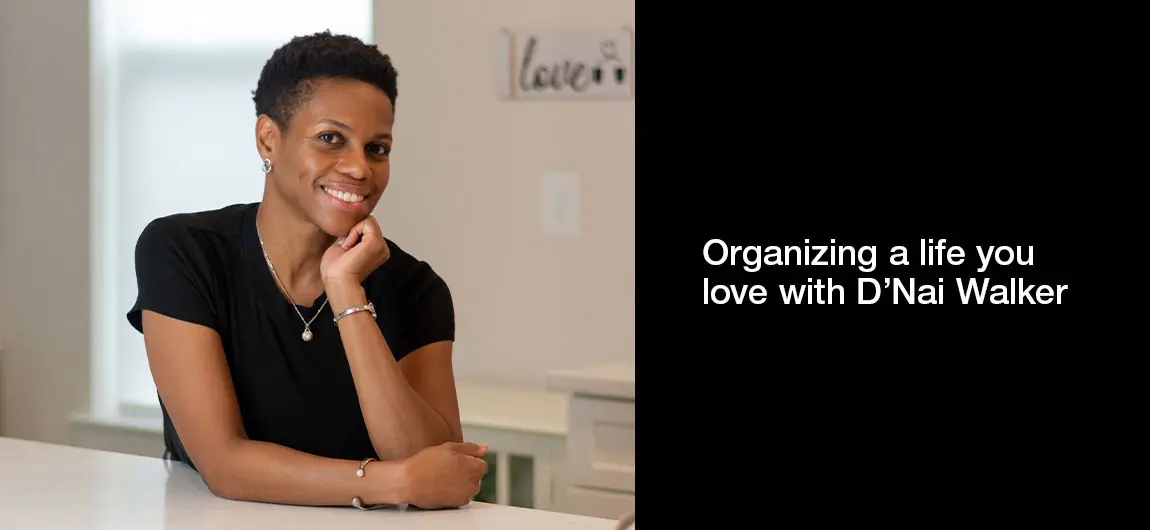
D’Nai Walker is not a naturally organized person. It wasn’t until she discovered professional organizer Marie Kondo that she got into the practice. When she was laid off, she started doing it on the side, until she was encouraged to go all in. She founded D'Clutter by D'Nai, an organizing company that specializes in senior downsizing, home organization, and productivity solutions.
View transcript
Professional Organizer – D'Nai Walker, D'Clutter by D'Nai
[00:00:00] Sanjay Parekh: Welcome to The Side Hustle to Small Business Podcast, powered by Hiscox. I'm your host, Sanjay Parekh. Throughout my career, I've had side hustles, some of which have turned into real businesses, but first and foremost, I'm a serial technology entrepreneur. In the creator space, we hear plenty of advice on how to hustle harder and why you can sleep when you're dead.
[00:00:22] On this show, we ask new questions in hopes of getting new answers. Questions like, how can small businesses work smarter? How do you achieve balance between work and family? How can we redefine success in our businesses so that we don't burn out after year three? Every week I sit down with business founders at various stages of their side hustle to small business journey.
[00:00:43] These entrepreneurs are pushing the envelope while keeping their values, keep listening for conversation context and camaraderie.
[00:00:56] Today's guest is D'Nai Walker, a professional organizer based out of the Washington DC area. Using your signature D'clutter Method, D'Nai helps families and individuals create a space that works for them. D'Nai, welcome to the show.
[00:01:09] D'Nai Walker: Thank you. Thanks for having me.
[00:01:12] Sanjay Parekh: So I'm excited to have you on because I will be the first to admit I'm not that organized. I think I'm organized on my computer, but, uh, in real life, not so much. Um, but we'll talk about all of those challenges and problems in a minute. Give us a little bit about your background and what got you to where you are today.
[00:01:28] D'Nai Walker: Sure, sure. So I grew up in a military family. I moved around all over the world, uh, with my mom being in the army. so I was born in Georgia, but then, uh, we lived overseas in Germany and Italy bounced back to the states. Went from Georgia, Hawaii, and then I did college in Tampa. From there, I got a PR degree and I decided I'm gonna move to DC. So I packed up my car and my dog with no job. I was a bartender, got a, I got a gig bartending, literally, I moved there on a Tuesday, had my first shift on a Friday. Like I put all my ducks in, uh, one ba or all my eggs in one basket and just did it. So, um, after that I got a job running a promotional, um, team through, um, a liquor company. And, uh, then I started working in the spirits world. Yeah.
[00:02:15] Sanjay Parekh: Oh, wow. Mm-hmm. So did that job stem from being the bartender? Is that how you.
[00:02:19] D'Nai Walker: Yeah, pretty much, pretty much. I think because they knew that, I knew my thing around the bar and I had worked with promo agencies before. It was an easy transition for me to, um, go to managing a team of models. Um, and I knew how to schedule and all of that stuff in payroll. So yeah, I did that for a while. And then Remy Martin liked me and I got hired directly, uh, with them.
[00:02:42] Sanjay Parekh: Oh, that's awesome. It's, it's so funny, like the just serendipity of life, right? Uh, and also like the, uh, the ignorance of youth as well of just like, I'm just gonna pack up my car and go to DC, get a job and Right. Figure it out, plan. Right. Like that, that sounds a little terrifying now. Right? But, um, to, to me at least. Maybe not to you, but, uh, but uh, yeah, it's obvious that it has all worked out, so then. Um, so somehow along the way then you started this business, how did that all happen?
[00:03:12] D'Nai Walker: Right, so, um, I got laid off after a few years, uh, after six years working in the spirits industry. I went from spirits to coffee actually. And um, I went through another layoff and I'm like, I can't believe it. I, I cannot keep doing this with this corporate life and so at the time, there was a really popular organizer that came out and she had her TV show, Marie Kondo. Um, and she, she is, you know, huge. Everybody that's an organizer knows who she is. And I got really into her technique and, um, her methodology about, you know, what things sparked joy and just holding onto the things that you love. So I started picking up jobs through a gig app and I really enjoyed it, but I still, I didn't put any, Faith in doing that full time. So I did go back to one last, um, corporate gig and then after that, I'm not gonna lie, I got fired from that job. You know, I don't know why I stayed in sales for so long because I really was not good at it. Um, so I had the opportunity to start this business and go all in and I did.
[00:04:17] Sanjay Parekh: Do you think you got fired because your heart just wasn't into it? Absolutely. Because you knew you did the organizing thing.
[00:04:22] D'Nai Walker: Oh, absolutely. I knew that I did not like going in every day. I did not like what I was selling. I didn't like the whole vibe in the office. It just wasn't me and I was miserable, and I just didn't put my full effort into what I was doing, and I didn't like that pushy, kind of sales salesy kind of thing that we were doing. And it showed in the number because that wasn't making any sales. And eventually it's like, okay, you know, this isn't for you today.
[00:04:49] Sanjay Parekh: Yeah. So a after that you didn't think again about trying to get a job, you were like, no, this is it.
[00:04:54] D'Nai Walker: I did, you know what I did? I started, I went through the job hunt and I don't know if. Looking for a job nowadays. It's brutal. I mean, I think it's always been brutal, but it is really bad and a lot of times you don't even talk to an actual person. You're recording your, um, uh, your intro to computer, you know? And so after months of that, I was still, I knew I had the skills organizing and I had already set up my business and was doing it, you know, on the weekends.
[00:05:21] And so I'm like, I still have this where I can make a little money while I'm looking for a job. And then finally, um, my boyfriend actually was like, you know, why don't you take, you got the time, put it, put all your energy into this because you're good at it. I said, all right, let's do it.
[00:05:37] Sanjay Parekh: Yeah. Had you ever been an entrepreneur before this? No. Is this the first? Okay. Not at all.
[00:05:42] D'Nai Walker: Not at all.
[00:05:42] Sanjay Parekh: Anybody in the family?
[00:05:43] D'Nai Walker: No. I mean, we got some hustlers. Uh, you know, we got the hustle cousin, you know, but, uh, no, no entrepreneurs in the family at all.
[00:05:51] Sanjay Parekh: Yeah, no. So, so did anything make you nervous about going all in? Like, not having that.
[00:05:56] D'Nai Walker: Everything made me nervous.
[00:05:57] Sanjay Parekh: You know, supposedly. Steady paycheck.
[00:05:59] D'Nai Walker: Everything, everything made me nervous. That was the, the most stress, you know, like not knowing how, you know, I was used to relying on, okay, every first and 15th, I'm getting this amount of money is easy to budget, but not knowing how much you're gonna make on a week, weekly or monthly basis is stressful. Trying to figure out how to get clients, how to even just set up the business, you know, I didn't know any of that, so I really just kind of went in blindly and was like, oh, okay. I'll figure it out as I go, you know, fake it till you make it kind of thing. And, uh, so far so good.
[00:06:33] Sanjay Parekh: Well, was there anything you did to, to help you overcome that nervousness? I mean, obviously it's just, you know, like everybody else, you just gotta do it right, essentially. But was there anything that helped you push you over that kind of hurdle.
[00:06:45] D'Nai Walker: I think that I had a good team behind me. I had a good support system around me, and then I just inundated myself in trying to learn everything. I took advantage of, um, the small business association, the resources that they had for free. I got a mentor through there that was very helpful and just nice. Whatever free resources I could take, that's what I did. And I mean, I'm still learning. I feel there's still plenty that I need to, uh I learned to advance myself, but yeah, that's, I just dug as deep as I could.
[00:07:17] Sanjay Parekh: Yeah. I think right there, I think you've hit upon the thing that so many people feel like they can't be an entrepreneur, or they're not ready to be an entrepreneur because they don't know all the things, and the secret is all of us that are entrepreneurs, we don't know all the things. Right. We probably don't know 99% of the things right. But we figure we can just figure it out. Mm-hmm. Um, and great on you for finding a mentor like that too, that, that helped you out. Right. In particular about this path that you ended up going down. Um, obviously like you, you watch Marie Kondo and all that stuff. Was there anything in particular that made you realize that this was the path for you? Like this is what you really love doing?
[00:07:56] D'Nai Walker: Absolutely. I think that I've always had that helper sense in me. I've always done volunteer work and things like that, and it's just something that I've always enjoyed doing. And outside of the organizing a closet or a pantry or that sort of thing, people really
[00:08:12] appreciate the help that you give them. Like usually the people I'm working with, they're just utterly overwhelmed. And if I can come in and cause some, uh, some structure in their life and make things easier throughout their day, it, it, it really is a blessing, you know? And so it is just such a good feeling being able to help these people.
[00:08:31] Sanjay Parekh: Yeah. So, um, let, let's talk about that talk, talk about the, the client side of it. Obviously you were. Um, well organized before, um, and so obviously organized for dealing with clients, but the challenge for most people is when they're starting a business like this and you're, you're leaping in from dealing with the spirits and coffee world and, and, and kind of marketing and PR essentially for that. A different market completely. Like you probably had no contacts. Yeah. How did you go about and find clients? How did you get them to know that you existed? How did you approach that for yourself?
[00:09:06] D'Nai Walker: Um, in the beginning, I used, uh, nextdoor. I went on next door. Okay. And I created a little page and I offered up a, a discounted rate for me to come in for some of my neighbors.
[00:09:17] That way I could get some reviews and get some pictures. And it, it worked. And I still work with a couple of, um, my original clients from there. And then word of mouth. I ran an ad on Google that was very helpful and I also ran an ad on Yelp, um, which is very helpful. I will say one of the key things that helped me is my partner. He's, um, in tech and so he helped me a lot getting to know, um, SEO. So I think my website was probably like, if you don't know anything about SEO, um, and you build a website and you're wondering, nobody's coming to, nobody can discover me. How come, you know, I'm not being found? That's why. And so I think I was a little ahead of the game knowing that I had to put in those keywords and all of that sort of thing.
[00:09:59] Sanjay Parekh: Yeah. Having, having free help at home, uh, that is always, very, very helpful. Yes. That's, uh, that's the luck part of entrepreneurship that, uh, that, uh, a lot of times doesn't get talked about. Okay, so talk about like the client side of things, you know, and I think the client side of things of all businesses can be tough.
[00:10:20] Uh, and you've probably got a, a series of clients that are tough to deal with and then the ones that are easy to deal with, um, easy to deal with, let's not even talk about them because those are easy. Right? Let's talk about the tough ones. Um, what is a tough client for you and how do you deal with them to be able to make them successful?
[00:10:38] D'Nai Walker: I would say the toughest client that I work with, type of client I work with are, um, people that don't know how to stop shopping. Like they know that they want, I mean, it sounds funny, but it's, it could be a major issue. It's almost a compulsion for some people. You know, it's, it's very difficult when someone knows that they are not happy with their space and they know that things are chaotic. But every time you go over to their house to help them, there's 10, 15 more packages and you're like, oh my gosh. You know, we're trying to get things out of the house and make space, but you know, they're, they're using the shopping as therapy, you know? And so I find that to be difficult because sometimes I feel like maybe you're just not quite ready to make this step.
[00:11:21] You know, you, you think you are. But if you, if you can't stop this part of it, you know, stop bringing things into the house, then we're not gonna really be able to move forward. So I find that to be difficult. Um, and so I actually do have one client that we're trying a 30 day no spend challenge with her. And, uh, we'll see how it goes, you know?
[00:11:40] Sanjay Parekh: Yeah, yeah. Do you, um, so for a lot of entrepreneurs, when they have difficult clients like this, they try to figure out a way to either. Um, make that relationship better or fire that client. Um, what do you think about that in terms of your business? Like, do you think about clients of like, look, I just can't help you and you need to fire that client even if they're gonna continue paying you money and you're not gonna publish?
[00:12:03] D'Nai Walker: Yeah, no, I don't like that. I, um, I will absolutely be honest with them and say, look, I don't think that we're the, the right fit. I think maybe you need somebody with, um, a specialty in what you are dealing with, you know, like a hoarding situation. I don't really work with hoarders, you know, because it's a completely different animal.
[00:12:21] Right. You know, and I'm not equipped for it. Yeah. You know, and I've had to turn, even though even in the early days of your business where you, you know, you're getting one client a week, you know it's even that and you need the money, but I just know that I'm not equipped to work with hoarders and I have to turn it down. But what I do is try to use my network or use my resources to find someone that I can introduce them to so I'm not just leaving them high and dry.
[00:12:44] Sanjay Parekh: Yeah. So that, that's a, a really interesting point you make there. Uh, so for most entrepreneurs, especially in the early days, right, you will take any business, any deal.
[00:12:55] That comes because you gotta pay the bills. Right? And you, and a lot of times it ends up diverging you from what the goal is or where your goal is in the business. Was there something that really made you realize that that was the right thing to do for you? Um, like did you take on some clients that you just afterwards realized like that was..
[00:13:12] D'Nai Walker: Absolutely, yeah. I've taken on clients and I'm going over there several times and not moving the needle at all. And You know, I'm a results person. I wanna see what I've done. I wanna be able to have the big reveal with you and show you like, oh, check out your closet, check out. But if after every session nothing's happening, you have to be realistic and say, look, this is, this is not working.
[00:13:32] What we're doing is not working. We can try different ways, different methods. If that doesn't work, we got to maybe cut ties and find you somebody else. And it hurts. And it also, it hurts also in the fact of like, you kind of have that feeling like, dang, I'm a failure there. I came in here to get a job done and I didn't. You know, and, but I guess you can't look at it that way. You just have to know like where your strengths are and where you know you're gonna be most useful, you know?
[00:13:58] Sanjay Parekh: Yeah. Yeah. That's interesting. Um, okay. I wanna, uh, change topics a little bit. Um, I noticed that you have, A substack that you're using to kind of talk about stuff, right? What motivated you to start that? How has that gone for you? Like as a marketing tool or is it a marketing tool for you?
[00:14:16] D'Nai Walker: Yeah, a little bit of both. So eventually I do want to, I'm trying to grow the list, um, so I can talk more about wellness in general. The more I work with these clients, I realize that clutter and mental health are sometimes hand in hand. You know, I feel like the, the bigger the mess is, the bigger mess, the mess in your mind is, you know? Yeah. So I wanted to provide some other, um, some other source of interest and some other resources for my clients and other people out there. That's, about just general wellbeing around the home and around work and yourself. So, yeah, and I also wanna use it to advertise the D'clutter Method that I just came up with, um, recently, and I'm just kind of early phases of launching, and then also maybe eventually I'll start, uh, you know, selling some merchandise of my own.
[00:15:09] Sanjay Parekh: Yeah. So what, um, why did you decide to go with Substack versus anything else? Like what, what was that decision process for you, and then how do you think about the content that you push on there? Um, and like what the audience wants, like how, how are you thinking through that?
[00:15:26] D'Nai Walker: Yeah. Um, look, I'm not a writer. I'll be honest, I, I do the best that I can. I, in my newsletter, I share articles that I enjoy. I do share some of my own, the ones that are about organizing. But as far as wellness and productivity, I share other ones that I found interesting that I think I'm looking for people that would have maybe similar interests to me in wellness and productivity. I chose Substack because I do like that you can also share. Other substack. And so if someone on Substack likes what I'm have to say and they wanna share it with their audience, it's very easy to do and vice versa. So I did try another one briefly, and I didn't really like the, the setup. I feel like Substack is very easy to use and it's kind of social media style. Um, and I just feel like the people that are on Substack, some of them, they're not there to grow. They just want to have their voice heard. I love it.
[00:16:19] Adam Walker: Support for this podcast comes from Hiscox, committed to helping small businesses protect their dreams since 1901. Quotes and information on customized insurance for specific risks are available at hiscox.com. Hiscox, business insurance experts.
[00:16:41] Sanjay Parekh: Okay, let's, um change a little bit and, and talk about kind of organizing clutter and all that as it relates to entrepreneurs. Um, that's our audience, that's people listening to this podcast are they're side hustlers and small business owners. Um, what advice, like, as you know, running your own small business there's a lot of things to do. It's, it's very busy and it can very easily, things start getting cluttered and unorganized because you're just running from fire to fire. Right. So how do you think about that for yourself and, and what advice would you give other small business owners inside hustlers in terms of how to make sure that they stay organized and on task and, and not overwhelmed by all of the stuff that keeps happening.
[00:17:24] D'Nai Walker: Um, I really feel like you shouldn't just wing it. I think you have to plan. I think you have to like, figure out what, where you're headed, you know where you wanna head, think about your goal, and then work backwards from there and then plan it out. Like, for instance, uh, every Sunday night, I think about the week ahead. And what I do is think about the big things that I wanna do. Look at my calendar and I schedule in everything. And then I build around my schedule, you know, and so I can easily see where the, where I have space. And so if I wait day to day to try to figure out, oh, three o'clock I have time, it's too late by then.
[00:17:58] You know, you know, I've already laid out what I need to do and then I can see very clearly, you know, where I have space if something pops up. But I do think, you know, planning backwards, you know, don't, I think you have to at least plan out like five years, three years, one year, and build in, figure out what resources you need to get you to where you're going.
[00:18:20] Sanjay Parekh: Um, that, that's, that's an interesting kinda long, kind of long, medium and near term planning, uh, horizon. Um, and interesting that you're saying five, three and one, because I think those are different than what a lot of people say. Mm-hmm. A lot of people talk about 10 or 20 plans or whatever, right. Um, and, and I think that's a little bit more near term, so that's interesting to me. What about your, for your own business, like what do you see then as a five, three, and one year plan for yourself?
[00:18:47] D'Nai Walker: Yeah, so for me, first professional organizing is very physical. I have to be realistic that I cannot physically be in these houses, um, climbing and crawling and ducking and, you know, doing all of this forever. So my goal is to do more public speaking and do more seminars and be more of a coach, um, one-on-one or for organizations. So that's where I'm headed for. This is why I was really excited to come on here and talk to you. But before I get there, I need to really feel like I am the voice. I am the expert and a trusted voice in this field.
[00:19:23] So for me to get there, I need to work with different types of clients. I need to be in homes and see all the different, um, situations and know how to resolve different um, issues. And then from there, maybe have a team that I can send out. You know, I, like I said, I ran the liquor promotions and I had a team of models, and soon I'll have a team of organizers that I can send out and, you know, they can teach for the D'clutter Method to their clients and, you know, go from there.
[00:19:51] Sanjay Parekh: Yeah. Has, has doing this work changed the way that you view your own space, like the things that you do at home? Absolutely. Yeah. Like in what ways?
[00:20:01] D'Nai Walker: Well, it's funny because earlier you said, you know, it's obvious that you're organized. No, I was not organized. So a reason why I became organized is because I'm lazy. I don't like looking for things. So I love it. If I'm looking for scissors. I, I wanna know exactly where the scissors are. So I, you know, I put things like items together and I sort things to where I don't have to, I like your pots and pans. I hate having to reach up underneath something to pull something out. Like I want things for me to be able to, you know, pull out like a book or whatever.
[00:20:32] And so, um, Yeah. For me it was really before I moved into this house, I was living in a small apartment and I had to get really, uh, creative to say the least about how I used my space. And that helped me understand like, you can't have everything in here, so you either don't bring it in or you need to let go of some things and use the space that you have and don't try to force things in that don't fit, you know?
[00:20:56] Sanjay Parekh: Yeah. Mm-hmm. Yeah, that makes sense. Um, okay. Let's, uh, change topics a little bit here and talk about. Kind of health and wellness and um, you know, what does it mean to you for setting boundaries and how do you set boundaries between you and your clients and work and all of these things?
[00:21:14] D'Nai Walker: That's such a amazing question because in this industry you become very, very close to your clients because I'm literally in their house touching all their stuff. I see everything, you know, and a lot of times you become very friendly with your clients. I try not to. I don't wanna say I don't become friends with my clients because you do have to realize, like you hired me and we still have to keep that professional relationship.
[00:21:37] Right. Um, and then you also, and I went through this today actually, you have to be careful about giving too much friendly advice. You know, like Telling someone how to raise their kids like me telling them, you have to give your kids chores. No, it's not my place to tell them they have to give their kids chores. So setting those boundaries of yes, I, I am a hired professional to help you. I will give you guidance and it's for, for you to take it from there. You know, we may not be going out for drinks or something this weekend, but we might, you know, you know, it, it really depends. And a lot of times, you know, some, some of my clients, they've been through trauma and they for lack of a better term, sometimes they will latch onto you because you become so personal with them and Right. You just have to be careful with that, you know?
[00:22:24] Sanjay Parekh: Yeah. Do you do anything to make sure you keep those boundaries intact?
[00:22:29] D'Nai Walker: Yeah. I mean, I've had clients, they, they call me off hours and I just kind of let them know, like, look, you know, I'm, I'm here with my family and we, we'll catch up when you're ready to talk about what we're doing next at your house. You know, you know, I, I try to be kind about it and, you know, if you, if they need to vent about something, sure. But it can really get you in a sticky situation sometimes. You know?
[00:22:53] Sanjay Parekh: Right. Yeah. Um, how do you think about, uh, for yourself health and wellness and exercise and all that stuff? Do you, do you work it in or, yes, I have to. Is it, yeah. You, you're physical because you're in everybody's house crawling around everywhere.
[00:23:05] D'Nai Walker: Well, that's the thing, like I, so I'm not any kind of gym rat or anything like that, but stretching, yoga is part of my daily. Practice because I, I have this fear that I'm gonna pull something, so I make sure that I am limber and, you know, I don't wanna have a muscle injury or something like that. Because if, if I have an injury, that's it. Yeah, yeah, yeah. My job is going out into these houses and I can't afford to take two, three weeks off because I have a torn rotator cuff or something like that, you know? Right. And so I try the best that I can to, you know, make sure my muscles are flexible and I take my collagen and all that stuff, and you know.
[00:23:42] Sanjay Parekh: Uh, just so, so today, do, do we identify you by the fact that we see you standing on people's lawns stretching before you go inside? Is that, is that what's happening there?
[00:23:50] D'Nai Walker: Yeah, usually I'm in a dark basement somewhere doing it before I go out, but yes. But yeah, it's, it's true. I was watching one of my colleagues the other day and she's doing, you know, she's rolling her arm around because she, she messed up her shoulder, and I'm like, see, this is, you have to be careful. You have to make sure you, yeah. You're careful about what you're lifting and don't overdo it. Yeah.
[00:24:11] Sanjay Parekh: Yeah, you don't wanna throw your back out or anything. That's, that's right. Absolutely not. That is, that is awful Uhhuh. Um, what about, uh, on the, kind of same tact as that, what do you think about in terms of like sleep and wellness and like, you know, making sure that you get enough sleep?
[00:24:23] Do you, Do that or Oh yeah. Is it just like, whatever happens, happens?
[00:24:27] D'Nai Walker: I'm, no, I'm regimented about my sleep. I'm definitely, I don't know. I read that Ariana Huffington book about how she, uh, passed out at her desk and ever since then, um, I have been very regimented. So I'm usually in the bed at nine 30, like, yes, I'm Grandma D'Nai is in the bed at nine 30. And lights out by usually 10 30 if I make it that long. But I am, as far as like when I like to eat and when I like to go to bed, I am pretty regimented about that. Yeah. And I am, I'm not as early as a riser as I used to be, just in different situations in the house now, but usually by seven I'm, I'm awake and moving around.
[00:25:04] Sanjay Parekh: Okay. Yeah. Well, you actually bring up an interesting, um, question there. You talked about regimented about eating, but a lot of times you're probably working in these people's homes and how do you work that in, right? Like you're, you're gonna sit down at their breakfast table.
[00:25:23] D'Nai Walker: So I definitely, I kind of carbo load before I go out. You know, I eat a pretty hardy breakfast and protein and all of that, and then I bring, um, usually some kind of granola bar or something like that, that I can eat. I usually don't take a lunch break, um, but I grab something to where I'm not, you know, getting lightheaded and then, yeah, I'm starving by the time I leave. So, so, yes, this definitely has really messed up my, my timing of when I eat, you know. Um, interesting. When I was in sales, I was always in the field and I could eat whenever I wanted to. So now yeah, it's really kind of messed it up. Right. But at the very least, I always have breakfast and I try to eat dinner by, uh, between seven and seven 30. Lunch kind of floats around, but at least I'll try to have a healthy snack to hold me over and so I can eat.
[00:26:06] Sanjay Parekh: Yeah, okay, uh, let's move on to, um, how you keep things kind of implemented for some. Is there like anything technology or apps or systems that you've implemented that you'd recommend to other small business owners?
[00:26:20] D'Nai Walker: Absolutely.
[00:26:21] I am a team of one right now. And so I need things to be simple for me and I try to automate as much as I can. So for instance, like my calendar booking system, I'm using cal.com. It's um, kind of similar to Calendly where the client can go in, see my availability and just book me, um, versus the back and forth on the calls. I recently started using this app called Twos. It's a, um, kind of a brain dumping app. I put all my to-do list. I'm a list person. Sanjay, let me tell you, I'm a list person. I have a list for everything. I have a list for what movies I wanna watch, what the books. I wanna read everything. And so this..
[00:26:59] Sanjay Parekh: Why, why am I not surprised by this at all?
[00:27:02] D'Nai Walker: I know, right? So I keep all my lists, all the things I want to do. Um, go on that list and my reminders, my calendar, all that goes into twos. I also use Square for my CRM and, um, my, uh, payment, uh, system. And, um, I'm kind of old school. I use OneNote. I love OneNote for all of my, you know, just the different ideas that I have or things that I'm working with to keep all my notes, um, categorized and organized.
[00:27:33] Sanjay Parekh: Yeah. Mm-hmm. Love it. Love it. Um, okay, last couple of question for you. Okay. Thinking about now, you've been doing this for a few years, um, if you could go back in time and do something differently. What is that and why?
[00:27:46] D'Nai Walker: I think I would've asked for more help earlier. You know, I was really one of those like, I'll figure it out. I'll figure it out. I'll figure it out, and I did at some point. But I think I would've progressed quicker had I asked for help sooner. You know, um, yeah, I was doing all the reading and watching the YouTube and things like that, but there's nothing like having a mentor or having a coach or something of someone that had been through it before to help you out. So, yeah.
[00:28:13] Sanjay Parekh: What, what do you think it was that held you back from asking for help earlier?
[00:28:18] D'Nai Walker: I think that I thought it was gonna cost more than it did. I thought, I can't afford it. I don't have any money to do this. So, yeah. You know? Right.
[00:28:26] Sanjay Parekh: And, and, and, and you went out and you found free mentors. Right? Exactly. Once I didn't, it didn't cost you anything. Right?
[00:28:31] D'Nai Walker: Right. And so even if I were to get a coach that is more specified to my industry. Yeah, it's a little costly, but sometimes you have to weigh on what is where you wanna invest your money in your business. Right? You know, is it running an ad? Is it getting a coach? Is it, you know, in the beginning you can't do it all, you know? So you have to figure out what's gonna be the best thing to move things forward. Yeah.
[00:28:53] Sanjay Parekh: Yeah. I, I mean, I think at that point, uh, there are a lot of entrepreneurs that have been through it and are willing to give advice mm-hmm. For free Absolutely. To other entrepreneurs, just because they wanna see other people succeed. Right. Um, I mean, I know I do that, like, I talk to other founders all the time mm-hmm. And I try to help them out because it's like, why, why should your path not be easier than your path? Right. Right, right. Like, let, let's see what you can do if you get a little bit of extra help along.
[00:29:16] Right. Um, so that's, that's great advice. Okay. Last question for you. Um, what would you tell somebody that's trying to do what you did? Trying to take their side hustle and turn it into a full-time business? Um, and also maybe the, the side, uh, question is, uh, do a side hustle while they're running, uh, a full-time job at the same time. Obviously, your answer, I think would be, uh, don't do that because you're not gonna be, you're gonna get fired from the job, but maybe you have a.
[00:29:44] D'Nai Walker: Um, try it. You know, don't be afraid. You know, sometimes, like, I, I always love to say, sometimes you gotta fake it to make, make it and learn as you go. Um, but also you do have to be realistic about your finances. Make sure you are able to take that leap and do it as a side hustle until you can afford to fully step away from your job. Because there's no more stress than not knowing where your money is coming from and figure, you know, draining your savings account because you have to pay the bills, you know, and so just make sure you have your finances lined up and you're able to do it.
[00:30:17] And, um, ask for help early. You never know who's out there in your network that can help you out, you know?
[00:30:24] Sanjay Parekh: Yeah. Yeah. Great advice. Uh, D'Nai this has been fantastic. Where can our listeners find and connect with you online?
[00:30:29] D'Nai Walker: Sure. So I have a website, um, it's dclutterbydnai.com and that's D C L U T T E R by D N A I And so also Instagram at dclutterbydnai TikTok at dclutterbydnai. So same thing all across the board. Um, and then I have the substack. It's called Faith and Mind Matters. So, yeah.
[00:30:53] Sanjay Parekh: Awesome. Thanks so much for being on today.
[00:30:54] D'Nai Walker: Thank you for having me.
[00:31:01] Sanjay Parekh:Thanks for listening to this week's episode of the Side Hustle to Small Business podcast, powered by Hiscox. To learn more about how Hiscox can help protect your small business through intelligent insurance solutions, visit Hiscox.com. And to hear more Side Hustle to Small Business stories, or share your own story, please visit Hiscox.com/side-hustle-to-small-business. I'm your host, Sanjay Parekh. You can find out more about me at my website, SanjayParekh.com.
Subscribe to our podcast



Did you start your business while working full-time at another job?
Tell us about it! We may feature your story in a future podcast.