Mattress Review Site: Derek Hales' Story



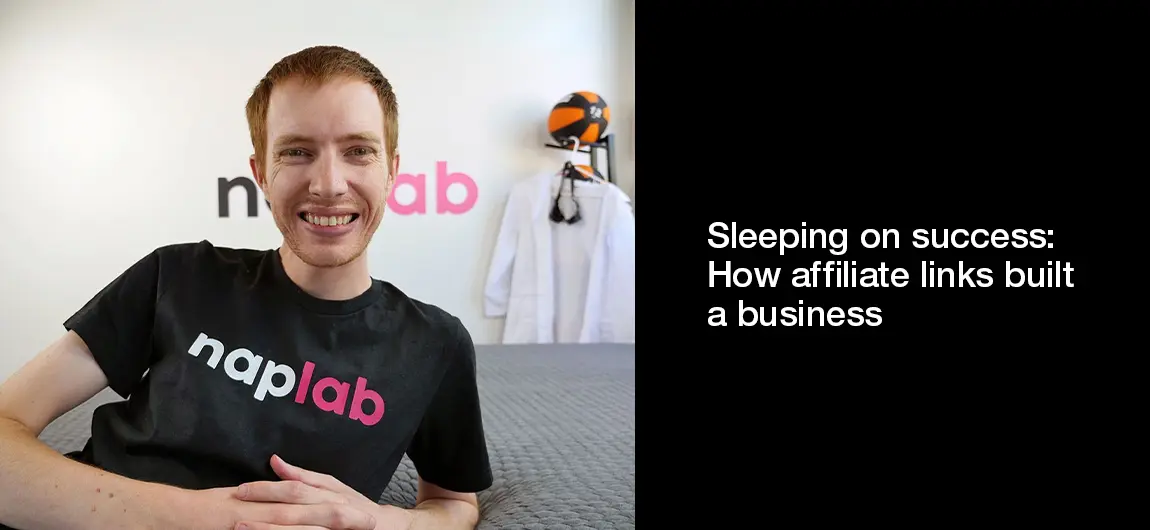
Derek Hales was working in marketing and SEO when he and his wife set out to buy a new mattress. Frustrated by how hard it was to choose the right one, he launched a side project comparing mattresses. What began as a hobby quickly grew into NapLab, a mattress-review company that uses scientific data to break down mattress performance and help people make smarter buying decisions.
View transcript
Mattress Review Site – Derek Hales, NapLab
[00:00:00] Sanjay Parekh: Welcome to The Side Hustle to Small Business Podcast, powered by Hiscox. I'm your host, Sanjay Parekh. Throughout my career, I've had side hustles, some of which have turned into real businesses, but first and foremost, I'm a serial technology entrepreneur. In the creator space, we hear plenty of advice on how to hustle harder and why you can sleep when you're dead.
[00:00:22] On this show, we ask new questions in hopes of getting new answers. Questions like, how can small businesses work smarter? How do you achieve balance between work and family? How can we redefine success in our businesses so that we don't burn out after year three? Every week I sit down with business founders at various stages of their side hustle to small business journey.
[00:00:43] These entrepreneurs are pushing the envelope while keeping their values. Keep listening for conversation, context, and camaraderie. Today's guest is Derek Hales, the founder of NapLab Reviews a mattress testing company based in Arizona. Derek, welcome to the show.
[00:01:04] Derek Hales: Thank you so much for having me. It's a pleasure to be here.
[00:01:07] Sanjay Parekh: So I'm excited to have you on, I think you might be the first kind of review site founder that we've had on and kind of a fun industry. You get to just lay around all day and that's, I guess, doing work. But before we start talking about all that, give us a little bit about your background and what got you to where you're.
[00:01:25] Derek Hales: Sure. So my sort of background in the world of mattresses really begins getting married. My wife and I got married in 2014, but we needed a new bed immediately.
[00:01:33] We did kind of the whole in-store experience, going in, laying on beds, trying to find something that we both liked. We found beds, but they were just astronomically expensive, you know, four or five, $6,000. We were. A young married couple with no money to speak of and pretty frugal beyond that, so we just couldn't pull the trigger.
[00:01:50] So we ended up taking a chance on some of these new online beds that were just getting going in 2014. We tried, one, wasn't a great fit, but had easy returns, so we tried another and it was a little bit better. And I sort of finished this sort of mattress shopping process for my wife and I. And just wanted to basically as kind of a hobby project, put up a website with some reviews, some comparisons, just some notes about like what we had experienced, what was good, what was bad, and try to just help some others and really just kind of, it was just a fun project for me to build on a weekend.
[00:02:20] And you know, the site really struck a core. What was started as a hobby project really blew up. I've never seen a site. Go from sort of, you know, zero to huge traffic so quickly. And very quickly people were asking me, you know more questions. They wanted more reviews, they wanted more comparisons.
[00:02:36] So we, we kept testing kept reviewing. And what was this little, you know, hobby project side hustle, if you will, very quickly became my full-time job and I was able to leave my kind of regular job in about six months.
[00:02:49] Sanjay Parekh: Wow, that's that's incredible. So I got to ask you about like the process of doing mattress review, because, I mean, a mattress is not a small thing.
[00:02:58] It's not like you're just picking it up in the store and bringing it home, and I it's a, it's kind of an ordeal. So how do you deal with kind of those logistics of getting, and do you return the mattresses or do you, are you just buying them? Like how does that work?
[00:03:13] Derek Hales: So, so we don't return the mattresses after we've done our testing. They are you know, not damaged, but they've been used oftentimes we've cut into them with scissors and, you know, hand saws to like, get at the layers and actually see what's going on inside of them. So everything is not returned. But yeah it's a, it's been a challenge and over the years I think we've handled it progressively better.
[00:03:35] In the early days, you know, it was you know, just my wife and I in our one bedroom apartment and we let you know, 17 king size mattresses, like gradually take over. Every like, usable piece of floor space to now we're a little better off today where we have a set studio that's about a thousand square feet and we have a garage, sort of warehouse building that's about 1300 square feet. And that sort of gives us enough space to sort of handle these things and get them through efficiently.
[00:04:02] Sanjay Parekh: I'm just imagining what your house would look like. Like with all those mattresses. It was probably like a bouncy house, right? You just do it bouncing everywhere you go in the house, everything laid down?
[00:04:12] Derek Hales: Pretty much in that first one bedroom apartment where we got our star.
[00:04:15] It was like 950 square feet. Very small place. The living room was like a bookcase of mattresses that sort of lined up with my bedroom, we had them stacked on the bed up to four tie, so we would climb up like the ladder Wow. Of mattresses to just try to use all the space we could. But the after 17 king size beds we had, there was just zero room.
[00:04:38] So we finally, we were able to like get into our first house together as a married couple and get a little bit more space before. Mattresses slowly took over that house.
[00:04:47] Sanjay Parekh: Yeah. So was that when you started that, was that the first time you'd done anything entrepreneurial or were there entrepreneurs in the family or anything else like that? Or was this a first time thing?
[00:04:57] Derek Hales: No, no real entrepreneurs in my family. But no, it's definitely not the first time. I guess I, I've got whatever sort of genetic code flips on and just turns people into entrepreneurial maniacs. Even as a young age, I was doing stuff like I learned how to crochet and I would, you know, knit coasters and bags and like sell them to people in the neighborhood. I'd mow lawns, I'd pick up pine cones as a young kid. In college I really got going, you know I was always a super nerd. Hated having to work for other people at like regular sort of jobs. So I started a website where I turned my video gaming knowledge playing a game called World of Warcraft into something I could sell.
[00:05:38] So I sold an ebook that taught people how to make gold. And the video game. And I was able to basically do that all through college. And I had a blog and a YouTube channel back when YouTube was just brand new in 2007, 2008, and was able to kind of pay the bills that way and definitely caught the bug then and have carried it on.
[00:05:58] Sanjay Parekh: I love it. I love it. So w was your background you said you had a full-time job and then quit it to do kind of the review site. Was your background in anything that was related or like what was that full-time job?
[00:06:12] Derek Hales: So, so my first job, straight out of school, I went to work for a digital marketing agency called iCrossing. They do full service digital services. But my role there was a search engine optimization strategist. So I definitely was able to take many of the things I had learned there. And even before, you know, I crossing, I already learned sort of a bunch about SEO and search and marketing in college and after four years at the, in the world of agencies. Had a lot of experience that I was able to, you know, use as I started building decipher the mattresses.
[00:06:43] Sanjay Parekh: Yeah. Yeah. So, okay. You made the, like six months in you, you kind of started this thing, then you made the leap and went all in on it. Was there anything that made you nervous about making that jump?
[00:06:59] Derek Hales: I don't think so. I don't think so. We, I.
[00:07:02] Sanjay Parekh: Ignorance is bliss sometimes as an entrepreneur.
[00:07:04] Derek Hales: So a little bit. So we had, I spent a lot of time thinking about it, the, within about two months, I'd already replaced my income. So I had sort of, you know, four extra months to just like, make sure, okay, is this thing gonna hold, is this thing gonna hold?
[00:07:19] Beyond that, you know, my wife and I are prolific savers and very frugal. So we had a large safety net that like could have floated us for a full year if the whole thing just immediately fell apart. So I felt like I had done the prep work I had the safety net built. And I was also just so burnt out at the agency. Agency life is really a grind and I was just so, so ready to leave. So just sort of any exit off that ride was good. And so everything kind of, you know, set up and I was ready to take the chance sort of no matter what happened.
[00:07:52] Sanjay Parekh: So let me ask you, so where was that revenue coming from when you do a review site? And has that changed over time to what you're doing now?
[00:08:00] Derek Hales: So in, in the earliest days, it was just referral links. So people would come read a review they would click our link. If they made a purchase then we would earn a little bit of a commission on that. A lot of times those links also gave them a discount, so that also helped as well. That's how it worked in the early days, and that's exactly how it works. Now over the years I've tried and tested some other, you know, methods, you know, whether it's onsite advertising or CPC models. But I think referral links is the best for everything. Our readers, our viewers, they don't want ads, so having fewer ads is always beneficial.
[00:08:35] And it's just the best way to allow us to monetize our content. We can get referral links for every brand we review, so we don't have to play favorites. We can just get them for everybody. And then whatever our customers buy we're able to earn a commission on that.
[00:08:48] Sanjay Parekh: Yeah. That's interesting. So it really, then it becomes a game about traffic.
[00:08:54] And then I'm wondering like if your experience in kind of marketing and the agency is helpful in terms of that and how have you thought about making sure that you do have traffic to the level that you need to make sure that, you know, those conversions happen and then revenue happens because of that?
[00:09:10] Derek Hales: Definitely. So, I mean I have I would say a deep bra background in, in SEO and organic traffic. So even as early in high school, I was already sort of building my own websites, you know, trying to, you know, rank for different things and just play around with it. And then I had this video game site where again, was just trying to build stuff that I thought people would like and do my best to optimize it for search so that search engines would find it and rank it. And then I basically got the professional version of all that sort of hands-on training as a you know, young professional working in an agency.
[00:09:44] You know, enterprise, SEO is very different than sort of real world SEO, for lack of a better word, enterprises a lot of, like, you know, you listed out recommendations and issues, not just, and you're sending it over to a developer and they take it from there. But I still think there's value in that to see really how it's done, kind of at the highest level, at the, you know, the greatest sort of scales. And so was able to take all that information, all of that education, and then use that to, to build my own websites.
[00:10:08] Sanjay Parekh: Yeah. Yeah. I love it. Okay let's talk about the product per se too. Or the review target. I think a lot of people that are listening to this would be like, that's such an interesting kind of niche to decide that, Hey, I'm gonna go all in on this. And you've kept at it for so many years since you first were buying mattresses. What is it about that kind of journey around mattresses and buying mattresses that you really are looking to solve for people?
[00:10:36] Derek Hales: So I think it's something that is a problem for everybody. Everybody has to sleep, everybody needs some type of a mattress. And I think especially as people, you know, get into their mid twenties, thirties, and beyond, sleep becomes so much more critical. I mean, it is a foundation of, you know, your entire health. If you're not sleeping well. You know, mood, energy, physically, you're just falling apart. So it's something that, that everybody needs.
[00:11:04] And the second part of it is it's incredibly confusing, at least here in, in the us. I, many of the traditional brands spent decades, you know. Making this hard. And so in 2014 we started seeing more of these online bed in a box type companies popping up as disruptors offering an alternative. And so I think that was great, but even there, it was still. Complicated. You still had people trying to decide, well, is this good for me? They can only see it online. They're not sure. And so taking kind of all of the mystery and the mystique out of it and the brand speak and just getting down to like what is this?
[00:11:41] Is it memory foam? Is it latex? Is it poly foam? What's in the color? What are the materials made of? How does this feel? What's the firm? And just. Simplifying the process as much as possible is just, for me, it's really rewarding and it's good to be able to help people find something that really can have a big impact on their sleep and ultimately their life.
[00:11:59] Sanjay Parekh: Yeah. So are you taking the approach of how you test this differently than what other folks do? What is the testing protocol that you're undertaking?
[00:12:09] Derek Hales: Our approach is quite different. So I think most people in the industry that, that do these types of reviews are doing more subjective reviews.
[00:12:18] And there's definitely value to that. And there are subjective elements to our reviews as well. But we really take a big push into more quantifiable objective data-driven testing. So I want to be able to look at the numbers that surround any given mattress test, and then be able to compare that to everything else we've tested to be able to.
[00:12:38] Make really solid statements and analysis around saying, okay, this is. You know, this much better performance in terms of motion transfer. And I know that, 'cause I'm looking at the acceleration intensity and on an accelerometer and where I'm looking at the motion duration in terms of, you know, really precise seconds. And I can say this is, you know, 20% better, 20% worse. And so we have all of these different measurement categories in which we're trying to collect this quantifiable and objective data which allows us to create a level of analysis that most other websites just can't.
[00:13:10] Sanjay Parekh: So okay. That's super interesting. And I imagine when you started on this journey, when it was just you and your wife and 17 mattresses, you weren't using accelerometers, you weren't doing all these kinds of tests. So how did that kind of develop over time? And how did you figure out like, okay, I need this testing equipment, I need that, you know, to do these exact things that I need to test.
[00:13:31] Derek Hales: For me it was just a really gradual thing, and you're absolutely right. When we started, it was just, you know, subjective. This is I experienced this, here's what I experienced, and try to make that as, you know understandable and easy to access as possible. Over time, you know we added, you know, different elements that we could actually collect that objective data for.
[00:13:52] We had, you know, in 2015, 2016 we did add the earliest version of our accelerometer, but it was very simple and not nearly as precise. It was just here's the wave and here's how this wave compares to others. But with the accelerometer over time, that got more sophisticated and precise and we're, we are measuring the, basically the peaks and valleys of that wave to say, okay, here's the excel, the range. In terms of meters per second square, just we have a precise number. And we just kept looking for ways to add more. And I think over time as we were in it, things became more obvious, like, oh, well we could take a measurement using a medicine ball here, or we could do high FPS video to see response in like really precise terms.
[00:14:36] And then finally in 2021, we basically reset our entire testing scoring system, rebuilt all of our reviews in the ground up to. Make sure that objective, quantifiable, data-driven testing was the core, was the base for everything. And so all of our, you know, most recent 360 or so reviews have the exact same data-driven testing.
[00:14:58] Sanjay Parekh: So, okay. That's interesting because I think what you said there probably lends a lot into kind of who you're looking to hire as well, because it's not like you can just hire people that like to take naps. So how is that translated into the people and those hiring decisions that you're making and then also the culture that you're building around the organization?
[00:15:22] Derek Hales: Yeah, so. I think, you know, God had the right woman for me when he brought my wife and I together, even though I didn't know just the level of her sort of. Data excellence. She has become really like the linchpin of sort of the data science behind NapLab. So I do a great job of telling her, say, Samantha, okay here's what I want, here's what I want the analysis to come out of this. And then she goes about and builds formulas and scripts and just a mind boggling depth in Google Sheets. That allows us to do what we do at such a strong level. So she is the really the data science be behind NapLab. The other people on my team are quite frankly, people that I trust and people that I just like to work with.
[00:16:06] It's my sister, it's two of my best friends. So, you know, it just, I would much rather work with people that I like and know and trust, and I've been able to train them on our systems. And then together, you know, we make a pretty effective team.
[00:16:20] Sanjay Parekh: Yeah. Yeah, I like it. What do you think about in terms of like scaling the business?
[00:16:25] Is that a thing that needs to happen or is it like, look, there's just so many mattresses that come out. The team that we have, the process that we have, it can deal with all of it.
[00:16:36] Derek Hales: So yeah it's a good question. And what I'm kind of always debating on, like, does it make sense to, to hire someone, to, to move a little bit faster?
[00:16:42] As of right now, I think our current team has the capacity that we need to do the job that we're trying to do. It's one of those things where we're always kind of looking at, well, we do wanna bring on this type of testing, we wanna add this type of content. And there may be a point where.
[00:16:58] In order to do that, yes, we have to bring somebody on, but as of right now our team is able to do it. So we have basically seven full-time employees and then essentially two offshore contractors that are basically also full-time. And so between the seven of us, we're able to, you know, deliver, you know, two to four videos a week, two new reviews a week, update all of our basic content, do all kinds of updates and new, comparisons and best of as well. So we have sort of enough to keep things going, but if we do end up expanding, then yeah we'll probably need to bring on another few bodies.
[00:17:32] Sanjay Parekh: I mean, yeah. If you think about kind of the sleep space, there's obviously, like you say, like a lot of attention to it, right?
[00:17:39] Because now we've got these sleep trackers. You've got rings that do it. You've got watches that do it. I've seen an arb man that does it. You've got like all of these things that are also somewhat interrelated into kind of this whole philosophy. Then you have not even mentioning that, like you've got those things that kind of cool down the mattresses that, you know, chill you. Yeah. Like there's all of these other like side effect products. What do you think about those? And does that make sense in terms of the business that you're building as well?
[00:18:08] Derek Hales: It's definitely something top of mind, sort of all the accessories kinda on under around the bed. Sleep tech especially is really interesting.
[00:18:16] It's one of those things that. I think we might get into, but I don't really want to touch it until I feel like we have truly perfected everything we can do in the world of mattresses. Mattresses are just so complex and they're so not only so many brands out there, but brands are often refreshing their product lines.
[00:18:34] And so we have to be able to quickly do those tests and so. Anything that I, that felt like what was pulling us away from the world of mattresses that we weren't able to do, sort of both at the highest level would feel like we were compromising. So for that reason, I've been sort of hesitant to start reviewing sort of sleep tech or sleep accessories.
[00:18:51] But it is something that's on my mind that I think if sort of there's ends up being enough interest there or we feel like we have done everything we can do in the world of mattresses, then we would probably take a look at that more seriously.
[00:19:05] Adam Walker: Support for this podcast comes from Hiscox committed to helping small businesses protect their dreams since 1901. Quotes and information on customized insurance for specific risks are available at Hiscox.com. Hiscox, business insurance experts.
[00:19:26] Sanjay Parekh: Okay. Let's switch gears a little bit and talk about kind of balance and kind of the stress of owning a business and working on this and it went from a side hustle to a full-time hustle. And kind of separating some of these things. I mean, you work with family and so it's really easy for this to kind of creep into the rest of life.
[00:19:45] And honestly, every night you're going to bed and you're sleeping on some of the things you're reviewing. So how do you think about that for yourself and for the rest of the family really and those that you work with about separating kind of business and personal life and family life and those types of things.
[00:20:02] Derek Hales: Definitely something that, that is just top of mind, always and something I have not done a great job historically with. I think when you work with family, when you work from home, it's really easy for those lines to get blurry and you're just kind of like always working and working. And that was especially the case in the kind of earlier years.
[00:20:19] More recently I think we've done a better job of this and for us, we're very fortunate and that we have, you know, a. Physical, separate building where we go and do the test. We have the studio back there and the garage, the warehouse area is also physically separate from my home.
[00:20:36] So that really has been hugely helpful because it is, you know, like, like any other sort of, you know, business. We go to work, we work at work, we close that door, we leave it and then we're done. And I really do try to. To not think about it, not touch it when I'm not working. So I work from, you know, roughly eight to five, and then after that I'm not working.
[00:20:59] And so for us, again we're fortunate we have that physical space. I think for other people that maybe, you know you're working from home, you don't have a clear distinction, just. If you have a, even just a separate area where you have your desk in your office and you can sort of walk away from that, close that door I think that can help to create, you know, at least some reasonable boundaries and help, work not creep into sort of everything in your personal life.
[00:21:25] Sanjay Parekh: Yeah. Do you ever get kind of sucked into it? Like you're, if you're out and about and shopping and you see like a mattress or, you know, like anything else like that and be like, oh, I, you know, let me go try it out or whatever, or just push on mattress. Like, do you ever, does it ever suck you in like that?
[00:21:42] Derek Hales: Not as much anymore. I always kind of feel a bit weird when I see a mattress out in public, especially if it's when I've tested. So that's, I don't know. It's a strange feel and I feel very awkward going into mattress stores in particular. It's like, like, I'm like, I shouldn't be there without permission or something. So it's, no I have found myself getting too sucked in. But maybe at the annual sort of trade shows for mattresses, which they, those exist if you can believe it. Those are pretty interesting and you can get sucked into those.
[00:22:16] Every, every brand has their own little store and you go check out kind of all the models for that year. And so those could be really fun.
[00:22:23] Sanjay Parekh: Do people ever recognize you that are in like, the industry? Like, do you ever wa, have you ever walked into a mattress store and they like know you before you?
[00:22:30] Derek Hales: Yes. That, that, that happens fairly often at mattress stores. But that's got about the only place I get recognized. I think the only, I've only been recognized one other time in public by a non mattress industry guy.
[00:22:44] Sanjay Parekh: That's funny. I like it. I like it. Let's talk about like kind of wellness and exercise and kind of all those things. Do you plan for those in your day? Like how does that work for you? Like, talk to me a little bit about that.
[00:23:00] Derek Hales: Definitely. So this is another sort of, you know, personal struggle. I hate going to the gym. It is the B So I, I often try to do things that, you know, are, you know, games, sports, you know, rec stuff to keep me active.
[00:23:12] And so I, I have a handful of those that I sort keep in the cycle. I go for a walk every night with my dog. She needs it. It's good for me as well. And then, you know, three to five times a week I'm trying to, you know, do something, you know, high cardio. So I have a exercise bike in my bedroom that I'll hit again three to five times a week.
[00:23:32] Beyond that I just try to make as much exercise, like as part of my daily routine as possible. So really simple stuff. When I'm brushing my teeth in morning and night I'm doing, you know, a set of like 20 squats. When I'm re reviewing videos and in my studio, I, you know, kind of get up from my chair 'cause I can watch that. And, you know, I've got, you know, sort of a set of you know, calisthenics that I'll do, you know, stretches and exercises just to keep moving. And so for me, I get, I, I hate going to the gym so much. I just have to build it into kind of like the rest of my daily life. And that's worked pretty well.
[00:24:07] Sanjay Parekh: Yeah, I like that. I've got to sit stand desk too. I need to think about doing calisthenics when I'm standing. I haven't really thought about that as a part of my routine. That's a good idea. Is there anything, like, thinking about the business now, like this is a lot of management and stuff, like, is there anything that you use in terms of technology, apps, systems, things like that, that you've implemented, that have, has helped you run the business?
[00:24:32] Either the online portion of it, the offline portion of whatever it is. That you would struggle with if you didn't have it now?
[00:24:39] Derek Hales: Yeah, so this is another one where my wife has really, you know, built the foundational systems of sort of like organization and management sort of company wide. And so, you know, I know there are platforms that are like monday.com that are sort of, you know, project management platforms and those are great.
[00:24:53] We basically have a customized version of that's leaner faster and just better for us built in Google Sheets. And so that lets us, you know, the entire team know exactly. You know where projects are, who's working on what's the next step? What do we need to do to finish this thing up?
[00:25:09] So that is, I think the core sort of thing that, that keeps us, us organized. Beyond that, it's just, you know, sort of basic process training. Everyone, you know, knows that they need to move X project along to this step. And then once it's there someone else takes it to the next step.
[00:25:25] And then it sort of just works its way through the production line. So we have, made a point to segment and specialize, you know, who works on what on the team. And so we have people that test, people that write, people that do photos, people that do videos. And it just sort of, you know, slowly works itself across our collective team with each person specializing in an area that they've spent a lot of time really mastering.
[00:25:48] Sanjay Parekh: Yeah. Okay. That's super interesting. So I've got to ask, so like, how many mattresses at any one time are in the process of being analyzed?
[00:25:59] Derek Hales: Oh, that's a good question. Most of the time, that number should be something like 12. Okay. Right now it's something like 26. We had, wow. A big glut come in. In the summer. I was attempting to take a vacation, so I had front loaded a bunch of mattresses so that I could. I did not get that vacation due to some just like personal chaos. So we have this sort of glut still working its way through the queue. So we do sort of the test, the photos, the analysis, the video, and then it's ready to go.
[00:26:31] And so that's kind of, kind of our full process. So we have yeah, some somewhere in the mid to high twenties that need to get cleared out. But once it is, we should be decked down to around a dozen or so.
[00:26:42] Sanjay Parekh: Okay. Super interesting. Because the way you talk about it makes me think of like Henry Ford and the like assembly line production process.
[00:26:51] You've got, you know, one person for everything. So then it's hard to kind of visualize how many are in that process at any one point in time. Is there one point in the process that ends up being the log jam compared to all the rest of the processes?
[00:27:06] Derek Hales: God, it's just it seems like that bottleneck moves around. And whenever I was trying to like front load the stuff at the beginning of the summer, it was just like the testing we just had, we had to test, you know, like 20 plus mattresses. Yeah. To just be able to have those to move to the next step. Right now it's the sort of the final editing of the mattresses or the review rather. So like all of the photos to test the analysis is done. So it's with my sister who's sort of our content manager and sort of. Kind of final editor. And so she's going through and basically building the pages, dropping in the images, the video clips, all the stuff that we need before I can give it my final QA and then push it to the website.
[00:27:45] Sanjay Parekh: Yeah. Yeah. Super interesting. Okay let's talk about the last final couple of things here. You've been doing this for a while. You've had a lot of challenges over the years, I'm sure. If there's something that you could go back in time and change and do differently, what is that thing that you'd do differently?
[00:28:04] Derek Hales: Something I would do differently. That's such a, an interesting question. It's one that I ask myself sometimes. And the answer is I'm not sure because I go back and I sort of analyze the mistakes that I made, but it's those mistakes that led me to do stuff differently. Right. So I question like, would I go back if I could make no mistakes and have perfect knowledge, then sure.
[00:28:29] Sanjay Parekh: Yeah, but knowing what you know now, it's like do you identify a mistake? Like, oh wow. Had I known then what I know now and I would've done this differently.
[00:28:37] Derek Hales: I think maybe the one thing that feels kind of more obvious now is I wish I had been more structured with the way that we tested and collected data faster.
[00:28:48] That was something that sort of gradually built over time. And I think really making a point to build testing processes, even if it's, you know, subjective testing, but building processes that we know every master are doing exactly this, and this exact door. We're taking these photos. Exactly like this. Every single time the production process is gonna look like this and this order every single time. That has helped bring a lot of efficiency to the business and just a lot of peace to my personal life knowing that we have the process built. We know exactly what needs to be done. And I think having that structure has been really helpful in more recent years. So I think the lack of structure in our earlier years was one thing I would love to change.
[00:29:33] Sanjay Parekh: Yeah. Was it so in those earlier years, was it basically just a free for all? Like you got something in and then you just started doing stuff and then figuring it out as you went?
[00:29:44] Derek Hales: Yeah. I mean, so much of it was, we were, you know. Learning what should even be in a review. Yeah. I mean, I had done, you know, reviews previously and like as a person that sleeps on a mattress, in a shopper mattress, like I knew sort of, you know, the questions that were in my head. But, you know, it's one of those things that when ev, every time we would do a mattress, I would think, oh I could do this a little bit differently or a little bit better. And so we were just gradually like improving, like review by review, which was great because the content was getting better and better. But and it's one of those things that I just. What is it sort of, sort of unconscious incompetence is like the first step to like you don't know just how bad you are and then you're consciously competent and then you realize just how bad you are and eventually you move up that rung so that you are consciously competent and then unconsciously competent.
[00:30:34] We spend a lot of time at the unconscious incompetence. We just didn't know. Yeah. We were doing the very best that we could and we were still making good reviews that were impacting. But relative to where we are now, you know you can see all the mistakes and all the areas that could and should have been better and different.
[00:30:51] Sanjay Parekh: Yeah. No I think that obviously makes sense because if you've never done it before, you're gonna just do things and then realize along the way. So I'm imagining if you look back at those reviews, it's probably really hard to compare one to the next because Yeah, the methodology is so different from one to the next.
[00:31:09] Derek Hales: Yeah. Especially comparing our reviews now to back then, I mean, I look at stuff I created, you know, 10, 11 years ago, and it's just shamefully bad. It's so bad. I I have a hard time. But honestly, even looking at stuff that I did just a couple of years ago, you know, we are just always improving and then. You know, and in more recent years we go back to our older views to bring that up to the current level. Yeah. That way our reviews are always uniform and organized and at the same quality level.
[00:31:37] Sanjay Parekh: Yeah. The, you know, the saying goes that if you wait for everything to be perfect, then you've probably waited too long and so you just got out there and just started doing, and then you learned as you did, which I think people appreciate along the way too.
[00:31:50] And you knew better than they did, which was. They knew nothing and so you knew at least a little bit. So it was helpful. Okay. Derek, last question for you. If you were talking to somebody who was thinking about taking a leap like you did and launching a side hustle or going from a side hustle to a full-time business, what advice would you give to them?
[00:32:09] Derek Hales: I think you just hit it, you know, be willing to get started and then learn by doing. Over the years, I've had so many. Friends, families, colleagues come to me with ideas and say, I wanna do this, I wanna do that. And I'll talk to them, give some advice, and they just never seem to be able to get off that starting block.
[00:32:23] And I think there's so much fear and anxiety around like, it not being perfect. You not knowing exactly what to do or how to do it. Trust me, you, it is never gonna be perfect. You're never gonna have all the information you need. I think it is so much better to get out there, start making mistakes, learn by doing, and just be willing to improve as you go.
[00:32:41] Sanjay Parekh: Yeah I recently saw this you know, when you're looking at these big giant corporations that have websites and you look at them and you find errors on them, like even they have mistakes. So, you know, have a little bit of grace with yourself when you're starting a new thing. Derek, this has been fantastic. Where can our listeners find and connect with you online?
[00:33:01] Derek Hales: So the easiest places to run our website at naplab.com, that's naplab.com. There we have our mattress reviews, tests, comparisons, best up guides, and a whole lot more if you're in the market for mattress. You can also use our mattress quiz there, answer a few questions about needs and preferences.
[00:33:14] That goes straight to me and I send you back a personalized recommendation in 24 hours. And if you just have a question, comment, wanna connect with me personally, I've got the other contact form on the website as well.
[00:33:24] Sanjay Parekh: Awesome. Derek, thanks so much for being on today.
[00:33:26] Derek Hales: Thank you so much. Absolute pleasure.
[00:33:33] Sanjay Parekh: Thanks for listening to this week's episode of the Side Hustle to Small Business podcast, powered by Hiscox. To learn more about how Hiscox can help protect your small business through intelligent insurance solutions, visit Hiscox.com. And to hear more Side Hustle to Small Business stories, or share your own story, please visit Hiscox.com/side-hustle-to-small-business. I'm your host, Sanjay Parekh. You can find out more about me at my website, SanjayParekh.com.
Subscribe to our podcast



Did you start your business while working full-time at another job?
Tell us about it! We may feature your story in a future podcast.