Pizza Franchise: Chris Brady's Timber Pizza Story



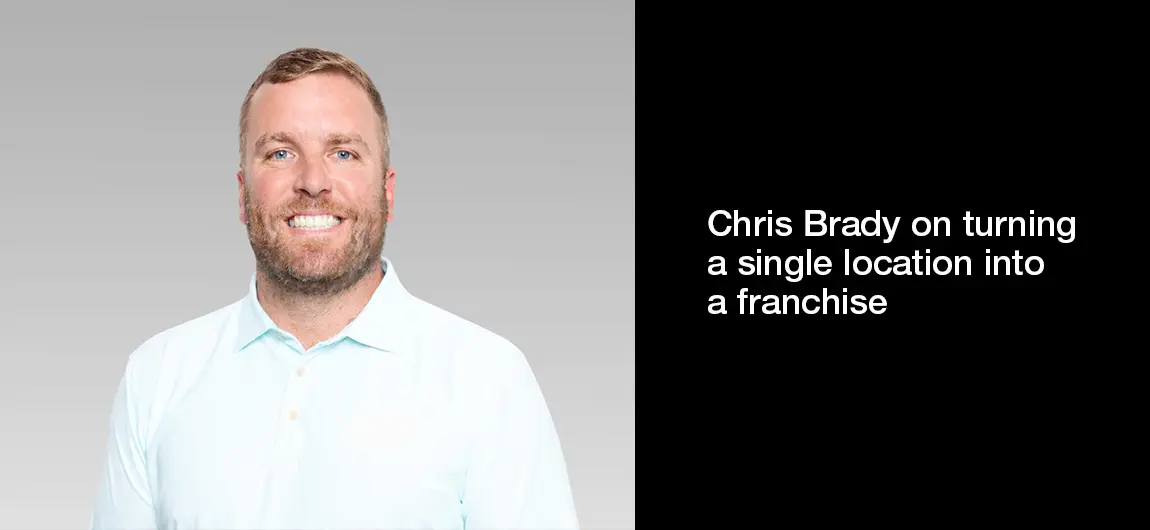
What does it really take to turn a food truck into a franchise? In this episode of Side Hustle to Small Business, Chris Brady, co-founder of Timber Pizza, shares how he and his partner grew their business from making pizza out of a 1967 Chevy to operating a restaurant brand with multiple franchised locations across the United States. Chris walks through the early scrappy days of the business, the moment they realized Timber Pizza could scale, and the practical realities of building a franchise system from scratch.
View transcript
Pizza Franchise – Chris Brady, Timber Pizza
[00:00:00] Sanjay Parekh: Welcome to The Side Hustle to Small Business Podcast, powered by Hiscox. I'm your host, Sanjay Parekh. Throughout my career, I've had side hustles, some of which have turned into real businesses, but first and foremost, I'm a serial technology entrepreneur. In the creator space, we hear plenty of advice on how to hustle harder and why you can sleep when you're dead.
[00:00:21] On this show, we ask new questions in hopes of getting new answers. Questions like, how can small businesses work smarter? How do you achieve balance between work and family? How can we redefine success in our businesses so that we don't burn out after year three? Every week I sit down with business founders at various stages of their side hustle to small business journey. These entrepreneurs are pushing the envelope while keeping their values. Keep listening for conversation, context, and camaraderie.
[00:00:56] Today's guest is Chris Brady, the founder of Timber Pizza Company. Timber Pizza started by selling pizzas out of the back of a 67 Chevy, and now has multiple locations and food trucks. Along the East coast. Today we're focusing on Timber's, franchising aspects. Chris, welcome to the show.
[00:01:13] Chris Brady: Thanks so much Sanjay. Pleasure to be here.
[00:01:15] Sanjay Parekh: So I'm excited to talk to you. Not because of the franchising part, honestly, it's because of the pizza part, 'cause I love pizza. And hopefully I might get some cooking tips from you here in a minute. But before we get into all of that, give us a little bit about your background and what got you to where you are today.
[00:01:32] Chris Brady: Yeah, a hundred percent. Thanks again for having me. It's a pleasure to be here. You know, the journey of Timber has been a fun ride over the last 12 years, but we'll, you know, start a bit before that. Calling you here today from Annapolis, Maryland, where I'm from. Always been, you know, a native of the DMV, if you will. After college moved to DC it was in the tech startup world at a few companies, including living social. EverFi and Wedding Wire. So within the tech world selling some different technologies and making some friends and having a great time in my early twenties, but early on there, I knew that wasn't going to be super long for me.
[00:02:11] Whether it was the commute or you know, selling and cold calling, things that I wasn't super passionate about I had to find a way out. So, fast forward a little bit. My buddy Andrew Dana, and I came across the mobile Woodfire Pizza. Situation and knew that was for us the minute that kind of that light bulb went off 67 baby blue Chevy pizza oven and a lot of hustle in four months from idea to selling pizza on the street of DC back in 2014 was exactly how we started this. So it's you know, kind of the quick background on me and how Timber came to be, but certainly a lot more to unpack as we dive deeper into it.
[00:02:49] Sanjay Parekh: Yeah. I lo I love that origin story by the way. DMV for our listeners is. DC, Maryland and Virginia, right.
[00:02:57] Chris Brady: Most definitely. Yeah. As yeah, commonly known around here, but maybe for a lot of people, that's where you gotta get your driver's license, so it's a lot more boring.
[00:03:06] Sanjay Parekh: Why does Delaware get left out of that? Is it Delaware's right there with you too? Is, why is it not Delaware, Maryland?
[00:03:11] Chris Brady: So a lot of our, you know, me and the guys, especially the beach loving folks we kinda lobby to slide Delaware in there, especially as the summertime rolls around. So sometimes it's DMD and Dewey Beach gets a little love when it comes to that.
[00:03:25] Sanjay Parekh: I was going to say, just to just expand a little bit, you know, grow the region or something. Happy to add. Okay. So is this the first time that you've done anything entrepreneurial or was there entrepreneurial stuff when you were a kid? Any entrepreneurs in the family, anything like that?
[00:03:42] Chris Brady: Great. Great question. So my uncle was a very successful entrepreneur. It was a totally different ball game. He was in the orthotics business. So a podiatrist worked with a ton of professional sports teams in the VAs on the eastern shore of Maryland, not too far from old Delaware down there near the beaches.
[00:04:04] And Uncle Jack, you know, definitely the entrepreneurial spirit was alive and well with him. He showed me a lot, taught me a lot, definitely blazed his own trail and was a man who was not necessarily controlled by, by anyone else, and I liked that. So, you know, he might not get as much credit as he deserves on my journey. But you know, for me. Being the boss being able to help others and create opportunities for people was really, you know, something that I admired about him. And something that I took notes on as a young man spending time fishing and hanging out with him down in Ocean City, Maryland.
[00:04:42] Sanjay Parekh: Love that. Okay let's start. Talk about starting the business. So over four months you kinda, you picked up this six, seven baby blue Chevy the wood fire oven and the whole thing kind of figured it all out. Was there anything that made you nervous in starting down this path? I mean, before this you had, you know, again, I'm assuming just regular W2 jobs and you were working for these tech startups and whatever, but somebody was paying your salary and now you're jumping into this thing where it's like you don't sell a pizza.
[00:05:08] You're not making money.
[00:05:11] Chris Brady: Yeah, no, it was the real deal. There were some nerves I think at that time the lack of true responsibility, no mortgage, no wife, no kids. I had enough fire in the belly to know that I could just go after it. And I remember the moment just saying to myself, Hey, like the worst thing that happens is you get another job. Maybe you move home and crash and burn out and have to restart. But at that time, you know, I'm 25 years old. I said, let's go. I knew I had enough to last five or six months in dc which wasn't easy going salary list in DC at any point in time. But just put my head down and went for it, and me and my buddy Andrew weren't going to be stopped. So nervous, yes, but way more brazen and excited and glad we didn't look back.
[00:06:02] Sanjay Parekh: Yeah. Okay. I gotta ask you, so first pizza sold out of the back of that that truck. Do you remember it? What was it like? How did it happen?
[00:06:13] Chris Brady: Yeah, sure thing. It wasn't easy battled a lot of traffic to get out to Rockville, Maryland on that, that late May evening.
[00:06:20] It definitely was to a family member. It may or May, it may or may not have been to my dad, and that picture may not be in the restaurant below me. And I think we skipped them on the pepperonis pretty good. So we sold about 45 pizzas that evening. We were at the Columbia Heights Farmer's Market in DC that Saturday and sold about 60. Instead, he creeped up. From there, we learned how to get to a hundred, and then, you know, volume became keeping up and dealing with the lines and balancing it all. Student became our new skill. But yeah that first pizza sold and that first dollar made you never forget those memories.
[00:06:57] Sanjay Parekh: Yeah. So that, that's actually a very interesting kind of skill to have as well, like dealing with lines and things like that. How long did it take you to get to that point where you had. Lines that you had to deal with, was it right away or was it, you know, did it take a couple of times to the farmer's market and did you do anything specifically to make sure people, because the problem always with those lines is people leave those lines 'cause they don't wanna wait. Right. And you're losing that revenue. So how did you do anything to figure out how to deal with all that?
[00:07:28] Chris Brady: I think managing expectations and just overdoing it on the customer service was always our mantra. Like we were, we knew we weren't always going to make an amazing pizza. We were figuring that out as we went.
[00:07:38] We knew we were going to have to deal with long lines because we got some good press right out of the gate. And you're driving a 1967 baby blue Chevy truck listening to old school hip hop and dressing like you're, you know, fresh out of the high school gymnasium. You're going to attract some attention.
[00:07:55] So we. Definitely learned how to manage expectations and say, Hey, my bad, or, you know, it's going to be a little while. Let me kick you a pizza on the house. So just trying really hard to give people a great experience and being super apologetic if you know, their first experience especially wasn't the best. We learned that out of the gate and those lines did come fast, I will say. So we had the good problems and just managing how to deal with those was an early business lesson that you know, pays in spades over time.
[00:08:26] Sanjay Parekh: Yeah. So a huge focus on customer service, which I think is kind of the key, especially in retail businesses like this.
[00:08:33] Is there anything, like, thinking back that man, that was just a disastrous customer service experience that just stands out to you still to this day, probably many years later. What did you learn from that experience? How would you deal with it now versus how you dealt with it back then?
[00:08:49] Chris Brady: Yeah, I think, you know, those times where you had a flat tire or those times where the weather was so bad and it just took forever to set up and you were kind of having that line in anticipation as you were opening up and out of the gates, you were just, you know, drinking through a fire hose, if you will. Those were always tricky. So like, being extra early, being super over-prepared always preparing for something to happen, which I wouldn't say we didn't do, but at the end of the day. Being exceptionally prepared and making sure that, you know, you're way ahead and playing into all the dicey situations that can arise you know, is exactly where our heads would be. So I would've just taken it further. Not to say we didn't do a good job at that, but you can always do better.
[00:09:32] Sanjay Parekh: Yeah. Yeah. Okay let's start diving in on the franchising aspect. So, how many years of this. Was it just the two of you or the team there before you decided to go start franchising? Sure.
[00:09:46] Chris Brady: So around 2019 and into the COVID times, we were, you know, facing a little bit of a turning point and kind of looking to bring in new energy, bring in some, you know, investment and take the company into the next level. So fast forward a little bit from there into 2021. We met my now business partners, Fred Fried, Luke Watson who came in with some investors in the intention of franchising.
[00:10:09] Really to, you know, give Timber the juice and create our second iteration, if you will. So we spent the majority of 2022 laying the infrastructure and, you know, going through the franchising process, which is certainly arduous and tightening up operations then into 2023 begin to sell in earnest and, you know, pitch the Timber dream to others. And now, you know, fast forward to where we are today. That's, you know, really how it all kicked off.
[00:10:35] Sanjay Parekh: So okay let's talk about that 2022 timeframe. Like before you started franchising. How many stores did you have at that point? How many locations were you dealing with?
[00:10:46] Chris Brady: Sure. So we were just at two locations, our main original brick and mortar in dc and two trucks out of DC So it was our Petworth location is the neighborhood in DC where we started it all.
[00:10:58] And then two of the mobile Woodfire catering wagons that go around and do the catering and the farmer's markets Exactly how it all started. And then our, we have a food hall location in Arlington, Virginia as well. So we were just two and two way back in 2022. Did not try to do that. But yeah, had, you know, pretty modest setup, if you will, when we kicked off the franchising situation, but we were confident based on, you know, how well our restaurant does in the brand.
[00:11:25] Sanjay Parekh: Yeah. So let's talk about that. What does that mean? So when you started out like that first year. How much revenue were you able to generate, and then how much before you started franchising to, to know like, okay, yeah, this is going to work for other people as well.
[00:11:41] Chris Brady: Yeah, so that, you know, our DC location, the flagship brick and mortar and DC does around 2 million a year out of a thousand square feet.
[00:11:48] So, you know, when you say that people's eyebrows kind of raise it's certainly a strong, powerful story. It's been consistent. Certainly it took some years to mature to get to that level. But you know, those types of numbers definitely, you know, pop pop off on the page when you start talking about franchising. So we felt great about that. But it's so much more than just the revenue for us. It's the brand, the way that Timber makes you feel. Our commitment to being, you know, community focused and really leading with our core values. The feeling of Timber is, you know, even much more powerful than our product itself in our opinion.
[00:12:29] So kind of going back to that early commitment to customer service and just making sure that you're doing right by people that's, you know, really stuck with us and it's been like a key piece of our franchising journey.
[00:12:42] Sanjay Parekh: What was revenue like that first year when you were still in the truck the Chevy and getting that done?
[00:12:48] Chris Brady: Sure. So we launched at the end of May, so we got just over seven months and we made 90 grand then. So in revenue certainly wasn't 90 in revenue. So certainly, you know, we were like, okay, we have something going on here. And we put our dag on heads down. Booked out way in advance for the next year and started getting some good play on catering and you know, ticking up from there. But we, you know, were very confident in the reviews we were getting, the press we were getting and kind of the following, we were. Getting in the buzz that was building that once we got a brick and mortar together, we were going to be very successful.
[00:13:25] Sanjay Parekh: Yeah. How long did it take you from starting out at that point? You kind of mentioned this to get really dialed in to your recipes and everything else to be like, okay this is it. Now we're good. We don't need to keep monkeying with this.
[00:13:40] Chris Brady: Yeah. So we brought on it, who ended up being an executive chef and partner of ours chef Danny in 2015. She came in classically trained from the Culinary Institute of America Fine dining background, candidly, walked in and said, what are you guys doing with these recipes?
[00:13:56] We need. On paper, the yellow scoop is not an amount. Kind of helped Andrew and I, you know, put on our chef hats a little bit and wr wrangled in the cowboys, if you will. That really stabilized things. We had the basis of a great recipe. We were serving great food, but we needed you know, that stabilization to make sure that, you know, it was sustainable at the end of the day.
[00:14:22] So really, kind of year two, when Chef Danny entered the picture. We needed that to say the least. And then, you know, the stabilization underneath her and the team that she built out on the culinary side really put us on a good path to, you know, take our, take it to the next level.
[00:14:39] Sanjay Parekh: You didn't ask, I mean, come on. At the Culinary Institute, you don't have a yellow scoop. I mean, this is standard.
[00:14:46] Chris Brady: We love, we, we love the yellow scoop. It was just dicey on those days where we couldn't find it.
[00:14:55] Sanjay Parekh: Ah, man. You could never lose the yellow scoop. You gotta, always gotta have that handy.
[00:14:59] Chris Brady: Nah, I wonder where it is today.
[00:15:02] Sanjay Parekh: It should have a a wall of fame, you know, right there for the yellow scoop.
[00:15:08] Chris Brady: Absolutely.
[00:15:10] Adam Walker: Support for this podcast comes from Hiscox committed to helping small businesses protect their dreams since 1901. Quotes and information on customized insurance for specific risks are available at Hiscox.com. Hiscox, business insurance experts.
[00:15:31] Sanjay Parekh: Let's talk about like kind of now you've been going through the franchise kind of process for a while. You've got some franchisees. Have you learned anything through that process? Then understanding like who an ideal franchisee is, you know, when does it make sense? When does it not make sense in terms of you and the brand? Because it sounds like there's a lot of. Importance on community and engagement and those types of things. And I could imagine some people, especially when you pop off that number, right, 2 million out of a thousand square feet, they're going to be like, I'm in for the money. But maybe that's not the ideal partner for you.
[00:16:06] Chris Brady: Yeah, a hundred percent. You know, it's. Not an science for the type of person that we're looking for. There's a lot of fabric, if you will the character and you know, the aspect of having the reverence for the community that they wanna bring Timber to. That's really. First and foremost. So, you know, of the five groups that we have, we feel amazing about the mix of people that we have.
[00:16:28] We also have, you know, great teams within each group. It's not necessarily a franchise brand where it's like, exactly, I'm going to buy five of these and. Hire somebody to set it up and you know it's going to print money and send me checks to the islands. That's not exactly how this goes. We want people that are in it.
[00:16:46] We want people that are not necessarily hands-on operationally and in the place making pizza every day, but we want someone who wants to be a part of running the business you know, work collaboratively with us and the community and really. Have that alignment. I think that's the most important word for us. Alignment on how we want to grow this alignment on what Timber Pizza looks like in their own respective neighborhoods. And just alignment on, you know, the type of brand and company we're trying to build. So we feel very blessed that thus far we've been able to attract that. And as we continue to expand our reach and search for new partners and emerging markets for us. We feel great about, you know, the conversations that we're having.
[00:17:28] Sanjay Parekh: Yeah. Do you worry at all about. You know, because I mean, we see this with a lot of businesses that decide to go to the franchise route and as they get bigger and bigger that some of that gets watered down. Whereas there's other businesses that decide not to do the franchise route because they want to control all of it.
[00:17:47] And they're able to maintain that culture or that, you know, kind of that mission, that message, whatever it is. Because they have control over every single location versus the franchises that they don't necessarily like. Do you worry about that? Do you think about that? Like how are you going to manage that over time?
[00:18:04] Chris Brady: A hundred percent. Scaling culture is something that definitely keeps us up at night. At the end of the day, it's the people you're working with ensuring that they are, you know, the type of business owner and community member if you will, that are going to hire, right? Treat their people, right. Deal with customer service issues, right? Manage the social media accounts, right? Like it's a lot. And it's definitely nerve wracking, you know, it can take one, as we know, especially in today's climate, one slip up or, you know. Outlandish comment from somebody to stain an entire brand. Yeah. So that makes us be, you know, extremely ent and careful about who we're working with the types of places that we're entering and really just ensuring that, you know, everybody from franchisee down, if you will, amongst their team, their operators, managers that they're hiring you know, through bartenders and dishwashers and everyone in between.
[00:18:58] That, you know, we're working with good people that are, you know, really exemplifying the Timber values every day because it definitely. Has cost me some sleep.
[00:19:09] Sanjay Parekh: I can imagine. And there's probably going to be more sleep lost in the future as you continue to grow. Hopefully not. Hopefully lost sleep in a good way because it's just so much work to do and things are going gangbusters. But let's talk about how you're thinking about this, and I think this will be informative and educational to those that are listening, that are thinking about doing something like this as well. Is that like geographically, how are you thinking about expansion? Is it going to be like concentric circles from where you are right now? Are you thinking like maybe far-flung places are Okay. And you know, how do you manage all of that depending on how far away these places get from the core that you're in right now?
[00:19:48] Chris Brady: Yeah. We're really focused on the former and the concentric circles remaining in the Mid-Atlantic and marching down to the southeast where.
[00:19:54] Either we can jump in our car and come see you within three or four hours or get on a two to three hour flight Max is exactly where our head's at. The places where we have expanded from DC Maryland, Virginia into North Carolina and South Carolina. Beyond that, looking at Georgia, your state, as well as Tennessee. And really honing in on that southeast as well as, you know, continuing to wave our flag in the Mid-Atlantic is exactly where we're at. You know, beyond that in time, certainly. But we wanna. For a lot of reasons. Mainly being support and supply chain stay where we are, continue to penetrate the Mid-Atlantic and the Southeast and be very intentional about that.
[00:20:39] Every article about us you know, calls that out and that's exactly what we're committed to over the next couple years. And then from there, you know, steady as it goes, if you will.
[00:20:49] Sanjay Parekh: Yeah. Do you worry? I guess it's like an alternate question here. Do you worry about not growing fast enough and then opening up opportunities for competitors to, to, you know, get into those slots and then it's harder for you to compete. And then alternate. Do you worry about growing too fast and then not being able to manage it all? Like, like where do you land in all of that?
[00:21:12] Chris Brady: Yeah. Personally, and I think, you know, Luke, my business partner will tell you the same thing. I think worrying about growing too fast is more where we're at. And worrying more so about ourselves beyond competition and others is definitely where we spend our time. There's so much. Within our system that we strive to improve and continue to sharpen the tools on so that once we do end up hitting our stride and start to go from nine to 15 to 20 and beyond in terms of unit count we're dialed in and really, you know, the location not becomes less of a concern, but more so we've, you know, dialed in our support, know exactly the cadence of visits, the cadence of correspondence, and really.
[00:21:55] Kind of have our franchisee support system on a little bit more of a, you know, consistent cycle, if you will. So that, you know, location becomes a little bit more agnostic and you just know. You know, the touches the right systems to, you know, come in, check, make sure everything's going well are a little bit more in place.
[00:22:16] And, you know, we're still refining that. As we're, you know, sitting here talking early 2026 we've opened six franchises since, you know, fall of 2024. So that's a lot to kick off and come out of the gate. So really being intentional about these next few and you know, taking it from there is exactly where our heads are at.
[00:22:37] Sanjay Parekh: Yeah. So as an entrepreneur has like doing this franchise kind of model, has there been anything that unexpectedly has surprised you either in a good or bad way that you've kind of learned through this process?
[00:22:50] Chris Brady: I think Franchising's just in incredible and there's so much more to it than the average American consumer realizes, right?
[00:22:58] So like pre franchising, reverse fact, five years ago, even as a, you know, just kind of a mom and pop he's a business guy, you know, franchising. You think McDonald's, you think Subway, you think fast Signs or some other businesses. There's, I. The average American consumer probably spends, you know, 50 to 60% of their household dollars at franchise businesses.
[00:23:20] And the average American consumer probably doesn't realize that. They're small business owners you know, within communities that, you know, have the systems and kind of playbook into entrepreneurship. Multi-unit franchisee owners, you can have two. You can have 200. There's different ways. That folks are in this business. And then I think the, just the vast majority are variety of brands, if you will, in the service based industry especially. Franchising's been super in, interesting to become a part of the community. It's a very supportive group. Folks are super willing to share, very open and honest about the challenges.
[00:24:04] And you can learn a ton from folks. Well beyond the peace industry in franchising. So it's just been kind of eyeopening, if you will, to put a bow on it to enter franchising and learn so much about the the industry at large. And I've really embraced it. It's it's been fun.
[00:24:20] Sanjay Parekh: Yeah. Okay. You're still kind of in the early innings then o of kind of this franchise model. What do you kind of see going forward, like five years, 10 years from now? What does Timber look like at that point? And how is it different than it is right now?
[00:24:37] Chris Brady: For us marching on and, you know, consistent unit count with intentional growth is exactly where our heads are at. I think five years from now we'll have flee the Mid-Atlantic and the southeast and, you know, be expanding west and north. You know, being in DC we're kind of right in the middle on the east coast and certainly being reverent of you know, the pizza giants to the north of us is definitely, something that we don't take lightly, but you know, we think Timber belongs everywhere. If you're in a neighborhood and you enjoy good times and amazing pizza and great experiences you know, we think that a Timber should be near you.
[00:25:15] So you know, we certainly expand beyond where we're focusing on now over the years to come. But just, you know, continuing to improve do it the right way and being very intentional about who and where.
[00:25:28] Sanjay Parekh: Yeah. Are you concerned, so mentioning that, are you concerned about when Timber does hit that one mega capital to the North and maybe in the Midwest where they believe that they are, their pizza is the best and Yeah, I mean, it's different. It's not necessarily the best. I like all kinds of pizza. Do you have concerns about when that's going to happen and how that's going to take off there?
[00:25:51] Chris Brady: If we're working with the right people and it's in the right place? I think Tim people will be open-minded. And I think, you know, on our best days when we're.
[00:25:58] Throwing our fastball, if you will. We can go toe to toe with anybody. I've had incredible pizza all across the country and all across the world. I definitely have a top two or three if we want to tap into that at all. And some certain styles are definitely towards the top, while some others maybe, you know, we won't highlight here. But no I think we can do well anywhere. And you know, for us, I think the neighborhood aspect is huge. But also, you know, we're very reverent of the places that have been around for years. We're very much not trying to go anywhere and say, Hey, like, we're the new guy in town. Everybody should come here and you should ditch the place you've been going for 40 years.
[00:26:41] Like that's never who we are, you know? Yeah. I think the thing about Andrew and I, when we started up like. The place that he had gone his whole life ended up being my favorite place. That's where we had long lunches and spent a ton of time eating slices and talking about what we wanted to do. So like, you know, that's what pizza and community are to a lot of people when you go into the old school places from many years past and see the little league teams on the wall and you know, things of that nature. That's what it's all about. And that's, you know, who we've become too. So we don't take that lightly whatsoever.
[00:27:15] Sanjay Parekh: Yeah. Okay. Since you, you mentioned it, I gotta ask, okay. On an average day, Chris, how many slices of pizza do you eat?
[00:27:24] Chris Brady: If you spread out the day throughout the week, I suppose you could get me close to a slice per day because I probably eat about a Timber Pizza a week on average, which isn't too crazy.
[00:27:37] You know, we're 12 inch pies, so it can definitely be personal when you're talking about dinner. You know, we're on a little bit of a push right now. I won't call it a New Year's push, but I'll call it a new dad's push. I don't wanna not trying to blow up as a first time father. So I'd say my slice counts down just a little bit. But we still make sure that you know, typically on Friday nights the wife and I are grabbing some temper pizza, so you can put me down for almost a slice per day since. I'll knock back about five slices in in a city.
[00:28:08] Sanjay Parekh: So it's, okay. So it's one day a week you're eating pizza, temper pizza and five slices.
[00:28:13] Okay. So the alternate to that, especially being a new dad and being an entrepreneur, do you have an exercise routine? How do you make time for that? How do you deal with it? Like, how do you work it all in with everything else going on?
[00:28:25] Chris Brady: Yeah, super important if I'm not in the gym or getting steps or, you know, trying to improve the physical, the mental we'll shortly you know, get a lot duller. So right now the morning workouts are out. I'm spending time with the little man, letting the wife catch up on sleep at the moment. But the midday lift heavy weights, incline, walk afterwards and get a steam in. If we had time is where we're at, so about three times a week. Mix in a little jog on the weekends to knock off some cobwebs.
[00:28:57] But we're in a good spot feeling good. And you know, and that the routine has returned after a few weeks of you know, those early couple weeks. There's no routine when you get a little. Little person entering your life, it's all up the door.
[00:29:12] Sanjay Parekh: Absolutely. They have their own schedule and you have to meld to that.
[00:29:16] Chris Brady: Yes, indeed.
[00:29:17] Sanjay Parekh: Okay. Last couple of questions for you, Chris. Thinking back now at kind of this entire journey and there's obviously still more to come, but if you could go back in time and do something differently based on what you know now and what you've learned now what is that thing and why?
[00:29:34] Chris Brady: I think I would seek out someone in the franchising community who had been there before in year one and really, you know, whether it was a mentorship or bringing them on as a consultant. So we've brought on Matt Friedman to our team who was the founder of Wing Zone. He's been with us. You know, over the past year and really, you know, someone that's been in those trenches and made those mistakes before to help give you that advice and guidance and, you know, really help on the growth and development side.
[00:30:03] That's been invaluable to us. So, you know, for me, learning from those that have been there before you and, you know, collecting advice I always try to. You know, emulate and you know, just really learn from people that I respect, people that are smarter than me, that have been in the situations before. So just doing that earlier definitely would've been, you know, advantageous to our growth, in my opinion.
[00:30:26] Sanjay Parekh: Yeah. Okay. Chris, last question for you. If you were talking to somebody that's thinking about doing like you did, maybe not necessarily pizza business, but taking the leap and launching a side hustle or taking that side hustle into a full-time business, what advice would you give to them?
[00:30:42] Chris Brady: Look yourself in the mirror and just make sure that you are at the right point in your life to make that jump. For launching Timber, you know, no mortgage, no wife, no kids. The downside was pretty low. As you know, I calculated at that point. It's not for everybody, but you know, if you have a great plan, have, you know, some mentorship and some guidance, and have some capital.
[00:31:06] Behind it, or at least the safety net, so that if your idea goes wrong, that it doesn't adversely affect, you know, the life that you're hoping to live or currently living. Then you know, absolutely it can be an amazing experience and, you know, entrepreneurship definitely not for everybody, but extremely enriching and very rewarding. Especially being able to create opportunities for others. I think that's been the thing through franchising that's really. Humbled me and made me feel extremely blessed over the last few years is helping others enter entrepreneurship and create an incredible opportunity for themselves. That's big time motivation for me to continue on.
[00:31:46] Sanjay Parekh: I love it. I love it. Chris where can our listeners find and connect with you online?
[00:31:52] Chris Brady: So I'm on LinkedIn. That's a good spot to find me. Never was a big LinkedIn guy after I left the corporate or startup world, if you will. But we're back on there. That's a good place to find me writing a little bit about our growth and telling everybody what we have going on at Timber. So check me out on LinkedIn and. If I don't respond to the messages I'll get around to it. Just not back in the groove of of the corporate social networks quite yet, but we're getting there.
[00:32:20] Adam Walker: I love it. Chris, thanks so much for being on today.
[00:32:23] Chris Brady: Absolutely, greatly enjoyed it. Thanks for having,
[00:32:29] Sanjay Parekh: Thanks for listening to this week's episode of the Side Hustle to Small Business podcast, powered by Hiscox. To learn more about how Hiscox can help protect your small business through intelligent insurance solutions, visit Hiscox.com. And to hear more Side Hustle to Small Business stories, or share your own story, please visit Hiscox.com/side-hustle-to-small-business. I'm your host, Sanjay Parekh. You can find out more about me at my website, SanjayParekh.com.
Subscribe to our podcast



Did you start your business while working full-time at another job?
Tell us about it! We may feature your story in a future podcast.