Donut Shop Business: Bradley Taylor's Story



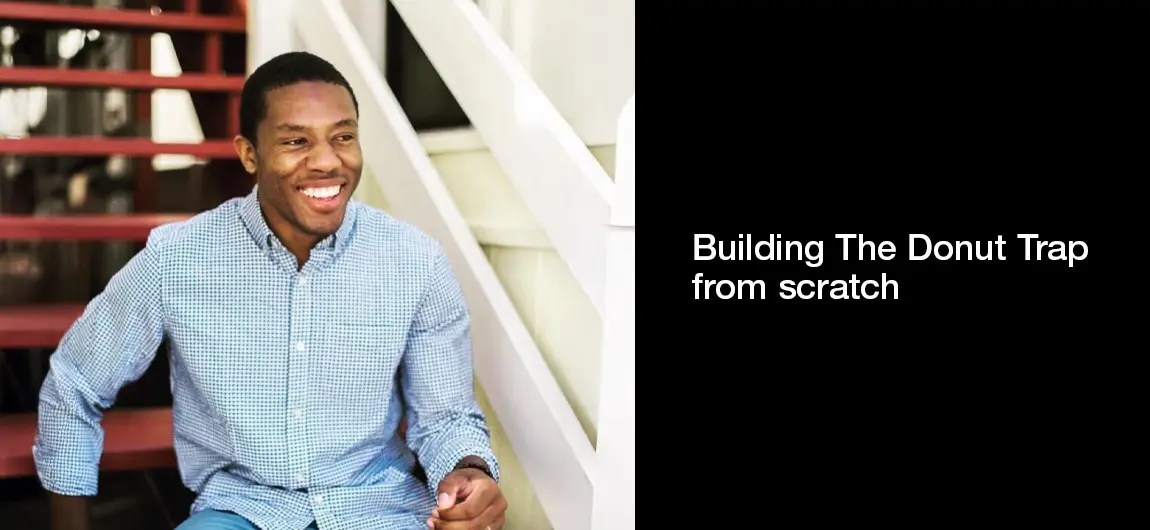
Bradley Taylor is the founder of The Donut Trap, a donut, coffee, and ice cream shop in Saint Paul, Minnesota. After returning home from college in Los Angeles, he noticed the lack of quality donuts in his community and set out to fill that gap. What began as an idea has grown into both a storefront and a donut vending machine. Beyond serving sweets, Bradley is dedicated to empowering Black youth and people of color to explore and pursue entrepreneurship.
View transcript
Donut Shop Business – Bradley Taylor, The Donut Trap
[00:00:00] Sanjay Parekh: Welcome to The Side Hustle to Small Business Podcast, powered by Hiscox. I'm your host, Sanjay Parekh. Throughout my career, I've had side hustles, some of which have turned into real businesses, but first and foremost, I'm a serial technology entrepreneur. In the creator space, we hear plenty of advice on how to hustle harder and why you can sleep when you're dead.
[00:00:21] On this show, we ask new questions in hopes of getting new answers. Questions like, how can small businesses work smarter? How do you achieve balance between work and family? How can we redefine success in our businesses so that we don't burn out after year three? Every week I sit down with business founders at various stages of their side hustle to small business journey. These entrepreneurs are pushing the envelope while keeping their values. Keep listening for conversation, context, and camaraderie.
[00:00:56] Today's guest is the founder of The Donut Trap, a donut ice cream and coffee shop in Saint Paul, Minnesota. The donut trap has also expanded into vending machines. Bradley Taylor's mission is to empower black youth and people of color to enter entrepreneurship. Bradley, welcome to the show.
[00:01:13] Bradley Taylor: Thank you. Thank you, Sanjay.
[00:01:15] Sanjay Parekh: So I'm excited to have you on because man, there's so much fun stuff in the business that you started. But before we get there, give us a little bit about your background and what got you to where you are today.
[00:01:27] Bradley Taylor: So I've always been kind of had this entrepreneur book in me, you know, from the time I was like, dude, 10, 11, you know, you just kind of levels to it. You sell the candy. And then from there, like I had my own little t-shirt line in high school and then, you know, college hit and stuff like that. And along that way just started little businesses here and there. Nothing crazy. But then. Really what happened, my love for donuts and not having access like I had back in LA in Minnesota really got the best of me.
[00:02:00] Sanjay Parekh: I love it. Let's think back though. What was the very first thing that you started as like a side hustle or some kind of hustle to that entrepreneurial bug? Can you remember what that was?
[00:02:10] Bradley Taylor: Oh. As a kid. Yeah. I remember I started a Pokemon tournament in my garage and now it was cool.
[00:02:18] It was like maybe three or four bucks to enter and then a little pot, like winning pot for I think it was like maybe 10 bucks or something. But you know, if you get 20 dudes to come through, it's hey. That's awesome.
[00:02:33] Sanjay Parekh: Yeah. You made money yeah. You didn't rig the game or anything, right? So that you won? No. And won the pilot.
[00:02:38] Bradley Taylor: I was probably one of the worst, actually. That's the funny part. I was not good at Pokemon. I just was like, whatever. But I was able to organize. I think that was the thing.
[00:02:48] Sanjay Parekh: There you go. The seeds of organizing right there. Yeah, definitely. So were you like the first entrepreneur in the family or have there been other entrepreneurs in the family?
[00:02:58] Bradley Taylor: So my grandpa granddaddy, he started a construction company called TaylorMade. And basically he really helped build and shape a lot of Watts, California and what we see today and neighborhoods in there. And then, you know, throughout that, like my uncle, I have 12 uncles and aunties, and so we had a huge family.
[00:03:20] Yeah. So my mom was the youngest. And she really instilled that entrepreneurship drive. I mean, I saw her like, you know, get her real estate license to invest in real estate, do construction like her dad, and a couple other things here and there. So it was really cool to just have a front real seat and see that in lifetime.
[00:03:38] Sanjay Parekh: Yeah. Did you ever get a chance to work in any of those businesses?
[00:03:41] Bradley Taylor: I really wish I did. Not under my grandpa specifically, but under my mom for sure. It was like under her construction businesses and stuff like that. I was definitely able to help.
[00:03:52] Sanjay Parekh: Yeah. Any lessons that you learned in that experience that you've kind of carried forward to yourself?
[00:03:58] Bradley Taylor: Yeah, really just start and I think like really it's not real until you at least fail, you know? In a way. Yeah. So that really just, it's dude, who cares? Just built, just print out like your business plan sometimes as it goes. Depend on the business, right?
[00:04:17] Sanjay Parekh: Yeah. I think that's one thing that holds back a lot of people because they're so worried that, oh, what are people going to think? And every, you know, honestly, most people don't even think about you. No. So just do it. And you know, then if it's successful, then they'll might think about you. Oh yeah. But right now they're not thinking about you.
[00:04:35] Bradley Taylor: Exactly. We got too much going on.
[00:04:37] Sanjay Parekh: Exactly. Exactly. So talk to me a little bit about the business, this donut idea, like okay, you didn't have access to good donuts or any donuts. How did you get started, you know, going from nothing into being a donut maker?
[00:04:53] Bradley Taylor: Yeah, so I was fresh from coming back from spring break in LA and I was like, dude, there's my, I can't take any more of this. It's my senior year. I was like, I really need donuts, yo. So I just started looking on Etsy, Googling different recipes and started, you know, kind of messing with those.
[00:05:10] And then my, one of my good friends, her homegirl, who's like her grandma's from Arkansas or whatever, but what's really funny, we talk about that. She sent me a recipe and I don't know if it was a donut recipe, but it was some type of raised like kind of yeast recipe. And I started messing with it and they started looking like donuts.
[00:05:29] They started tasting more and more like donuts. And once I got comfortable with, I was like, my thing is every Sunday I'm going to make a dozen donuts for myself. That's it. I don't care how hung hungry I am, I don't care. And it was like really funny because you know, in college you go over a friend's house, you don't expect home dude to just be making fresh donuts, you know?
[00:05:50] Right. So naturally that word just spread. And from there, you know, people who I didn't know started worrying them and inquiring about them. And as I, it started happening, I was like, dude, like I don't know if I'm making money or not, because after we graduate, those same people, we all got real jobs, started ordering donuts for the offices and stuff like that.
[00:06:11] So it was like that natural role of that. But what I did was I got a mentor. There's a dude down the street who had a couple of food trucks, knows he looks like he might know what he's doing. So I was like, Hey, I got this donut thing and people are just coming to pick up little donuts out of my apartment.
[00:06:30] How do we do help me? So I just interned for him, cutting, doing all the grunt work, you know, of restaurants and stuff like that. And he was just giving me these chimps. But then what really happened was when I started doing pop-up shops in the local college town within non-competing businesses, and you know, I'll be like, hey.
[00:06:51] There's a print shop, whatever. Here I'll give you a hundred dollars, whatever. And like on Friday we'll have a popup shop. People come get donuts and it just started going crazy from there.
[00:07:02] Sanjay Parekh: So how long was it when you just started making donuts on your own, deciding look, every week I'm going to make a dozen.
[00:07:08] Yeah. Until it got to the point where somebody wanted to buy them from you?
[00:07:13] Bradley Taylor: It happened fairly quick I'm not going to lie. Yeah, probably like in at least three or four months, it was like pretty wild. Yeah.
[00:07:20] Sanjay Parekh: And that first order, how did that come about? Did you like go looking for it or did somebody just come to you and say I want to buy these?
[00:07:28] Bradley Taylor: Someone just came, actually, it was one of my friends, he was like, Hey. My dad has a dealership and can you make four dozen? And I was like four dozen. Oh my gosh. You know? And I.
[00:07:39] Sanjay Parekh: Only make a dozen a week. What are you talking about?
[00:07:42] Bradley Taylor: You want me to make four times that amount already? So I just was like, okay, I can't let them down, you know and I just got to and made it happen. I don't care.
[00:07:54] Sanjay Parekh: Yeah. Yeah. And you know, like in doing any of this, like even that first order, was there anything that made you nervous about embarking on this? And if so, how did you get over that for yourself?
[00:08:06] Bradley Taylor: I think one, you know, look, trying to make sure I had enough ingredients to fulfill it, you know, and then two, made sure that the product was consistent.
[00:08:14] You know, I wanted all four dozens to look like each other. Not you know, one's burnt, one's a different shade of color. One doesn't quite taste like I want it just consistency. So those two things I think were like the determining factors in that.
[00:08:31] Sanjay Parekh: Yeah. As you've kind of moved forward, how have you made sure that exists?
[00:08:37] Like we understand how like those big box I don't know if you call them big box donut places, they do it because they've got like factories. And they make sure everything's consistent. When you're a smaller shop like you, that's got to be a lot harder. So is there something that you've done to make sure that. You know, the Monday's donut is the same as Friday's donut.
[00:08:55] Bradley Taylor: Yeah, definitely. Really just putting a lot of emphasis a lot of emphasis on standard operating procedures. You know it's like whoever is one who's mixing the batter or soap, even if it's another person that should those SOPs should be able to translate seamlessly through each person, regardless of what their skillset is.
[00:09:19] Sanjay Parekh: Oh, that's interesting. Yeah. So that, what, how early on did you figure that out that you needed to have these standard operating procedures for each job?
[00:09:28] Bradley Taylor: Yeah. So really, I would say it started with my mentor. You know, all chefs are low key, crazy intense and crazy. That's not a joke. And what he instilled with me was efficiency, you know, and be able to replicate each thing like.
[00:09:47] Just seamlessly. And it happened when I had a huge thing of onions that I had to cut, like a huge bag just spread across like the kitchen island. And he walked past and then he looked at me, stopped and then kept going. And then he came back and he started yelling at me. And I was like, what's going on bro?
[00:10:05] I'm cutting the onions and you're not paying me, so what's wrong? But he was like, dude, look at this onion. You have let's say four or 500 in this bag if you're taking 30 seconds to do it like that. Like multiply that, you know? He was like, here's how you cut an onion. Cut once this way, cut twice that way, cut across, go down, replicate that across all these onions, you know?
[00:10:29] And I was like, oh, okay. I get it now. You know? So that was the first installation that really just exposed me to be like, okay. Process.
[00:10:41] Sanjay Parekh: Yeah. I love it. Yeah. Love it. Okay, so you started out baking these at home. When did you get to the point of being like, okay, now I need to open up a place. Yeah. And how did that happen for you?
[00:10:52] Bradley Taylor: It happened when I think we started to notice that we're just hitting our ceiling with the pop-up shops. You know, every Friday it was like. Lines all the time, but I'm like, how can we get bigger? How can we reach more people? Like I feel like we're just kind of just at a point of saturation here, you know?
[00:11:07] And I, there was a building that was like abandoned, like throughout, not abandoned, but vacant for most of my school year. And it had a leasing sign up for, and I was like, it was right in a college town, dinky town. I was like, that would be a dope place. And all I did was send a cold email to home, dude. I was like. Hey this, my name is Bradley. This is the name of the donut place were called, so Nuts back then. And I just attached a whole bunch of press and stuff that we got and I just sent it to him and then a couple days later, he was like. Let's talk.
[00:11:40] Sanjay Parekh: Nice. Yeah. And then, okay, so you got the space. You did a build out. Who knows? Do you remember how long that took?
[00:11:48] Bradley Taylor: Took a while. Whatever the build out was. because I just graduated college. My partner Ashley, she was still in college and we had a kid too as well. So we just, with all that going on, basically we're just like, Hey, we're still in college.
[00:12:02] We are our market who we're targeting. So we just made it as super homey as possible. Went on Facebook marketplace, whatever, and just got bean back chairs and N 64 and a good sound system. I think we spent the most money on the sound system and that was it. And people were like, they loved it.
[00:12:21] Sanjay Parekh: Yeah. Yeah. Go ahead. I kinda love that, right? Yeah. Create a place where people want to hang out. Yes. because inevitably they're going to keep smelling the donuts. They're going to eat more donuts. Right. Yeah. So it's a it's a nice little insidious marketing thing that you had going on there.
[00:12:40] Adam Walker: Support for this podcast comes from Hiscox committed to helping small businesses protect their dreams since 1901. Quotes and information on customized insurance for specific risks are [email protected]. Hiscox, business insurance experts.
[00:13:01] Sanjay Parekh: Okay, so you start this up and then you know, at some point I saw in the background you had a vending machine. Yes. And the vending machine is pretty awesome. I also didn't know that you could get customized vending machine. So talk us through like your thought process of that and how that all came about.
[00:13:23] Bradley Taylor: Yeah, so it started actually when we first had our first storefront. And I remember back in high school, my friend from went to go visit a family in Japan, and he was, he came back and he was like, dude, I was buying so much random stuff in vending machines. So it was crazy. And when I had my T-shirt line, he was like, you should definitely try it.
[00:13:42] And that notion always just stuck in my head. But when this whole concept of donuts started coming through, I was like, dude, it would be so cool to do this in a vending machine. You know? And like instead of having a it'll be so easy and, but the whole storefront took a lot of our time. And then COVID came really, and I was able to sit down as most of us were, and just really just like kind of reflect on things.
[00:14:08] And I was like, well, we can't do another storefront food trucks down. Like we can't do that. What about that vending machine thing concept? And so I was like, that sounds cool. So the first thing I did was really just start googling who, what vending machine sellers, you know? And talked to one dude, I was like, I want to do sell like donuts on a vending machine. He was. No, we only do Coca-Cola and chips and that's it. I don't know what you're talking about.
[00:14:42] No, I was like, okay. For sure. And I was like, any recommendations for a person who's capable of doing something? He was like, I don't know, maybe talk to this guy. And I was just being like passed along to these different dudes. And throughout that time I was just picking up the terminology. And what kind of shaping what this vending machine would look like. You know, how I want it to feel, how people want to interact with it, and how I want the vending process to look and to address just certain stuff with our product. Until I met the grandma and I was like, with all the past terminology and stuff, we're able to just skip that line and go straight to like real good talks. And he was like, all right, I can make this happen. And I was like, really? And I was like, yeah. So for four or five months we just sat designing outcome a concept, be like, hey, I don't want my thing to fall on the floor. That's disgusting. It's a premium product. What would it look like if we rolled it out and an elevator came and picked it up and put it in your hands and just stuff like that. Nuances, you know, and yeah.
[00:15:46] Sanjay Parekh: So I got to ask you I, first of all, I didn't know that you could even do this. Yeah. Get somebody. Build a custom vending machine for you? Yes. Because I think we've all seen kind of the standard ones, right? For the drinks, right? And the little corkscrew thing for the chips and the whole thing, right?
[00:16:02] Yeah. This is so different. What does it cost to make a vending machine like this?
[00:16:07] Bradley Taylor: Yeah. So all in for us, and this before we actually outsourced it to China, just because they had way better technology uhhuh, but for us it was about maybe 20,000, I want to say, for that one vending machine.
[00:16:22] Sanjay Parekh: Yeah. And how long did it take you then to make the money back on that first vending machine? For the sales of it.
[00:16:28] Bradley Taylor: So we put in a great location. Our first location couldn't have been any better. I would say probably within maybe a year and a half or two that we were able to like just recoup our money fully on that, like for sure.
[00:16:40]Sanjay Parekh: Oh, wow.
[00:16:41]Bradley Taylor: Yeah.
[00:16:41] Sanjay Parekh: And I imagine this machine was more than just the machine of the sales. Because it was also advertising, I think, for you. Right, for sure. How much of that really played into doing this versus not doing it?
[00:16:54] Bradley Taylor: It played a lot. You know, I look at them as like our own little billboards in a way, you know? Right. And also depending on what you want to do, you can also advertise other people's stuff that make our brands that make sense depending on you know, the touchscreen and stuff like that.
[00:17:08] Or if you want to play videos and stuff in between, you know, when no one's using it and stuff like that. So there's like little ancillary opportunities for that. Really just plastering all our stuff all over the place. From the boxes, everything. Yeah.
[00:17:23] Sanjay Parekh: Yeah. How did you deal with, because I got to imagine there'd be some donuts that just don't go sold, right?
[00:17:30] Yeah. And donuts are a very perishable item. Yes. And so what did you do? How did you deal with that? Was that like those just get thrown away at the end of the day or what happens every day? They got all refreshed.
[00:17:41] Bradley Taylor: Yeah. So. One approach to that was really the data and the data is really like the heart, the freeway of how we influences like the system and how many donuts we make of that flavor at the time of the day and so forth, so that we can leverage that to like.
[00:17:58] Not have as much waste and we got really good at that. But you know, we still have our waste. But what's cool is we also donate a lot of those. And then two, we'll also pack pre-package up like box up, let's say six or so. And just saw them I heavenly discount at our bakery studio.
[00:18:16] Sanjay Parekh: Yeah, I kind of love that. So is the vending machine something that gets replenished once a day? Is it multiple times a day? How does that work for you?
[00:18:24] Bradley Taylor: It's about every other day I want to say is how we do it. Yeah, okay. Because the shelf life on the donuts are about, they're three days, but we hard cap them at two because three, they're still good, but someone who's like really familiar with and you're like, I already know when it's going over the hill, you know?
[00:18:41] Right. So, yeah. Two is our hard cap.
[00:18:43] Sanjay Parekh: Yeah. Okay let's move on. The name too for me is super fascinating and it's, yeah. It's very enticing. It's good branding, I think too, the donut trap. How did you come up with that name? Yeah. And kind of what's the history behind it?
[00:18:58] Bradley Taylor: Yeah. So I cannot take credit for that. I 100% give out to my partner. Amazing Mother Ashley, who was like, because when we were in college it was like suit nuts and it just came out of nowhere and I was so sick of having to. Walk people through how to spell it, you know, and stuff like that. And then once we moved out of college, like my partner Ash was like, alright, we need to grow up now.
[00:19:19] Let's think of something that people can pronounce, you know, and stuff. So she came up with the donut trap and it worked really well because it has two kind of meanings to it. One front facing side is oh sure, you trapped me with donuts. You know, all that stuff. Whatever. But then the backend side, I would say on a more culturally relevant side is like trapping, you know cause it started out of my apartment and Yeah.
[00:19:42] Anyone that associates trapping, you know? Well, no. So, yeah. Yeah. And I liked it and it worked perfectly.
[00:19:49] Sanjay Parekh: Yeah. I mean, to me instantly it, it reminded me of trap house music and..
[00:19:53] Bradley Taylor: Exactly, you're from Atlanta and you already know!
[00:19:56] Sanjay Parekh: From Atlanta, so you know that's a thing here ti there's the trap house museum.
[00:20:01] Exactly. You know, the whole thing. So I love it. Yeah. Yeah, so it's super, super interesting. I love those connections. Kind of background wise? Okay. Let's talk about kind of your kind of broader mission and Yes. And I tease this at the front end. Yes. How, like your kind of mission is to empower others to go into entrepreneurship. Why is that? Something that you care about and what have you done around that, you know, using donuts as kind of the currency of that?
[00:20:29] Bradley Taylor: Yeah, so I think I care so much about it because, you know, as people of color, we're really just so behind the eight ball, you know, and I just want to one.
[00:20:39] Entrepreneurship is probably like one of the most empowering things ever. You know, something that you just created from your like bare hands and the idea, you know, and stuff like that. So being able to instill that into and help bring that potential out of others is like the greatest feeling for me.
[00:20:55] And then we with our cause we just built a new headquarters and distribution in place where it's also a retail. So what we do is we leverage that to actually come in, bring, you know, kids of color in of all ages, and really expose them to the nuances of what it's like really running a business, you know, and all the skill sets that go into it from like finance to manufacturing, baking. Marketing, like community involvement, all that stuff. So they're able to really see it like in real time. And especially I think it's so important for them to be exposed to that, a small business. because you can really see the rawness of it versus working for a corporation, you know, or something like that, where it's like you can't really directly see the results of your or the impact of your decisions.
[00:21:46] Sanjay Parekh: Yeah. Yeah, absolutely. Okay, let's talk a little bit about just kind of your day to day life Yeah. And all that stuff. You know, like this is one of those things that Yeah. I feel is really hard to get away from. Oh, man. When you're not at work technically, right? So how do you build those boundaries for, because like you see this all the time, right. Yeah. Like you see yummy stuff out there, or people will ask you about it once you get well known. You know, like how do you build those kind of boundaries for yourself?
[00:22:17] Bradley Taylor: Yeah. So I think in terms of like at work, really just hiring a manager, who's she? She's been with me forever, so really her being the first point of contact, you know, where it's hey, if you have anything that is little.
[00:22:31] Should I go get more chocolate chips? It's while we out of chocolate chips, then maybe you should go get some, you know and get more so you don't have to ask me a week later, you know, and stuff like that. So those little things really helped take a lot of my plate off. Take a lot off my plate, sorry.
[00:22:47] Right. Yeah. And then really just like having time deliberately, intentionally having times for like myself and for my family as well, you know, and depending on what comes along, if it's like. Someone had asked a question or comment on like our Instagram, I'm like, okay, sure. Lemme get back to him as soon as possible because that shows that I want, we're engaged, you know, we have our finger on the pulse and like we just love talking to our customers and it'll only take me like five seconds to reply.
[00:23:17] Sanjay Parekh: Right.
[00:23:17] Bradley Taylor: So just little things like that, you know, have really helped me a lot. And yeah. Maintain my sanity.
[00:23:25] Sanjay Parekh: So let's talk about that, you know, keeping your finger on the pulse. Yes. How do you come up with the flavor combinations and the names and like all that creative side? Yeah. Because, you know, after doing this for a while, you could feel like you're tapped out, but how do you keep your yourself engaged in that?
[00:23:41] Bradley Taylor: Yeah. Really just, I think I'm a creative first, so that just naturally happens, you know, comes across and really just pulling whatever influence I have that I'm experiencing that day. If there's something that I'm seeing trending that resonates in me, you know, or something like that. because it always has to be organic, you know, and just be like, okay, there's this one like flavor that I've been thinking of.
[00:24:06] I want to do something with chocolate. I want to do something spicy with it. Let me take that and bring it together and then like just kind of make this atom smasher of a process and just boom, there's a donut. So yeah it's pretty cool.
[00:24:20] Sanjay Parekh: Yeah. I love that atom Smasher of a process. Yeah. I don't know that's ever been mentioned in the same words as donuts, but I like it.
[00:24:28] That might actually be a good name for another donut that you made. Hey, there you go. Smasher. There you go. Let's talk a little bit about the community and Yes. And kind of, obviously it sounds like the the Saint Paul community has embraced this very well. How has that been for you and how has that relationship, like, how have you built that and how are you thinking about that as you potentially continue to expand and maybe. You know, one day have places outside of Saint Paul.
[00:24:55] Bradley Taylor: Yeah, it's been great because I think it's like one, just having a place where people can con, like congregate together, you know? I think it's always so important. It's let's put our phones down, let's like engage and actually have good formal conversation and then do a collaboration too within the community.
[00:25:14] So like even our new spot, like the people who did the art. They're from Frogtown, which is like a local neighborhood, right in Saint Paul. And then from someone who's Hey, like we want to do like this art event or something like that, or see a local artist, I'm like, you know what? We have a huge patio. Can we get five more of you guys and let's just put curate a really cool show. Or there's local performers in town. We just did a drag show of all local people within the community. And just giving a platform for people to really do so, and that looks different from what we're used to seeing, you know? So it's, right. Yeah. It's pretty chill.
[00:25:56] Sanjay Parekh: Yeah. I like that. So I think that's a smart way of going because you're hitting different communities. Yeah. Which obviously have different people. Was that, I mean, you're doing it obviously because you want to support the community, but was it. From a business standpoint, was it intentional Hey, I don't have access to these people. How do I get access to these people?
[00:26:15] Bradley Taylor: Yeah. Actually it was completely organic and it started when we had our first shop on campus because we're broke. We didn't have any money.
[00:26:23] Like all I know is yo, we have a spot right off campus and we have these tools of Facebook and Instagram. Like any college dude who wants to come in and who's doing half ass doing something, let's collaborate. And that was it. I was like, wow, through collaborating, like it's really cool. We can touch these different people and really just create like a whole wave of something, you know? And it didn't cost us anything. So.
[00:26:51] Sanjay Parekh: Yeah.
[00:26:52] Bradley Taylor: That's really it.
[00:26:53] Sanjay Parekh: I love it. So what are the future plans for you and donut trap? Do you have a vision of where this is going to go?
[00:27:00] Bradley Taylor: Yeah. I just really want to become a really household name in Minnesota. You know, definitely get into other spaces that like, might seem a little unorthodox, like our donut vending machine and continue, maybe scale that vertical in a way. But also just really make our place a really cool spot to just come and chill and get some good, get some great donuts, you know, all that stuff.
[00:27:26] And really just like form relationships and experiences around. So I feel like once I have that, which we're on the way of doing I'll be like, okay, cool.
[00:27:36] Sanjay Parekh: Yeah, I love it. I love it. Okay, so you've been doing this for a while. Yeah. Thinking back now, yeah. There's probably been a lot of challenges and now you've learned a lot of stuff that you know now, you know, because of the lessons that have hap happened in the past.
[00:27:51] If you could go back in time and do something differently, is there something that kind of stands out to you and if so, what is that?
[00:27:58] Bradley Taylor: Yeah. I think one, make sure your business good is good when it comes to leasing space. That's a real thing that not a lot of dudes talk about, and I think it's something that really should be paid attention to.
[00:28:11] So, I mean, chey, you're into making startups and all that stuff, right? So say if me and you made a sh a sneaker store, it's popping, right? And we took this little like vacant building of a place and we just made it the coolest place to be at. But then all of a sudden, now that it's hot. Foot Locker decides to come in and wants to lease the whole building and all that work and time we put into can easily be erased because like they decide to give, you know, the landlord a million dollars up front for whatever.
[00:28:44] Yeah. And now we're back on the street. So I think that's the biggest thing I would do differently.
[00:28:50] Sanjay Parekh: Yeah. Is there thinking about those experiences, is there anything that you think you would've done differently to protect yourself from something like that happening?
[00:29:00] Bradley Taylor: Definitely, I think I would maybe pay the attention to the lease more, you know, and the structure of it. And you know, it was just like, oh, we get this spot. How much rent? I don't care. Like we could do that, right? Fine. So maybe do that and maybe put in moats that would protect us more. Or at least would give us a head, a bigger heads. Be able to assess things as we go into the next step of wherever we need to go. Instead of just be like, yo, this happened, you got to be on two months. You know?
[00:29:30] Sanjay Parekh: Yeah.
[00:29:30] Bradley Taylor: So. Yeah.
[00:29:32] Sanjay Parekh: Yeah. I love that. Yeah. It's good to pay attention to the details Yes. Of those contracts that you're signing because Oh my god, things can get taken from you very easily. Okay. Bradley, last question for you before we wrap up here.
[00:29:46] If you were talking to somebody. Who's thinking about doing the same thing as you, maybe not necessarily a donut shop, but you know, launching a side hustle, turning that side hustle into a full-time business. What advice would you give to them?
[00:29:59] Bradley Taylor: Yeah, really just start, you know take the LS as much as possible, as fast as possible.
[00:30:05] You know, because that's, you don't really lose, you just learn. So it's just just get out there and really start doing it because like I'm, I don't think I ever met anyone who started something and has regressed to worse than how, where they started out. Yeah. So just the upside is always there, you know? Yeah. How you get good at basketball, you can't, you start picking up a ball, you don't regress. You know it makes no sense. Right.
[00:30:35] Sanjay Parekh: Well, I kinda love that the L isn't a loss, it's a learn opportunity, right? Yeah. So that's what the L is, so yeah. So go ahead and take it. Bradley, this has been fantastic. Super interesting. Where can our listeners find and connect with you, especially if they're in Minnesota?
[00:30:50] Bradley Taylor: Yeah, definitely on our Instagram. That's like our, my main point of contact. I run that personally and sat the donut trap. On Instagram and yeah, just hit me up and I'll be happy to talk to me at dm. Thedonuttrap.com.
[00:31:03] Sanjay Parekh: Awesome. Thanks so much for being on today.
[00:31:05] Bradley Taylor: Of course, Sanjay. I appreciate you so much, dude.
[00:31:10] Sanjay Parekh: Thanks for listening to this week's episode of the Side Hustle to Small Business podcast, powered by Hiscox. To learn more about how Hiscox can help protect your small business through intelligent insurance solutions, visit Hiscox.com. And to hear more Side Hustle to Small Business stories, or share your own story, please visit Hiscox.com/side-hustle-to-small-business. I'm your host, Sanjay Parekh. You can find out more about me at my website, SanjayParekh.com.
Subscribe to our podcast



Did you start your business while working full-time at another job?
Tell us about it! We may feature your story in a future podcast.