Sports Injury Recovery: Bobby Aldridge's BAMmetrics System



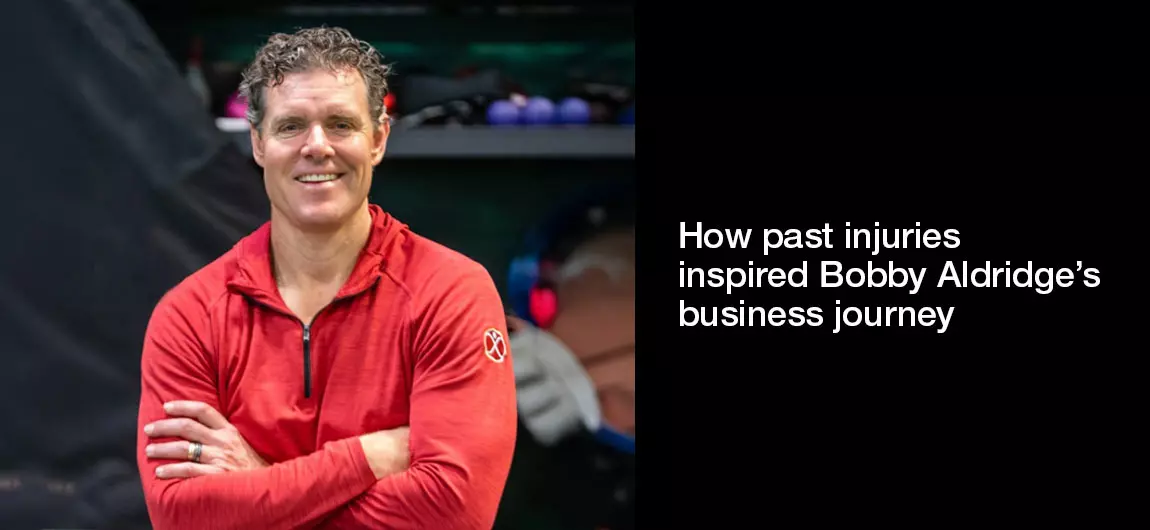
Bobby Aldridge, a sports kinesiologist based in California, has been an athlete and has worked with athletes for as long as he can remember. After having two hip replacement surgeries, Bobby was inspired to create his business BAMmetrics Systems, and within that, “The Bobby Aldridge Method”, a method he uses to help athletes alleviate pain, avoid injury, increase mobility, and improve functional movement.
View transcript
Sports Injury Recovery – Bobby Aldridge, BAMmetrics
[00:00:00] Sanjay Parekh: Welcome to The Side Hustle, the Small Business Podcast, powered by Hiscox. I'm your host, Sanjay Parekh. Throughout my career, I've had side hustles, some of which have turned into real businesses, but first and foremost, I'm a serial technology entrepreneur. In the creator space, we hear plenty of advice on how to hustle harder and why you can sleep when you're dead.
[00:00:22] On this show, we ask new questions in hopes of getting new answers. Questions like, how can small businesses work smarter? How do you achieve balance between work and family? How can we redefine success in our businesses so that we don't burn out after year three? Every week I sit down with business founders at various stages of their side hustle to small business journey.
[00:00:43] These entrepreneurs are pushing the envelope while keeping their values, keep listening for conversation context and camaraderie.
[00:00:56] Today's guest is Bobby Aldridge, a sports kinesiologist based out of California. Bobby created the BAMmetric System after recovering from two hip replacement surgeries in 2023. Bobby, welcome to the show.
[00:01:10] Bobby Aldridge: Hey, how we doing Sanjay? Thanks for having me on.
[00:01:13] Sanjay Parekh: I'm excited to have you on. First of all, I'm gonna wanna ask you about those hip replacements in a second.
[00:01:17] But before we get to that, tell me a little bit about your background and what got you to where you're today.
[00:01:23] Bobby Aldridge: Well, it started out that I was an athlete, two sport athlete in college. I went to the University of San Francisco and played basketball and baseball and years of injuries through sports.
[00:01:33] And I broke my back in a car accident in when I was a sophomore in college and had to deal with that for a year and a half, and came back from that and again, tried to play some basketball and baseball, but was struggling with injuries. And then I got outta school and became, I had a degree in kinesiology and started doing sports training.
[00:01:55] So very high end athletic training. And 30 years ago I thought I was the smartest guy in the room because I had one certification and now after doing it for 30 plus years, I feel like the dumbest guy in the room because there's so much information to know now. And it's like when you have one thing, it's so much easier than having a plethora of things.
[00:02:15] But through working with a lot of rotational sports like golf, tennis, basketball. The thing that I was finding with these players is the injuries they were having was because they were lacking movement and I call it core, correct alignment, optimize mobility, restore balance, then enhance performance.
[00:02:33] But before, when I was first training, I was enhancing performance. And because of the years and years of doing this, I, when I'd leave and travel with my pro athletes, the people that were home would kind of be lost what they're doing. And that's why I came up with this metrics-based system to help them do what they need to do when I wasn't standing right there. And that's how this all kind of came about after yeah. 30 years.
[00:02:58] Sanjay Parekh: Yeah. Interesting. So, I gotta say one comment about that being the dumbest guy in the room, you know, they often say if you're the smartest guy in the room, you're probably in the wrong room. Because you want to be in the room where there's people smarter than you because you learn from them.
[00:03:12] So yeah. Good on you for being for recognizing that and keep pushing yourself forward. So I gotta ask, so in the intro I talked about two hip replacements. What happened there?
[00:03:25] Bobby Aldridge: That actually was the easy thing. Well, you know, like I said, 30 years ago, we were jumping off 10-foot ladders to increase our verticals.
[00:03:32] We were deadlifting 500 pounds, we were squatting four 50. We were doing all these things that were putting serious demand on my hips, and we didn't do any soft tissue work. We didn't stretch, we didn't mobilize, we didn't do any of that. We just said, deal with the pain. Don't be, you know, don't just do it again.
[00:03:50] It hurts. Do it again. So after all these years, I had to have bone on bone, so I had to go in there and have surgery. But the two hip replacements weren't as bad as my umbilical hernia surgery I just had this year because I've had that since 25 years ago. I used to model and when I do the AB commercials and things, it would bulge through right there and I said no, I can control it.
[00:04:12] But I finally had to get that replaced because that was bulging even worse. I was getting that old man belly, and I'll tell you man, that's the, that was worse than the hips. The hips were no problem, but that is center of your body and you feel it every day when you do athletics. It's like it's taken some time still recovering from that.
[00:04:31] Sanjay Parekh: So, is this your first time doing something entrepreneurial or have you been, you know, entrepreneurial when you were younger and. You know, or had entrepreneurs in the family?
[00:04:42] Bobby Aldridge: I'm entrepreneurial because my brother's a serial entrepreneur and I used to ride the wave with him and I was the worker bee alongside of him.
[00:04:50] So he, he is an amazing guy with what he does. US equity holdings is what he does. And, anyway, so years and years of working with him, we came out with toys, we worked the toy Fair, we came out with a golf game. We did a deck of cards that we actually lost the because we're kids. We didn't pay the fee and we lost the whole thing on that, that we'd be millionaires right now over and over.
[00:05:16] They're using it in casinos and then we came out with some other toys. So, anyway. All these different things we were doing. But my brother's now doing big business and financing big companies and doing that. And I've always been the athletic trainer. I've always wanted to work with pro athletes. I've always wanted to make people better.
[00:05:37] I just really enjoy sports. I was the guy that went curry before Curry. I could shoot, but I couldn't move around and jump. Until I could move around and jump and then it was like, but I was 33 at the time, so I was older and I could now dunk a basketball. I could now run like a reindeer. I could now do all the stuff that now I could shoot that.
[00:05:56] It was like, now you're athletic. But it all came about because of the my brother doing entrepreneurial stuff.
[00:06:03] Sanjay Parekh: So, so what was the first business or product or service that you guys started when you were kids? So what was the very first you remember and how old were you?
[00:06:12] Bobby Aldridge: It was a golf game and we were just outta college.
[00:06:15] We were literally just outta college. So yeah, so it was like, it was so fun. And we went to the toy Fair. We actually put these hats on at the toy Fair gesture. Hats. And we ran around the whole toy fair with bags, and we drop to a knee and go hey ladies, would you like a toy here? We'd throw it to 'em and I'd set it off.
[00:06:36] So I'm like, go to booth 10 20 and they'll tell you how to turn it off. So we're running around the show for two and a half days like this. On the third day, on halfway through that third day, the security guy comes up to me and goes, hey, where's your badge? You can't be out in these aisles. What are you talking about?
[00:06:52] We're like, oh, okay. He's all, go back to your booth. So for two and a half days we got to run around the show giving out these toys outta control. So we were a no name. So two and a half years later, we're back at the show again, and the guy that's across from us is Brio Toys. And he comes over and he says, welcome to the team guys.
[00:07:13] And we're like, what do you mean? And he goes, the first year people are here, 50% of 'em the next year aren't here at the toy Fair. The next year, 50% of those guys aren't here in the third year, he goes, you guys are doing something right. You're back again. So that was like, we didn't know, we're clueless.
[00:07:31] We're like, you know, so that, that was kind of fun. So, yeah, that's funny.
[00:07:36] Sanjay Parekh: You know, that's a very similar attrition rate that back in the day when I was at Georgia Tech they talked about as well, like, half of your class was gone after the first year. Half of that second year class was gone by the end of the second year.
[00:07:48] And then after that, everybody pretty much stayed through and was able to make it. But that attrition rate is just..
[00:07:54] Bobby Aldridge: That's awesome. Georgia Tech's a great school.
[00:08:00] Sanjay Parekh: Yeah, Georgia Tech is a great school, but it makes sense that like developing a product like that, a toy like that, probably a lot of people have ideas but maybe don't really fully grasp how hard it is to actually succeed in something like that.
[00:08:14] And to keep up that momentum. So kudos to you guys.
[00:08:18] Bobby Aldridge: And I say I, well, it takes a team. My brother and I were a team and we had another buddy and it made a team and we just battled through all the time. It's like a game. You gotta keep fighting through. You might be down 10 points, but you don't give up.
[00:08:30] You keep going. And I literally say this to people all the time. I started this company 12 years ago. If I look back at the stress, the stuff that's put on me, the difficulty of where I am today, I would not have done this if I look back. But right now I'm in a great place to help a lot of people. And because I pushed through those 12 years, I'm now in a place where I actually am getting traction.
[00:08:56] I'm actually speaking, I'm on a circuit of what the perform better group. That's a, I used to sit there in the seats with these guys and listen to the smartest guys in the world. I'm now, this year gonna be on stage with those guys. So it's come like full circle with seeing that. So it's quite exciting to to be a part of that and be able to help people just feel their best.
[00:09:18] That's the reason why I started this, is to get people to feel better. You know, it's like they can do it when I'm standing there, but they can't do it when I'm not, they're not sure. Because of the tools and the things I came up with, you can now do this on your own when I'm not standing there and make adjustments on your own. That's the magic.
[00:09:34] Sanjay Parekh: Yeah. So let's zoom in on that. So 12 years ago you started this business. What was the motivation, why did you decide to start this? I as a business instead of like doing whatever you were doing and kind of doing it as a side hustle or, you know, whatever it else that you were doing before then.
[00:09:52] Bobby Aldridge: I look back and go, I actually don't know how I got started. It was like, it's insane to think back what I did. No, I just started pushing towards something and when I get my mind on something, I go and I go all out and I go hard. And long story short, I was looking at this and going, I need to get this made.
[00:10:15] I need to, and I found this guy who said, I'll make you that. He makes it for me for like eight months, nine months. I'm waiting for it. Waiting for it, and then I go into a bar to meet the guy to see what he brought back from China and I grab it with my hands and I break it apart. And I literally almost cried going, I waited nine months for this thing.
[00:10:34] It wasn't made well. It was cheap, it was wrong. I didn't know what I was doing with manufacturing equipment at the time, and I was like super sad. So two months, three months go by and I go. Talking to these guys and then I tell 'em, yeah, I'm trying to make this product, but I can't get it made. I can't get it made.
[00:10:53] And they go, hey, I got a perfect guy for you. You know the TRX guys I, that those guys can make your product? I'm like, no, you don't know what I'm trying to do. And they go no. Trust me. This guy will help you. So I go, fine, I'll go meet him. I go over there and this is the guy and this guy makes quality product.
[00:11:08] So he starts making my things that I started with, and that's how it got started at that time. But honestly, when I look back, what was I thinking when I started like there, I didn't have a plan. I didn't have a, this is what we're gonna do. I didn't care about marketing. I was making this to help my clients.
[00:11:26] I wasn't even thinking about like, I'm gonna go get rich. No. That had nothing to do with it. That was the problem. I should have actually thought about a plan. How am I gonna make money? How am I gonna market this? What's it gonna cost? All these things. I didn't think of any of it. I just literally dove in the pole and started swimming and go, there's four sharks in here.
[00:11:45] I better get out the water. You know, it's like,
[00:11:48] Sanjay Parekh: it's crazy. Well, I mean, you'd be surprised. There are so many stories like this where people just start doing things and so many people don't start companies because they are paralyzed with how much they have to do. Instead of just, you know, at one point just, you just gotta start doing things.
[00:12:07] Adam Walker: Support for this podcast comes from Hiscox committed to helping small businesses protect their dreams since 1901. Quotes and information on customized insurance for specific risks are available at Hiscox.com. Hiscox business insurance experts.
[00:12:28] Sanjay Parekh: Let me ask you this. So then, okay. You started that, you know, eight, nine months, you're waiting for the first product, it's garbage. You're figuring this out. So during this time, are you, I'm assuming you're working full-time as well or doing something else? Yes. So how are you kind of managing all of this and making it all work?
[00:12:46] And then now fast forward to today. How do you manage this? Because for those of us watching the video we can tell like, you're actually in your home garage and you've got this built up studio there. And so the blending between work and home is basically non-existent for you because home is like 10 steps that way.
[00:13:09] So talk about both of those, like how do you balance your time and stress and how was it in the beginning and how is it now for you?
[00:13:18] Bobby Aldridge: Well, it's been high. It's struggle and you gotta learn to organize and plan the week and set time aside for yourself. You have to put the time aside for yourself, and that's why I like to get up earlier in the morning.
[00:13:35] That way there's quiet time. If I get up at 4:30, nobody's bugging me 4:30 to 5:30, right? Then at 5:30 I might have a client till 6:30 and another client 6:30 to 7:30. But that 4:30 to 5:30 time is my time, and that's where I come down. I do a little meditation. I might read something.
[00:13:54] I do different things every day, but you have to put fit whatever you're trying to do into your lifestyle. And you get busier and busier, especially when you have kids, a wife, family, a mother-in-law. You get calls during the day. Can you do this for me? Can you do this for me? When I have a plan, the perfect plan doesn't always work. So you have to be adaptable. Adaptability is key, but you have to find that time of quiet for you. And sometimes I'll be in bed with my wife. because you gotta spend time with the wife at night, right? The eight to 10. We're watching some TV. She falls asleep. All of a sudden, I'll jump out of bed and go spend an hour doing what I need to do for an hour before I'm gonna go to bed.
[00:14:37] But I had that plan because I was behind an hour to go pick my son up at school that I had to go get because she couldn't pick him up and I had to go get him. That, those are the things that happen. So there is no perfect plan, but there is adaptability.
[00:14:51] Sanjay Parekh: Yeah. So I always wonder about folks like in your line of business, because your business is helping people exercise, helping people get in shape.
[00:15:01] Do you actually exercise and have an exercise routine for yourself or do you get it, you know, just as a byproduct of having clients?
[00:15:10] Bobby Aldridge: I fit it in throughout the day as it works for my lifestyle. And I have certain goals that I started this year that I wanna spend more time with me. Getting better at stuff that I've been wanting to do for a while, like playing the piano, playing the guitar, playing golf, doing things that are more, you know, I'm not living.
[00:15:28] I've been saying I've been surviving, I've been swimming in the water. I've been trying to adapt to everything but quality of life. I want to improve that. I always spend time with the family, so that's not something I'm trying to do more of. I need a little bit more me time, and I think that's gonna make me stronger and a better person for everything I'm trying to do right now.
[00:15:47] Is that's what I think is gonna help this year. So, trying to work on the golf game takes so much time, you know, but it's, I work with a lot of pro golfers, so it's fun to, to kind of go play with those guys and play. Okay. So.
[00:16:01] Sanjay Parekh: Yeah. Yeah. That's cool. Okay. Let's dive into the system that you've built, this BAMmetric System.
[00:16:09] Can you explain it a little bit and how was it influenced by you like your injuries and things like that, that really made you kind of hone in on this?
[00:16:19] Bobby Aldridge: Well, I just noticed that when we go to physical therapy, they give us some exercises and I would go home and I would do them, but there wasn't an exact, you know, point of measurement.
[00:16:28] There wasn't an exact point of where do I stand when I use this band? Like this band is a yellow band. It's like a medium band, but how far am I away from that door doorway? You know, today I'm here tomorrow, I'm there. But that's not like a measurable way to improve. So it's like I tell people, like, you guys understand business.
[00:16:45] You guys measure all the metrics of business. Why don't we measure what we do in mobility? How do you not know your feet are 40 inches apart? My hands on a 12 inch block and then I'm rotating open. I know where I am in space. So I had some golfers I was working with years ago and I was drawing lines on the yoga strap and I was saying no, put your hand here, then put your hand here and then put your hand here.
[00:17:08] And then one day I'm like. Oh, I should put numbers on it. I could just tell him, put his hand at 14. Right now, the guy knows, put his hand at 14 and then Sanjay comes to me and I say, hey, put your hand at 26. And you're like, putting it at 26. I'm like, this is brilliant. This is so simple, right? So that's how it started.
[00:17:27] And it went from there to, I was trying to get some people to do some mini band walks and they have a light band on and I say, go ahead, start walking. But I'm like no, put your feet wider, put 'em back together, put 'em wider, put 'em back together. And so what I was teaching, 39 physical therapists. One day, and they were doing the mini band walks and I said to 'em, hey, go ahead and use these black band, the heavy, medium, and light.
[00:17:51] And they start doing it. And they're like struggling with the movement, right? Because some are wide, some are short, some are wide, some are short. And the physical therapists say to them, the other physical therapists, I said, what would you change about their movement? And they're like, put your feet wider, put your feet closer.
[00:18:07] So there's no metric to it. And I flipped my mats over it, right? And I said, Hey, you stand one box, you do two boxes and you do three boxes. And the one that was doing three boxes, the knees were going valgus and in and struggling. And all the physical therapists said, Hey, she's gotta move in one box. And I was like, ding ding.
[00:18:26] Now we're speaking the language. It's one box with a medium band. So each tool came out of a necessity of needing to help someone with what they were doing, and it basically would help them correct their movement with the metrics.
[00:18:42] Sanjay Parekh: Yeah. This is super interesting to me because I've been through physical therapy as well, and they give you the bands and stuff and they tell you how many reps and whatever.
[00:18:50] Yeah, but that doesn't really relate to like exactly what you're saying, like how much tension because there's no way to really understand the tension or the pressure that's being you know, kind of impacted on your body based on those bands, because they're there, there's nothing on them. There's, they're just straight up bands.
[00:19:09] So super super interesting insight. Okay, so. You know, you've been working with athletes all of this time. Why did you decide athletes in the first place? Like why is that kind of your sweet spot? Why is it not? I don't know some other group of people.
[00:19:28] Bobby Aldridge: Well, I always say we are all athletes. Athletes come to me because I get results. So they hear about me. But we are all athletes. We all are driving. We all have to go to the store. We all have to carry lift boxes, do things. So I'm working with the human body, not athletes. You're all athletes. So the athletes come because they hear, hey, can you fix my back?
[00:19:53] Can you fix my knee? Can you make me run faster? Why do I pull my hamstring? So I've worked with a lot of these athletes because I'm so good at fixing and making them perform better because of the first three things I talked about. Remember it's core correct alignment, optimize mobility, and restore balance throughout the body.
[00:20:12] If you do those three. We can always enhance performance, but if you enhance performance without these three, that's where we have an injury. That's where we have compensation, a dysfunction, and that's what causes pain. So I train the human body so I can help grandma who just wants to walk better, or I can help Tiger Woods that wants to, you know, get rid of his back pain, that sort of stuff.
[00:20:34] Sanjay Parekh: Yeah, so let's dive into that a little bit because I think it's an interesting kind of marketing, like obviously there's word of mouth with athletes because kind of how they perform is their job. And so they're gonna do things to, to make it better. So, have you figured out ways, you know, to market yourself so that you can expand that customer base so that it's not just what we traditionally think of as athletes, right?
[00:21:00] Like people that whose job it is. To do something athletic, but talking about regular people too. And if so, like how do you market to those folks and how do you get them to realize that they need somebody like you?
[00:21:13] Bobby Aldridge: Well, it takes time for everybody to kind of believe you that this is gonna help them.
[00:21:17] I've had, so many seminars that I do where I have the guy sitting there with his arms crossed in the back, who's 80 years old, he's looking at me like, kid, you don't get this and dah. By the end, he's coming up, he's smiling, he's like, and I go wait, stop. When did you get the feeling you could do this?
[00:21:33] And he starts to talk. I go no. Go talk to the camera. Other people need to hear this. And that's what I, it's hard to get people to believe because there's so much out there. But like I said, there's a foundation to movement and if you do the proper thing and build the foundation of your house properly, you can add level one, floor one, floor two, floor three.
[00:21:55] Most people go for the shiny objects and jump the floor two. And so I do a lot of speaking to get that word out. And then it's just a lot of word of mouth. Yeah. And then that's some of the marketing stuff.
[00:22:09] Sanjay Parekh: So that's the main kind of marketing strategy that you've employed is the kind of like speaking engagements and then hoping word of mouth is there. Is there anything else that has come into play or has been valuable for you?
[00:22:21] Bobby Aldridge: Yeah, well, I'm gonna start, I have an online program right now, mobility program that's going to be specific right now for golf that's helping all the golfers out there. And so people can sign up and start that. And I call it like the dirty dozen. These are the 12 things that everyone should be doing from a pro athlete to the grandma. And that's what I'm gonna start promoting online. Yeah, more often.
[00:22:45] Sanjay Parekh: What, so, so that's interesting. So I mean your business has really been built by, you know, as we see it behind you an in-person kind of one-on-one strategy. And now you're moving to an online, I'm assuming a self-paced course, or is it like real time online?
[00:23:02] Bobby Aldridge: It's self-paced, but it's weekly where it comes each week. You get a different every three weeks to get a different tool. But it's online. Okay. It's self-paced. You do it yourself.
[00:23:12] Sanjay Parekh: Yeah. So, so with that like how are you it's a totally different experience for the end user, right? So how are you thinking about that in terms of trying to make sure that value stays there?
[00:23:26] Bobby Aldridge: Every two weeks I'm gonna have a community call so people can come on, ask questions. Ah, okay. They can learn it's live with me. I might have my pro with me, who's in town that week, and we were working out. I'll have him on camera with me answering questions, like whatever's going on.
[00:23:42] Okay. So I'm trying to build that community of people to help because. I love helping teams. I love helping mass people because I, it's really easy to help people move better if they do the right thing. Right. And I feel like I need to touch more people with that. So that's the only way to do it.
[00:24:01] Sanjay Parekh: Right. Yeah. So this'll be your first time, I assume then trying to start scaling your expertise to, to touch more people.
[00:24:09] Bobby Aldridge: Yes. Yes.
[00:24:11] Sanjay Parekh: Okay. Interesting. It's a interesting approach and hopefully we get some kind of follow up from you in the future about kind of how it worked out because I think it's a hard thing to kind of grow into because, you know, you've already been in this space, but obviously from a business perspective, something useful because
[00:24:31] revenue should grow with that as well. So let's talk about kind of like partnerships and how do you get the word out? Like do you partner with teams and gyms and other people? Like is there some kind of strategy there for you as well?
[00:24:46] Bobby Aldridge: Yes. I have affiliate programs so people can sign up as an affiliate.
[00:24:49] So trainers, I train the trainers and give them continual education. They sell it to their clients. And then they get an affiliate kickback on that. That's what, so that's the trainers. And then on the other side, I do stuff with the you know, adults and things like that, word of mouth. And I give little sessions to people that are bringing me two, three people, you know, I've been doing this for years.
[00:25:13] The word of mouth thing, right? So every time they bring me someone I give 'em time, I always call. And how's it going? And help them more. I'm a helper. That's what I do. Right. You know, I wish, I just literally, had a bank account that sat over there, it just filled. So pay the bills and do the stuff and I could just go help.
[00:25:30] because then it'd be so much easier, like, I'm here to help, not I'm here and I need this amount and I need this amount. Then it's like, it's transactional. You know? I love the helping part. That's really who I am. Yeah. That's why I got into this.
[00:25:46] Sanjay Parekh: Yeah. Is there, so you've been doing this now for 12 years.
[00:25:48] Is there anything that even now kind of. Keeps you up at night or makes you nervous about the business?
[00:25:56] Bobby Aldridge: Oh yeah. Always. Like, I wanna make it better. I'm like, is that video good enough? I did that tell the story to them better? How can I make that better? Did I put the words in there on the website that they're getting the information from?
[00:26:08] Is that good enough? So I'm going back in there and I'm changing words all the time. Like, no, I better say it like that. So yeah, I wake up at night and just like, boom, I gotta go downstairs and start typing. And it's like. I'm always trying to make it better, and I think I said this the other day, I do not understand people that say they are bored.
[00:26:26] If you are bored, you're not learning and you're not striving to be better. It's not possible to be bored if you're doing that because I've never been bored and I say someday I can't wait to be bored. I can't wait to sit in a lounger and go, I'm bored. Wow. What's bored Feel like I don't know that because I'm always trying to get better
[00:26:45] to help my clients get better. So I can't learn enough fast enough. There's not enough time in the day. My wife's like, take a break, and I'm like, I am. I'm reading.
[00:26:59] Sanjay Parekh: I, I think you might have hit upon something like. Good entrepreneurs and founders. I don't know if they're ever bored because I, now that you're saying that, like I don't, I can't really think of the last time that I was bored, like maybe when I was in my teens before then sometime.
[00:27:20] Bobby Aldridge: That's what's crazy is I remember being in school.
[00:27:24] And I'd sit, like junior year, I'd sit back, I look at the clock, it's like 1102. And I'd sit there and I'd look back and it's like 1103. I'm all, what? Oh, one minute went by. We got 57 more minutes here. Is that clock moving or is it broken?
[00:27:42] Sanjay Parekh: Yeah. I gotta agree with you. And I think maybe that's the entrepreneur, founder part of us just being like, this is not useful information for me, like, this is boring. You know I think I should be spending my time doing something else. So okay. A couple more questions for you. So, you know, you've been doing this now for 12 years.
[00:28:03] Thinking back over those 12 years, if you could do something differently and go back in time and do that differently what is that and why would you do that differently?
[00:28:13] Bobby Aldridge: Better teammates, guys that I would pick to help me. And really sit back and think about the decision of who is part of your team, because you need a team and you need the right team. That's the biggest thing I could give you advice on is take your time. So it sounds like you've gone
[00:28:33] Sanjay Parekh: through some trials and tribulations with teams and with Yes. Kind of your team. Talk about that a little bit and kind of what happened.
[00:28:42] Bobby Aldridge: I built a team of, I think we had about 24 people and this is about seven years ago, and we had it all going. It was gonna be a big business and it was gonna be in all avenues of physical therapy, training, all the trainers, the gyms, all of that. I closed three big deals, one with a construction company that was gonna do all the teamsters and all that.
[00:29:09] I closed one with a hundred gyms and another hospital closed that. And my, I closed one other big one and my partner asked for too much from each one of them. Instead of asking them what do they want to do and how much do they want to put in, I brought him in as a business guy and I thought, I didn't know business enough.
[00:29:30] I put him as the business guy, but he burned all three leads because he asked for too much. And that's when I had to cut it off, and start over and get away from what he was doing because he was trying to hit a home run rather than hit a single because all three of them would've put money in and started the process and it would be very large right now with what I was doing.
[00:29:51] And he burnt three big bridges. And so having the right partners and you also know more than you think, you know. For the people that think they struggle and have imposter syndrome and all the stuff that you're struggling with, you are actually better than you think you are. If you care and if you're authentic and you care, you will get there.
[00:30:13] That's the tough part. Yeah. So trust your instincts. Go with good people and find good people because then you can really build a solid business. That's not even a question. And I've been putting better people around me is why things are moving in that direction right now for me. Your failures become your successes. Always take those failures, right? And don't be bitter about 'em. Learn from them and move on. Yeah. Don't let it, don't let it hold you back.
[00:30:40] Sanjay Parekh: Yeah. What you're kind of touching on is I think a hundred percent accurate. I think imposter syndrome runs rampant in kind of. You know, us as a class of people you know, our colleagues that are all founders and entrepreneurs.
[00:30:55] I think that happens a lot of times. And so I think that's really good advice because you're a hundred percent right, like everybody has to do something for the first time. Like, you can't compare yourself to people that are already successful because you're not looking at back when they weren't successful and then when they were just starting out and when they were failing and still trying to figure it all out.
[00:31:15] So, along those lines even though you just did give us one piece of advice for listeners, do you have anything else that you would tell somebody that's thinking about taking that leap like you did and jumping into a full-time business or a side hustle like you
[00:31:32] Bobby Aldridge: Oh, I would just say, I mean, if you're really passionate about it.
[00:31:35] You really love it, and it's not like you're jumping in for the money. If you jump in for the money, you're jumping in for the wrong reasons. But if you are passionate about helping people, changing the world, doing something, that it all comes down to passion. So if the passion's not there, it won't work because you won't dig through when it's hurting and it's hard and it's, you're tired and all the stuff that struggles. It's easy when it's easy, but it's the once it, I was literally at USC last week and one of the professors was talking behind me while I'm working on my computer and I said, man, that was a great conversation you just had with those kids. He said, I've been doing this for 35 years down here, and every kid that's been successful is not smarter than the other kid. It's that they pushed through the hard times and when it got hard, they kept pushing. And when it got hard, they found mentors. And when it got hard, they asked for help. And when it got hard, they just kept going. That's success.
[00:32:35] Sanjay Parekh: Yeah. Yeah, absolutely. Great advice. Bobby, this has been fantastic. Where can our listeners find and connect with you online?
[00:32:43] Bobby Aldridge: BAM-metrics.com. And yeah, and you can send me an email anytime I ask a question, [email protected]. [email protected]. And I look forward to helping you guys.
[00:32:59] Sanjay Parekh: Awesome. Thanks so much for being on the show today, Bobby.
[00:33:02] Bobby Aldridge: Thanks you. Thanks, Sanjay.
[00:33:07] Sanjay Parekh: Thanks for listening to this week's episode of the Side Hustle to Small Business podcast, powered by Hiscox. To learn more about how Hiscox can help protect your small business through intelligent insurance solutions, visit Hiscox.com. And to hear more Side Hustle to Small Business stories, or share your own story, please visit Hiscox.com/side-hustle-to-small-business. I'm your host, Sanjay Parekh. You can find out more about me at my website, SanjayParekh.com.
Subscribe to our podcast



Did you start your business while working full-time at another job?
Tell us about it! We may feature your story in a future podcast.