PR Agency Franchising: Aquila Mendez-Valdez's Growth Strategy



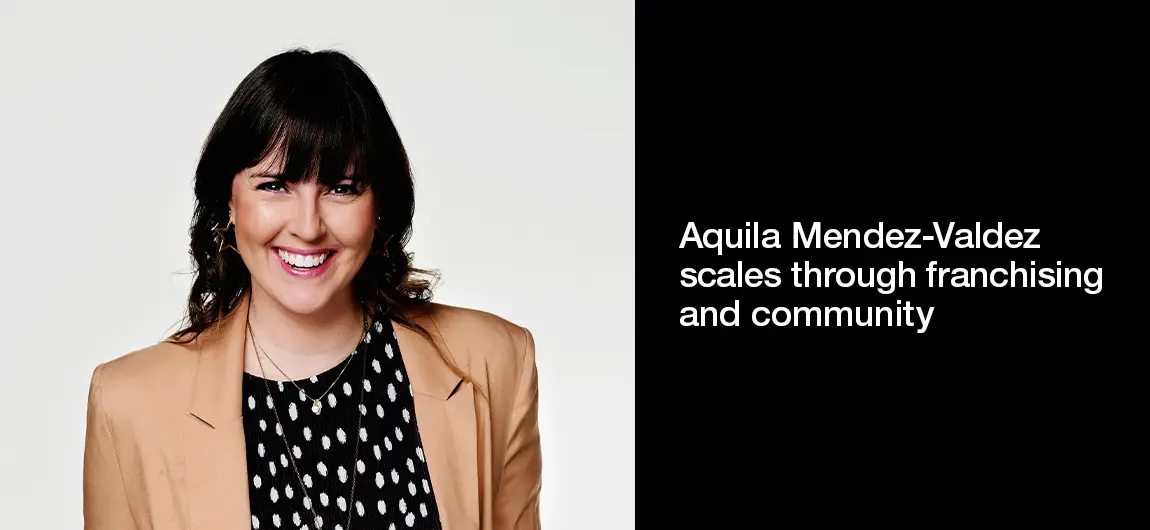
Aquila Mendez-Valdez is the Founder of Haute in Texas, which began as a personal blog and has evolved into a full-service public relations agency empowering women-led businesses. Her innovative approach combines storytelling, strategy, and community to help brands grow with authenticity and purpose.
View transcript
PR Agency Franchising – Aquila Mendez-Valdez, Haute in Texas
[00:00:00] Sanjay Parekh: Welcome to The Side Hustle to Small Business Podcast, powered by Hiscox. I'm your host, Sanjay Parekh. Throughout my career, I've had side hustles, some of which have turned into real businesses, but first and foremost, I'm a serial technology entrepreneur. In the creator space, we hear plenty of advice on how to hustle harder and why you can sleep when you're dead.
[00:00:22] On this show, we ask new questions in hopes of getting new answers. Questions like, how can small businesses work smarter? How do you achieve balance between work and family? How can we redefine success in our businesses so that we don't burn out after year three? Every week I sit down with business founders at various stages of their side hustle to small business journey. These entrepreneurs are pushing the envelope while keeping their values. Keep listening for conversation, context, and camaraderie.
[00:00:56] Today's guest is Aquila Mendez-Valdez, the founder of Haute in Texas, a PR firm with multiple locations across Texas. Aquila, welcome to the show.
[00:01:07] Aquila Mendez-Valdez: Hi. Thank you so much for having me.
[00:01:09] Sanjay Parekh: So I'm excited to have you on. I think you've got a really interesting story of developing this marketing firm that you've got. But before we get into all of that, give us a little bit about your background and what got you to where you are today.
[00:01:24] Aquila Mendez-Valdez: Sure. So I grew up in Indiana. Actually, we're now based in Texas. My husband that I met in college is from here. And so I've been a resident of Texas for a very long time, but grew up in the Midwest daughter of a farmer.
[00:01:39] And I think that taught me a lot of, you know, hard work ethics and being able to do right by the people that you work with. So when I went to college, I majored in PR and immediately after getting my master's went into to work with some agencies and it was really when I was about, you know pregnant with my second daughter that I started to feel that, you know, decision looming of, do I want to keep working for somebody else? Do I want to do something on my own? And so I was really fortunate to have an opportunity to start my own agency and 11 years later, here we are.
[00:02:14] Sanjay Parekh: Awesome. And so is this the first time that you've done something entrepreneurial or was there something entrepreneurial as a kid, or were there entrepreneurs in the family?
[00:02:23] Aquila Mendez-Valdez: You know, I think I definitely learned a lot of lessons from my dad and my mom also, you know, helps a ton with the family business. So seeing him as an entrepreneur, I think you hear a lot of stories of people stuck in corporate jobs and they're scared to leave because they don't know like, well, how will I figure out my benefits?
[00:02:39] How will I figure out this? How will I figure out that? And seeing the example of my dad. Being able to just kind of figure all of that out on his own as he was going along removed a lot of that fear for me. But I don't have like the classic story of like, I used to, you know, sell pencils to all my third grade, you know, classmates. Like, I don't have anything classic like that. I think it was just when the phase of life that I was in. Really was going to match super well with being an entrepreneur was when I felt that kind of inkling in my gut of I, I think I could do this too.
[00:03:15] Sanjay Parekh: Yeah. So how did you get started then? So you're pregnant. You, is that when you decided to make that jump? Was it after the Yeah, pregnancy. Before the, during the pregnancy. Like what, yeah. Walk us through. Yeah.
[00:03:27] Aquila Mendez-Valdez: You want the actual timeline? I love it. I love it. So, yes, we you know, decided, my husband and I that I would leave my job in. I think July timeframe, and I was due, my, my youngest who's now 10 she was due in March, so I had some runway of like, okay, I'm expecting, but I can really kind of, you know, do my due diligence right now while I'm expecting to try to grow this as much as I could before.
[00:03:54] Or any, you know, you don't get a quote unquote maternity leave when you're an entrepreneur. But I did have some runway. I have a great, you know you know, memory of my first client hiring me when I was massively pregnant for an event and at the event. They were just incredibly concerned that I was going to go into labor, but I did not. So that was the positive.
[00:04:18] Sanjay Parekh: That's completely winning right there. How pre do you remember, how pregnant were you during that?
[00:04:22] Aquila Mendez-Valdez: I think I was close to like eight months. I think they were having that event. Oh, wow. In like February, like late January, early February, and I was due early March. Oh, wow. But I was hustling. I was moving and they still are great friends to this day and tell that story to anybody who will listen. It's pretty hilarious.
[00:04:39] Sanjay Parekh: Yeah. I like that. So okay, first customer. How did you find that first client?
[00:04:45] Aquila Mendez-Valdez: Yeah, they were, you know, it's funny because I really started Haute in Texas while I was still working for my old agency as more of a blog and really an opportunity for me to be able to network you know, find out other events going on around town that I could go and attend and cover and write about.
[00:05:03] And so I met them through a lot of that experience and being able to kind of build up my own name for myself while I was sort of also you know, working my full-time. Time job. So they came from that. And that's something that I always recommend to people who are thinking about going off on their own, that you have to start building up that personal brand even as you are looking to, you know, make a decision strategically about when to leave that full-time job.
[00:05:30] Sanjay Parekh: Yeah. Yeah. So, w was there anything so you made this decision it sounds like soon after you were pregnant and you had this kind of. I guess nine month runway to to that and all of that. So, so the business started before you gave birth you know, like what happened kind of after birth? Like, how did you keep the business running because that's, I mean, a hard time. And then was there anything that made you nervous and kind of this whole deal of starting out and how did you get over that for yourself?
[00:06:04] Aquila Mendez-Valdez: Yeah, I think I would've been far more nervous knowing what I know now. If I was going into the exact same decision I would be more of a nervous wreck.
[00:06:14] But in hindsight, I was just kind of, everything's going to work out. We're going to, we got this, we're going to be fine. And you have all of these, you know pie in the sky, goals and dreams that, okay, I'm jotting down my first 10 clients on a napkin and they're all going to sign and they're going to sign for exactly what I think they can afford.
[00:06:29] And obviously the reality is very different. But I was also very fortunate that with Issa, my youngest being my second baby. My recovery was much faster. I was right back in the throw of things. And you know, as I mentioned before, I think growing up, you know, with a dad who works incredibly hard with a mom who, you know, is very strong, independent I didn't want to slow down.
[00:06:53] I wanted to be back in the mix and back to doing what I love. So I was just very fortunate that I was able to bring her ride along with me to client meetings and all that good stuff that was ready and waiting for me to pick back up.
[00:07:07] Sanjay Parekh: Yeah I think that's probably one of the superpowers of entrepreneurs is our blind faith in that everything will work out, or our inability to recognize our own dumbness or stupidity of recognizing the risks of the thing that we're doing, right?
[00:07:24] Like we just jump into it and be like, nah, it'll be fine.
[00:07:27] Aquila Mendez-Valdez: Yes. Yeah. I love the term delusional confidence. Like there's no reason that you should be, you know, thinking that you can take this risk and make these moves, but there's just something within you. And I think that's also a very like American thing to just feel like, why not? Why not meet, why can't I be the one to go out and do this thing? So it, it's always cool to see it pay off. For sure.
[00:07:49] Sanjay Parekh: I think you're, I think you're dead on, right? Right. Like, I, you know we can't, and say it's. Delusion and all that, but there's a lot of courage there too, right? It's like this trust that, look, everything will work out.
[00:08:00] We're going to figure it out. We're not dumb people. You know, we may not know all the answers right now. Yeah. But we know that there's a way to get to the answers, and that's how we'll get there. So so let's talk about that, like lot, lots of unknown answers or unknown questions as well.
[00:08:17] As well as unknown answers. In doing this. Like, how did you kind of navigate yourself through that? Because there's a lot of things that you have to go and set up when you're setting, starting a business for the first time, right? Like there's the legal stuff and the accounting stuff. And then like, there's all these like, details of stuff. So how did you work your way through all of that and get to a place where you were comfortable and you could actually do the work that you wanted to do and not like all the administrative stuff that you have to do to get that going.
[00:08:47] Aquila Mendez-Valdez: Yeah. You know, it's funny because I feel like it's kind of goes back to that old saying, you know, how do you eat an elephant?
[00:08:54] It's like one bite at a time. Like you just, there's problems and obstacles that come your way once you start a business that you just figure out one problem at a time, one step at a time. And now you look back, you know, 11 years later and it's like, oh my gosh, we have all of these systems and processes and our tech stack and our insurance and, you know, all these different things.
[00:09:13] That if I would've had to have all of those set up on day one, I would've been, you know, absolutely. Or paralysis by analysis. But you know, you just one challenge at a time. Figure it out. Figure it out. And I think you also tend to build your own confidence that you can figure it out, because the more that you have those things come your way and you realize, okay that's, that seemed intimidating at first, but I got that. I can figure that out. When you do that 5, 6, 7, 8, 9 times, then the next thing that comes your way, you're like. We're not going to panic. It's going to be okay.
[00:09:45] Sanjay Parekh: Yeah. Yeah. So, okay. So you've been doing this now for quite some time. How has that impacted your role then within the company? Has it changed? Is it still the same as it was in the beginning?
[00:09:58] Aquila Mendez-Valdez: Oh my gosh. I would be much more tired if it was the same as it was in the beginning because we have been very fortunate to grow and build a team. We have a huge support system now with, you know, not just our internal team, but subcontractors, freelancers, like all sorts of people that help this engine.
[00:10:17] Running. So yes I definitely recommend that when you are ready. I stayed a solopreneur for probably four, probably the first four to five years before I brought on my first employee. And the same first client gave me some great advice when I was looking to hire my first person, I called her and said I just, how am I possibly going to be able to do this?
[00:10:40] Nobody can do it like me. Nobody's going to do it as, as great of a job. You know, back then you're thinking like, no way this could happen. And she kind of stopped me and was like, Aquila, first of all, there's no great company of one, so you're going to need to hire eventually. And second of all, you're not the first to do this.
[00:10:57] You're not going to be the last somebody taught you and you can teach somebody else. So let's just get on with it and start building that team instead of, you know, being so in your head that you think this is way bigger of a deal than it really is.
[00:11:10] Sanjay Parekh: Yeah. This is a classic trap of entrepreneurs too, right? That nobody can do it as well as me. No. And I have to be the one involved in touching all the things. Yes. And it's going to take me much longer to teach somebody to do this. Then I could just do it myself. Yeah. And it's all of those things that, that prevent a lot of entrepreneurs from scaling up.
[00:11:31] Yep. So let's talk about it like, you know, one of the things that happens a lot of times in scaling up is talking about culture and things like that. And so how have like your values and principles guided you to build a culture. And then also guided you through the tough decisions that naturally come from starting up your own thing.
[00:11:50] Aquila Mendez-Valdez: Yeah, I mean, I think, you know, I certainly learned some really hard lessons early on that, you know it is much better in the long run to let go of somebody quickly that you know, is not a good fit in your gut and you know, want to make it work. You want to try to train them, you want to try to improve and figure out how to find a way forward.
[00:12:10] And sometimes it's just better to kind of cut it, you know, right there in the beginning and say it's just not a good fit. Yeah. We also what I ask. Skin, every interview and what we kind of try to build our culture around is a book called The Ideal Team Player. And it talks about, it's a very quick read, very anecdotal but one of the core kind of principles is that the. The three characteristics of an ideal team player is to be humble, hungry, and smart. And by smart they actually mean people smart. Not necessarily, you know, book smart, but do you have the emotional intelligence to be on a team and adjust to clients and personalities and all of that. So we always ask people in interviews, you know, what's your strongest and which one do you need to improve in the most?
[00:12:56] And it's really interesting what kind of answers you get out of that. But it, I also, I think that's what it all boils down to. Are you ambitious and hungry and want to get after it and work hard? Are you humble? Do you feel like there's no task that's, you know, below me? I'm happy to jump in where the team needs me. And then am I going to be able to connect and relate to people and be somebody that everybody enjoys being around.
[00:13:21] Adam Walker: Support for this podcast comes from Hiscox committed to helping small businesses protect their dreams since 1901. Quotes and information on customized insurance for specific risks are available at Hiscox.com. Hiscox, business insurance experts.
[00:13:42] Sanjay Parekh: Okay. Let's switch gears a little bit and talk about the business itself. So you're in PR marketing. Lots of organizations that do that, right? So how do you think about that in terms of differentiating yourself with other firms in this kind of a field?
[00:14:01] Aquila Mendez-Valdez: Yeah, no, it definitely is very saturated.
[00:14:05] And, you know, really tough, I think a lot of times for customers to feel like, how do I even choose amongst all these different agencies that all say they're the best, that all say that they do things the most uniquely and the most, you know, advantageous to my goals. So it is, it's really hard to differentiate yourself in this market.
[00:14:23] I think what we have found over the years is that super high attention to detail for the client themselves to where they feel as if we are an extension of their team. If they have a question, you know, I'm reading a book right now called The Trusted Advisor. That's a really classic, you know, old business book. And, that is how we want people to view us. Not just, oh, I have an SEO agency. Oh, I have a, this agency. We want to be the people that you call when you have challenges in other facets of the business that maybe we don't even help you with, but you feel close enough to us that you would be willing to say. Hey, I think Aquila might have some good advice for me on this. Yeah. Beyond that, in a PR and marketing, you know, specific aspect we follow, there's a woman in Chicago whose name is Jenny Dietrich, and she follows or she's the creator of the peso model, so PESO, peso standing for all different types of media, paid, earned, sh, shared and owned.
[00:15:20] And we love. Having trained under her and now implementing that across all of our clients. That integrated marketing approach is really the way that I think all agencies need to be headed because it's easy for clients to think, oh, I'll just give this to Chad, GBT. They can write my press release, they can write my social media content calendar. When we bring the expertise of pulling all of those aspects together and running them smoothly and tracking them accurately and pointing to all of these metrics that we've set up to really showcase how we're driving results that is next level and where you become irreplaceable over a ChatGPT or something along those lines.
[00:16:01] Sanjay Parekh: Yeah, no, absolutely. So let's talk about that a little bit. Has there been. A very successful or surprising strategy that you've come up with for a client that e even now, that you're like, wow, I, I can't believe that worked. I, you know, don't understand why it worked, but it did work. You know, like, is there something that jumps out at you like that?
[00:16:23] Aquila Mendez-Valdez: That's a really good question. I think I am always pleasantly surprised when clients trust us to help put them in front of community organizations and do more of that gorilla marketing, where it's not as flashy as a TV commercial. It's not as, you know straightforward as just a social media campaign.
[00:16:45] But if we think more holistically and we're able to say, okay. We're going to put you in front of the right audiences and then they can kind of see, okay, because you had me on that stage at that event, introduced to those people or got the right, you know, people to attend our event. We now saw these business opportunities come our way.
[00:17:04] As a result of that. I love when clients will trust us to have that level of. Connection with their business. Versus kind of trying to keep us over here and hey, this is what you do, but we don't want to give you, you know, extra access or you know, resources beyond that.
[00:17:22] Sanjay Parekh: Yeah. Yeah. Is there something that you would so thinking about it, like is there something you would recommend to somebody listening to this show that is. A side hustler or a small business owner, obviously not in the same space as you, but that actually has a business and they're trying to market. And, you know is there some idea out there, because I think you, you've touched upon this a little bit, like there's these challenges.
[00:17:47] Like, oh, let me just give it to AI or whatever. And I think a lot of times you know I've made this joke before is that AI a lot of times stands for the average of the internet. Right? Like, yeah. You don't get anything stellar. A lot of times outta it. You can get a lot of stuff done, but there's no, like that leap of insight necessarily that happens from it. I, is there some strategy or tactic that you've seen work lately that you would say like, oh, you know, small business owners should definitely think about doing this.
[00:18:17] Aquila Mendez-Valdez: Right. Yeah. So I'll tell you from a anecdotal perspective, you know, one of our clients that I still, you know, am friends with, we worked with him last year as he was kind of getting off the ground with his business for some digital marketing and things like that.
[00:18:30] And one of the things that I think he does an excellent job of is that. Executive thought leadership, which is kind of a buzzy term, you know, everybody wants to know like, what the heck does that mean for him? It really means, you know, I see his posts on LinkedIn all the time. I see his posts on Facebook all the time, and what he's doing that I find really, you know, beautiful is he's being extremely authentic to say, Hey, this is a really challenging thing we're running up against right now with our business.
[00:18:56] Or, hey, this is a, a inside peak as far as how hard this is to build what I'm building right now and what I think is beautiful is, number one, he connects really well with his fellow referral partners in his industry. So they say they see that he's willing to share and they feel much more connected to say, Hey, I'm going to send some business his way. Because I feel like I really know him. And then on the flip side, from a customer perspective, you see how much he cares and he's. Pouring into this business. He's really giving it everything he has. And the other third component is it's really hard to replicate that on ai. So the more that people are judging every single piece of content and saying, oh, I bet it's just a robot, I bet it's just a bot.
[00:19:37] If I'm an actual founder, putting my actual face or an actual narrative that I've written. That's really difficult to sit and say like, ah, I can't relate to that. It just seems like it's a bot. You know, he really truly does put his own heart on his sleeve from a brand storytelling perspective.
[00:19:54] Sanjay Parekh: Yeah I think that's great advice and I think you're dead on. There is just so much you know, derogatory term, but AI slop out there, that authentic content really does shine through and it's obvious and I will tell the listeners right now. None of this is AI, by the way. Yeah.
[00:20:12] This is just Aquila and me chatting and talking about all these topics. Okay. Let's talk about expansions. You've expanded geographically. You're in San Antonio now physically. You've expanded out to other places. How do you think about that in terms of the business and scaling the business? Because one of the things that you talked about before was you want to be. The trusted partner. And you want your clients to call Aquila. Well, if you're expanding out to all their geo geographies, they might not know you. Right, right. As the founder of the company. And so how do you think about that in terms of making sure that relationship is there and it scales up as you scale up the organization?
[00:20:55] Aquila Mendez-Valdez: Yeah, so during the pandemic was one of the times that I really had some time to sit as many of us did, about, okay, what's the future of the company? What direction do we want to go? What problems do we see? Kind of down the way that, that we might run into. And one of the things I always struggled with was the location being in our name of Haute in Texas. What happens if we really want to go after a big brand that's based in LA or New York or wherever. Why would they want to go with a, you know, mom and pop Texas agency? It would, might be their perception versus just this generic name that a lot of agencies have. So I was worried about that. And then there was also a ton of news about women leaving the workforce and they can't find that flexibility that they need.
[00:21:38] And so out of that process, we decided to go and create a franchise concept. And to your point. The biggest perk that we have seen from that is that as we move into other markets, number one, we now name them, you know, Haute in Austin, Haute in Dallas. They get to have their own location in their name. And then number two, they are the advisors and the experts and the, you know, connected people in their own markets.
[00:22:03] So. They don't have to know me, they don't have to, I don't have to walk in with a huge Rolodex in those markets to, to hand them. The expectation is we can give you all the tools and the resources to run the agency, but you're bringing that, you know, that gen seis in the local market that there's no way we could come in and replicate on day one.
[00:22:24] Sanjay Parekh: Yeah. So that's interesting to go a franchise model for something that. Historically, traditionally has not been a franchise model. Yeah.
[00:22:34] Aquila Mendez-Valdez: It's not a Subway, it's not a Chick-fil-A. Yeah, definitely. Definitely a right. A different way to go it. Right.
[00:22:39] Sanjay Parekh: It's not a restaurant chain, it's nothing else like that. Right. Yeah. First of all, I, is there anybody else that does franchise model on, in a marketing firm? And second of all, like, how do you support these franchisees then because I mean, we know it in, in the restaurant world, right? Like, okay, you got to use. Our cups. You got to use ours.
[00:22:58] Aquila Mendez-Valdez: The same frozen chicken that's getting Right. You know, shipped to you we're, yeah.
[00:23:01] Sanjay Parekh: we're going to, you're going to buy the food from us. We've already made it all. You're just going to Yeah. You know, thaw it out and heat it up and serve it. Yeah, like we got to add all, I mean, a marketing agency is somewhat of a bespoke thing because every client really needs something differently because of their unique needs, right? Yeah. So how do you think about all of that?
[00:23:22] Aquila Mendez-Valdez: Yeah, it's a great question. So I think for us, the way we like to think of it is, you know, essentially we're giving you the frame of the house, the materials of the house. We're giving you all the things, but we expect you to live in it. We expect you to be the one who brings the personality and the perspective, and you know, all the things that make the business so special.
[00:23:41] And we are just here to support you. You know, everybody who's running a business needs somebody that they can call to say, am I crazy? Or is the client crazy? Like, who? Who is it? Because somebody's crazy in this scenario and I don't think it's me, but I need somebody to help me out. So we hope to be kind of that sounding board for them, the referral network for them. But yeah it's certainly different than, you know, your kind of typical market or, I'm sorry, franchise model. And to your earlier question the only other options are, I guess, franchise concepts that I know of. In the marketing space, they run it as more of a sales representative model where yes, there's a local sales rep in your, you know city, but they're kicking all of the fulfillment up to, you know, maybe it's Phoenix, maybe it's wherever, and none of the actual work is getting done in your local market.
[00:24:37] Sanjay Parekh: Yeah. So interesting. So interesting. Okay. Let's shift gears a little bit and talk about balance and wellness and health and like all of these things that are a perpetual struggle for entrepreneurs because. This is not an eight to five, right? You could spend 24/7 on this if you wanted to, because there's always something to do. So how do you balance for yourself, life, family, business, friends, all of the things, how do you think about that and how do you make sure that it doesn't get outta whack?
[00:25:11] Aquila Mendez-Valdez: Well, it's certainly easier for me to speak about that 11 years in versus I think almost every single entrepreneur you ever talk to has to go through that period of, it's just a grind.
[00:25:23] It's just hard. There's no, you know, there's no way around it. There's no way over it, under it. You have to go through it. So I do think that's important, you know, especially right now where. You know, half of Gen Z and Gen Alpha now wants to be YouTubers and they think they're going to be able to, you know, immediately jump into whatever career and make six figures. I think it's important to acknowledge that you are going to have to earn that, right, to find that balance. It does not happen on day one. And so I think, you know, I was very fortunate that I started my business really young, relatively young. So I had that energy and that drive and that passion to really push through.
[00:26:04] But every entrepreneur also hits that moment where they realize like we've got to adjust, we've got to change some things. And I really, I think the biggest hurdle is deciding to let go of control. When you realize that, number one, the work will always be there, and number two, somebody else can do this, it doesn't have to be me. That is when you also start to really be able to recalibrate the scales, find some of that balance and achieve a little bit more normalcy.
[00:26:35] Sanjay Parekh: Yeah. Yeah. I like that. Okay let's talk about that. So you've been doing this for a while now. And lots of lessons have happened over the time.
[00:26:46] If you could go back in time and do something differently knowing that obviously outcomes would be different then, right? You wouldn't be at the same place you are now, but you've learned something that now thinking back like, oh, now that I know this, I would've done this other thing differently.
[00:27:01] Is there something that jumps out at you that's the case of and if so, what is that?
[00:27:07] Aquila Mendez-Valdez: Yeah, I think it's something for me that is somewhat unique to female founders and women entrepreneurs where we tend to play it safe too early and whereas, you know, our male counterparts might be going after those big accounts, going after those big revenue numbers, and we kind want to make sure we prove our concept and we feel really good about it, and we've got it all figured out and now we're ready for. Big growth and big goals. I wish I would've had, you know, a little more confidence in those early years to really start pushing hard for, you know, some of the growth that we've seen over the last, you know, 7, 8, 9 years has really come about because we've been ready for it. But we would've been ready sooner if I would've just decided, Hey, we're going to, we're going to go ahead and go after this.
[00:27:54] So it's really to me all about just not playing small because you are afraid. Yeah. But more so feeling like we're going to, you know, figure it out as we go along. So let's make sure we're saying yes to opportunities and we're not holding our own selves back.
[00:28:11] Sanjay Parekh: Yeah. I think you've hit the nail on the head.
[00:28:15] Entrepreneurship is about courage and courage to do all of the things, and knowing that you're, look, you're going to fail at some point, right? Like they, there, there is no successful entrepreneur that has never failed before. Every single one of us has failed. Once and probably much more than once, multiple times along the way. Yep. And that's the only way that we get to the place where we are, which is succeeding. So, um, okay. Aquila, last question for you. This has been fantastic so far, but last question. If you were talking to somebody who's thinking about taking that leap like you and launching the side hustle even when other things are going on, like they're pregnant or whatever's going on in life. And then taking that side hustle and turning it into full-time business, like what would you, what advice would you give to them?
[00:29:02] Aquila Mendez-Valdez: I would say look around you and make sure that you know who that support system is going to be for you. When times get tough. Because if I would've jumped into this pregnant and young and a little bit crazy and not had, you know, my husband and my father-in-law, and my parents and my siblings, like every single person in my circle. Felt like, yeah, you can do this. Absolutely, go for it. Do what you know, do what makes you happy. And I have definitely run across, you know, entrepreneurs that don't have that support system. And it is just, you can still succeed. It's not to say that you won't succeed, but it will be such a. A much larger drain on you, physically, emotionally, everything.
[00:29:49] Unless you've kind of already circled those wagons and said, okay, y'all are going to be my, you know, personal board of advisors, I'm going to need you. So just know that those asks are coming down, you know, the road if I'm going to make this leap, and then I think you're set up for so much more success and a much, you know, healthier way of going about it.
[00:30:08] Sanjay Parekh: I love it. I love it. Aquila, this has been fantastic. Where can our listeners find and connect with you online?
[00:30:14] Aquila Mendez-Valdez: Sure. Yeah, so we're on social pretty much everywhere at Haute in Texas, so H-A-U-T-E-I-N, Texas. And then our website is HITPR.com. Much easier to remember. But would love to connect and thank you so much.
[00:30:31] Sanjay Parekh: Awesome. Thanks so much for coming on today. Alright.
[00:30:34] Aquila Mendez-Valdez: Absolutely.
[00:30:37] Sanjay Parekh: Thanks for listening to this week's episode of the Side Hustle to Small Business podcast, powered by Hiscox. To learn more about how Hiscox can help protect your small business through intelligent insurance solutions, visit Hiscox.com. And to hear more Side Hustle to Small Business stories, or share your own story, please visit Hiscox.com/side-hustle-to-small-business. I'm your host, Sanjay Parekh. You can find out more about me at my website, SanjayParekh.com.
Subscribe to our podcast



Did you start your business while working full-time at another job?
Tell us about it! We may feature your story in a future podcast.