Leadership During Crisis: Amy Comeau's Story



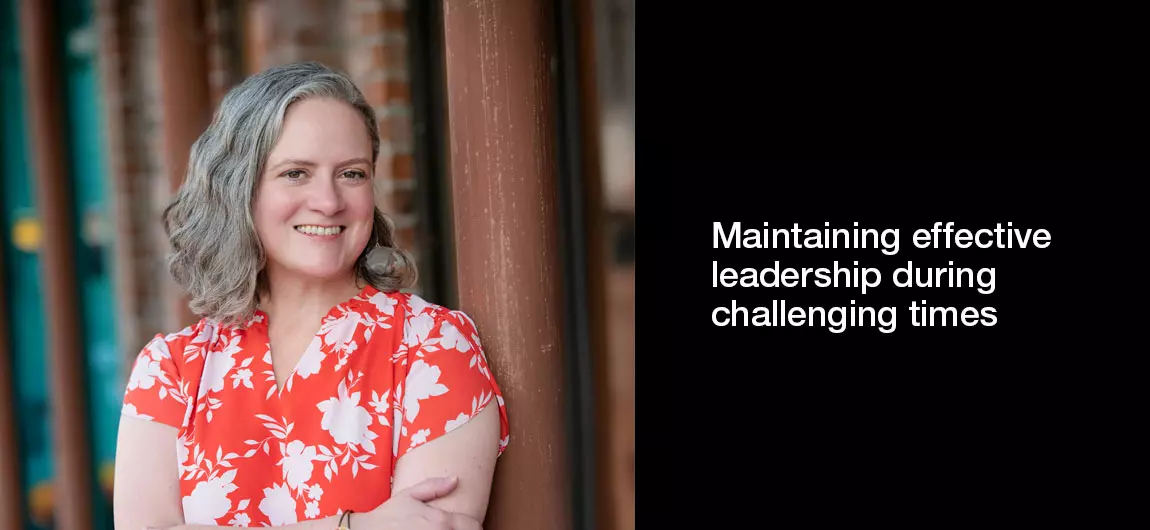
As an experienced marketer, Amy Moudy Comeau has seen her fair share of marketing emergencies. However, when the COVID-19 pandemic hit while Amy was working in health care marketing, it seemed like every day brought a new crisis. It was at this time that Amy started sending out weekly inspirational emails to her team, which lead to her writing the book Every Storm Runs Out of Rain, which offers a peek behind the curtain of these challenging times.
View transcript
Leadership During Crisis – Amy Comeau, Every Storm Runs Out of Rain
[00:00:00] Sanjay Parekh: Welcome to the Side Hustle to Small Business podcast powered by Hiscox. I'm your host, Sanjay Parekh. Throughout my career, I've had side hustles, some of which have turned into real businesses. But first and foremost, I'm a serial technology entrepreneur. In the creator space, we hear plenty of advice on how to hustle harder and why you can sleep when you're dead.
[00:00:21] On this show, we ask new questions in hopes of getting new answers. Questions like, how can small businesses work smarter? How do you achieve balance between work and family? How can we redefine success in our businesses so that we don't burn out after year three? Every week, I sit down with business founders at various stages of their side hustle to small business journey. These entrepreneurs are pushing the envelope while keeping their values. Keep listening for conversation, context, and camaraderie.
[00:00:55] Hi there and welcome to the side hustle of a small business podcast. Today, my guest is Amy Comeau. Amy, welcome to the show.
[00:01:02] Amy Comeau: Thank you so much. Great to be here.
[00:01:03] Sanjay Parekh: I'm excited to have you on. But first, before we start getting into all the interesting stuff that you're doing, give us a little bit about your background and what got you to where you are today.
[00:01:11] Amy Comeau: Absolutely. So I have an unusual background. Um, I have spent, uh, All my career in marketing, but the first 10 years I spent in performing arts. So doing marketing for, marketing communications for opera companies. I actually started, um, as a voice major in college and switched quickly, uh, realizing that it would be too hard to literally sing for my supper. And so I switched into, um, arts administration, music business. And so I did that for about 10 years. Um, that's why I moved to Atlanta. Um, as I ended up my last role at. The Atlanta Opera was as their director of marketing and PR. So that was great. Amazing experience. But September 11th changed the arts community.
[00:01:51] What changed the world for, for at least the United States for a long time. Um, and, uh, but also really devastated the arts community in Atlanta. So I found myself out of work and eventually transitioned into, a small. A short stint at the Rialto Center for the Performing Arts at Georgia State University.
[00:02:11] And then that led me to, Emory University and Emory Healthcare, where I spent, uh, just completed 20 years in the fall. Um, there, most recently, serving as the Vice President of Marketing for Emory Healthcare for 10 years.
[00:02:24] Sanjay Parekh: Yeah. Yeah. That's an interesting transition there to go from. Yes. Opera and the arts into health care.
[00:02:30] Like how did that happen?
[00:02:33] Amy Comeau: Well, it's interesting. And so I have been sharing with people that I've managed to make a career out of the healing arts. So the. So the art, you know, the arts are soul healing, right? You go to, you listen to music, you go to these events to restore your soul in some way, shape or form.
[00:02:52] And then working in healthcare is literally medicine is a healing art as well. But the transition is an unusual one. So I found myself, as I mentioned, out of work after September 11th, at the opera and, Enjoyed working at the Rialto, but I was tired of working nights and weekends. That was a roadhouse and so we had amazing artists come through like Bobby McFerrin and Herbie Hancock. I got to promote all them But I never got to meet them because they would just fly in do their show and fly out, right?
[00:03:26] But when I was at the opera the artists would be in residence for four weeks. You get to know that like it was just like a whole event. And so I was like, you know what? I think the nights and weekends is getting kind of old. I want to transition into what I thought would be a, a nine to five job, which I know they don't exist.
[00:03:45] And so I did a lot of work. There was a job open, at the nursing school at Emory, for an Associate Director of News and Information like, oh, that sounds interesting. I could do that. And, um, I studied really hard up on it, nursing did all the research and managed to, earn the interviews and then earn a second interview.
[00:04:11] And, but there was a little bit of divine intervention that happened with this, in that, when I finally landed the job, I didn't know this, but I remember asking, um, the Dean of the School of Nursing, why, um, you know, what was it about me that propelled me? And she said, well, you know, it turns out her sister was an opera singer.
[00:04:30] So not anybody that I knew, right, but, enough of a connection. She said, we figured if you could sell opera, surely you can sell nursing. And so then that was a transition and I didn't expect to be there 20 years, but. I was, and it was a great, fabulous transition.
[00:04:46] Sanjay Parekh: Yeah. So you were there for 20 years, um, through the pandemic. And that kind of leads into what you're doing now, which is you've written a book. I have. So what is it about the pandemic that kind of caused you to say like, hey, I want to go and write about this.
[00:05:02] Amy Comeau: Yeah, so, it's interesting. So, I've always loved to write. I've always, ever since I was probably 13, 14, wanted to eventually write a book. This was not intended to be a book. I wasn't expecting this to be a book. Right. It kind of happened by accident.
[00:05:16] Sanjay Parekh: Yeah.
[00:05:17] Amy Comeau: So, the story goes, so, I had been in my role for 10 years, uh, was in the role for 10 years. I'd been in the role for about 5 years before the pandemic. Had began, actually, maybe a little bit longer than that. Doesn't matter. And I had already been in the role and I had been at a senior leader meeting where someone was talking about, how they were inspired by someone who wrote friday emails to their team, like that was that their lead, that leader's way to engage with their, um, with their team, you know, do appreciation, kudos, just encouragement, that type of stuff.
[00:05:55] I thought, well, that's cool, but I couldn't figure out actually how to start that after having already been in the role, because my team would be like, why are you all of a sudden writing this Friday inspirational Friday emails out of the blue, right? So, lo and behold, the pandemic comes along and, um, we were scrambling to get an ad out in the AJC to thank the community for their outpouring of support.
[00:06:19] Remember, these are the days when people were donating goggles, masks and everything. And a leader on my team said, oh, you should, you should send this ad out to the team ahead of time, the marketing team ahead of time. So they know that they know what we're working on and they know what to expect to see it because, you know, when you're working on an ad, not everybody on the team is working on it, just, you know, a smaller group is. I'm like, well, that's a great idea. So I did. And then, that started what I thought was just going to be an eight week journey of, friday emails to my team to get us through Shelter in Place.
[00:06:54] Sanjay Parekh: Right.
[00:06:54] Amy Comeau: Which we now know shelter in the eight week shelter in place turned into 18 months and three years, and right with COVID still among us. It's just not, you know, the well's still deadly depending on, you know, what your, comorbidities are. But it's, it's more now, it's just like the common cold out there, um, among us.
[00:07:11] Not, not quite the, the scary right. Better equipped now, a little bit better equipped. We know what it is, understand a little, we understand it now, we can treat it and it's, and it's mutated enough now that it's not quite as, um, devastating as it was in those early days.
[00:07:23] Sanjay Parekh: Yeah. So what made you make the move then and leave, um, kind of working full time and go into this, uh, side hustle of really now full time gig of of being an author and writing a book.
[00:07:37] Amy Comeau: Yeah, well, a couple of things happened. So, I, um, I knew after 20 years at Emory, it was time for me to start looking, um, at doing something different. Our son, I wanted to, it was a great place to raise, raise our son. I mean, I had amazing experiences all throughout my time at Emory. Um, but I knew once we got him into college, he's a freshman now, that it was time to look for something else. And I knew that by publishing this book, it was going to, it would lead me to whatever is next for my career.
[00:08:04] Sanjay Parekh: Yeah.
[00:08:04] Amy Comeau: We also had a, um, uh, in the past two years had a complete change of our executive leadership team. And so, you know, those two things sort of kind of came to fruition and, I accepted the opportunity to leave the company in November and now I'm focusing on promoting the book and looking at what's next.
[00:08:24] Sanjay Parekh: So in doing that, you, I assume got some kind of runway. to, you know, have some time to do this. Yeah, yeah. So, how did you think about that move for yourself? And have you given yourself, like, milestones or deadlines to make sure that you kind of hit these things and make sure you can keep going?
[00:08:41] Amy Comeau: Yeah, so I actually, um, there was a, so I write in the book about burnout, especially, I mean, there's, burnout's well known with, clinicians, but it's also prevalent among non clinicians who work in health care, like health care marketers.
[00:08:55] And so I deliberately took the, um, the end of 20, what is this? 25, 2024 off. I didn't really do much of anything in November and December was the holidays and people weren't really hiring. And so I decompressed. I slept, like, probably 10 hours a day, just to recuperate from five years of pandemic stress and industry disruption and all of that.
[00:09:20] Did some networking, but not, you know, not, not a ton. And then, I broke my leg in December. Not, wasn't expecting that to happen. Which was the universe saying you need still slow down some. So, but in January, I started getting out and I, you know, I've been doing speaking engagements. I've done about, um, probably 10 to 12, speaking engagements related to my book, whether it's virtual author talks or podcasts like these or actually in person events.
[00:09:49] So I'm working on that. Um, I just finished recording my audio book, last week and we're that's going into edit and post now, and that will be coming out on March 13th, which is also my official, um, launch party. So I have milestones related to my book that I'm working on to make sure that I'm staying focused on that.
[00:10:09] Sanjay Parekh: Yeah. So, um, okay, so you, you made this move. Was this move something that, you know, as you took the package coming out of Emory that you already knew that you were going to do, had you been working on the book beforehand, like, talk to me a little bit about the process of doing this.
[00:10:26] Amy Comeau: So I, you know, the book came out September 13th and, um, you know, it was, it was a, you know, a fortunate series of events that led to, you know, my November 1st being my last day. So, like I said, it was, it was trying to figure out exactly how to, and I'm still in the process of figuring out how to get on the speaking circuit. Like, that's my, that's my, I'm kind of in like a discovery phase right now, like doing more, I'm doing some of these speaking engagements as like market research to figure out what in the book resonates for people.
[00:10:56] Sanjay Parekh: Right.
[00:10:56] Amy Comeau: What are the themes in it? Like, I know what the themes are in there. And then what are the themes that I want to, write about, you know, write a, you know, a 45 minute presentation on to that I hopefully can monetize and become a keynote speaker at events. So it was always in my mind and now not.
[00:11:14] But when you have a full time job, it's very hard to, you know, put the time into a side hustle. Now, if I'm looking for a new full time job, I'm like, how do I make sure I keep this book and speaking as a permanent side hustle.
[00:11:27] Sanjay Parekh: So that's the goal then, is to get another full time job and then keep doing this as a side hustle.
[00:11:31] Amy Comeau: Yeah, I mean, unless I can figure out how to turn this into a full time gig that, you know, brings in a lot of revenue that I don't, you know.
[00:11:38] Sanjay Parekh: So let's talk about that. How do you do that? Like, do you make any money on the book? There's a lot of cost up front to do that, right?
[00:11:48] Amy Comeau: Certainly it's an investment, but it's well worth it.
[00:11:50] I mean, you just think about it as a professional development, um, you know, investment in yourself. Um, but it's funny because when I met Jeff, when I talk with Jeff Hillmeyer, who's the owner of Ripples Media, He asked me, he said, why, u he's like, you know, why do you want to write a book? And I said, well, I've always wanted to write a book.
[00:12:05] One. Two, I don't want anyone to ever forget the pandemic. People are too quick to want to just brush it under the rug. Right. Right. And forget about it, move on. And three, I know it's going to lead to whatever's next for me in my career. I just don't know what it's going to be. He said, great, because if you're in it to make money, you're not.
[00:12:22] I mean, I don't, you don't make a ton of money. I mean, there's a lot of costs in a book. I mean, you know, if I make $7 a book, that's, that's great. And, you know, I've sold, I think about 500. So that's good. So I'm getting close to recruit, you know, hopefully eventually recouping my investment, but the money in at least in independent, you know, books like, like this, you know, unless you're a New York Times bestseller.
[00:12:43] Yeah. You might make a... then then you can start making revenue right in the New York Times bestseller world and maybe Stephen King does fine. I'm sure. Right. But you know, as an independent, you know, author, the money is in the business that your book is about. Right. So whether, you know, a lot of people are writing books
[00:13:01] because they're consultants and they want to, they want to grow their consultancy or they're with an, you know, an agency and they want to, you know, increase their client base and demonstrate their expertise and whatever their book is about, whether it's leadership or marketing or something like that. So yeah, it's, it's, it's the Avenue.
[00:13:19] It's, it's, this is showing that you. Have thought leadership that you're an established thought leader that will then hopefully lead to more.
[00:13:29] Sanjay Parekh: Yes, this is actually a very interesting thread to me. So basically what you're pointing at is like, look, I've got to do a book or I've got to show some kind of proof that I actually know what I'm talking about, even though you already know what you're talking about.
[00:13:42] And I think this is a challenge that a lot of entrepreneurs have, um, as they're running their businesses, their small businesses, side hustles, whatever it is. Because they've done things, but there's no necessarily obvious proof that they've done those things. So how do you, uh, for you, yourself, how do you think about those things?
[00:14:02] Because, you know, like getting a degree in college, sometimes that's what that's about, right? It's like proving that you're not dumb, right? Like I was able to accomplish this and get a degree. Yeah, yeah. I mean, you were smart before you got the degree. Right. Now, this just proves to other people that you're smart as well.
[00:14:16] So, how do you think about that for yourself and, and as you go forward in trying to get, you know, speaking engagements or whatever, or your next gig, like, how are you thinking about that in terms of, like, showing that, you know, I know what I'm talking about?
[00:14:28] Amy Comeau: Right. It's a really great question, honestly. And, and for me, it is, it's almost, it's kind of going through the process of thinking about your own personal brand. Like, what is it that you're good at? What are your brand, what are your personal values? What are your brand values? And what are the proof points behind those? Like, how do you demonstrate that success?
[00:14:48] Right? Right. And so, for me, in the book, it's all, it's, it's not, it's a book about the pandemic, but it's so much more than that. It's really about leading with authenticity, vulnerability, and leading oneself or one's team through change, challenge, crisis. And so, for me, it's, it's, there's different themes in there.
[00:15:08] So, like, I have a whole, there's a whole. I think that's a really important topic. Like people want to know what my leadership style is. It's right here. It's all right here. You just pick one passage, you know, and you'll be able to see, oh, she's, she's a collaborative leader. She leads with calm and compassion.
[00:15:21] And so then there's, but then there's tangible stories, either from my work at Emory, or even from my childhood growing up that show how that has always been part of who I am. And so if you're looking for a calm leader in a storm, right. That's, that's me. And so I think you have to. You've got to think about for, you know, entrepreneurs that are out there, what, what are, you know, what are the, what are the through lines of your life and the through lines of your business?
[00:15:45] And then what are the proof points that you have? And so whether it's a book, it's a blog, or it's just a conversation with somebody, it's, it's leading with those and being purposeful around the conversations that you're having to show, to demonstrate that expertise, but in an authentic way that's true to you.
[00:16:01] Not trying to, you know, force the conversation in a way that. It doesn't sound real.
[00:16:08] Sanjay Parekh: You mentioned personal brand. I find that an interesting kind of take because You know, we've, talking about like social media, there's kind of been this backlash around all that. How do you think about like your personal brand and highlighting your personal brand?
[00:16:22] Obviously the book is part of that, right? Are there other things that you think about, uh, in terms of your personal brand?
[00:16:29] Amy Comeau: I do. And I have to say when you're not... when you're not associated with a formal company, it actually gives you a lot more freedom to find and experiment with your personal brand. So I like I've been, I'm very, very new on Substack.
[00:16:42] Um, so like maybe like even not even a month on Substack but I'm using that as a place to experiment. Right. Because I can write different.. I can write a different post, write a different thread that picks at one of those values, and then I can explore it there. And then, does it feel authentic to me? Does it engage with other people?
[00:17:05] Um, and so I think you've, you know, it's like, it's almost like internal exploration on how you do that. And then how do you bring it to, you know, how do you bring it to life on social media? If you're comfortable with your values and who you are, then expressing them in a public way should come naturally to you.
[00:17:26] Adam Walker: Support for this podcast comes from Hiscox, committed to helping small businesses protect their dreams since 1901. Quotes and information on customized insurance for specific risks are available at Hiscox.com. Hiscox, business insurance experts.
[00:17:47] Sanjay Parekh: As somebody who's in marketing, do you think about it differently for people that you know are still at a large organization right that might be trying to do a side hustle like how should they think about their personal brand and how should they try to craft it because you've got to balance this line like I'm not talking for my big company I'm talking for my side hustle you know or it's my personal brand but what if somebody at the big company doesn't like. Now, knowing where your personal brand is and once they eject you, like, how would you think about that?
[00:18:14] Amy Comeau: I, you know, I think there's a risk there potentially, right? There's definitely a risk there. So I, you've got to look at it. I mean, what our guidance when, you know, when I was, you know, you know, when you're employed at the company, your guidance is to say, these are my, you know, in social or anywhere.
[00:18:28] These are my own views and not the views of my company. I mean, you've got to do all that sort of disclaimer stuff because that's important. But you also know that you, that you represent your own personal brand, but you also represent the brand of your company. And so you got you, if, if there's a conflict there between your personal brand and your company brand, well, then you may not be at the right spot, right?
[00:18:51] So you got to think about that. But I almost think about yourself as in your own personal brand is. Who are you? Like, if you're not at that organization anymore, who are you? Like your, your company is not you, you are you and you bring, and you're in the company you work for. Helps you, um, you know, develops who you are as a person and you learn a lot from that and that helps you develop your personal brand, but you aren't just, you know, your title at XYZ company and saying that's how you start to sort of think about, okay, well, think about your life's experiences like what... what has gotten to you to the role that you're in now?
[00:19:27] Sanjay Parekh: Yeah.
[00:19:28] Amy Comeau: And how do you start to describe your, I mean, you kind of need this as you're thinking about your, what you're going to do with your career anyway, whether it's a side hustle or what your next role is going to be like, who are you? Yeah. What value do you bring to the world?
[00:19:42] Sanjay Parekh: Yeah. And this is an interesting kind of, uh, area I feel because this is one of the challenges that entrepreneurs have. When they exit a business right this they have this existential like crisis because now who am I because I am no longer You know, CEO, president, founder of XYZ company. Um, any thoughts on like how to deal with that and how to think about that?
[00:20:06] I mean, I feel like it's something you need to deal with. Well, before that exit ends up happening that before you leave that company.
[00:20:13] Amy Comeau: Um, I mean, it's helpful if you can, but sometimes you, I mean, you may or may not be able to if you're in it so much. And I think that's also one reason why people probably stay longer at organizations than they might.
[00:20:25] Because. They are, especially when you're, when you get to a C suite level or something, and you're, you're known in your network as, oh, you're Amy from Emory, or you're, or I used to be known as Opera Amy, right? And so when you, when you leave that, you're like, I'm, well, I'm, I'm, I'm, yeah, I am Amy from Emory and I'm still Opera Amy, but I'm also just Amy.
[00:20:49] Sanjay Parekh: Right.
[00:20:50] Amy Comeau: So I think it is figuring out what it is that. It's, I mean, it's a lot of introspection, introspection, is that the right word? I mean, you know, people say, oh, go, you know, go to a cabin for a weekend and, and, you know, just think and write and, you know, figure out who you are, but you know who you are.
[00:21:09] Right. You just have to take the time to actually tell everybody else, think about it for yourself. And then once you have, you can actually articulate using the words that, that, resonate for you and are simple, then you can. Articulate it to others, but you've got to do the work on you first before you can share you with others.
[00:21:30] Sanjay Parekh: Yeah. Has anything, so you've kind of made this leap now, as you said, you've gone from big giant organization to it's you and that's it. Anything that's made you nervous about making this move?
[00:21:43] Amy Comeau: Sure. I mean, you're on the, you're kind of on the edge of, uh, well, what's the word liminal? I think it's like, you know, you're on the edge of something, you just don't know what it is.
[00:21:52] And so, um, it's fun to be in this exploration phase. It's nerve, it's nerve wracking too, because, you know, eventually you've got, you know, it would be great to be unemployed if we were all independently wealthy, but we're not. Most of us are not. So how do you make money? So yes, that is nerve wracking. But I use an analogy a lot.
[00:22:14] It's actually, there's a story in the movie Parenthood, um, where the grandmother talks about the rollercoaster versus the carousel. And I love rollercoasters and to have the exhilarating highs, you have to then also, you know, have the lows, otherwise you're just on the carousel going round and round and round.
[00:22:35] And that's. It's, it's fun for a little bit, but then it gets boring, right? Yeah. So right now I'm like, okay, I'm, I think I'm just, I'm at, I'm, I'm on the ride and I'm just going, you know, the, the slow tick up to the top of that hill on a roller coaster. And I don't know when I'm going to get to the top, to the top for that great, you know, thrill ride.
[00:22:55] But I know it's coming next. I know it will be because it happened to me before, right? I wouldn't have had the great fortune to lead an amazing team and an amazing organization like Emory had I not lost my job and, um, from the opera in the early 2000s. Right, right. So it's just, it's so it's very exciting.
[00:23:13] Yeah. Nerve wracking, but very exciting.
[00:23:14] Sanjay Parekh: Yeah. So along those lines, what about, like, self doubt, um, and have you experienced that? It seems like you have. Oh, sure. How have you dealt with it, like, you know, now during this transition, probably also when you lost your job, you know, from the opera, like, how have you dealt with self doubt? For yourself?
[00:23:32] Amy Comeau: Um, differently at different times. Um, when I lost my job at the opera, it was really devastating. I didn't see it coming. Um, and I didn't honestly, nobody saw that coming. No, nobody saw that coming. And I didn't, I mean, it was the dot com puff bust on top of the, um, on top of, you know, 9, 11, 9, 11 and everything that that did to the economy.
[00:23:53] Right. Um, and so, no, I didn't see it coming and I was young. I mean, I was, I don't even know that I was 30 if I was even 30 when it happened. And so, uh, it took a big hit to my psyche because I'm like, what, what, what, what just happened? Am I not good at what I do?
[00:24:10] Sanjay Parekh: Right.
[00:24:11] Amy Comeau: Um, and it took, um, just get myself trying to get through that, but then also some amazing mentors that saw something in me that I didn't see in myself that pulled me out of it.
[00:24:25] Sanjay Parekh: Yeah.
[00:24:25] Amy Comeau: So like at that point in time, I needed to, I actually needed to meet the woman who's now my mentor and I didn't know it at the time, but she. She really helped, um, me realize how, how much potential I had and then helped, you know, help train me and grow me to be the person and the leader that I am today.
[00:24:45] Now I used to talk to her now and she'd be like, oh no, it's the whole, the whole what Wizard of Oz story. No, honey, you, you had the power within you all along. You just needed to see it for yourself. And so, so, so yeah, so you, I mean, great mentors, great friends. help you through those moments of self doubt. I also, uh, in the middle of a pandemic, turned to meditation, and that helped me, um, very much quiet a lot of, like, just the swirling thoughts. Like, there's so much to do, there's so much happening, there's, like, how do you, your mind can play tricks on you, where you can just get fixated on a thought, and then you'll chase it down this rabbit hole, and all of a sudden, you've told yourself this story that, You've made up this story and told a story that's, that's not even true.
[00:25:26] And so it's like, yeah, get out of your head, just get out of your head and find ways to, whether it's creating art or writing and writing to process. I mean, I think there's just different ways to. You know, allow, allow yourself to have the self doubt, but don't wallow in it, right? Figuring out why, so why do you have it?
[00:25:44] What's, what's, what's driving at that? And then start to work through how to either overcome it or address whatever the root cause is that's, that's. Yeah. That's nagging at you.
[00:25:56] Sanjay Parekh: Yeah. Okay. I think I've got one last question for you. Sure. Kind of relates to the book. You were kind of managing a team through a huge crisis.
[00:26:07] What advice do you have for our listeners, our viewers that are entrepreneurs, all of them, either they have gone through a crisis or they will go through a crisis, that's kind of the story of entrepreneurship. Right. So how do you think about keeping a team motivated, dealing with whatever crisis that is, uh, and making sure that everybody's kind of growing in the same direction.
[00:26:28] Amy Comeau: Yeah, so the first thing is you need to take care of yourself, right? So, I would say that it's so important to remember that as a leader or an entrepreneur, you know, you're the owner of your company or you're leading your team, that you are experiencing the crisis at the same time your team is. And you have to process it.
[00:26:47] You don't have any, you don't have any advanced information on, on it. You're experiencing at the same time they are. So the fear and the anxiety you have, your team has. Um, but you have to then figure out a way to be steady and calm, to provide your team, um, focus and confidence that we're going to get through this.
[00:27:07] The second thing is find the truth. And share it. Um, so when I was working in healthcare, I was fortunate to have, um, and this was a, you know, the pandemic was an infectious disease. So we had the world's greatest infectious disease experts and epidemiologists, so we were right at the core of the scientific truth of what was happening.
[00:27:27] What did it change frequently? Yes, but at least we knew what it was. And so I would share with my team what I was hearing from our team, our scientists around. Okay. Here's what we know. Here's what we don't know. Here's what could change and that would give them a sense of knowledge to kind of anchor on.
[00:27:45] Sanjay Parekh: Yeah.
[00:27:46] Amy Comeau: And just it's constantly share what you know, and I think that is communication is key and frequent communication. We would have daily huddles. I would share with them every day. Here's what I know. Here's what we don't know. Yeah. Here's what we're focusing on for today.
[00:28:01] Sanjay Parekh: Yeah, yeah, it's interesting. I'm very much of the same kind of leadership style as you are of transparency. And there's a lot of people that are not. And what would you say to those folks that are maybe not as transparent, you know, is there any advice that you would give? I think some of that comes from fear.
[00:28:19] Amy Comeau: Yeah. I mean, I would, I would, if, if, if you're one of those people, I'd ask Why, why?
[00:28:23] Yeah, why aren't you, why are you reluctant to be transparent with your team? Is it because it feel, if it's because it feels like it makes you. Look, less leaderly, I think that's the wrong answer because, um, the team is scared. In a crisis, they're scared too. And if you're acting like this isn't scary, then you should, then they're, then they're going to feel like there's something wrong with them. So, I mean, I don't know. It's, I mean, there's probably, there's probably a couple other things there too that we could, we could riff on. But I think that, you know, I think the real question is what, you know, why, why, why, why are you being transparent? Um, and, and really think through, through that and, Yeah. I really encourage you to actually be, you know, transparent with your team.
[00:29:14] Sanjay Parekh: Yeah, Amy, this has been an absolutely fantastic conversation. Where can our listeners find and connect with you online?
[00:29:19] Amy Comeau: Great. Well, the, the best place to find me is, on the website for my book, which is everystormbook.com. I'm also on LinkedIn, so you can find me there. It's, um, just Amy Comeau, and you can find me there. And then on Substack, my subscriber name, I guess, or the subscription is, Authentically Authoring Amy.
[00:29:41] Sanjay Parekh: Awesome. Thanks so much.
[00:29:42] Amy Comeau: Yes, thank you.
[00:29:48] Sanjay Parekh:Thanks for listening to this week's episode of the Side Hustle to Small Business podcast, powered by Hiscox. To learn more about how Hiscox can help protect your small business through intelligent insurance solutions, visit Hiscox.com. And to hear more Side Hustle to Small Business stories, or share your own story, please visit Hiscox.com/side-hustle-to-small-business. I'm your host, Sanjay Parekh. You can find out more about me at my website, SanjayParekh.com.
Subscribe to our podcast



Did you start your business while working full-time at another job?
Tell us about it! We may feature your story in a future podcast.