Sustainable Homeware Brand: Amy Anaiz's Side Hustle Story



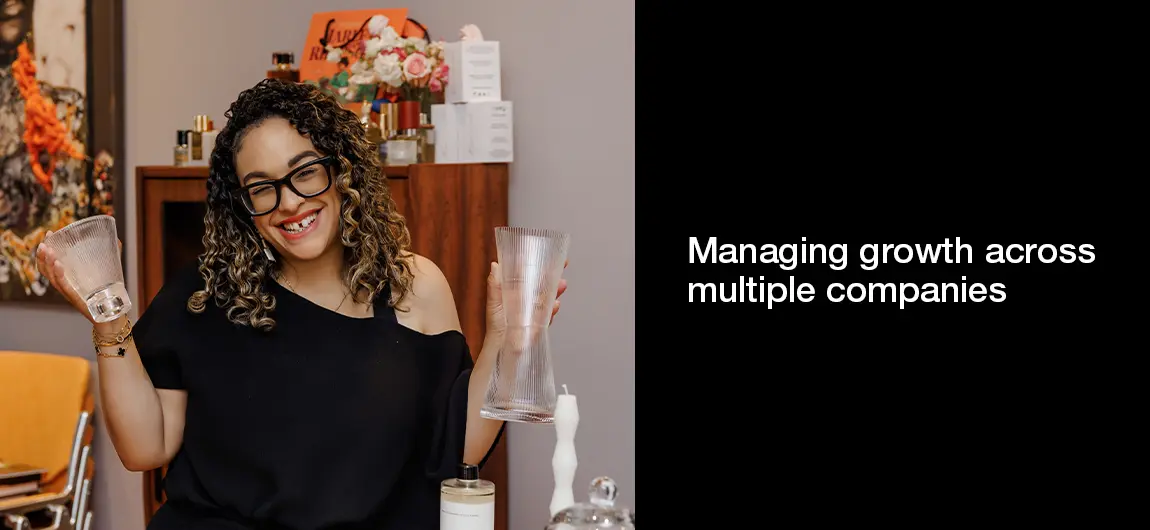
Amy Anaiz has spent over 25 years building a career as a professional photographer. When the pandemic paused events and disrupted her usual work, she saw an opportunity to explore new creative ventures. That’s when she founded OZAIZ, a homewares brand born from the idea of making candles last beyond a single use. Today, Amy balances running OZAIZ alongside her established photography business, all while raising a family.
View transcript
Sustainable Homeware Brand – Amy Anaiz, OZAIZ
[00:00:00] Sanjay Parekh: Welcome to The Side Hustle to Small Business Podcast, powered by Hiscox. I'm your host, Sanjay Parekh. Throughout my career, I've had side hustles, some of which have turned into real businesses, but first and foremost, I'm a serial technology entrepreneur. In the creator space, we hear plenty of advice on how to hustle harder and why you can sleep when you're dead.
[00:00:22] On this show, we ask new questions in hopes of getting new answers. Questions like, how can small businesses work smarter? How do you achieve balance between work and family? How can we redefine success in our businesses so that we don't burn out after year three? Every week I sit down with business founders at various stages of their side hustle to small business journey. These entrepreneurs are pushing the envelope while keeping their values. Keep listening for conversation, context, and camaraderie.
[00:00:56] Today's guest is Amy Anaiz, a New York City based photographer, and the founder of OZAIZ, a homeware brand that fuses functionality and sculpture of design. Amy, welcome to the show.
[00:01:07] Amy Anaiz: Hello. Hello.
[00:01:09] Sanjay Parekh: So I'm excited to have you on because you are very clearly a side hustler. You've got it like a main gig and a side gig and like all of these fun things and I looked at the site and the design of the stuff that you've got is really kind of cool. But before we dig into that, give us a little bit about your background and what got you to where you are.
[00:01:26] Amy Anaiz: Absolutely. So I am New York City born but first generation. My family is from the Dominican Republic, so I'm Afro-Latina. And I was born in New York, but raised in Miami and then came back to New York almost 20 years ago.
[00:01:41] So. So that's a little bit as far as my family background but I'm a mom of three two that you can physically see. One that lives in my heart. My daughter Amelia passed away right before she was born. I'm a partner. I've been with my partner for over 13 years and we have a really strong foundation together and we've started a family together. But professionally I. And I've been an editorial wedding photographer for over 25 years. Capturing love stories, families, intentional celebrations. And in recent years I launched OZAIZ which is a homewares and fragrance brand rooted in legacy sustainability and design that evolves with your life.
[00:02:32] Sanjay Parekh: I love that. Okay, so let's dig into some of these things. So, is OZAIZ the first time you've done something entrepreneurial like this?
[00:02:41] Amy Anaiz: No, not at all. So as I mentioned, I've been a photographer for over 25 years. When I moved back to New York back in 2008 that's when I really took my photography career seriously.
[00:02:52] I was actually a talent agent at the same time, representing hair and makeup and styling. So I was really in that advertising editorial world. So it really shaped my business as far as being an editorial wedding photographer is what I kind of say that I am. And that really has been a very thriving.
[00:03:11] Thriving business for me. But I'm getting older and, you know, I was really thinking about like, what are my next, you know, what's my next move? What's my next step? Also too, you know, since starting a family, you know, figuring out what is going to provide me more time to be with my family. So that's kind of where the initial idea of OZAIZ was kind of breathed from, you know, was that idea of what is my next. Step as far as after photography because photography is very labor intensive. You know, I have to be there, I have to shoot, and these knees don't bend, you know, like they used to. So so I definitely wanted something that was profitable, you know, that I didn't physically, you know, need to be there all the time. That can kind of make me money while I sleep, as they say. So that's why I started OZAIZ.
[00:04:04] Sanjay Parekh: Yeah. So let's talk about that. So how did you actually come up with the idea? How did you start the business?
[00:04:09] Amy Anaiz: So again, I was thinking about what were my next moves. But I didn't really have the time to sit down and really focus on it because I was booked and busy and this was, you know, I.
[00:04:21] Before COVID. So you know, 2019, like it was literally the most busiest season that I had. And honestly, COVID gave me the ability to pause because all events were paused, so I had to sit at home. So I really had the ability to really sit down and figure out, you know, how I wanted to expand. And what started off as wanting to create a beautiful candle.
[00:04:44] Because as you see behind me, I have a bunch of candles behind me. I'm a candle lover. I love all things bougie. And I wanted a really nice candle. That's kind of where it started from. But I was really frustrated with the fact of, you know, the way candles are nowadays, it's kind of single use. You burn the candle, that's it. You have this vessel and then that's it. You don't really do anything with it. So I wanted a candle that was multi-use that you can refill and use over and over again. But I was working with a designer and I was kind of giving her all my concepts and ideas, and we came up with the whole system of what OZAIZ is, and its interchangeable decor in which you can transfer it.
[00:05:26] From a fragrance as far as using it as a candle, or you can use it as drinkware. Right. You know, I'm using it as a drink right here. Or you can use it for home florals as home decor. So it kind of interchangeably lives with with your life.
[00:05:42] Sanjay Parekh: Oh, that's interesting. So okay, so you came up with this idea how did you get started? Because it's not like you're. I don't imagine going out and doing glass blowing and like making these things yourself. Like, how did you get down this path?
[00:05:58] Amy Anaiz: Honestly I, I partnered with a really good designer who was versed in this space, so that was extremely helpful as far as from a manufacturing perspective. They were really able to guide me as far as like, what were the ins and outs. Of, you know, manufacturing, especially since I wasn't going to be using an existing mold, you know, it's easy to Right, create a, you know, create a candle with an existing mold. So it's really, you're only adding your own wax and your fragrance from a candle perspective.
[00:06:30] But because I had this whole idea, it was creating our own molds. Creating our own design. So we went, we worked with one manufacturer at first that wasn't able to kind of get it up to par. So we found another manufacturer that was able to really see us through and kind of develop the glass to our standard because I wanted the glass to feel like luxury, you know, to have weight to it, to really be something that was durable so that it wasn't something that if it happened to topple over, it was going to break or be damaged.
[00:07:03] So we were finally able to find a supplier that was able to do that for us. But it took a long time, you know, I started in 2020 and we didn't launch until 2024. Wow. So it took us, those four, four years to really from, you know, concept to having it, you know, in hand being able to sell it to market. It took us that long.
[00:07:23] Sanjay Parekh: Yeah, that, I mean, that's a big commitment in terms of time. I imagine it was also a decent commitment in terms of money as well. Like talk to me a little bit about that.
[00:07:35] Amy Anaiz: Well, like I said, I started off with the simple idea that I wanted a nice candle. So, and you know, naive. Thinking that, you know, maybe this is gonna be like a $10,000, you know, investment. You know I was more than willing to make that Le leap on myself. So I am completely self-funded. But of course, as my ideas continued to expand. So did the price point continue to expand?
[00:08:03] Sanjay Parekh: So it's funny how those things happen like that. It does. And like I said too, I'm a lover of anything bougie.
[00:08:10] Amy Anaiz: So I went with really high end fragrances for our candles and our diffusers. You know, our glass again, I mentioned I wanted it to be of substantial weight. Our carafes are hand blown because our. Because our tumblers have to be very specific for the use. We had to get it machine made, you know, so that it was consistent every single time.
[00:08:35] So that was an extra expense. So literally it was like what started off as 10,000, if I'm candid, you know, we was close to almost a hundred thousand dollars investment to Wow. From start to finish as far as finally getting the product over here.
[00:08:51] Sanjay Parekh: Yeah. Yeah. Did anything on this process make you nervous? I got to imagine something. Did
[00:08:58] Amy Anaiz: you know, I, again, I'm self-funded, thankfully, you know, I've had a really lucrative career as a photographer. So I had a really, you know, I've had a really nice nest egg. So, investing that nest egg, you know, that. Was the probably, you know, one of the more scarier things that I've done, you know, because again, I'm betting on myself.
[00:09:19] Luckily my partner was super, you know, committed as well. So he was like, babe, just, you know, we got this, like, let's do this. So it's been a big of investment that we've made in ourselves. And it is, you know, blossoming back, you know but it takes time, you know, like any, like building any new business. It does take time in order for you to see those profits come back.
[00:09:40] Sanjay Parekh: Yeah. Okay. So it's been a little over a year then since you've been out. Then. How did you get the word out about the product and how did, how is it going so far?
[00:09:51] Amy Anaiz: No, absolutely. So again, because I've been in the wedding industry for so long I did have quite a bit of a base there as far as folks that followed me, you know, through my photography journey. So when I pivoted over to OZAIZ. Had that audience, you know, of folks that wanted to see me succeed, you know, so they have been my biggest supporters to this state. But also too, you know, being, having worked in advertising before having had my photography business, I had a lot of groundwork already done that I was able to kind of pivot into this business and use those existing contexts that I had to be like, hey, this is a new venture that I'm starting and because it leans into, you know, wedding gifts, you know, engagement gifts and all of that, it kind of, you know, I was able to find a very happy medium between the two. So yeah, so I was able to do that as far as leaning in on the connections that I had already made and then build from there.
[00:10:49] I've done a few trade shows. Sent a lot of pitches. You know, I'm very involved as far as pitching myself to different magazines, to different, you know, podcasts, all of that in order to to get the word out about what Oai actually is.
[00:11:05] Sanjay Parekh: Oh, that's so interesting. I didn't really think about that connection between the wedding industry and this, like thinking about that now. If you hadn't had that, like what would've been your approach in terms of getting this out?
[00:11:19] Amy Anaiz: I think it would've been the same, but I think it just would've been a lots. Slower. Yeah, nobody, you know what I'm saying? Like, I think I built my credibility as a refined photographer so everyone knew that if I was releasing something, it was gonna be of a certain caliber because I had already built that reputation.
[00:11:35] So. It was a lot easier to especially launch into more of the mid luxury space because that's the space that I was already in. So I think having that credibility already established was really helpful. So if I didn't have that, I think it would've been a little bit more of a. Slower journey as far as the growth that we've had and the opportunities that we've had.
[00:11:58] I think it would've been a lot slower because I've been invited into certain spaces now just because I've already had those connections. Right. So it was kind of one of those things that seeds that I had, you know, sewn years ago, you know, now I can kind of bear the fruit of that. Because it had been like a long game that I kind of played.
[00:12:17] Sanjay Parekh: Yeah. How how have you kind of managed the business? Let's talk about that for a minute. Like, okay, you've got a manufacturer, you've got all that, I imagine you're not packing boxes in the apartment there, in your house. So how are you managing like the whole logistics behind this and, you know, shipping and, oh, you know, all that stuff that happens with a physical product.
[00:12:37] Amy Anaiz: Absolutely. That's an amazing question. Because I think that folks think that you launch a product and you know, they don't see all the backend behind it. The one thing that I knew, and again, this is why. My initial investment kind of 10 x was because I knew that if I was starting something, I didn't want something that was going to have to physically tie me to it.
[00:12:57] I didn't wanna be pouring candles. I didn't want to be, you know boxing things up. I didn't want a DIY business. I wanted something that was. Turnkey once I got it in my hands. So my manufacturer was re really pivotal in that as far as being able to provide me with a fully finished products once it reached here in the States.
[00:13:20] And then I worked with or from the beginning which was a very. I'll get to that. But I went with a fulfillment house right from the beginning so they Okay. Housed my products and we're doing all our shipping and all of that. Which, you know, in hindsight would I do that again? No because I don't think that you.
[00:13:42] People really realize, especially small businesses, the financial cost of having a fulfillment center. And because when I placed my my order with my manufacturers, it was thousands and thousands of units. So this is a lot of units that are sitting in a warehouse and they don't charge per product. They charge per weight, which I didn't really realize. And my glass. So that was, you know, kind of my Achilles heel is that I had, you know, thousands. You know, pieces that were very heavy, so it was just compounding cost. Right. So if I'm candid, at the end of the day, most recently I ended up pulling everything out of the fulfillment house.
[00:14:28] I'm actually have everything here with me in New York. We got, you know, a storage sensor here in New York. So I'm actually doing my fulfilling now. Because it made more sense. We were spending way too much money just to house our products really in a fulfillment center. Right. That it just didn't make sense anymore financially to do that. But even to pull my products out, you know, it was thousands and thousands of dollars just to get my product back to me. So it's little nuances like that, you know, sometimes as a small business can really, you know, can really kill us. You know, that we don't Yeah. Know until you're actually in that position.
[00:15:05] Sanjay Parekh: Yeah, it's so interesting because you went all in on the fulfillment side and now you're going the other way. You know, most people start doing it outta the house and then grow into the fulfillment thing, but I guess that was a lesson learned. I imagine at some point you'll probably grow back into a fulfillment place.
[00:15:22] At least that's the plan.
[00:15:24] Amy Anaiz: Yes, that's definitely the plan. But for right now, the. Demand in that sense is not fully there yet again, because we still are baby brand. So that like, you know, we still get a bunch of orders in, but it's not something that I can't, or, you know, my family or my friends can't help me, you know, pack those orders. Yeah. Because everything's already here. It's really just putting things in a box and sending it out. So it's not huge and labor intensive. It was more so finding the storage facility to house all these. Things, the inventory and all of that, which I will say having the fulfillment center did give me those tools.
[00:15:59] So I have all the weights to my products, all the measurements, everything. I have a huge and great, you know, inventory system already in place. It's just, I'm doing it now on my end. But the fulfillment center did help me as far as having those tools to be really able to manage this inventory.
[00:16:18] Adam Walker: Support for this podcast comes from Hiscox committed to helping small businesses protect their dreams since 1901. Quotes and information on customized insurance for specific risks are available at Hiscox.com. Hiscox, business insurance experts.
[00:16:39] Sanjay Parekh: Okay. Let's change gears a little bit and talk about kind of the balance. And part of your whole deal with trying to do this was to make sure you did have balance with family life and all of these other things. How do you balance it? Because right now you've got two gigs then, right? I imagine you're still doing the photography thing. You've got the business. And you still have the family. So how do you balance the time and the stress and kind of attention to all of these things?
[00:17:07] Amy Anaiz: No, absolutely. It's hard. I won't lie, it is hard. It's a lot of juggling. It's a lot of late nights.
[00:17:14] But it's a lot of prioritizing too. The great thing about it is that my photography business is pretty much. You know, full steam. It's a well-oiled machine. I've been doing it for, you know, over 25 years, so I kind of know what to do there. So I know when I am booked for a shoot. And the great thing about that business is that weddings are booked quite in advance.
[00:17:35] So I already know which dates, you know, I, I need to do certain things and I can kind of work my schedule around that. But sometimes it means that, you know, and especially there's. Parts and months for photography that are a lot busier than others. So I plan for that. But sometimes it means, you know, I don't get anything done for OZAIZ in a day, you know, because my photography, you know, like this weekend I have a wedding in New Orleans, you know, so this weekend is a photography weekend, not in OZAIZ weekend.
[00:18:04] So it's really just. You know, juggling juggling the two. But I do put a lot of priority as far as being a mom. I waited a long time to be a mom and my motherhood journey, you know, started, you know, with a huge duality, you know, with a huge loss, but also, you know, a living child at the same time. So there's a lot of, you know.
[00:18:27] Balance that comes in that. So I've put a big ba a big, you know, priority as far as being a mom. And sometimes if that means no work gets done, you know, because my child is having a hard day or, you know, like Thursday my oldest sons just started school, so that was like, you know, that whole week was preparing for school. So no work really got done. But honestly. It is what it is. You know, like I run these businesses. It, the growth depends on me. So I know that as much work or as much effort as I put in is what I'm gonna get out. And I'm okay with slow growth because it's still growth. So that's something that I've always said that, you know, growth, slow growth is still growth.
[00:19:11] Yeah. So I'm not going to try to force or you know, do something that doesn't, you know, feel right or isn't a priority to me.
[00:19:24] Sanjay Parekh: Yeah. Do you think about like on like any given week, you're thinking about the photography business and za and you're like, okay, it's a 50 50 split or a 40 60 split, that's like kind of the goal. And then how do you actually get there?
[00:19:39] Amy Anaiz: No, absolutely. So it's really just balancing the day. So now again, since my oldest son is in school and my youngest, my mom actually, takes care of him for me for the hours that my oldest is at school. So we found a good little balance now. Yes. So now I have a good six hour window where I can either today I'm editing or I'm doing pitches.
[00:20:00] So it kind of depends on like what's on the need for each business. For right now I'm focusing a lot on holiday because a lot of holiday gift guides are coming out, so I'm doing a lot of pitching as far as two different journalists and all of that in order to get the buzz out there. A little bit more on OZAIZ as well.
[00:20:20] As, you know, we just finished a trade show in August. I have a few in-person events coming up now at the end of the month and in October. So it really kind of just depends. The great thing about. Once I'm done with those emails or initial things, there's really. Not that there isn't anything else to do because I still need to do social, I need to do all those things as well.
[00:20:43] But I try to batch those things so that I have a good inventory of materials so that I'm not stressing about it every day. And then with photography, you know, it's this morning or yesterday, I spent the day editing, finishing a shoot that I had. So I've gotten that down, you know, pretty good. So I'm able to manage my time efficiently.
[00:21:05] Sanjay Parekh: Yeah, it's helpful that, you know, a pretty good photographer for the OZAIZ side that you can take product picks and stuff, so that definitely makes it a little easier, I imagine.
[00:21:14] Amy Anaiz: It does, and it saves me a lot of money, honestly. Because I have shot primarily most of the collateral that you see on our website, any of the things that you see on our socials. It's pretty much me that has done it. I am working with another photographer now that's helping me as well. But for the most part it is me. That's kind of like the one man band that's getting it all done.
[00:21:34] Sanjay Parekh: Yeah it's always good to take like, you know, whatever your skills are and then multiply them against the business that you are. I, I think we see this time and again on this podcast where we've got people come on and then, you know, you see this kind of underlying thing where they've multiplied their efforts because of what they already know how to do. So let's talk about the brand of OZAIZ and kind of. What it means to you and kind of where it came from for you and I think there's like this touch that you've talked about in terms of motherhood. Like how does it all interplay for you?
[00:22:08] Amy Anaiz: Absolutely. So again, it was birthed in 2020 before I was actually a mom. So between 2020 and 2022, you know, I'm really head steam, you know, with production as far as with this. But then in 2022 was when we lost our daughter. So I took a long time as far as quite a few months.
[00:22:29] And I just put everything on pause. I really needed to take that time and had space to grieve the loss of our daughter. But also kind of reconfigure as far as like, what am I doing with those ais? Like, what does it mean? Like, I didn't wanna just throw another product out into, you know. The space that really didn't have like a lasting meaning behind it.
[00:22:50] So that's where kind of like our legacy and how we say that our pieces live with you kind of was birthed from, is being able to just use your your glassware interchangeably as your life changes. You know, and your life might change, you know, unexpectedly. So being able to have pieces in your home that aren't just. Stuff, you know, that you can, if you need it for as a glass today, or if you need it for home decor tomorrow, you can kind of interchangeably use it. And also too, leaning very heavily in the sustainability aspect as it not just being another throwaway piece, it being something that becomes almost like a family heirloom, you know, that can be passed down to, you know, for, you know, future generations and it will still have, you know, a lasting meaning to them as well.
[00:23:38] Sanjay Parekh: Yeah. Okay. Last couple of questions for you. This has been so interesting. I think we could talk for probably a lot longer, but we don't have forever to keep talking here, unfortunately. You've had, you've been doing this now and we've kind of touched upon this. With OZAIZs, it's been five years now.
[00:23:57] And you've learned a lot. I think we've touched on some of it you know, doing the fulfillment house and then undoing that. But if you could go back in time and do something differently obviously it would change the outcomes by doing it differently. But now, knowing what you know now, is there something that stands out to you like, oh, yeah, I would've totally done that differently now that I know what I know.
[00:24:18] Amy Anaiz: I think I would've created a bit more of a buzz. Beforehand I kept everything Oh, interesting. Super kind of quiet to myself. So only like my inner circle really knew what I was doing. I wish I would've created a little bit more of follow along with the journey. I think it would've made my audience a lot more excited and more kind of invested.
[00:24:39] To our journey. I think that, especially the younger crowd now, is really into that as far as the entrepreneurial journey, like seeing the gritty part of it. So I really wish I would've done that because if people knew the stories of what, you know, I went through from a manufacturing per. Perspective. And also once I got the product and just like all the nuances that came with building this business I think I would have, like, I have a lot of fans now, but I think I would have given more fans if I had shared that part of the journey.
[00:25:11] Sanjay Parekh: Why do you think you did it that way? What were you worried about something? Were you concerned about something? Or did you just not think about doing it?
[00:25:18] Amy Anaiz: I think Because it was just so new and I didn't exactly know where we were going yet, you know, and I didn't wanna put that pressure on myself. I feel like once you say like, oh, I'm doing this, or I'm launching this now, people are looking and expecting for a date.
[00:25:34] And especially since we had so many delays within the process. I think it would've added more stress that like, oh, people are expecting this product. You know, I said it was launching in February and now it's, you know, September and we're still not launched, you know? Right. Which we had when we launched, you know, we launched in February, but we weren't able to because of shipping delays, we weren't able to ship the products. Till end of March, you know, so there was a delay there and I was upset because, you know, I had already launched and now people aren't getting their product right away because we live in a very, at least American culture is very immediate that we want it and we want it now. So I think there, that was part of the reason why I didn't share it. I didn't want people to know till it was ready, till it was polished and ready to go.
[00:26:19] Sanjay Parekh: Yeah. That's interesting and I think you're dead on with some of those things, but then I think there's also another flip side of it is that. Sometimes we think that other people think too much about what we're doing as well, right? Like we, we share things and then people are like, they don't care until it's actually done, right? They don't think about us again. So for a lot of businesses, honestly, if you share it maybe doesn't matter.
[00:26:44] Amy Anaiz: And that's why I'm saying that's why if I could go back, I would do it differently because I realized nobody was checking for me.
[00:26:49] You know, nobody was, you know, in my inbox.
[00:26:52] Sanjay Parekh: Really, you know hey, you said this, you know, so you said you launched three months ago, where is it exactly? Yeah. Nobody cares that much about us.
[00:27:02] Amy Anaiz: So, so yeah. So I wish I would've shared a little bit more. Yeah. But now I know, you know, as we continue to expand and grow and, you know launch more products, you know, I am, yeah. Now going to share that, you know, with our audience as far as like, this is what we're doing now.
[00:27:18] Sanjay Parekh: So that has changed kind of the perspective that you have going forward. You share more frequently, more often than earlier?
[00:27:24] Amy Anaiz: Definitely. And I share a lot more of the grittier, especially like on my TikTok, I do share a lot more of, you know, the hardships that come with, you know, being an entrepreneur, being, you know, a mom, you know, that's trying to, you know, work, being a mom with two full-time jobs, you know, like there's just a lot that comes with it, but there's a lot of connection that you can make with that, with other folks who feel the same or that you can maybe. Fire you know, because they're looking to build out to something as well.
[00:27:53] Sanjay Parekh: Yeah. No two entrepreneur's journey is the same, but there's always opportunities to like learn from another entrepreneur's journey. And at least if nothing else, avoids some of the pitfalls that people have had in their journeys because man.
[00:28:06] There's a lot of pitfalls out there as you, you well have learned. Okay, Amy, last question for you. If you're talking to somebody who's thinking about taking the leap like you did and starting a side hustle and maybe, you know, one day taking that side hustle into a full hustle which you still have yet to do maybe that's coming at some point what advice would you give to them?
[00:28:28] Amy Anaiz: 10 x or budget. You know it's what you think something is. And I would say more so if you're a product based business, what you think something is going to cost, it's probably gonna cost more. And especially when you're looking into quality control and just certain things, you know, the nicer you go into things, you know, and depending on where you manufacture and all of that, it's going to add up and it's very.
[00:28:51] Small little increments, but it adds up very quickly. And I feel like a lot of businesses are experiencing that now, especially if you manufacture overseas, you know, unforeseen costs. You know, like right now we're at a trade war, you know, so people who didn't anticipate, you know, a 50% tariff being put on their, you know, goods coming in.
[00:29:12] Where is that money coming from? Because, you know, you've already made this investment. So I would say have a good, you know, budget as far as discretionary funds that if and when something does go awry, that you do have the funds there to be able to keep going. And I know it's, that's a very privileged thing to say, you know? So start small, you know, don't. Want to have the whole kit and caboodle, you know, start small if that's, this is where you are at, like, know exactly where you're at and then start building from there.
[00:29:43] Sanjay Parekh: I love it. Amy, this has been fantastic. Where can our listeners find and connect with you online?
[00:29:48] Amy Anaiz: No, absolutely. So I am Ozzy's home on all social platforms, and that is O-Z-A-I-Z-H-O-M-E on all social platforms. www.ozaiz.com
[00:30:00] Sanjay Parekh: Awesome. Thanks so much for being on today.
[00:30:01] Amy Anaiz: Thanks for having me.
[00:30:06] Sanjay Parekh: Thanks for listening to this week's episode of the Side Hustle to Small Business podcast, powered by Hiscox. To learn more about how Hiscox can help protect your small business through intelligent insurance solutions, visit Hiscox.com. And to hear more Side Hustle to Small Business stories, or share your own story, please visit Hiscox.com/side-hustle-to-small-business. I'm your host, Sanjay Parekh. You can find out more about me at my website, SanjayParekh.com.
Subscribe to our podcast



Did you start your business while working full-time at another job?
Tell us about it! We may feature your story in a future podcast.