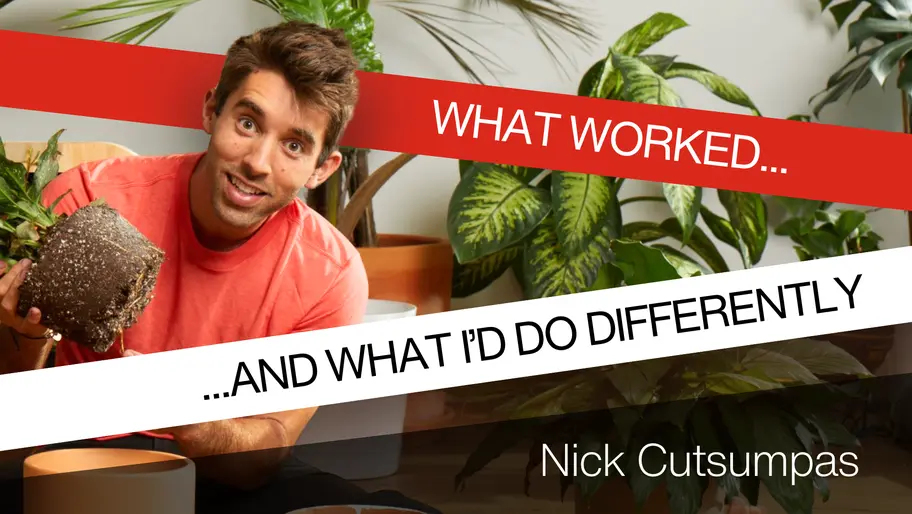
The growth of a Plantrepreneur: What worked and what I’d do differently
Any opinions, views, findings, conclusions, or recommendations expressed in this publication are those of the author(s) and do not necessarily reflect the views and policies of Hiscox.
It only took thirty-two square feet to change my life.
That was the size of the garden plot in my childhood backyard where I first learned about plants. Not a farm. Not a sweeping landscape. Just a small rectangle of earth tucked behind my parents’ house. But it was enough.
I had just graduated from Tufts University, and since I planned to live at home rent-free, my mother, like all good mothers, wanted me to contribute something around the house. Her request wasn’t dramatic. No ultimatums. No lectures. She simply suggested I start a garden.
At the time, I knew absolutely nothing about growing food. I didn’t know the difference between annuals and perennials, compost and mulch, or a weed and a native plant. I didn’t even own a pair of gardening gloves. But I agreed anyway, assuming it would be a casual project to keep me busy over the summer.
But from the moment I tasted the LITERAL fruits of my labor, I became obsessed.
That first season, I watched sweet potatoes sprawl across the garden beds, ruby red tomatoes color the vines, and sunflowers reaching for the sun. The garden didn’t just grow. It transformed.
And somehow, so did I.
Three fruitful gardening years later, I moved to New York City to continue my corporate career in tech sales. The transition was jarring. After a few weeks in my 600-square-foot concrete box of an apartment, it dawned on me…
There was a garden-sized hole in my life.
So I did the only thing that made sense and bought over one hundred houseplants.
Overnight, my apartment became a jungle. Plants covered every surface. Shelves, windowsills, floors. I didn’t just want greenery. I needed it. I was suddenly aware of my role in the ecosystem and was trying desperately to return to the roots that made me feel human.
And as this dormant version of myself began to reemerge, so too did my aspirations. What if this love of all things green, that brings me so much joy, could become my career?
I had a stable job with a great salary and benefits, and I didn’t know the first thing about starting a business or being an entrepreneur. There’s never a “right time” to take a risk and make a
career change, but I had already learned how to garden without knowing anything, so how hard could it be?
Seven years later, Farmer Nick LLC has been my greatest source of joy, pride and inspiration, and it has given me opportunities that I never thought possible. Filming two Netflix shows and winning an Emmy, designing over 100 plant spaces, teaching workshops all over the world and publishing my first book, I’d say I made the right decision
It wasn’t all sunshine and rainbows though, and many things that could go wrong, did go wrong. From failed clients to struggling employees, there was a tremendous amount of stress on me in those early years.
But that’s where the real learning and growth happens, so here is a breakdown of the decisions that accelerated my growth and others that I would do differently.
Growth accelerators
Early prototyping
The first thing I did when starting my business was establish a prototyping period. I define this as the time when I still had my full time job and was starting to work with my first plant design and landscape clients on the weekends. Most of these clients were friends or family, and it was a wonderful training ground for me to make mistakes and learn what worked best.
When I began expanding out to new clients, the stakes suddenly got higher and I was at my most vulnerable. So in order to increase my level of professionalism and protection, I signed up for small business insurance with Hiscox. Hiscox had everything I needed to protect this growing little LLC if I did run into an issue with a client, and it also had tons of resources for me to learn from. Hiscox gave me the peace of mind I needed to continue taking risks during this prototyping phase, and eventually develop the confidence to quit my corporate job.
Staying consistent
If my college athletic career taught me anything, it was the value of staying consistent. Through ups and downs, I never stopped showing up on social media, for my clients or for my brand partners. As a content creator that was also running a business, time management was key, but I stuck to my routine and was able to build great relationships both digitally and in person. A consistent process led to consistent outcomes.
In my opinion, one of the main reasons why many creators are not able to sustain their work full time is because they lose the motivation after their initial growth spurt. After growing my following and my client base, I reached an inflection point where I needed to decide how far I was willing to go.
Would my current routine and lifestyle sustain this growth if I stayed consistent? Or would I have to drastically alter the way I did things to the detriment of my business and work life balance?
Ultimately I decided to keep the plant business small and boutique, and expand the social media arm. The content from plant clients fed the social media and the social media led to more clients. A consistent and circular cycle of growth.
Growing community
Above all else, my ability to build community has been my greatest strength on this entrepreneurial journey. Between my time in NYC and LA, I was grabbing coffee and meeting with EVERYBODY. If I saw someone doing something related to houseplants, gardening or sustainability on social media, I reached out and asked to meet in person. I did this for two reasons.
1. Being an entrepreneur can be lonely work and I honestly wanted friends. I no longer had colleagues I could connect with at the office, but meeting with other people that were walking the same path was incredibly fun and validating. Many of those first meetups are still close friends to this day, and I love meeting new people everywhere I go.
2. The connections I built over the course of seven years have turned into amazing business relationships. And not just for me and my business, but for my friends who met other friends and business leaders through me. I often compare myself to the mycelium in the soil (a fungal neural network that distributes and shares resources between plants) but instead of sending plant food, I’m connecting people who can benefit from knowing one another. Hosting my plant potlucks is a great example of that, and nothing is more rewarding than watching two small business owners connect and make plans to support one another.
What I'd do differently
Outsourcing my weaknesses
This is an area many early entrepreneurs struggle with because they are often fiercely independent and accustomed to making things work on their own. For me, this battle manifested itself in long form content and videography. I’m good on camera and with clients, but trying to film those organic interactions and then editing all the footage together was overwhelming and too much to handle.
Instead of biting the bullet and investing in a part time videographer and editor, I just avoided this area altogether and it was a major missed opportunity. I am just now starting to break into longer form content on YouTube, but I could have had a seven year head start. Better late than never!
Say "NO" more
Sometimes as entrepreneurs we are victims of our own success and believe we can do no wrong. I especially fall into this category and whenever someone says anything positive about my work, and instead of thinking critically about what they may be proposing, I would just say yes.
How could it go wrong if they believed in me and my vision?
This “yes always” approach burned me on a few different occasions with bad hires and poor strategic choices, and I ended up investing time and money into people that did not push the business forward. If I had been more discerning up front, perhaps I would have noticed the flaws ahead of time and either addressed them or moved in a different direction. Any good gardener knows when to prune something back and not let it grow out of control, and I wish I used my metaphorical pruning shears more.
Advocate for myself early and often
I have a habit of assuming people have my best interest at heart and will do the right thing. This makes me incredibly trusting, which isn’t always a bad thing when it comes to relationships, but it can be catastrophic as a small business. Businesses don’t operate like humans do, and the person or client you have a great relationship with, may not be the one making the final decision when it comes to paying you on time, upholding a contract or showing up in a time of crisis.
Although I am embarrassed to admit it, there have been a few different times that clients have not paid for my company’s services at all. After sending the invoice, I would just assume they were going to get to it eventually because we had a signed contract. I would follow up occasionally, but I was never pushy enough to get real answers or force the issue. Some of the clients ended up paying over a year later, but a few went out of business entirely. Had I been more proactive earlier on in the contract phase, these losses may have been avoided.
Running your own small business isn’t for everybody, but I wouldn’t trade this experience for the world. Through each milestone and failure, I have loved every minute of my entrepreneurial journey and there are so many people and partners to thank along the way. Hiscox played an integral role in my company’s development and growth, and Farmer Nick LLC wouldn’t be where it is today without it.
I don’t know where the next seven years will lead, but I do know that taking the jump and creating something of your own, is worth the risk.
Related Articles

How to Hire the Best Employees
It’s always a big moment when a small business owner hires their first employee, and over the years, old and new staff alike can really help the business grow.
Read More
What every small business can learn from Jimothy, the viral raccoon
What can a viral raccoon teach entrepreneurs? Discover The Jimothy Effect and learn why memorable brands, authentic stories, and exceptional customer experiences help small businesses stand out.
Stand out
What can a viral raccoon teach entrepreneurs? Discover The Jimothy Effect and learn why memorable brands, authentic stories, and exceptional customer experiences help small businesses stand out.

Make August count: Key moments for businesses
August is packed with key moments for every small business. Discover five big August moments business owners shouldn’t miss.
August awaits
August is packed with key moments for every small business. Discover five big August moments business owners shouldn’t miss.
We provide tailored insurance for the specific risks you face, so you can take the right risks to grow your business.
Subscribe to the Hiscox Entrepreneurial Digest on LinkedIn


Get valuable business resources, timely tips and inspiring success stories in your LinkedIn feed every month.